In the last couple of articles in this series on defensive shotguns I talked about not using birdshot and straw man arguments against the shotgun. In the next article, I talked about choosing the right shotgun for you. That last one actually started out as this one… and I got sidetracked, but we’re finally here. Today I’m going to discuss defensive shotgun setup, once you’ve chosen your shotgun. I hate to ask you to spend a bunch more money, but there are some accessories that can make your shotgun much more user-friendly. This article assumes that you are starting from scratch in setting up a defensive shotgun. If not, and you’re way ahead of me, maybe there’s still a thing or two you can add or modify, or maybe this can help someone you know.

This article contains affiliate links. Using these links gives us a small commission but costs you nothing. Please consider using our Amazon link to support this blog.
If you'd like to listen/watch on Youtube, you can find this article here:
Before we get going, there are a couple of things I should point out. There is no end to the amount of accessories, gadgets, and enhancements you can put on a shotgun. There are all sorts of things, and new ones being invented all the time. Some of them will give you a bit of an edge. Many of them are designed primarily to separate you and your money. Also be aware that hanging too much stuff off your gun makes it heavier, more likely to catch on something, and creates more potential failure points. Try to keep the modifications to the bare minimum.
When considering an upgrade or accessory, ask yourself what it’s doing. I try to explain the why for all the upgrades I recommend here. But keep in mind, you can probably leave your shotgun exactly the way you purchased it and still defend yourself, your home, and your family. These things will make it a bit easier to run the gun, make you a bit more accurate, improve your target discrimination, etc.
Bottom Line Up Front
I’m not going to make you read this whole thing to get the goods. Here it is in short form. For the whys and whats and other details, read on.
If your shotgun didn’t come with a Magpul SGA stock or a youth stock, you probably need a new stock. Get a Magpul SGA.
You need a white light because target ID is very important. Solutions vary depending on what kind of gun you have.
You need sights. If your shotgun has a bead sight, you’re probably good, but better sights are…better. I like optics, but you probably don’t need an optic.
Remington 870s can use a bigger safety button.
Extra ammo is cool but optional.
That is pretty much it. Don’t put a bunch of other junk on there.
The sky is the limit as far as how much you want to accessorize your shotgun. However, you don’t have to spend a fortune or make your shotgun weigh 10 pounds to have a really effective home defense weapon.
First Priority: The Stock
Most shotgun’s stocks are too long. A stock that is too long effects recoil management and accuracy. Most shotguns ship from the factory equipped with a stock with a 14-inch length of pull (LOP). Length of pull is a common shotgun measurement, taken from the trigger to the butt of the gun. This doesn’t seem very long, but it is. It’s based on sporting shotguns - shooting clays, hunting rabbits, etc. - rather than defensive shotguns. The longer stock is designed for a more bladed stance one takes when wingshooting.
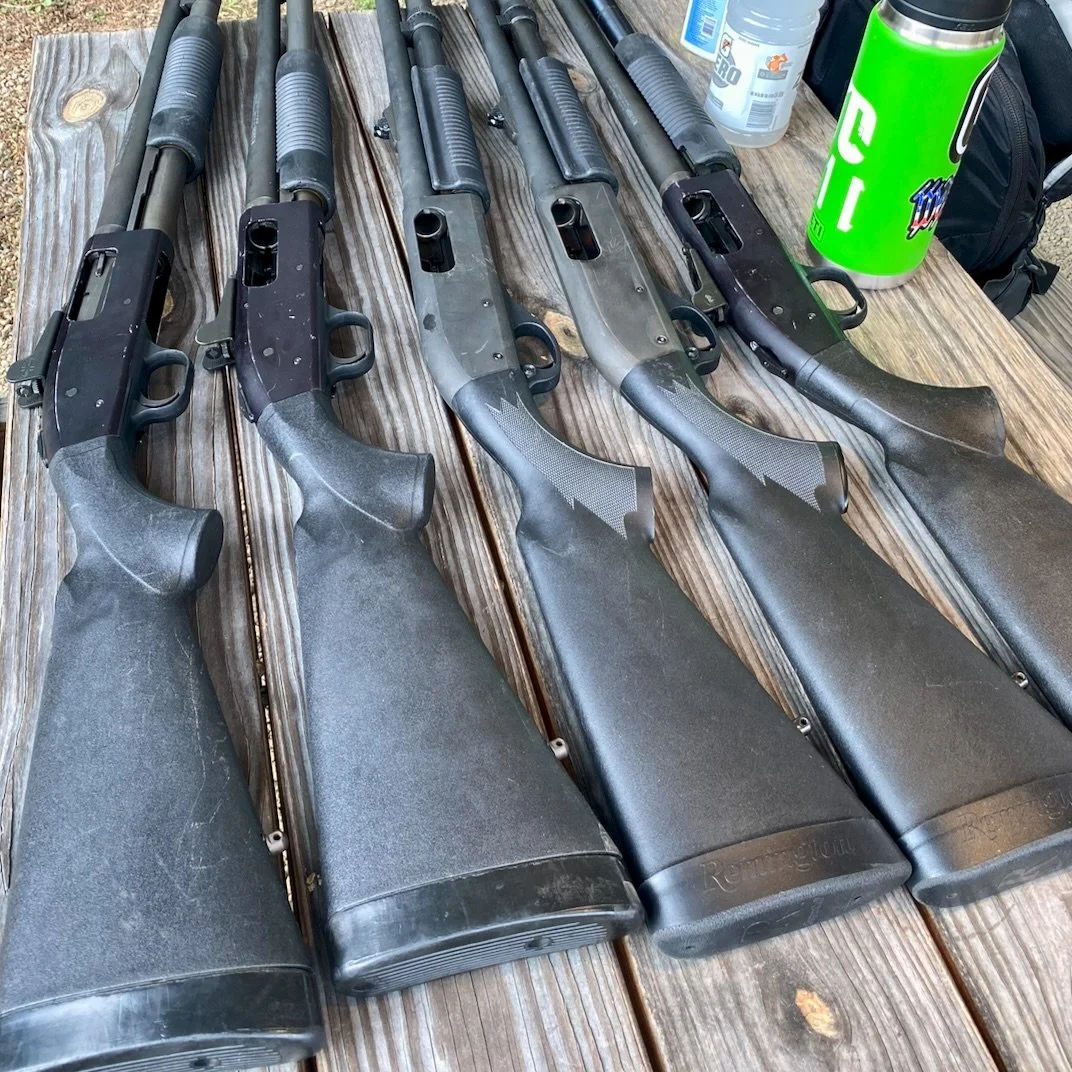
There’s nothing inherently wrong with this, and you can shoot your defensive shotgun with the factory stock. It is not ideal for the squared-up stance you’ll want to take when shooting harder recoiling loads like slugs and buckshot, even the low recoil stuff. I did not realize what a difference this made until I had to go backwards a bit. My personal shotgun had been setup with a shorter, Magpul SGA stock for several years when I went to the police academy. We did some shotgun shooting at the academy, and those guns had the normal, too-long stocks. I could still run the guns fairly well, but immediately realized how much harder it was to shoot and manage recoil with these stocks. And I kind of felt sorry for my fellow students, shooting full-power slugs with no training and guns that weren’t well-suited to the task. It’s no wonder law enforcement moved away from the shotgun.
A stock with a shorter LOP will allow you to manage recoil much better. The modern, industry-standard recoil management technique is the Push-Pull method popularized by Rob and Matt Haught. I first heard of it watching Lucky Gunner videos, was first taught it by Tim Chandler and Ashton Ray at their shotgun skills class, and finally got to practice it directly under Rob and Matt’s tutelage a couple years ago. Long story short, using a shorter stock will enable you to perform this technique more easily. This technique is the single biggest thing I learned to help me run a shotgun more effectively.
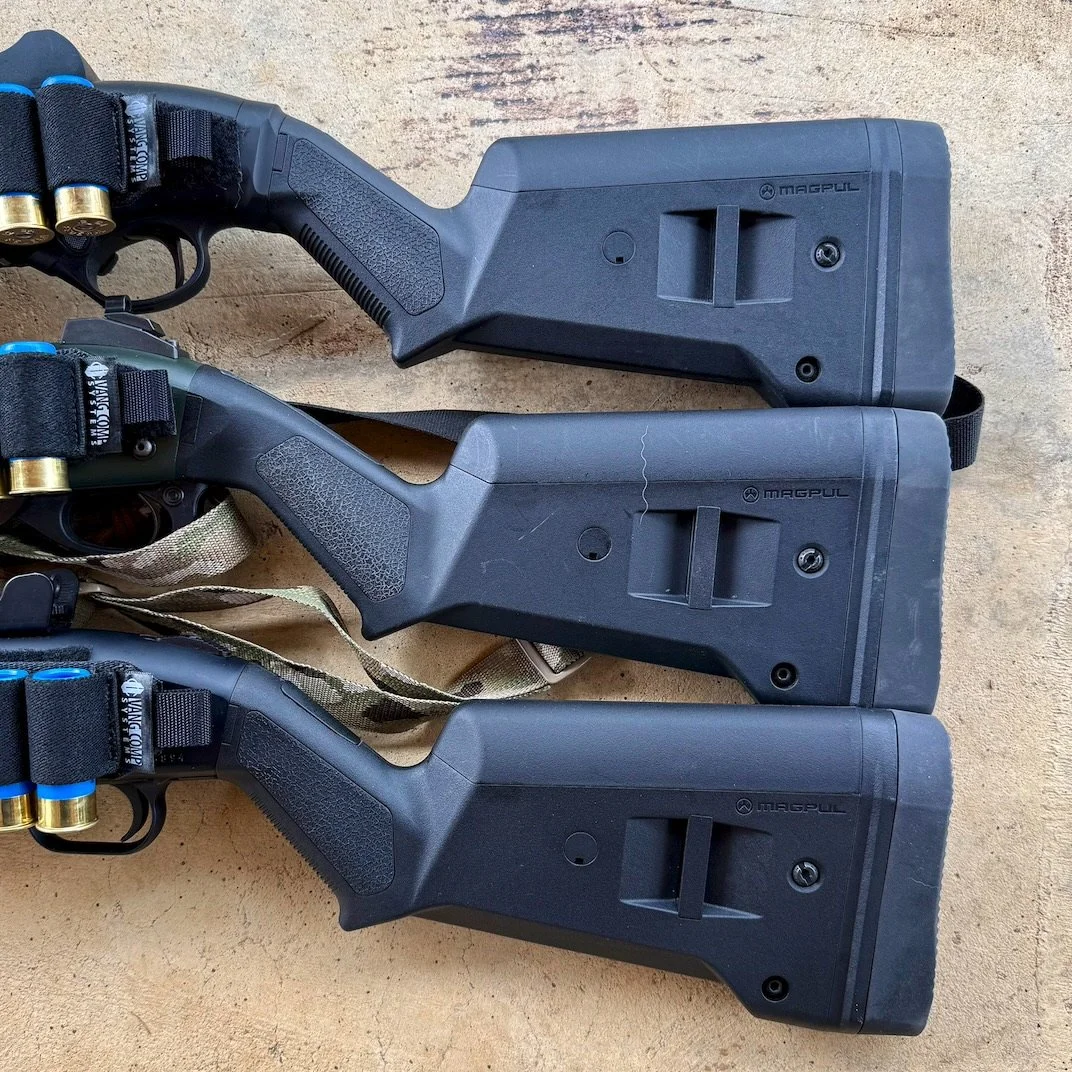
The stock for all of the above - save for the Beretta A300 Ultima Patrol - is the Magpul SGA. The SGA has a radical appearance relative to traditional shotgun stocks, that I don’t mind but some may not care for. It is optimized for defensive shotgun shooting, though. I resisted this stock for a long time because… This is painful to admit, but I resisted it just because everyone seemed to be doing it. I should have taken that as a clue, but I finally came around. Now all my shotguns wear SGA stocks.
The SGA is technically only made for the Remington 870 and the Mossberg 500/590 (this one will fit the Maverick 88, too). With an adapter from Aridus Industries, you can make it fit the 1301. You can also buy the whole package, with the SGA stock, from Aridus. Sometimes you can also find package deals the 1301. I bought mine with a SGA stock and the Reptilia optic mount already installed. Unfortunately due to the recoil system in the A300, it is incompatible with the SGA stock; fortunately the factory stock only as a 13.25” LOP. This was a big disincentive for me when deciding between the 1301 and the A300.
Second Priority: White Light
A defensive firearm needs a white light. Target discrimination is very, very important. I talked a lot in my book about the dangers of shooting at noises without identifying the target. Lots of people have done it. A few of them have killed children sneaking in, kids home early from college, a son-in-law giving a surprise “happy birthday” greeting and more. That sort of outcome should be completely unacceptable. It is to me; I absolutely want to avoid having something like that on my conscience. The best way to do that is with a mounted white light.
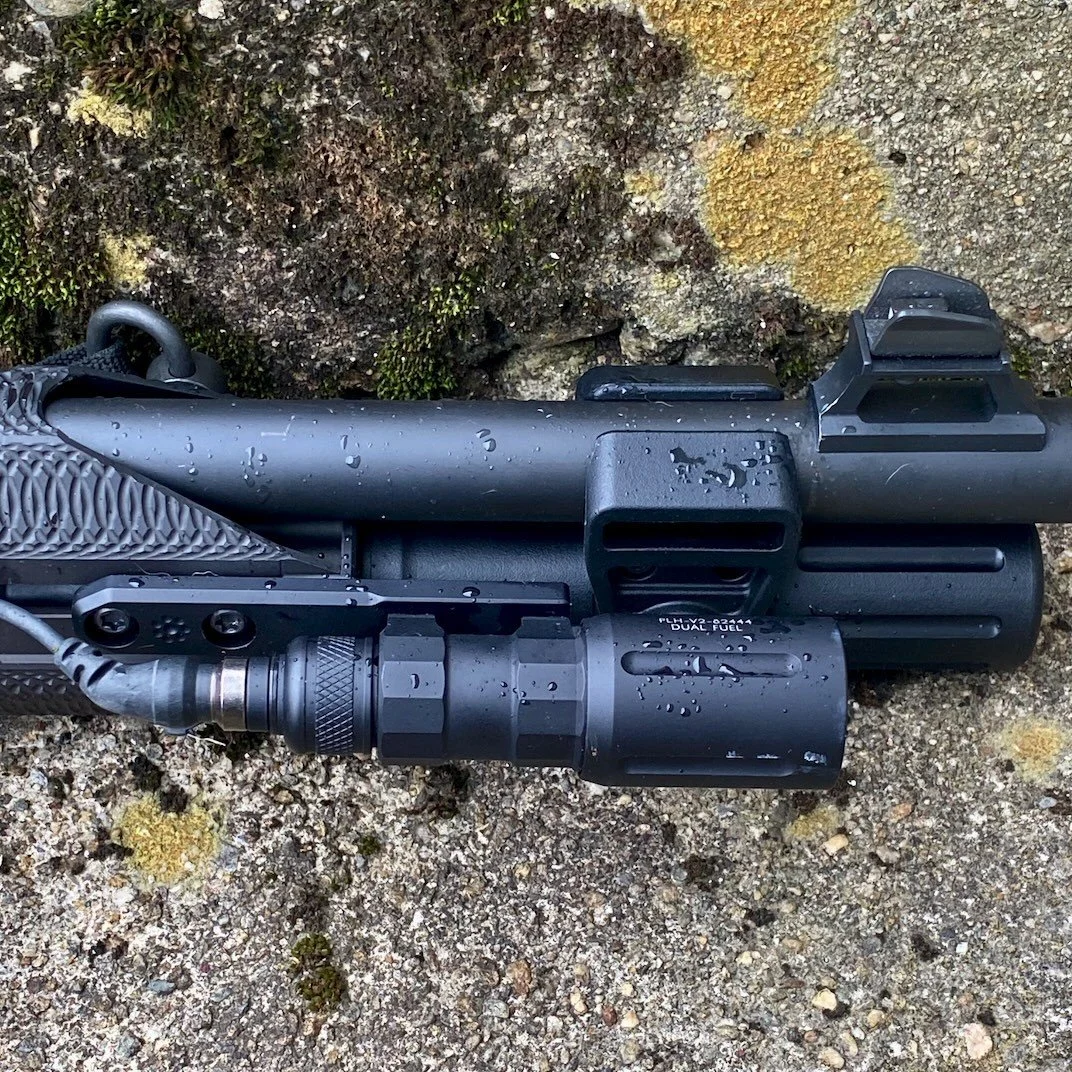
Modlite PHL V2 mounted to my 1301. I’ve been reasonably happy with this light, but if I had it to do over again, I’d just get a Surefire.
A handheld light will technically work (and of course you should have a handheld light), but will be extremely difficult to use while operating a shotgun. Your best bet is a forend-mounted light. There are a few options for this, and this is one avenue in which semi-automatic shotguns really shine. The A300 and 1301 both have MLOK slots cut directly into their forends.
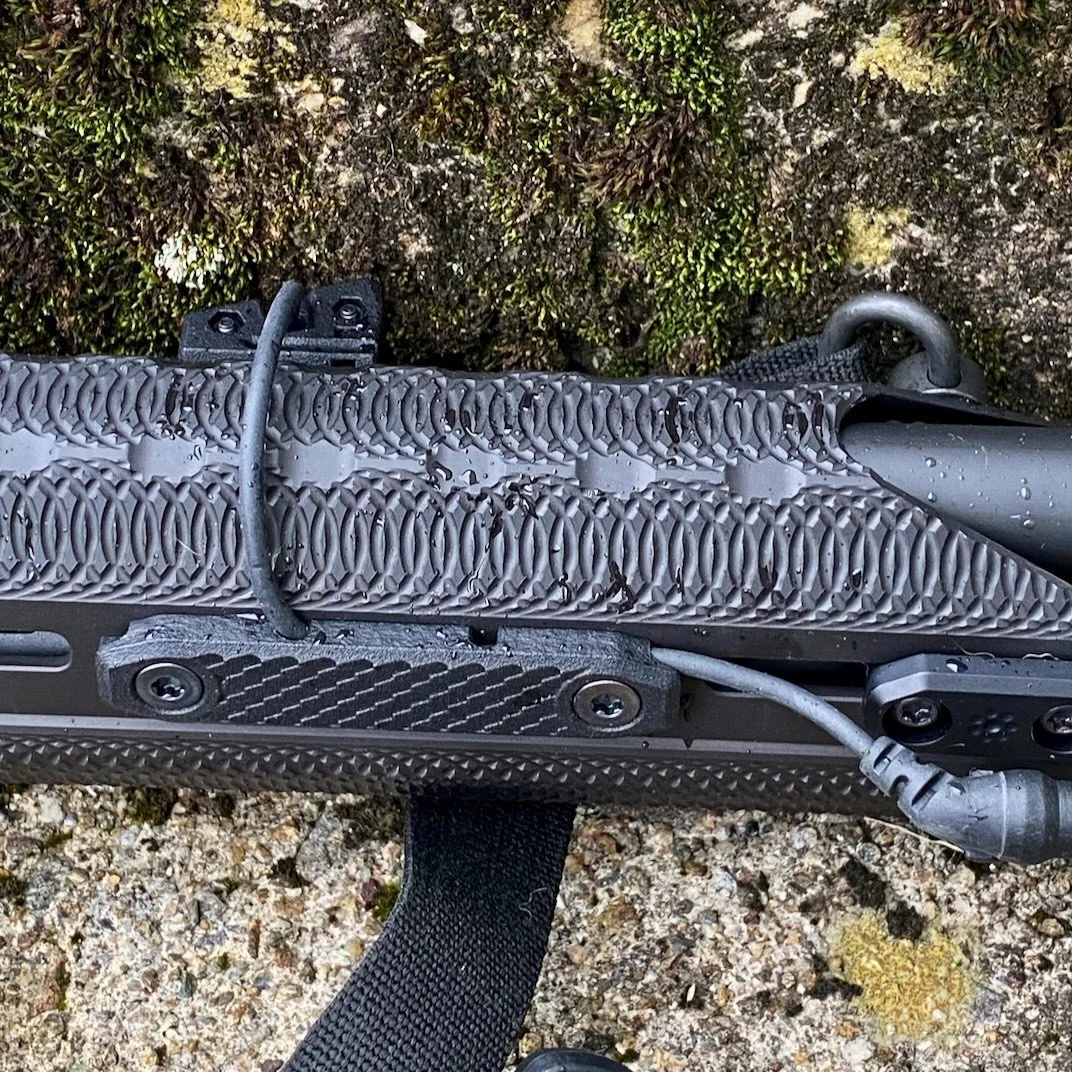
Cable management is important. I run this light via a Modlite Modbutton.
Unlike a pump shotgun, the forend doesn’t reciprocate, so you can mount the light to any of these slots and forget about it. You can also choose pretty much any weapon light intended for a rifle like the Surefire Scout or Streamlight ProTac HL-X. If using a thumb switch, I would recommend one that you can switch to constant “ON", otherwise the recoil will pummel your extended thumb if you shoot while activating the light. A pressure tape or carefully mounted pressure switch can solve this problem. Just be aware of cable management.
White Lights for Pumps
Things are a big more complicated with a pump shotgun. The forend reciprocates, and you have to manage that forend real estate a little more carefully because there’s less of it. You basically have two options. The first option is a forend with an integrated light. I’ll be honest, I don’t think any of these are great options. I have the Streamlight TL-Racker on my 870 and it’s alright (I reviewed it here). I modified it (and wrote about it here) and it’s better but still just alright.
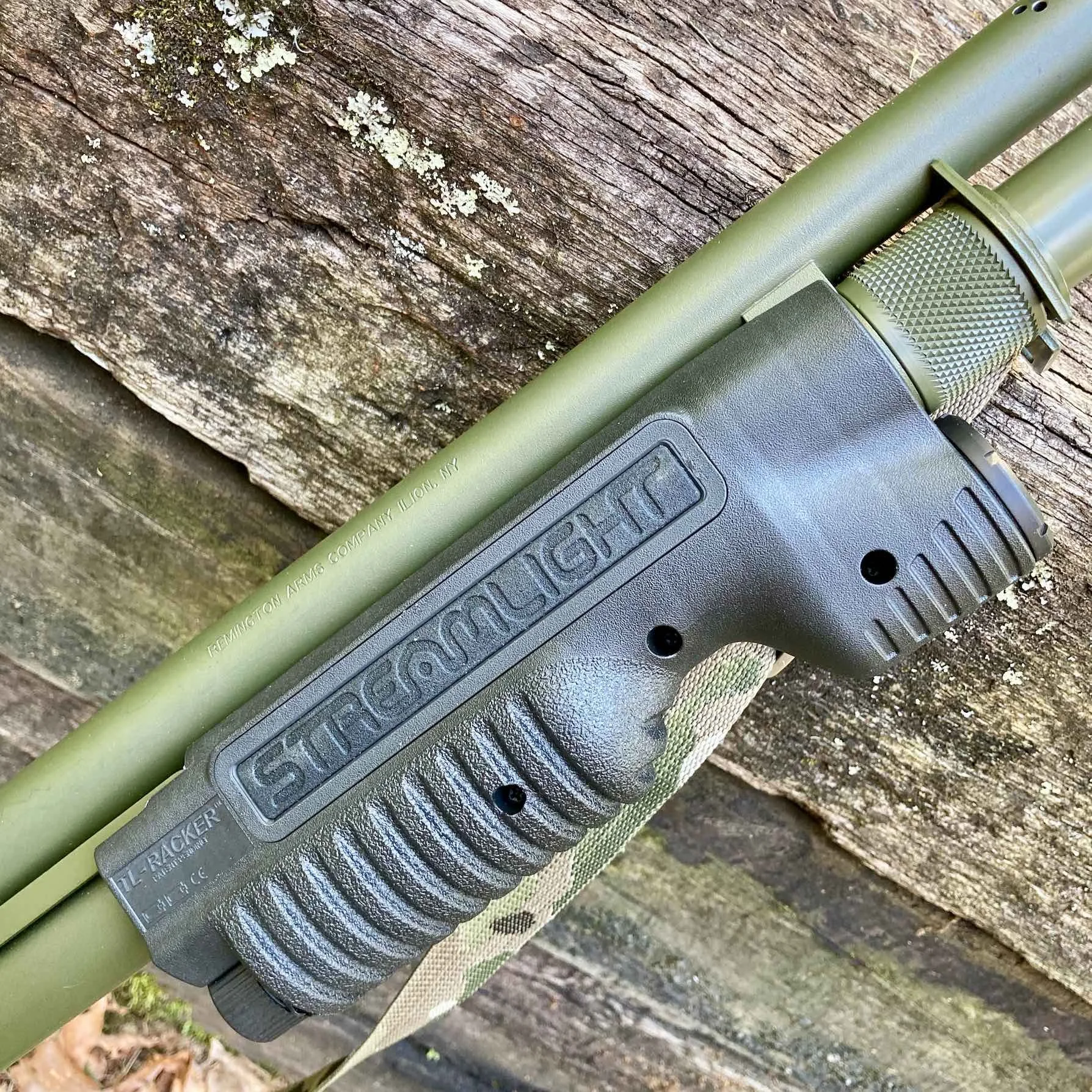
While the TL-Racker might not be as bombproof rugged as the Surefire DSF-870, it has three big advantages. First, the TL-Racker is quite a bit lighter than the crazy heavy, pound-and-a-half Surefire. Second, the TL-Racker puts out a lot more light. Third, I greatly prefer the large, tape-style switch on the TL-Racker to the easily confused, multiple buttons on the Surefire. And finally, unlike the Surefire product, the Streamlight is still in production for the Remington 870 and Mossberg 500/590.
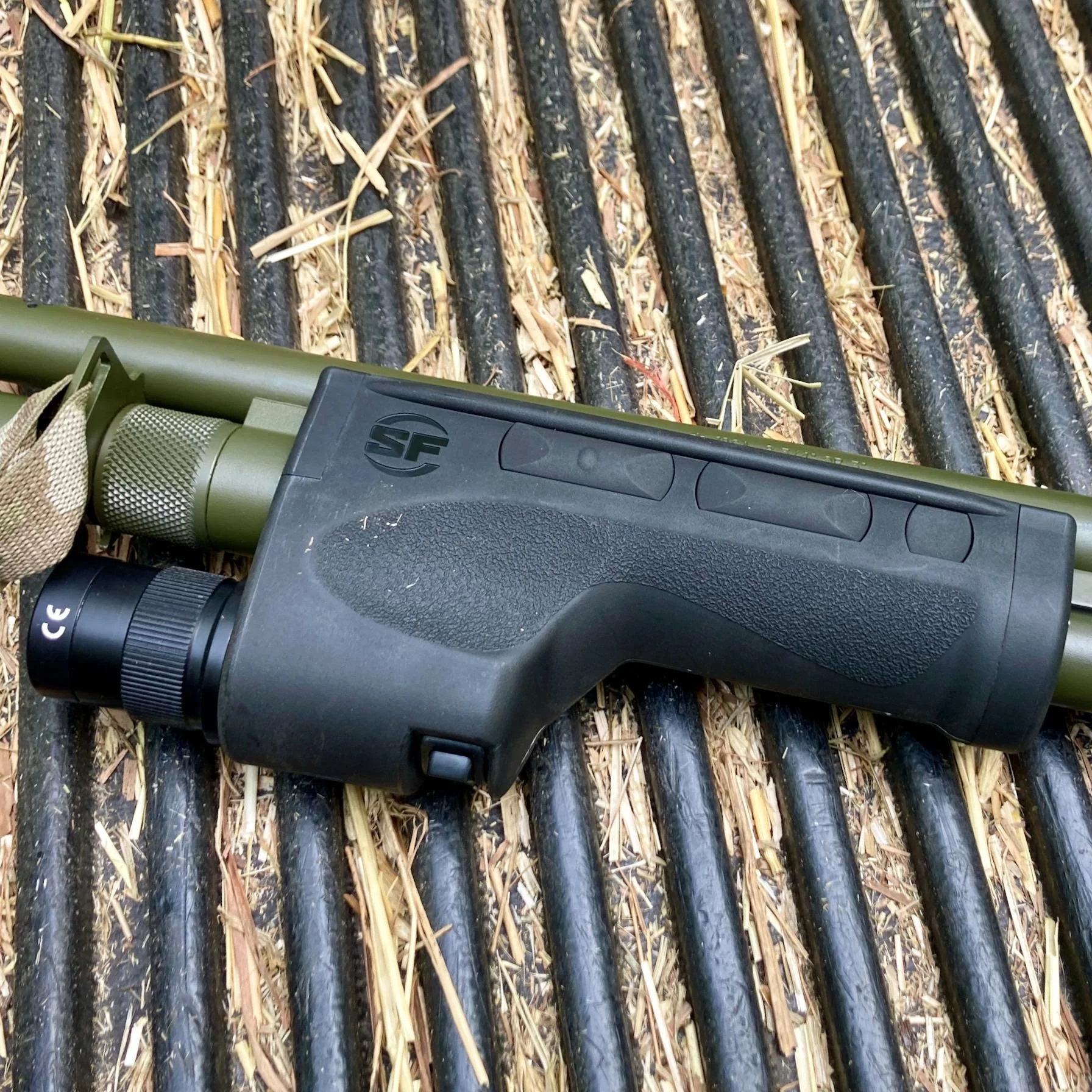
Note: if anyone is in the market for a gently used Surefire DSF-870, get in touch with me.
Another, newer option is the Nightstick shotgun forend for the Remington 870 and the Mossberg 500/590. It looks fairly bulky, but I’m willing to give it a shot. I’ve reached out to Nightstick to see if they’ll provide one. Frankly, I don’t think anyone has really nailed the integrated forend light, and it doesn’t seem like anyone has a ton of interest in doing so. If anyone is listening, smaller, slimmer, and lighter, please!
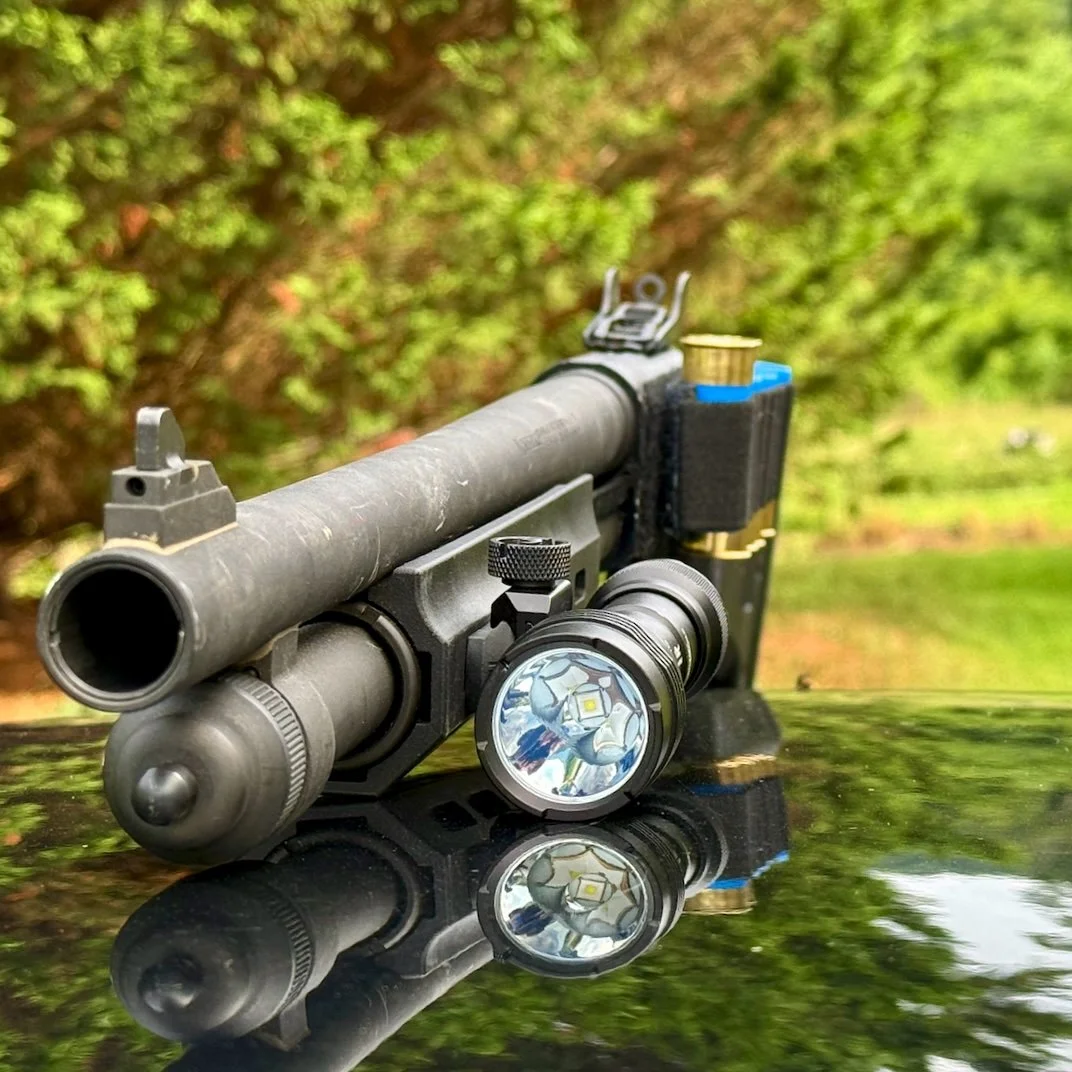
This Streamlight Pro-Tac is bulky, not super elegant, and won’t get you any followers on Instagram…but it would absolutely work.
The second option is a forend with MLOK slots that allow you to mount a regular, rifle-mounted light like the Surefire Scout or Streamlight ProTac HL-X. The Mossberg 590 I am using for these photos has such a forend. So does the Magpul MOE forend. I like the way this forend feels, but it is plastic (as is the Mossberg’s OEM MLOK forend). I have experienced a light tearing itself out of the plastic, and am not crazy about it as a result. But for home defense duty it is probably fine.
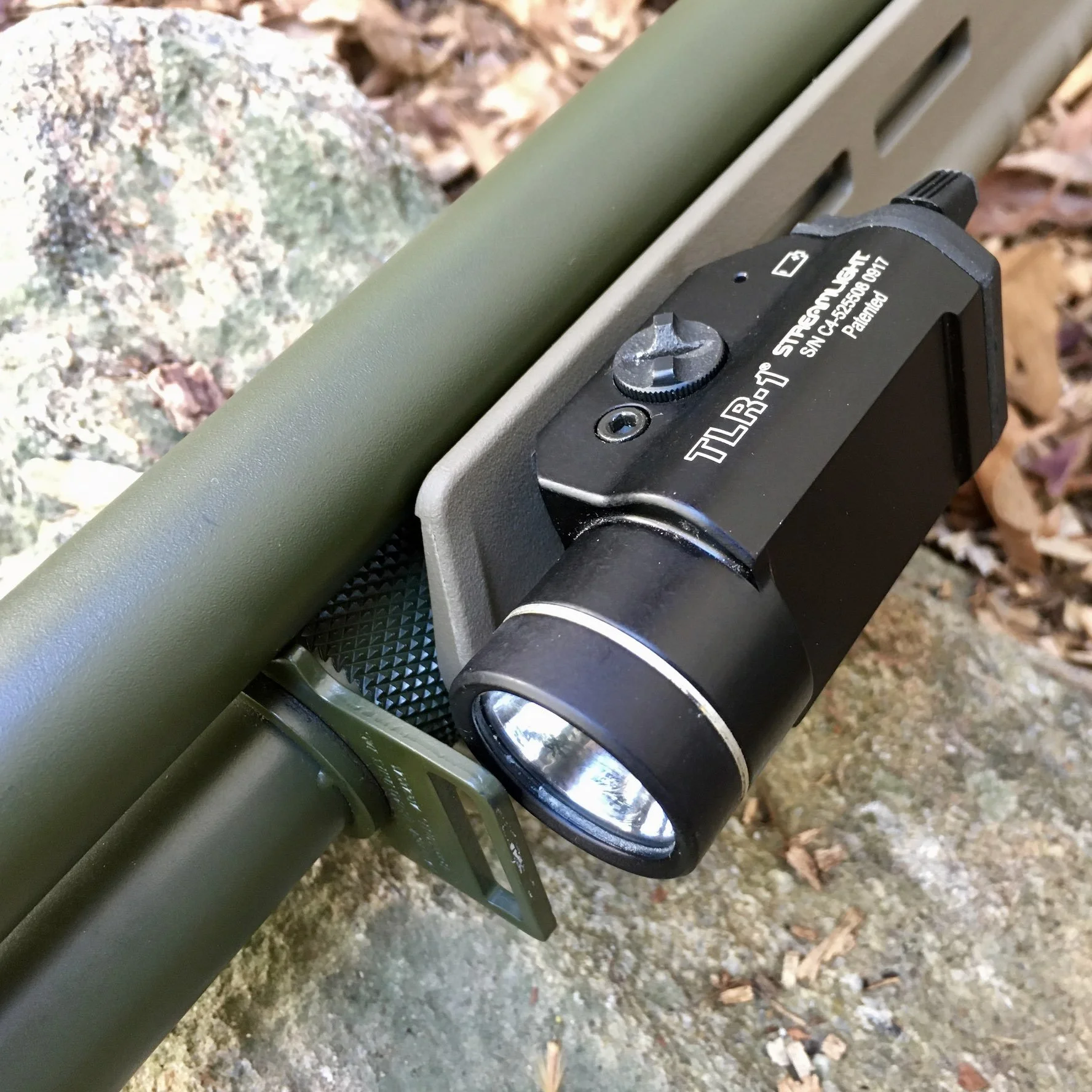
A Streamlight TLR-1 mounted to a Magpul MOE forend. Note that the sling attachment blocks the light; be aware of problems like this as you build your defensive shotgun and try to anticipate them before you sink money into accessories.
One thing to avoid on pump shotguns is a barrel clamp light mount. These mount the light to the barrel/magazine tube, and run a cable back to the forend. This is a huge complication. The cable is likely to get pulled free when working the action, or snagged on something as the gun is retrieved. I really don’t like this setup at all.
Third Priority: Sights & Optics
You must be able to fire your shotgun accurately. I put sights and optics at a “medium” priority because just about all shotguns come with some sort of workable sighting setup. Though they are certainly nice, you don’t need a fancy optic with co-witnessed ghost rings to be effective with a shotgun. For decades armed Citizens have defended themselves well with simple bead-sighted shotguns. If you want to improve your shotgun’s capability, however, sights/optics would be my next line of effort.
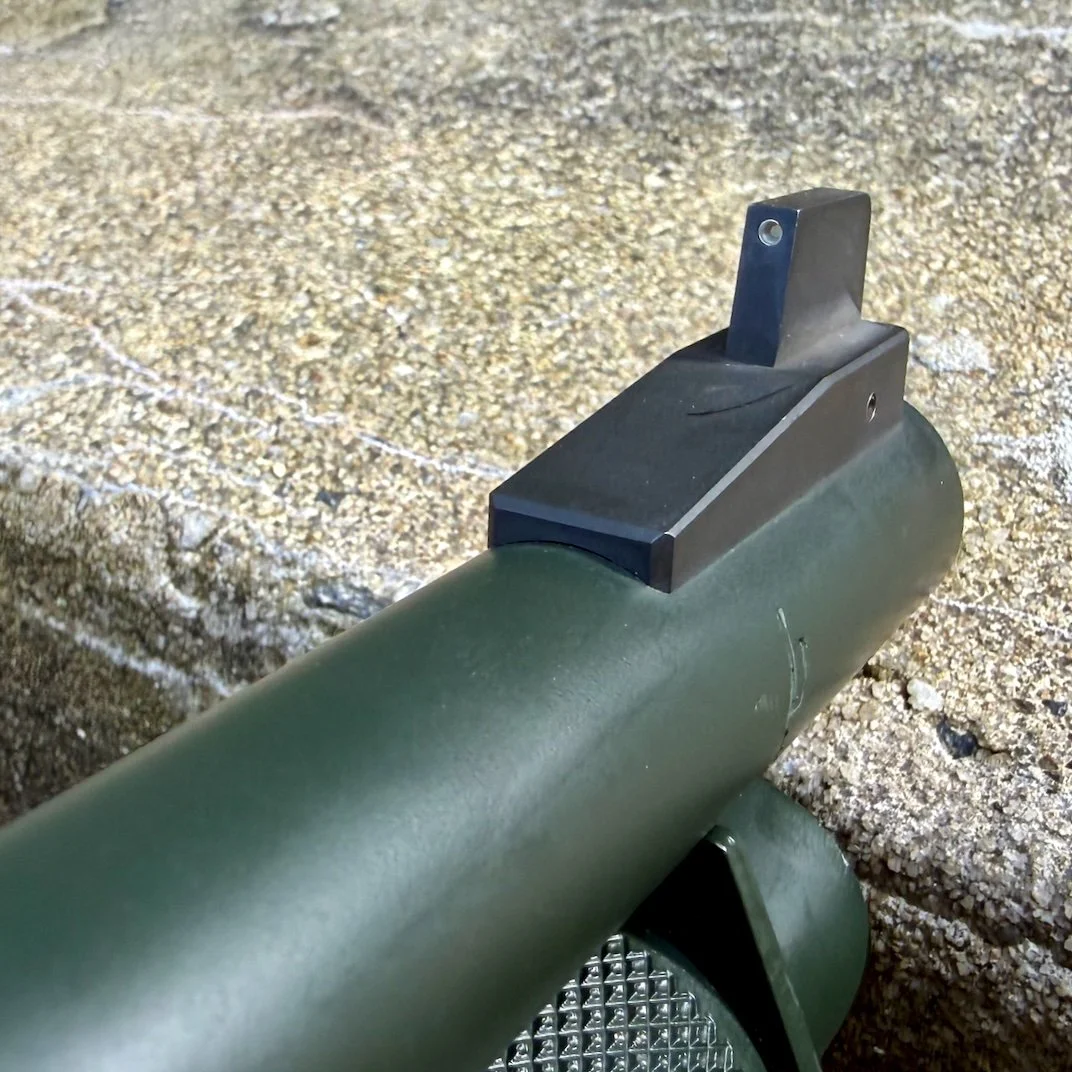
The front Trak-Lock sight on my Remington 870. This was a custom addition and costs quite a bit. If you have a bead on a pedestal, the utility of this addition for home defense is debatable. But if you like tinkering with your guns like I do, this is a really cool set of sights.
Bead Sights: The vast majority of shotguns out there come with a a simple bead. Bead sights don’t get much credit but they worked for Citizens, cops, and soldiers for a long time. They can and will work! Remington 870s typically come with a bead mounted on a pedestal. These tend to work pretty well. Mossberg mounts the beads on 500s and Maverick 88s directly to the barrel. These aren’t ideal because shots tend to hit high. Raising the bead some will fix this. The cheapest and simplest fix is to replace the bead with a taller one, like the Highball Front Bead from Defender Tactical. For about $20 your Mossberg shotgun will no longer shoot high. XS Sights also offers an improved bead sight called the Big Dot Shotgun Bead that has a bright, tritium insert.
Beretta A300 and 1301: the good news with these guns is that they both come with ghost ring sights. The Beretta 1301 sights are superior to the A300s. Although the A300 sights are a decent ghost ring, they are fixed and non-adjustable, but I have yet to see on that didn’t shoot pretty close to point-of-aim.
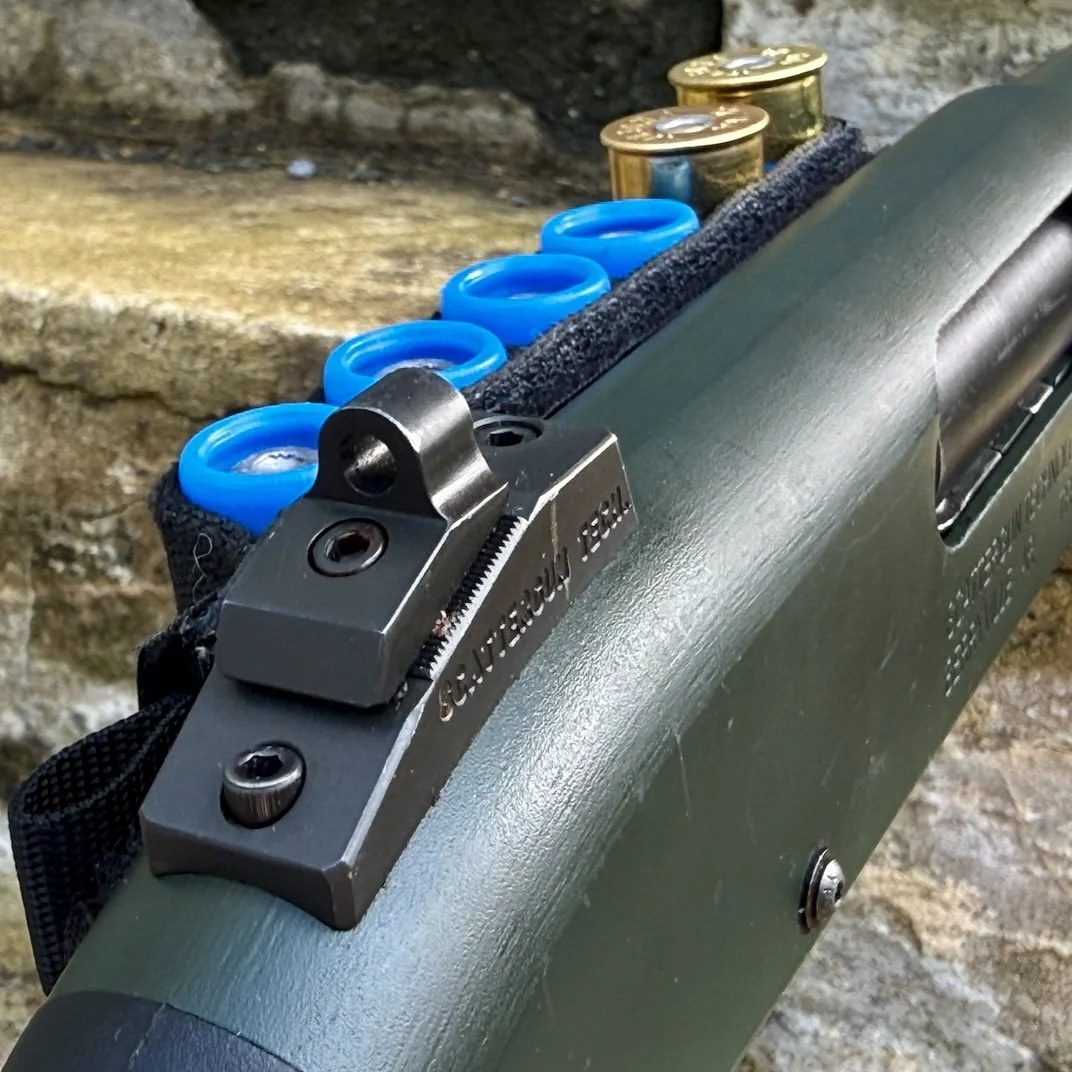
The rear Trak-Lock sight.
Optics: If you were a LEO or hunter, I would definitely recommend considering an optical sight. If you are a serious enthusiast, you will probably desire an optic of some sort, so I don’t need to convince you. I do think optics offer some benefits for cops, competitors, and hunters. First, you can be extremely precise with Flite Control buckshot or slugs. This only works if you work to KNOW your zero. I verify my shotgun/optic zero every chance I get, and regularly shoot it at a variety of ranges. Second, you can extend the range quite a bit. You can make hits at 75-100 yards with slugs…but it’s just way easier with an optic. If I had one shot to stop a bad guy at extended range with a slug, I would choose an optic over irons every single time.
Reality for defensive optics: they are super nice, but you don’t need an optic on a defensive shotgun. Even a “long distance” home defense shot of, say 20 yards/60 feet is still totally doable with a bead sight. It is certainly doable with a ghost ring or rifle sight setup. If you want an optic on your shotgun I believe you will enjoy it! I really like optics and tend to put one on just about all my guns, but don’t feel pressured into spending money on one just because someone on the internet said you need to. Cops used bead-sighted shotguns successfully for decades, and so can you. I would rather you spend that money on ammo and maybe a training class - those things will matter far more than a red dot
Upgraded Safeties: Probably A Good Idea
One thing my readers took me to task on in the last article was the upgraded safety switches from Vang Comp. Let’s talk about them.
Remington 870: This one makes such a big difference I think it is almost mandatory. It is called the Dome Head Safety. It is a very large, dome-shaped safety. When you bring your finger into the trigger guard, the first proximal portion of the trigger finger depresses the safety into the disengaged position. It is incredibly fast and very reliable. The safety I have installed on my 870 shown here is a similar product from Wilson Combat, but I like the smooth, Vang Comp button better.
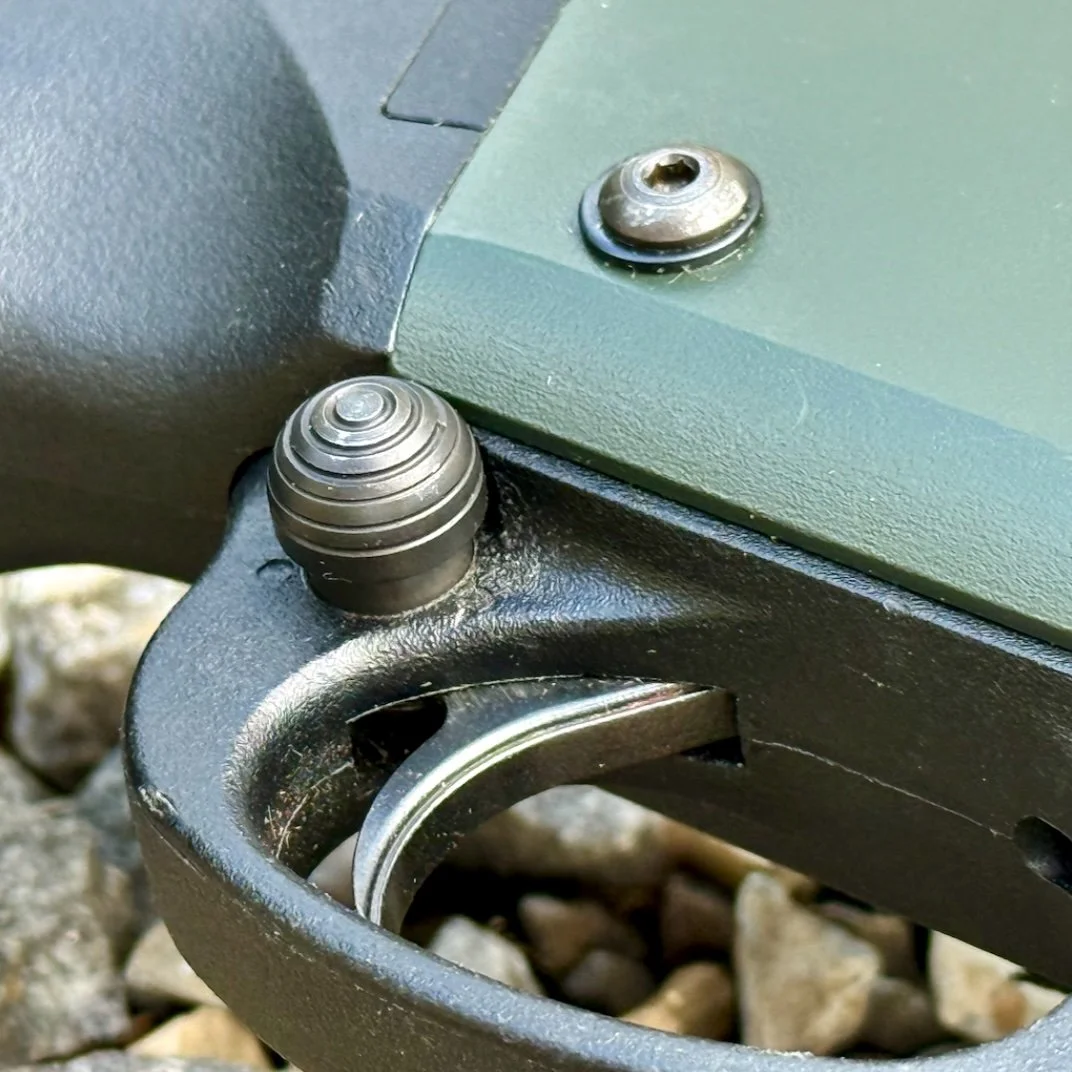
Mossberg 500/590: I have never had an issue with the safety of the 500/590. However, enough of you wrote in to tell me how great the Vang Comp Big Speed Safety is, I have ordered one myself. Several of you guys told me it made a big difference, so I’m going to give it a try. And it’s only $25, so it’s not a huge expense. I do think it might feel better, but I doubt it will change the way you actually operate the gun, like the upgraded Remington safety does. I will keep an open mind, though.
Optional: Ammunition Carriage
Getting pretty far down on the list of things you need on a defensive shotgun is extra ammunition. In fact, I’m just going to call this one totally optional. Reloading a shotgun is way, way down on the list of things you might have to do in a defensive situation. Even if you have multiple bad guys, “a five-shot shotgun is a five bad guy gun.” Despite the internet warnings to the contrary, you aren’t going to get into a protracted exchange of gunfire in a home defense situation.
If you go to a shotgun class, however… You will definitely need extra ammo on the gun in a class. Let’s face it, reloading is about fifty percent of what you do in a shotgun class. And I highly recommend you go to a good shotgun class. There are a couple options here.
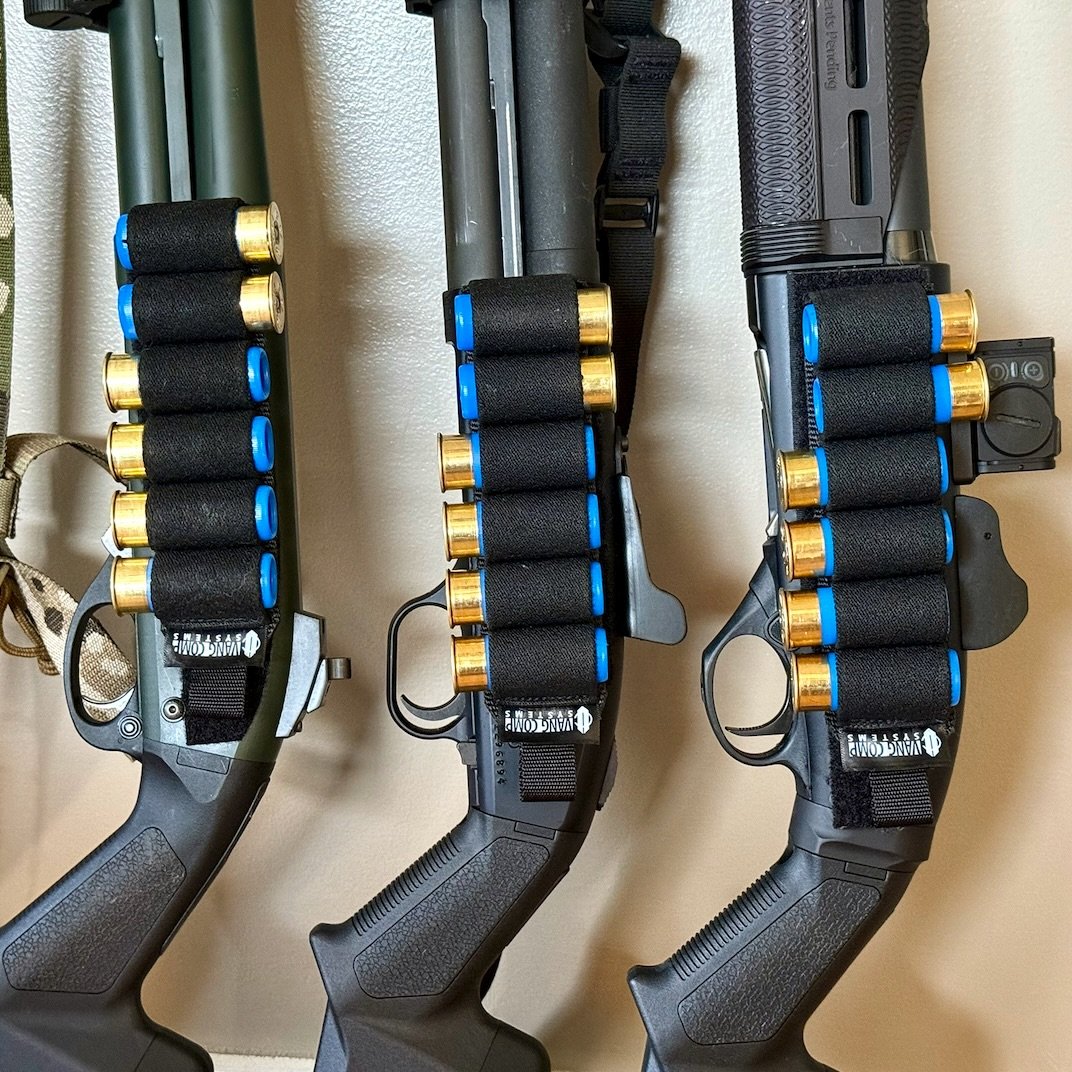
The first and best (in my opinion) is the Velcro-mounted shotgun card. These are essentially just a strip of rigid cloth with elastic loops. You adhere a piece of the hook portion of Velcro to the left side of your receiver. The shotgun card has the loop portion. Load up the elastic loops with shells, stick it to your receiver, and you’re good to go. when it runs dry, strip it off and slap another one on there. Even at a fairly high volume shotgun class you’ll probably be good with three or four shotgun cards. The cards from Vang Comp are, in my opinion, the best. The ESSTAC cards are pretty good, but won’t last as long as the Vangs. You can get four, five, and six shot cards from ESSTAC, but in my opinion the 6-shot card is the sweet spot.
There are also hardware shell carriers that perform a similar function, like the Aridus Quick Detach Carrier. This includes two parts; one mounts to your shotgun’s receiver. The other part holds shells, and you’ll probably want a few of these. I like Aridus products but I find this one a little overbuilt (and very expensive) for what it does. Quick Detach carriers are available for a number of shotguns. I would generally recommend staying away from the plastic sidesaddles of yesteryear. Initially they are tight and difficult to get shells out of; once they loosen up the will drop shells, and there is no way to tighten them back up.
It’s also worth pointing out that I don’t care for the butt-cuff shotgun shell holders. The alter the gun’s balance, so the butt is too heavy. They also put shells in an awkward place for fast reloading. If that’s all you can use for some reason, it’ll probably be fine. A receiver mounted shotgun card is definitely preferable, though.
Stuff You Absolutely DON’T Need
There are some shotgun accessories that you absolutely DO NOT NEED. They will make your gun heavier, bulkier, and possible compromise reliability. Some of these are stupid, and some of just unnecessary. Some of these are:
Heat shields: Just add weight. That’s it. They don’t really shield you from heat because they are metal and get hot, too. This doesn’t apply to things like the Aridus Imperium handguard that permit a thumb-over-bore grip. I’m referring more to the cheap, crappy ones like the Mossberg shown below.
Folding stocks: don’t improve the shotgun’s handling or accuracy in any meaningful way. They often make it far less comfortable to shoot though. The possible exception to this is the Chisel Machining folder, but I haven’t tried it so I don’t know. But also, it will double the cost of most new Remington and Mossberg shotguns.
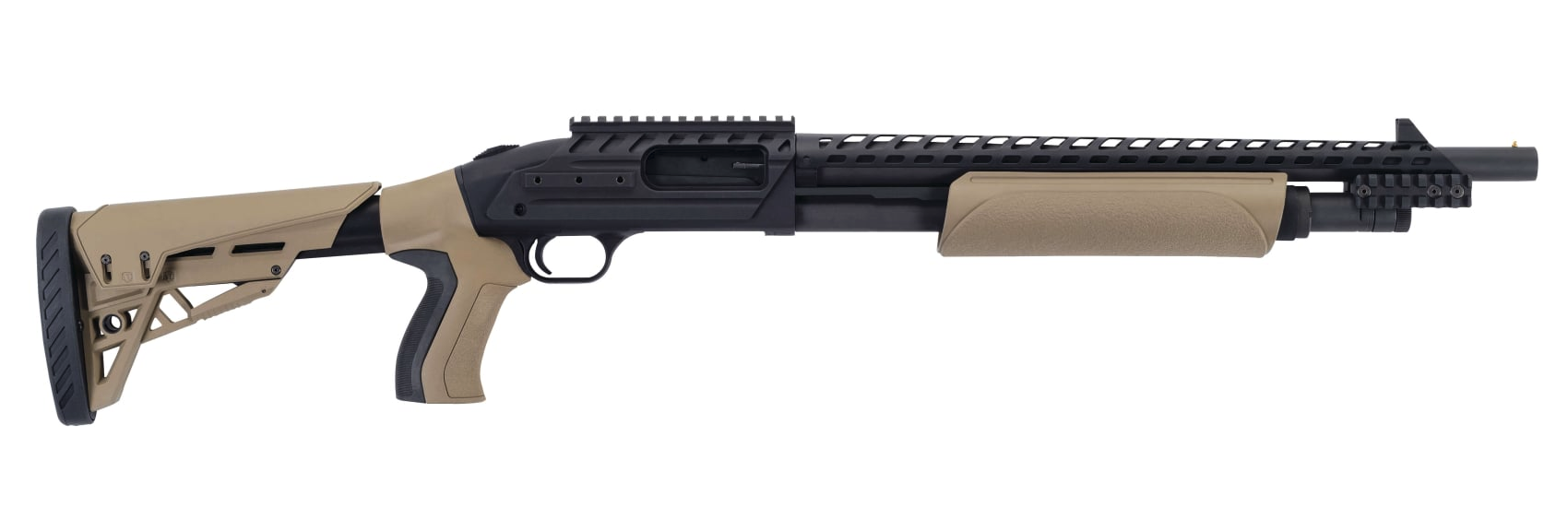
This ATI Tactical version of the Mossberg 500 is an almost perfect example of what no to do. This ugly thing is just designed to separate the unwitting from their money. If you bought this shotgun and got really into shooting shotguns, you’d replace every single feature on this piece of junk. Even the design of the stock makes it impossible to manipulate the safety as intended. Image courtesy of Mossberg.
Slings with ammo loops: Since I attended a Haught class, I don’t make fun of the shotgun bandolier any more. The sling with ammo loops is a different story. I don’t make fun of it, but I also don’t believe it’s a good option. It swings around, and the weight of the ammo makes it hard to keep the gun precisely on target.
“Tactical” choke tubes: I only have one shotgun with interchangeable choke tubes…and I don’t change the tube from the Improved Cylinder (IC). There are “tactical choke tubes that have sharp serrations for breaching and ports for reducing recoil. Mostly I suspect all these changes are for looks. Just make sure your IC tube is tight and leave it alone.
Extended magazine tubes: On the 20-inch guns these can get really heavy. If you have a five- or six-round shotgun, you are very well defended. Don’t make your shotgun overly end-heavy for a couple more rounds.
And That’s About It
Some accessories can definitely improve the handling and accuracy of a defensive shotgun. Bewared= the pull to constantly “upgrade” your gun, though. You don’t need a whole lot of stuff hanging off your shotgun for it to be extremely effective. Some accessories can definitely help, though. A shorter stock will make the gun handle better, and help you handle recoil better. If all you have is a bead sight, you may want to upgrade to better sights or an optic, but still, you’ll probably be OK with a bead.
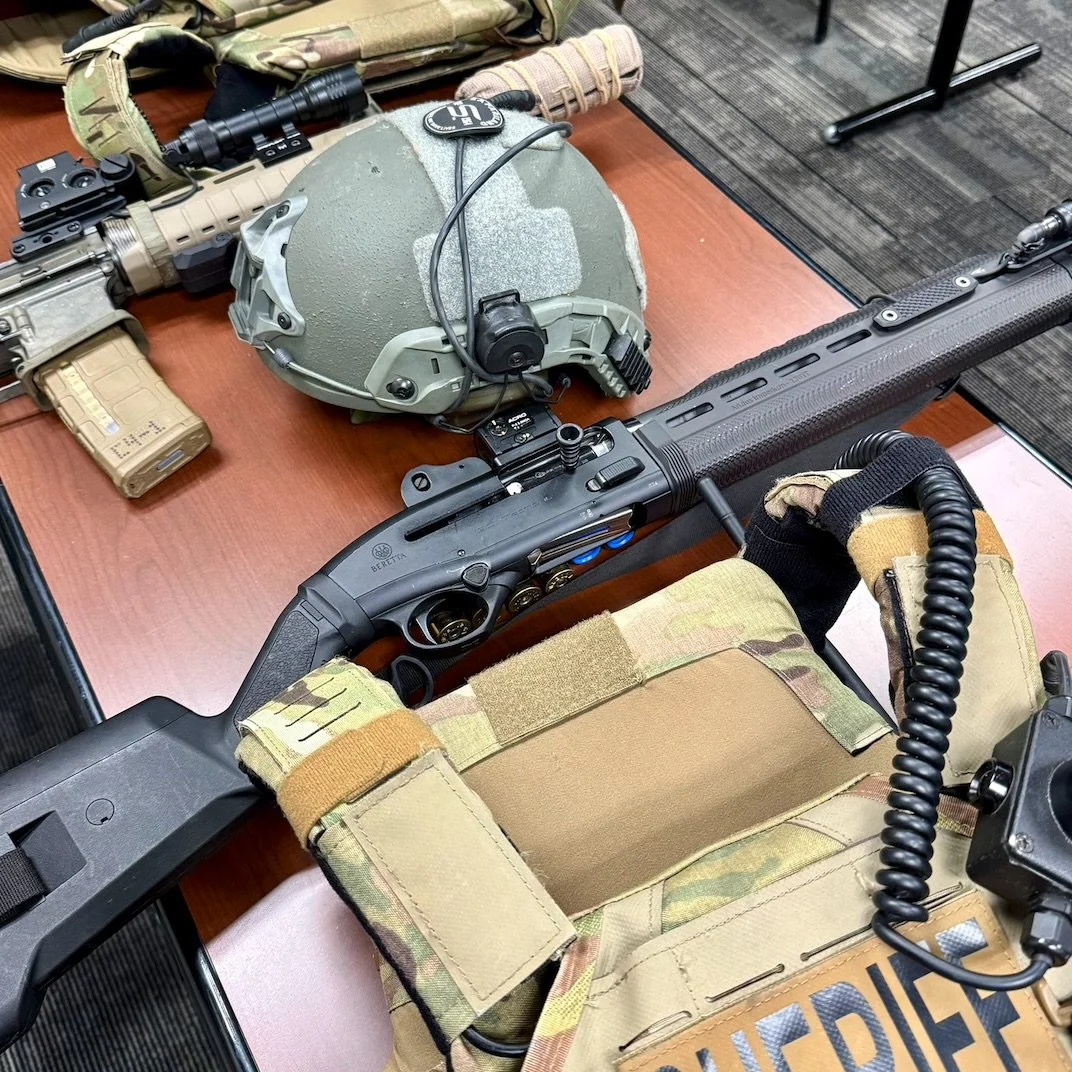
My 1301 is pretty tricked out, but I use it to go after bad guys. For home defense I’d be just fine with a much simpler shotgun setup.
A white light is pretty important for target identification, and I do recommend one. An improved safety button can help you manage the 870’s safety much more quickly and easily. If you want to throw some extra ammo on the gun, be my guest…but you’ll be just fine without it. And that’s about all you need. If you still want to spend money, spend it on a good shotgun class and some practice ammo and get really, really good. Being an awesome shooter will get you way further than having an awesome shotgun.