Defensive Shotgun Selection: Which is Right for You?
This article began as a quick piece on setting up your defensive shotgun. As I got into the part about picking out your shotgun, I realized I had a lot more to say on the topic than I thought, so I decided to break this into two articles. Today we are going to talk about defensive shotgun selection: which make and model is the right one for you? I will try to give you all the ins and outs as I see them. If you’re in the market for a social shotgun, my hope is that this helps you make the best decision possible for your situation.

This article contains affiliate links. Using these links gives us a small commission but costs you nothing. Please consider using our Amazon link to support this blog.
Bottom line up front: I won’t make you read the whole thing. My preferences, in descending order, are as follows: Beretta 1301 Tactical, Beretta A300 Ultima Patrol, Mossberg 590/500, Remington 870. Read on to find out why!
The Shotgun: Makes, Models, and Actions
There are four mainstay shotguns for defensive purposes, two pumps and two semis. The two pumps are the Mossberg 500 or 590 and the Remington 870, and the two semi-autos are the Beretta A300 Ultima Patrol and the 1301 Tactical.
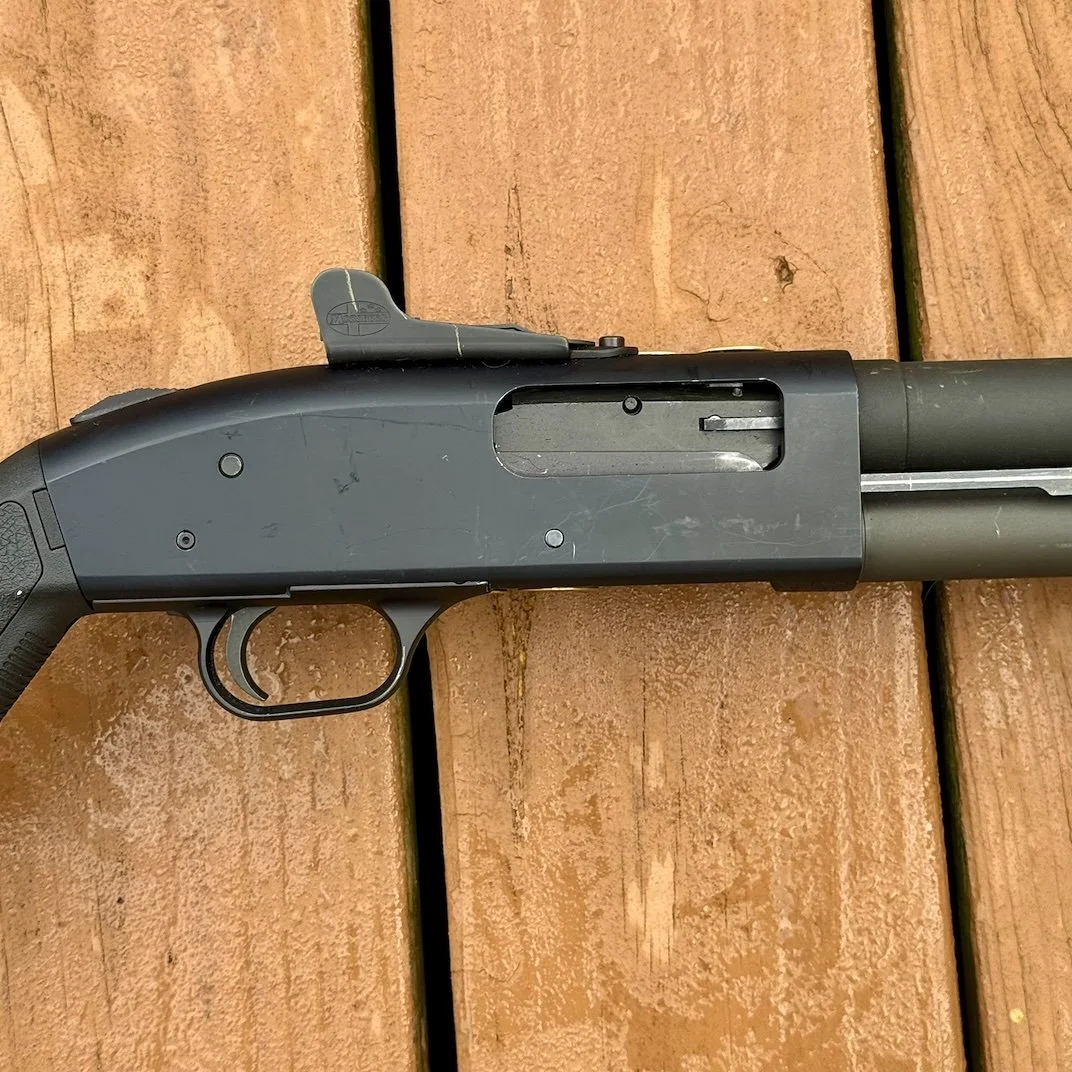
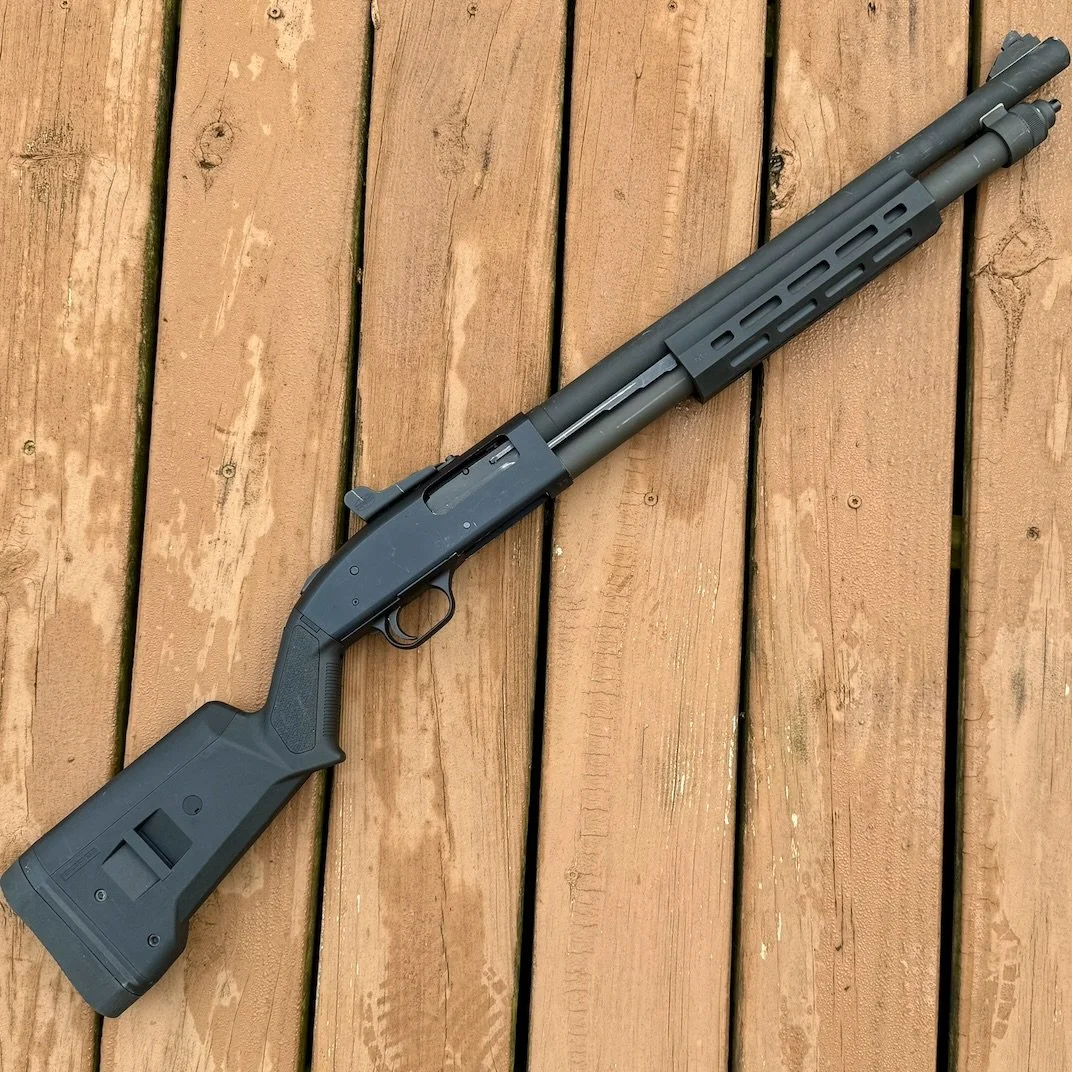
The Mossberg 590.
That being said, there are plenty of other good shotguns out there. If you have something else it can certainly work for you! Mossberg makes some excellent semi-auto guns, as well as the budget Maverick series of shotguns. Benelli makes outstanding shotguns, and even some of the Turkish import shotguns can be good home defenders. Unfortunately none of these shotguns are going to enjoy anywhere near the aftermarket support of the “Big Four.”
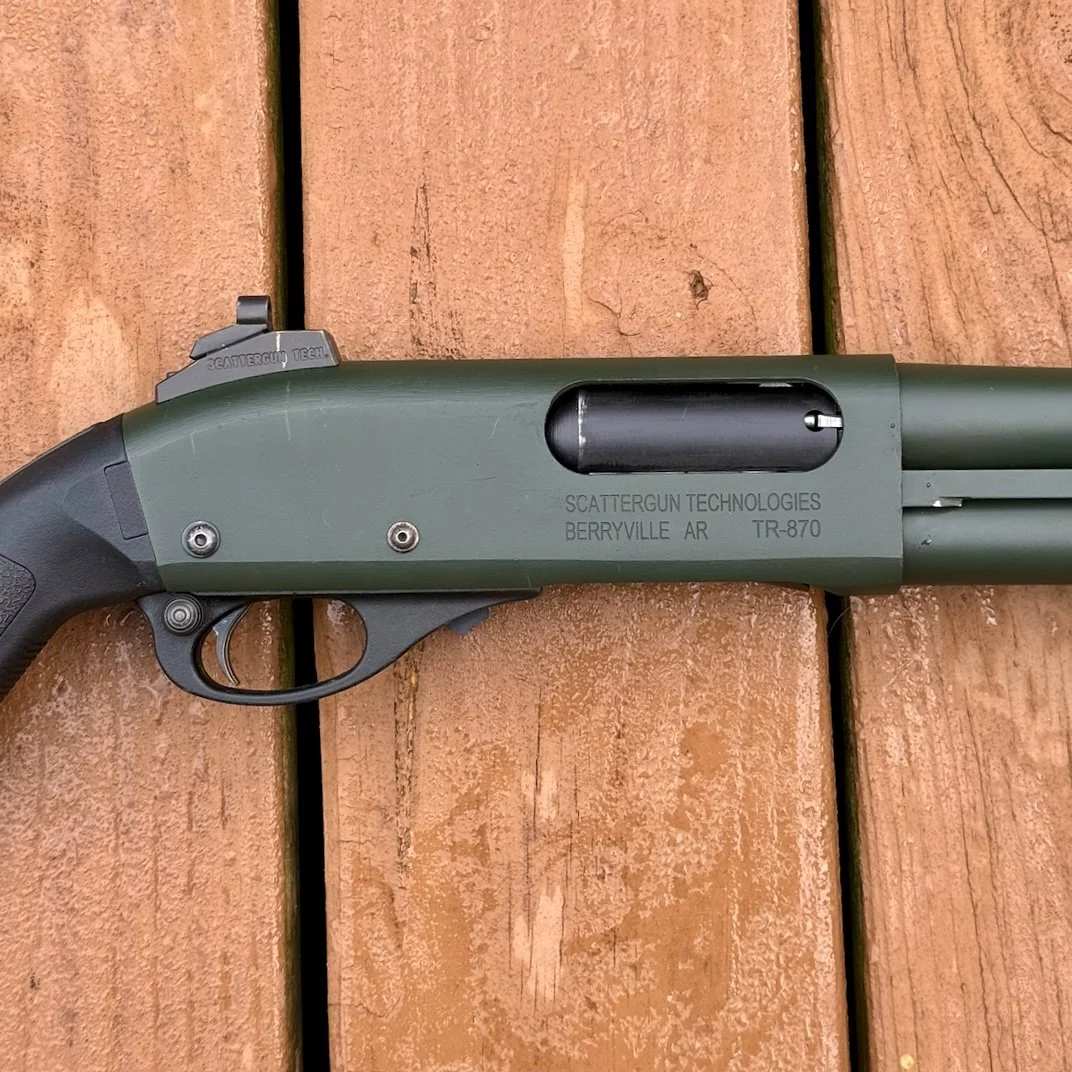
The Remington 870. This one has had some custom work, but at its heart is still an 870.
Your first choice is pump or semiautomatic. Historically pump shotguns have been more reliable than semiautomatics. With the latest Beretta shotguns, this is no longer an issue. I never owned a semi before my 1301, but I have been nothing but pleased with its reliability - it will eat anything you want to throw in it. Unfortunately, it is also far more expensive than a pump shotgun, which is now the pump’s biggest benefit. You can get into a Mossberg or Remington pump shotgun for maybe half the price of a A300 and less than a third of the price of a 1301.
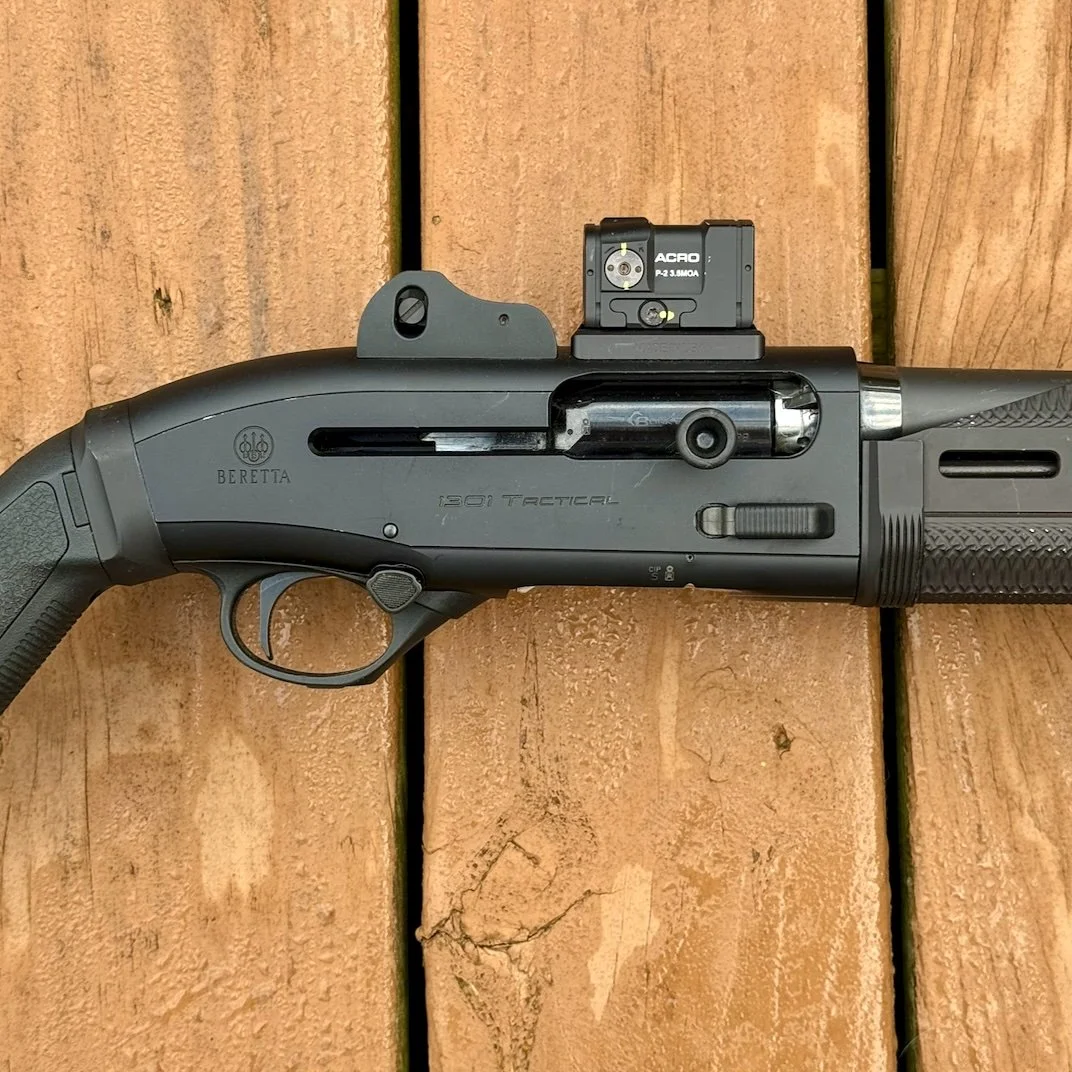
Semiautomatics have some pretty good advantages, too. there’s no reciprocating forend so it’s much easier to mount a light to the gun, and many more lights are available to you. The semiautomatic action absorbs some of the recoil, making them softer-shooting. There is also basically a zero chance of short-stroking the action.
My personal opinion: This decision is totally up to you, but I am sold on the Beretta 1301 for defensive use. I even run mine on duty. I have executed high-risk warrants with it, cleared buildings with it, and searched yards for supposed burglars with it. I literally trust it with my life. Why this over a good, old pump gun?
I think of the pump shotgun as the revolver of the long-gun world: You have to work a lot harder to run a pump shotgun than you do a good semi-auto. Carrying the analogy further, pumps are still perfectly viable in trained hands, but better options are available now. That said, semi-autos are much more expensive and seem a bit bulkier than pumps.
Chambering: 12 or 20 Gauge
Your next decision is 12 or 20 gauge. Many of you won’t even think twice about this. The 12 gauge is the gold standard, and for good reason. Shotgun shells in 12 gauge is some of the most common ammunition in the world. All of the shotguns listed below are primarily designed around 12 gauge, as are many accessories like shotshell holders. For most users, I would recommend just sticking with the good ol’ 12 gauge and mitigating recoil through a good stock design, ammo selection, and the push-pull technique (topics I will address in upcoming articles).
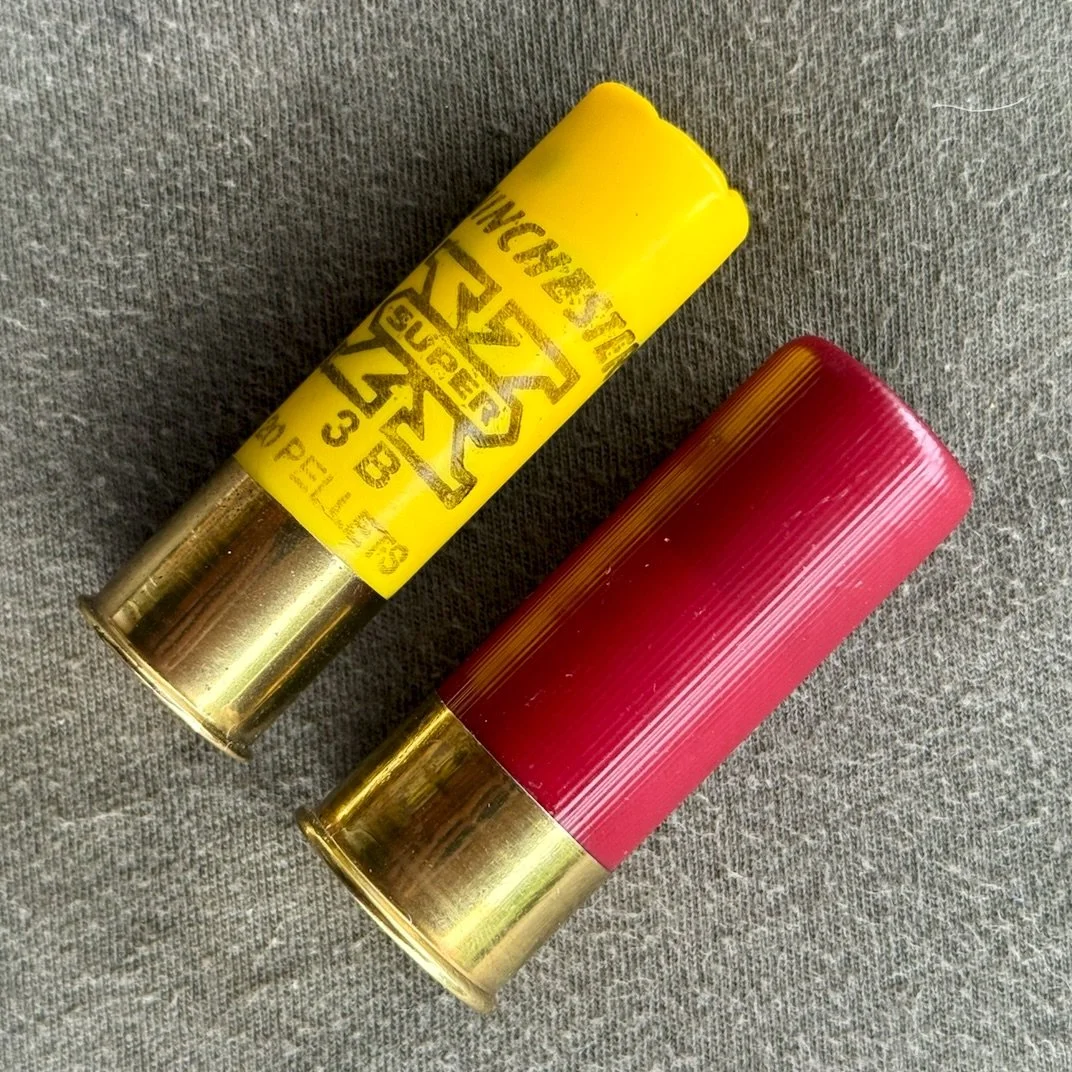
The 20 gauge has some merit if recoil is a huge consideration for you. The Mossberg 590 and the Beretta A300 Ultima Patrol are both available in 20 gauge versions. If recoil is your prime consideration, I would go with the Beretta because it will further reduce the recoil of the 20 gauge. Expect to have a slightly harder time finding ammo, especially premium defensive ammo. Though Federal makes a 20 gauge Flite Control load, I was unable to find it for sale online in preparation for this article.
Pump Shotgun Recommendations
Pump shotguns have been the mainstay of home defense for many decades. Until the last twenty or so years, they were also prolific in law enforcement use, and they still see limited military use. Pump shotguns are very simple and incredibly reliable. Because shotguns are low-pressure firearms, they will also last several lifetimes.
Mossberg 500/590
The Mossberg 500 and 590 both share the same basic design, and both will work well for home defense. Their differences are slight, but worth pointing out. The Mossberg 500 was designed as a sporting shotgun, but one that was exceptionally well adapted to defensive use. The 590 was redesigned/upgraded specifically as a police/military/defensive arm. It has some upgraded small parts (i.e. metal trigger guard vs plastic). The barrel of the 590 is much heavier, adding weight, which some dislike. Personally, I’ve owned both and would be happy with either, and either will be incredibly reliable and durable.
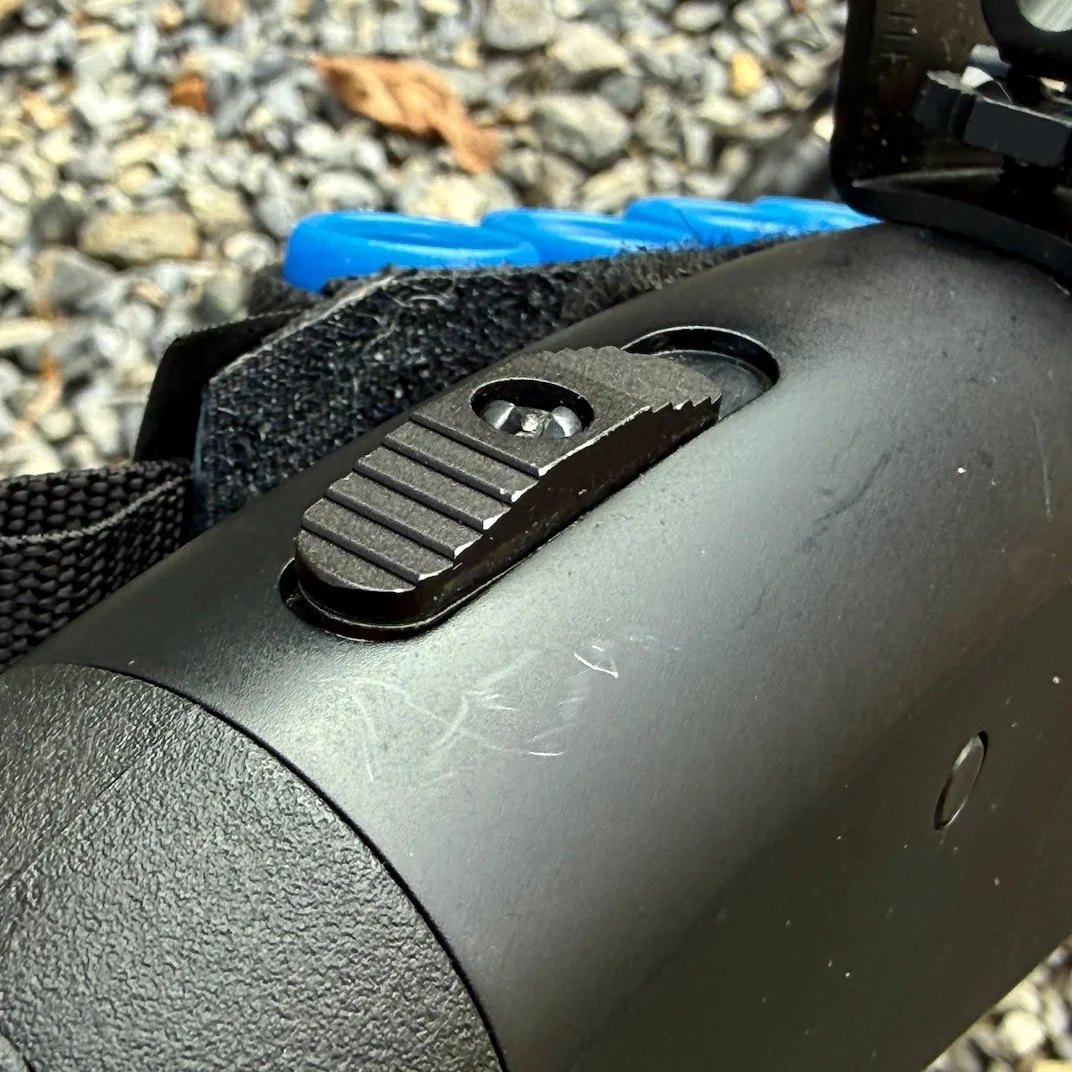
One huge benefit of the Mossbergs over everything else on this list is the positioning of the safety… at least for southpaws. Rather than a safety near the trigger guard, the safety is mounted on the back of the receiver. This makes it far more convenient for left-handed shooters than the Remington’s trigger-guard mounted safety (it’s in a great spot for correct-handed people, too). Why is this important? In a defensive situation, the firearms safety rules still apply; the gun should remain on safe until you are ready to fire. Being able to quickly disengage the safety is important.
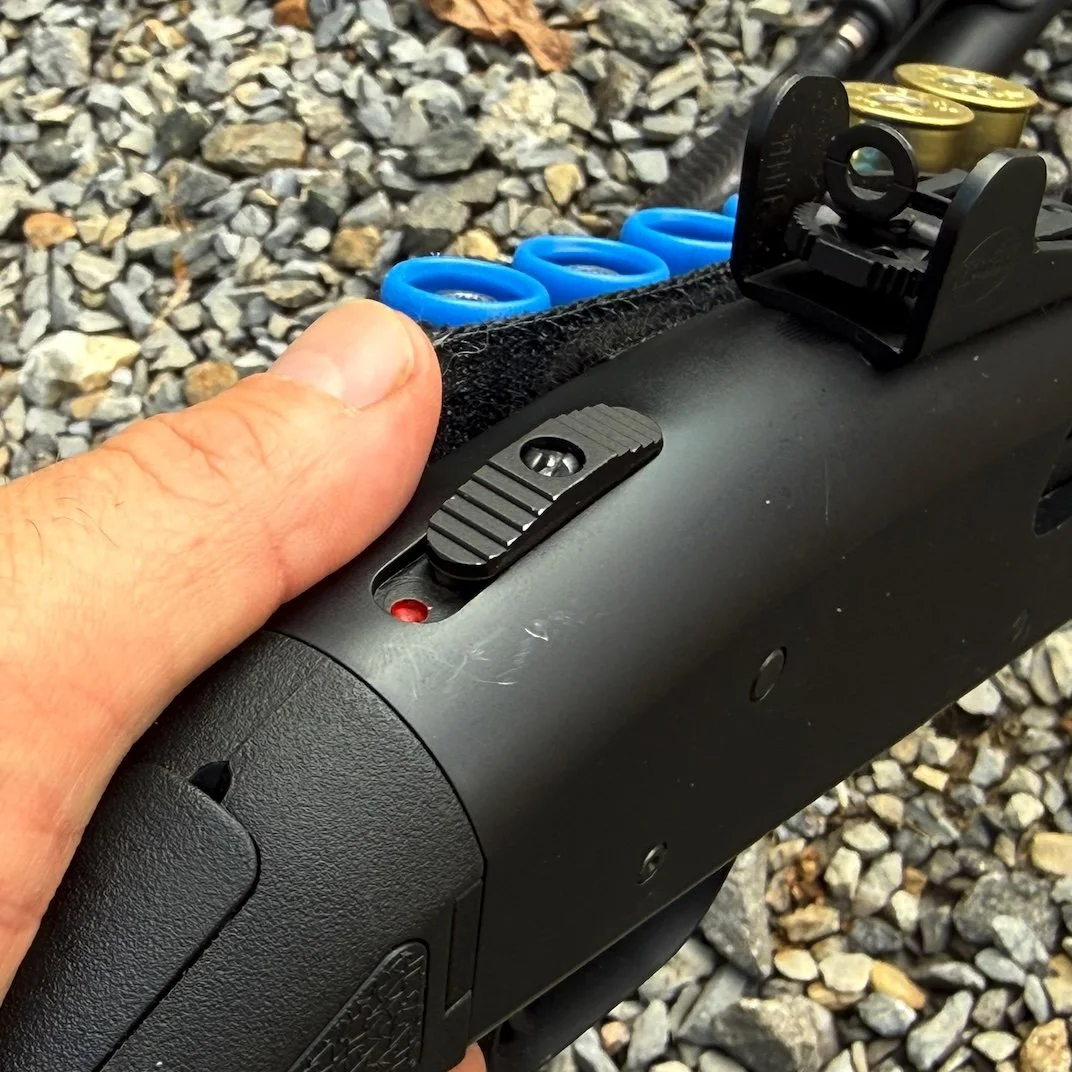
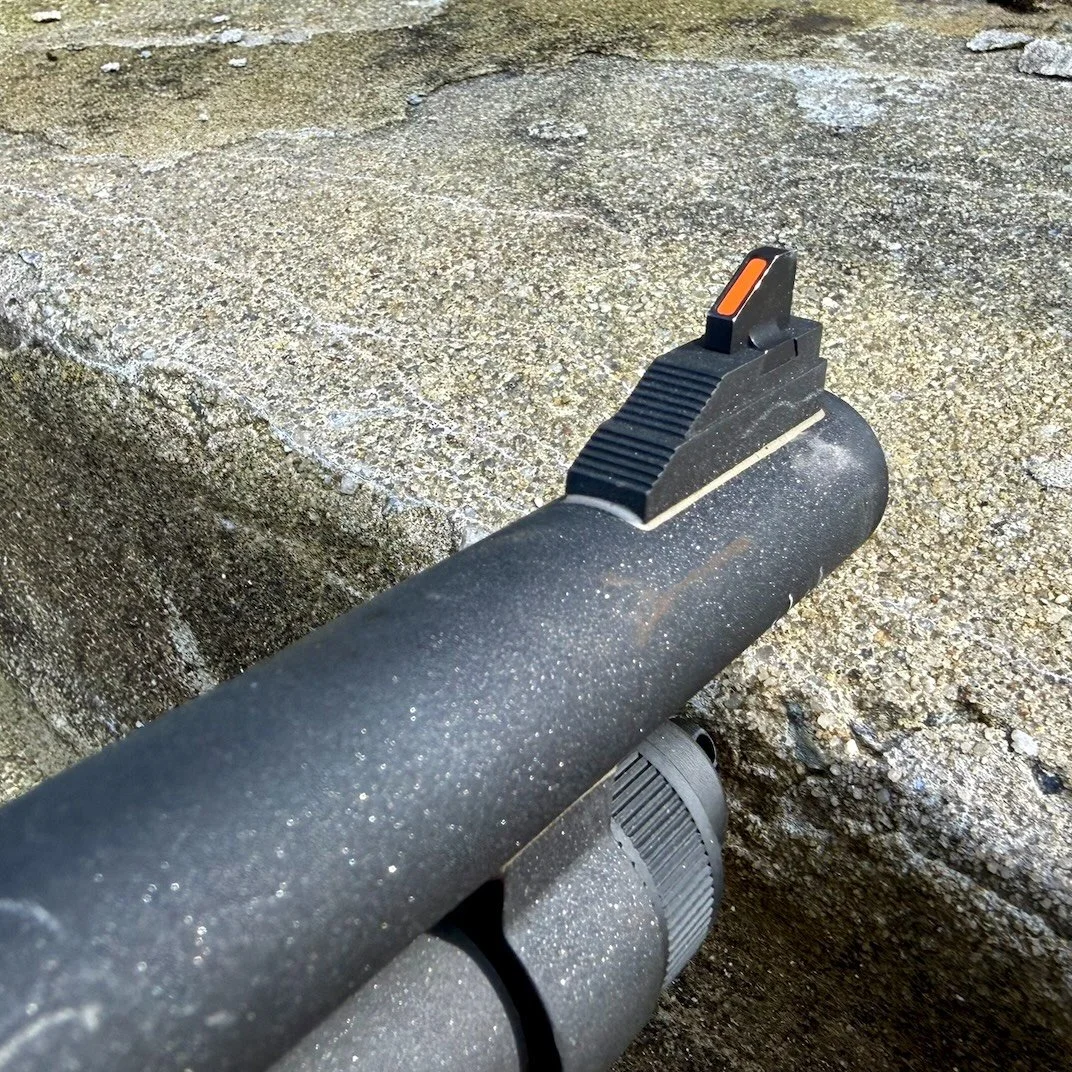
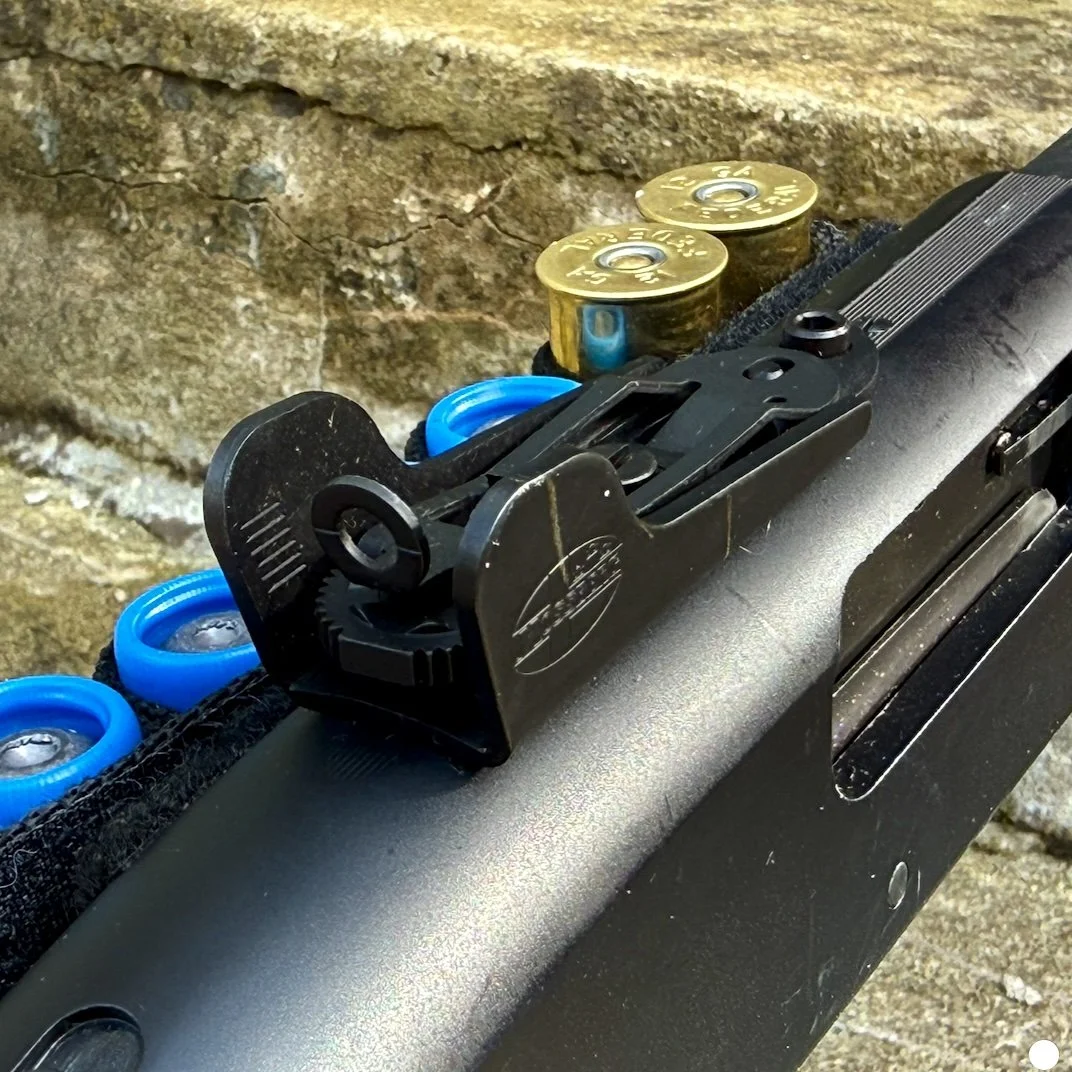
590 vs 500: There is one big, practical differentiator between these two shotguns. The 590 is available with high-quality sights, right from the factory. The 500 is usually equipped only with a bead front. Mossberg mounts the bead low, directly to the barrel. This causes shots to generally be quite high with Mossberg shotguns. The 590, on the other hand, can be had with very good sights - a very sturdy front blade and a fast-acquiring, adjustable ghost ring rear. Not only is it an excellent aiming device, I think these bulky rear sights look cool as hell.
Even if you’ve purchased a Mossberg 500, you aren’t out of luck. All Mossberg 500 and 590 shotguns come with a drilled and tapped receiver. This allows you to mount an optic to your 500 or 590, quickly, easily, and affordably. This is a great way to make up for the lack of iron sights on a shotgun, and I’ll talk about it more in the next article on accessorizing your defensive shotgun.
Honorable Mention: Maverick 88
The Maverick 88 is Mossberg’s budget line. A quick Gunbroker search shows them selling around $250 for the 18-inch, 5+1 model. These shotguns are tough and reliable, but lack some features of the 500/590. First, the only sights are a bead mounted directly to the barrel, which will does not promote good accuracy. Unlike the Mossberg 500/590, the receiver of the Maverick 88 is not drilled and tapped for an optic. This really limits your sighting options. You can have the receiver drilled and tapped, but this is going to increase the cost of the gun. There are a couple other options I’ll talk about in the next article in this series.
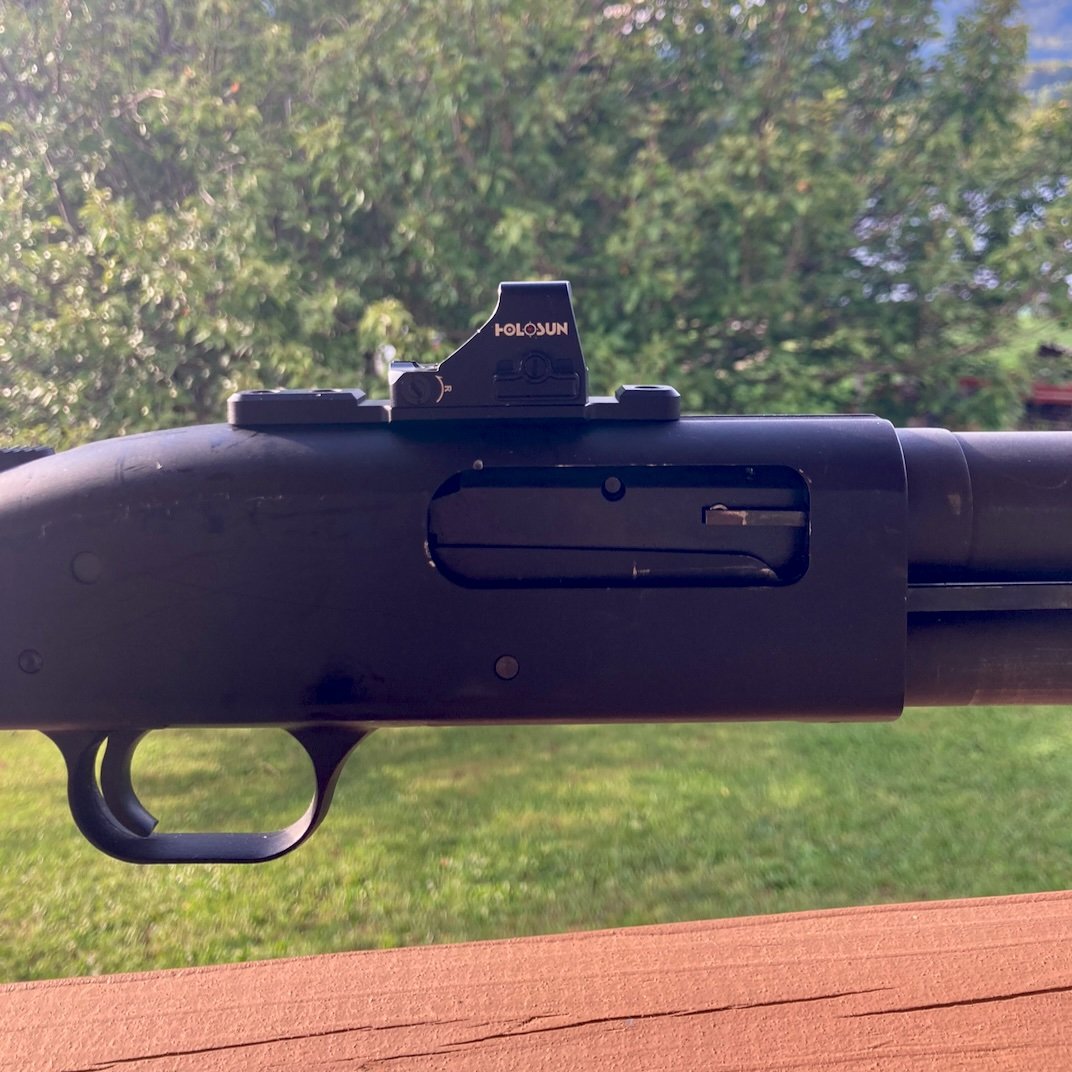
Mossberg 500 with an optic mounted to factory holes.
Next, the safety is not the tang-mounted safety found on the model 500/590. Instead it is a trigger guard safety. Fortunately it is on the front of the trigger guard, making it OK for right-handed shooters, but not lefties. Some aftermarket products will work on these guns, but support is much more limited than for the 500/590. If you are on a strict budget, you certainly won’t be defenseless with a Maverick 88. Just be aware that if you end up liking shotguns you may find yourself upgrading in the near future anyway.
Mossberg Features to Avoid
Mossberg makes good shotguns, but they definitely make some sub-optimal choices in the interest of separating you and your money. Here are some makes, models, and features to stay away from:
20-inch barreled versions. They hold a couple extra rounds in the full-length magazine tube, but in exchange are needlessly long and heavy. This goes for the 500, 590, and the Maverick 88.
Avoid like the plague the Maverick 88 with the top-folding stock; this thing will be very unpleasant to shoot. The top-folding stock makes storage easier, but we shouldn’t optimize the shotgun for storage, we should optimize it for shooting.
Likewise, avoid the pistol grip only (PGO) models, including the Shockwave. These are unpleasant to shoot and do not promote good accuracy. The only exception to this is if you find one at a good price and immediately plan to replace the pistol grip with a Magpul SGA stock - in which case, go ahead. Note: don’t put a stock on the Shockwave or you will be “manufacturing” a NFA short-barreled shotgun.
Avoid the detachable magazine-fed versions of these shotguns (this goes for the 870, too). The magazines are extremely bulky, expensive, and offer no real benefit over the standard magazine tube. Also, they are a brand-new version of a very mature, de-bugged design and I wouldn’t trust them nearly as much as a standard Mossberg shotgun.
The ATI Tactical models of the Mossberg 500 are hot garbage. I haven’t handled one, but can tell by looking at it Mossberg just let ATI attach a bunch of junk to it. The shell holders are in the wrong place for any meaningful training you will do. The pistol grip stock looks unpleasantly oversized, and will not work well with the 500’s tang safety. The forend does not have MLOK slots, but pic rails are mounted to the barrel/mag tube; a light should be mounted to the forend, making these sections of pic rail useless, and meaning you will need to replace that forend. The heat shield is junk, and since Mossberg receivers come drilled and tapped, the receiver mounted rail is just added bulk.
Remington 870
The Remington 870 is one of the most iconic firearms in America, along with the AR-15, the S&W revolver, and the Glock 19. It’s profile is instantly recognizable. The 870 was THE police long arm for many decades, it has served the military well, and is one of the most beloved sporting arms in the country. My history with the 870 goes back pretty far; I’ve owned a few of them. And when I lived in a very restrictive state, I bought a very nice 870 - the one you see here - that was heavily customized by Scattergun Technologies (now Wilson Combat). Years later I had it SBS’d and breathed new life into it.
In another lifetime, running around Central Asia as contractor I carried one extensively. I became known as “the shotgun guy” at that assignment…though for the life of me I can’t find a picture of myself carrying that 14” government-owned gun. I have a lot of love in my heart for the old 870.
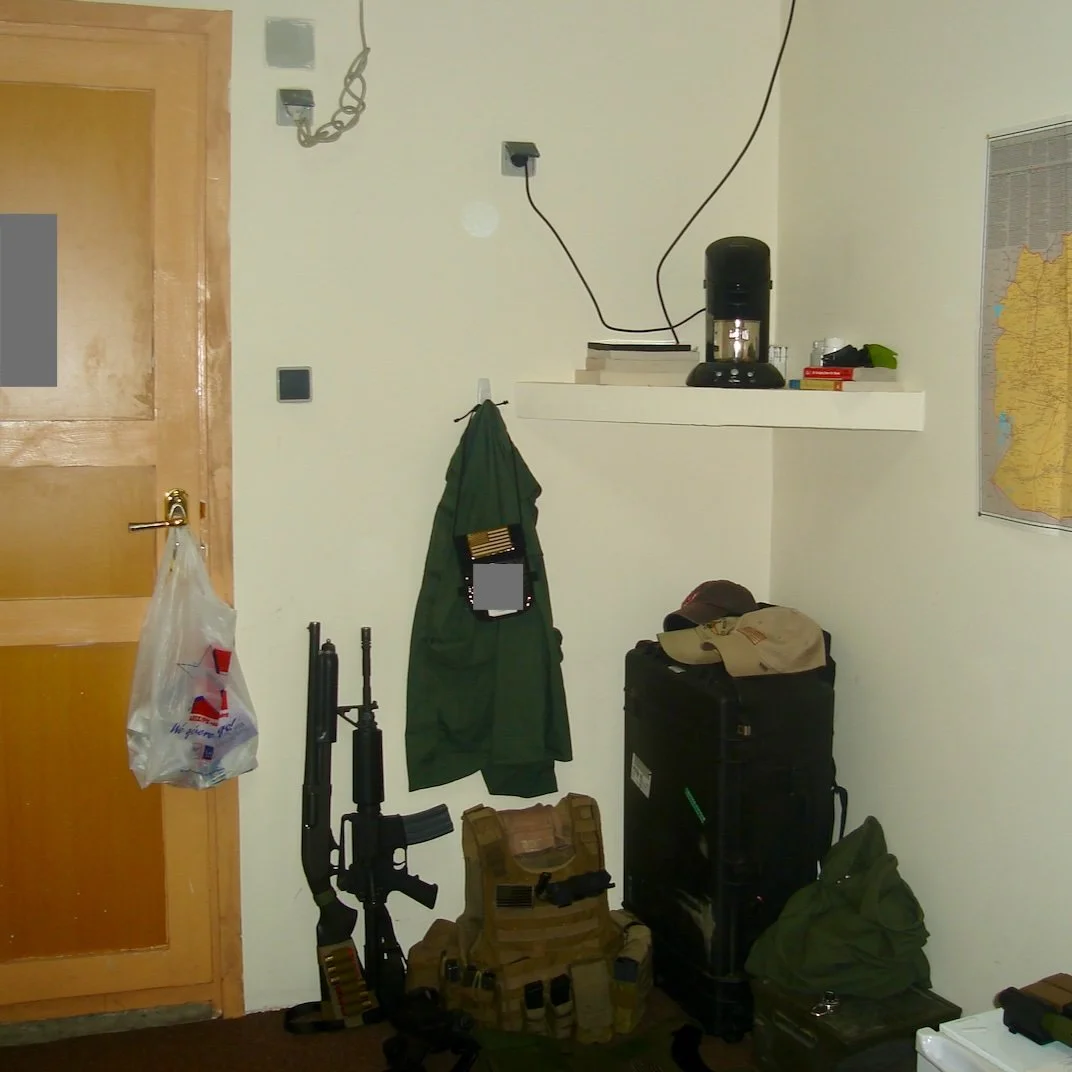
I couldn't find a picture of myself with the shotgun, but here's a picture of the gun, at least. When I checked into this assignment and was getting my initial weapons issue, I saw the rack of shotguns and asked about them. The armorer said, "you want one? I didn't ask because no one takes one." "Well hell yeah, I want one!" I really wish I'd taken some detailed photos of this gun; this was 2009-ish and I'm not even sure shotgun cards existed then as we know them now, hence the butt-cuff. I also tied a Turk's head around the pistol grip portion of the stock as a rear sling attachment point. I used this very basic Remington 870 a whole lot.
Pros of the Remington 870: The 870 is one of the most prolific shotguns in existence. Every imaginable modification and accessory is available for this shotgun, if it is available for anything. I personally think the 870 runs much more smoothly than the Mossberg family of shotguns. This is just personal opinion (and I have an exceptionally well broken-in 870) but the Mossberg shotguns just seem a bit less refined.
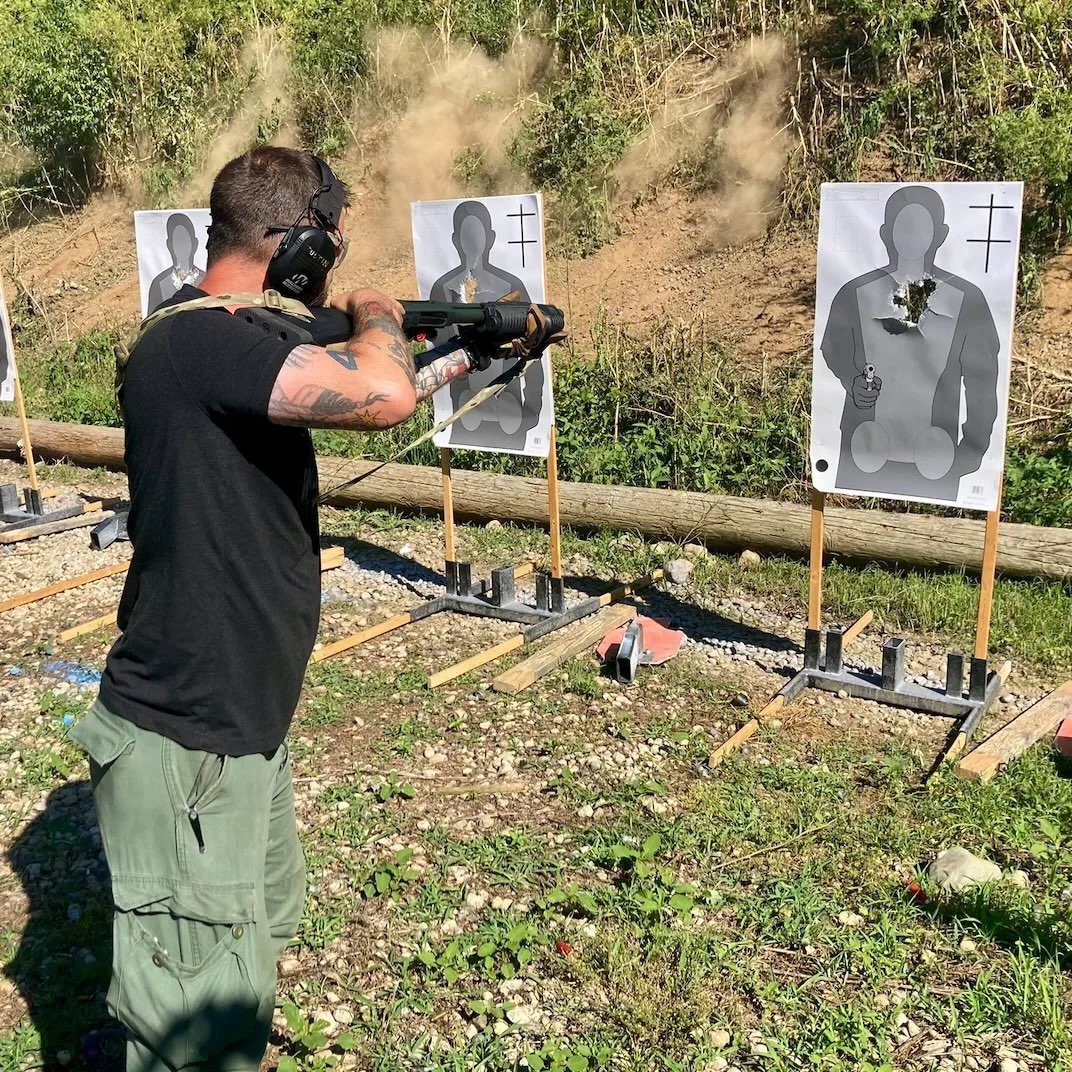
Cons of the Remington 870: All Mossberg shotguns come drilled and tapped, allowing easy mounting of optics to the top of the gun. Not all 870s do; in fact most do not. You may consider a bead sight to be perfectly reasonable, but as you age (as I have) you may come to see the value of an optic. You may also find that your shotgun does not hit point-of-aim with the bead; an optic offers an easy way to align point of aim with point of impact.
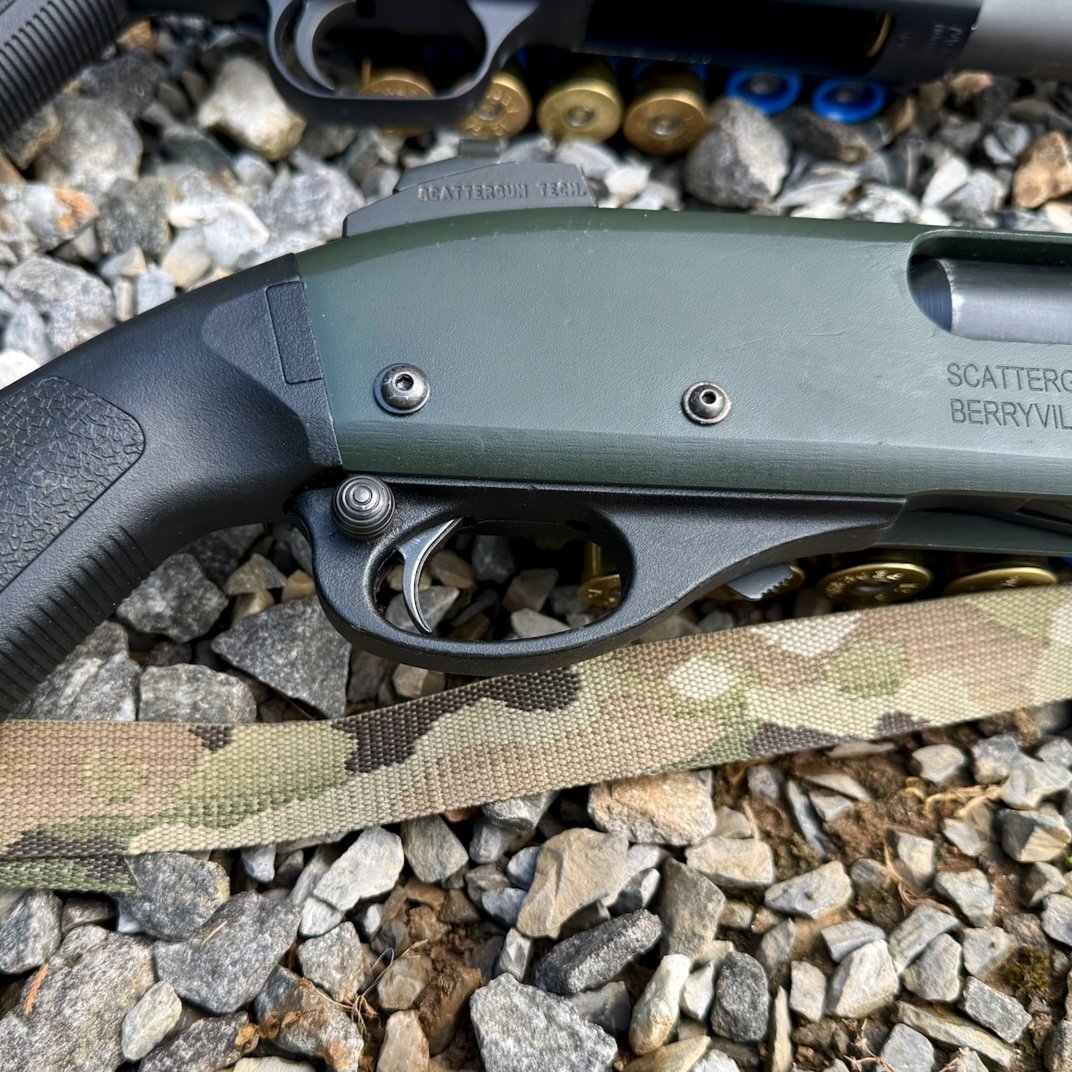
Another con of the 870 is the placement of the safety, behind the trigger guard. This makes it difficult to quickly disengage the safety. There are aftermarket answers to this that I will discuss in a future article, but it’s still sub-optimal. Be especially aware of this downside if you are lefthanded.
So…here’s the thing with Remington: I never thought I would write a shotgun article that had anything but favorable stuff to say about the Remington 870…but my how times change. If your heart is set on an 870, I recommend buying a used one. Remington has gone through various sales, bankruptcies, and changes of ownership in the last 25 years. Currently “Remington” shotguns are being manufactured, but by a completely different company, in a completely different facility. I have heard that quality on these guns is not what it used to be.
Additionally, Remington’s website doesn’t currently list any shotguns that are specifically intended or optimized for defensive use other than the Marine Magnum. With an 18.5-inch barrel this isn’t a terrible choice, but again, reviews on the quality of new 870s is not overwhelmingly positive.
If your heart is set on an 870, I would buy an older, used one. An old 870 Wingmaster or Police Magnum can be refurbished, upgraded, and turned into an incredible specimen. The low pressure of shotgun shells is part of the beauty of the shotgun. Though recoil will rattle off accessories, the shotgun itself will last virtually forever as long as it is maintained. Alternatively, consider buying a premium shotgun from the likes of Vang Comp; you will pay as much as you would for a semi-auto, but you’re virtually guaranteed to get an excellent shotgun.
Semi-Automatic Shotgun Recommendations
As I’ve said, I am a big fan of pump shotguns and I shoot them quite well. I’ve come to believe that semi-autos are the way to go, specifically the Beretta semi-autos. I’m not exactly an early adopter. Until late 2024 I didn’t even own a semi-automatic shotgun, but I came to see their utility after shooting a couple.
My friend Neil has a 1301. We’ve attended a few classes together and I’ve gotten to shoot it some. A couple deputies at my current job have 1301s and A300s. Shooting these really pushed me over the edge into buying a semi-automatic shotgun. Now it is one of the two guns I would have if I could only have two. The only two semi-automatic shotguns I would consider are the Beretta A300 Ultima Patrol and the 1301 Tactical. Let’s look at both.
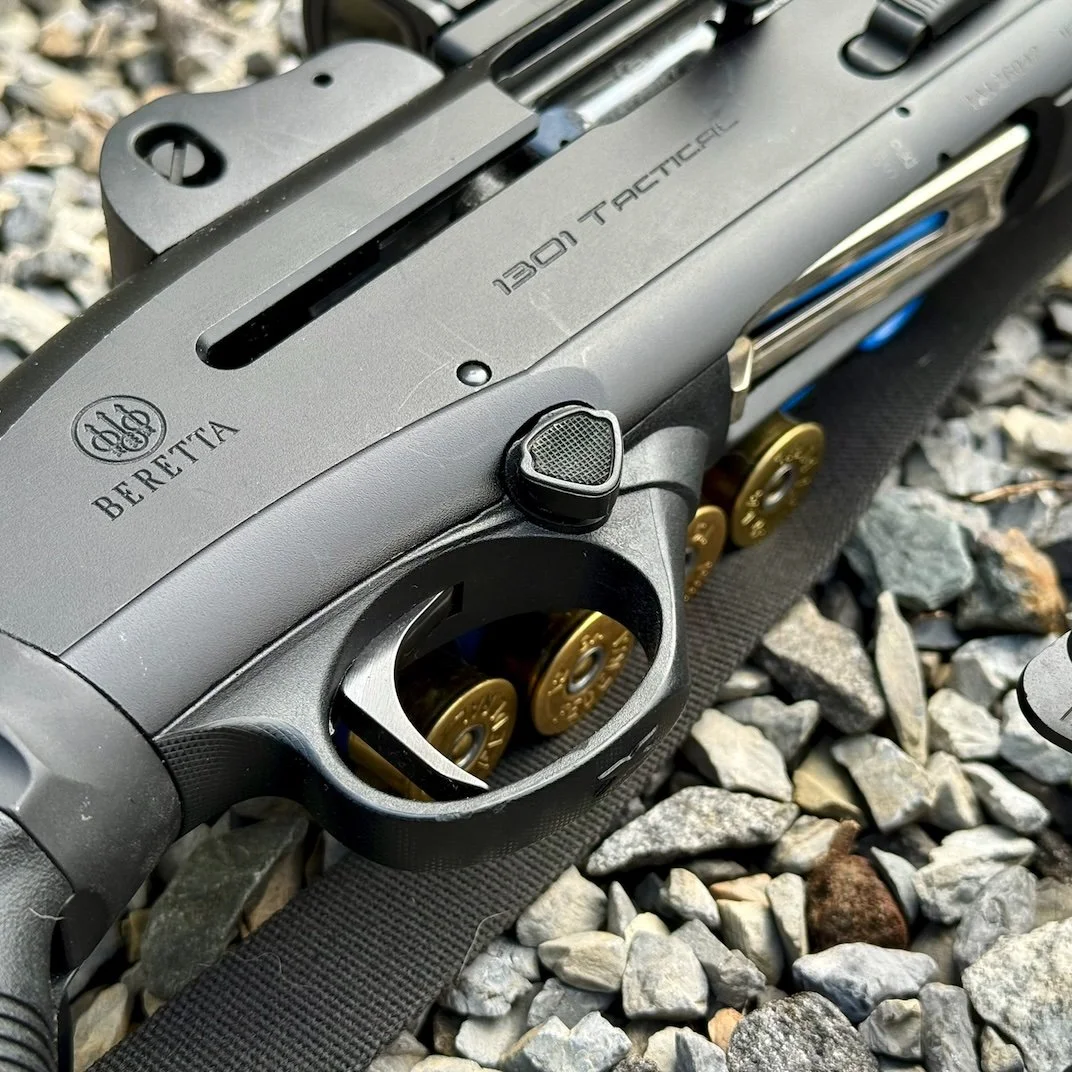
On important feature shared by both the 1301 and the A300 is the reversible safety. Both of these shotguns can be setup for left-handers. The placement of the safety is the same for both shotguns: fore of the trigger guard where it is easily indexed and permits a fast disengagement.
Beretta 1301 Tactical
The Beretta 1301 has become the dominant shotgun among defensive-oriented shooters. When I attended my first shotgun class several years ago, there were three semi-autos in the class, and two of those belonged to the instructors. When I attended the Haught’s class in 2024, I was one of just two people shooting a pump, and that trend has continued. Classes are now pretty much filled with 1301 shooters. And for good reason.
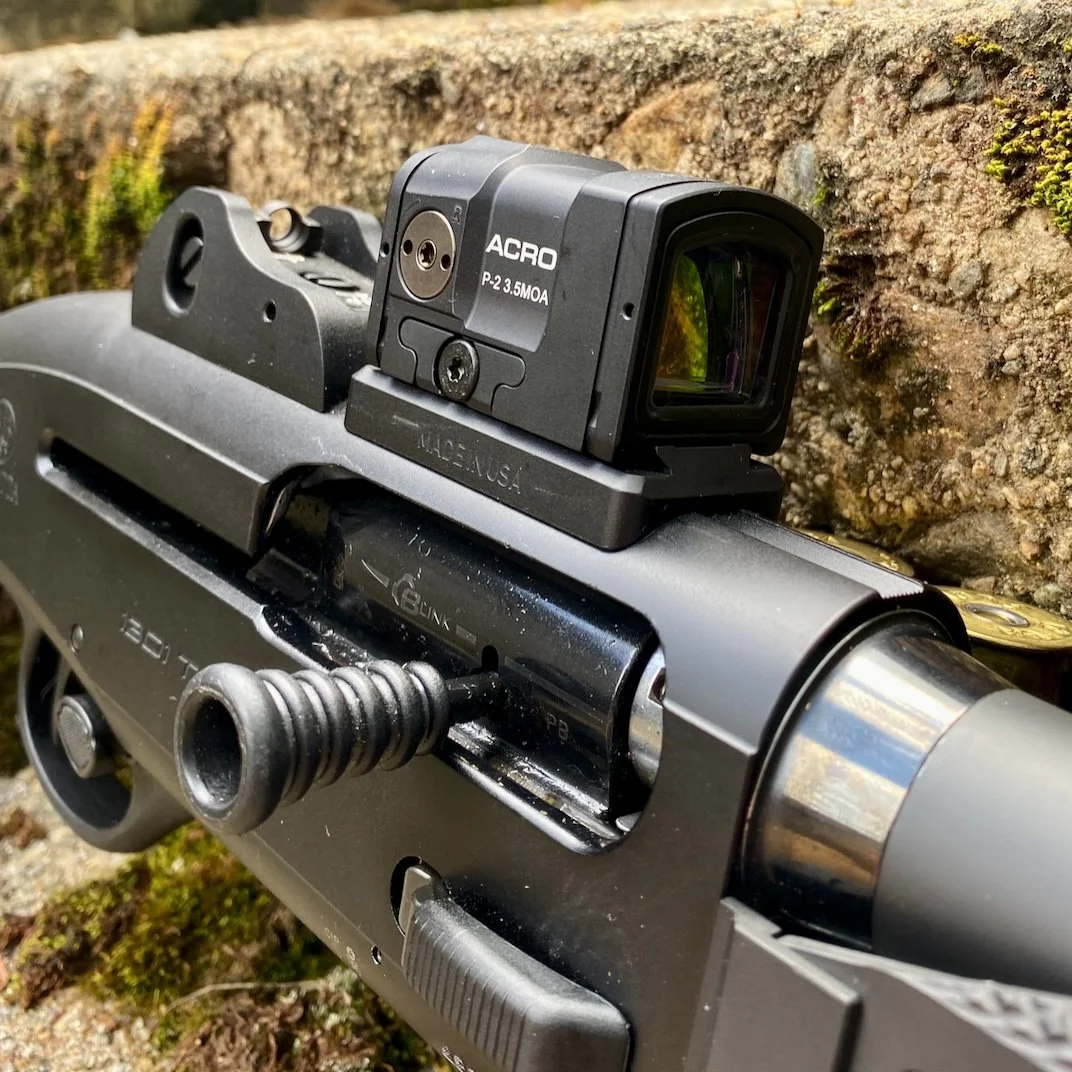
The 1301 came along over a decade ago. It took a while to catch on, but it’s benefits became apparent pretty quickly. The B-LINK operating system is incredibly soft-shooting. Also, being a self-regulating gas system, letting through as much gas as it needs to cycle, it is monotonously reliable. The 1301 is also well-designed with a lot of thoughtful features. In 2021 the Gen 2 came out with even better features including a the “Pro Lifter,” a shell lifter that stays in the up position, allowing for easier reloads, and a 7-round magazine tube.
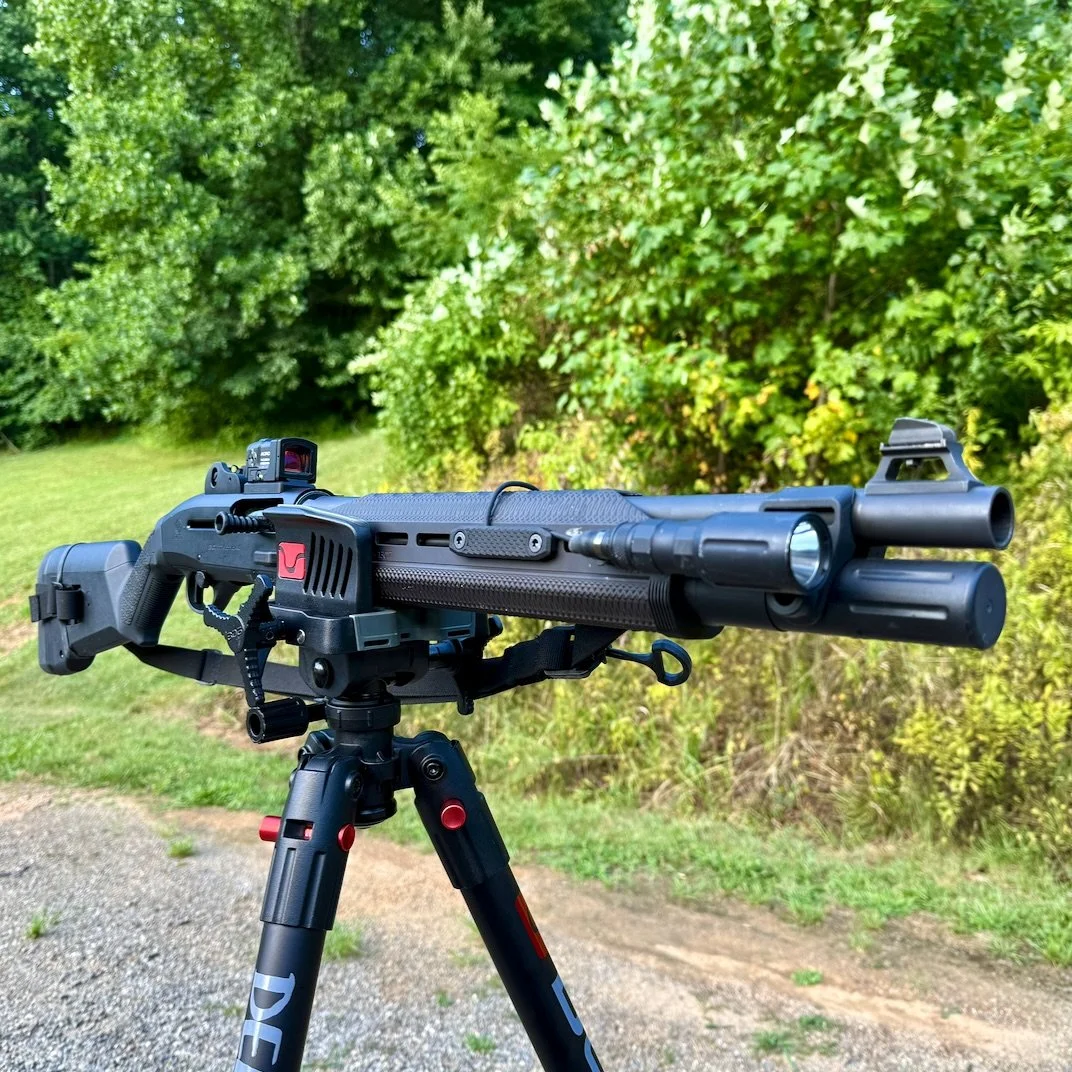
Aftermarket support for the 1301 has been swift and prolific. Companies like Aridus Industries have supported the 1301 from day one. A lot of other companies have jumped in as well, with some designing their own products…and others knocking off Aridus’ gear. The real reason to love this shotgun is how easy it is to shoot. Once you get the manual of arms down, it is super easy to operate. There’s no pumping, there’s less recoil and noticeably tighter patterns thanks to a back-bored barrel…the 1301 is a dream to shoot.
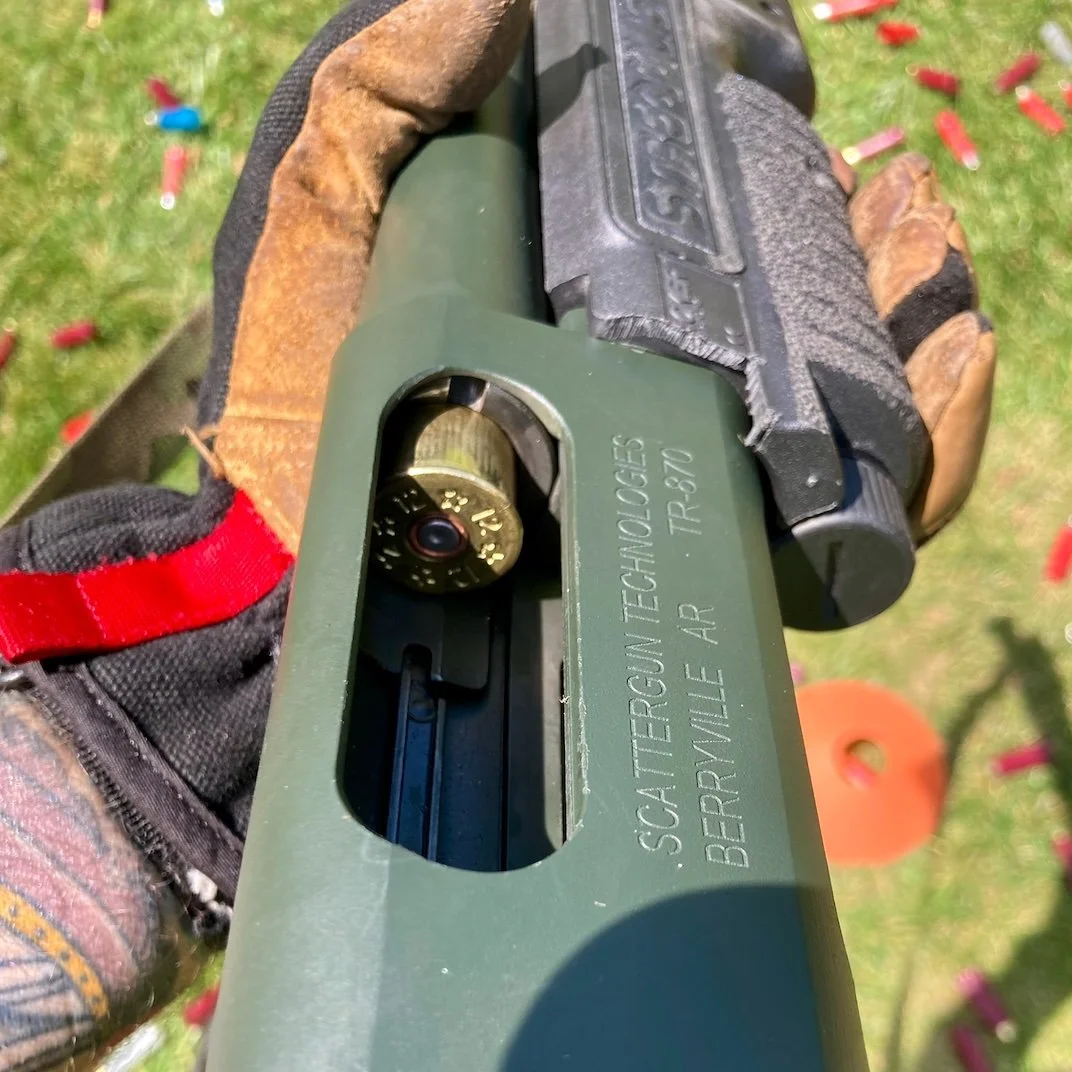
Not even pumps are 100% reliable. Like any manmade machine, they will eventually malfunction.
Cons to the 1301: the single biggest downside to this shotgun is the cost. Approaching $2,000, the cost exceeds that of many perfectly functional and servicable ARs, and approaches that of many mid-tier ARs. It also greatly exceeds the cost of a Mossberg 500 or 590…and there’s still plenty of money you can spend on accessories…as you can tell by looking at mine. This is probably not the shotgun for the occasional user. For the serious student and high-volume shooter, I think this is the best choice, but certainly not an absolute necessity.
Beretta A300 Ultima Patrol
The A300 Ultima Patrol is a less expensive alternative to the 1301. Both the 1301 and the A300 have an identical manual of arms. Both have self-regulating gas systems and are bombproof reliable, though the 1301 may have a very slight edge. Both have usable furniture as-is, both come with usable iron sights, and both have a 7+1 capacity of 2 ¾ shells (and both will chamber 3” shells, too). Though there are many similarities there are also a ton of differences. Many of these differences will be completely transparent to most users. Some are pretty important and impact the user experience significantly, so be aware before you spend your money. Here are a few of the downsides of the A300.
Stock: The A300 uses a different operating system than the 1301. The recoil spring is housed in the stock of the A300, severely limiting your options for buttstocks, though the factory stock isn’t terrible. The length of pull on the factory stock is 13 inches; if you are small statured or planning to used the A300 with body armor, this may be a bit long, and being unable to replace the stock would be a big downside.
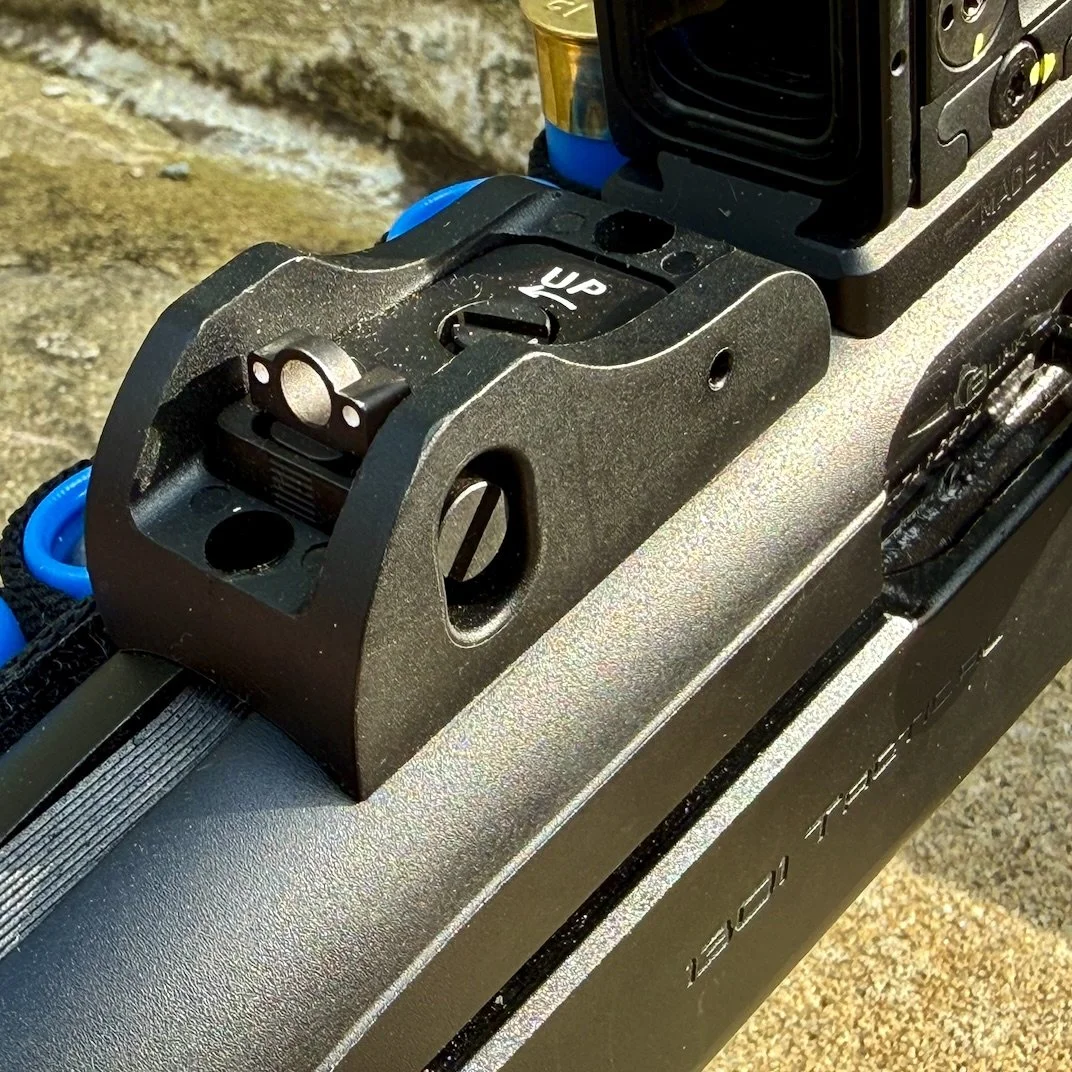
The adjustable sights of the 1301. Keep in mind that the A300’s sights are fixed and cannot be adjusted.
Lifter: The 1301 comes with a Pro Lifter. The lifter is sometimes called the elevator; it’s the shiny piece of metal in the loading port that lifts a shell from the magazine up, inline with the chamber. The Pro Lifter stays up except when accepting a shell from the magazine. This makes reloads much easier. The A300 lacks the Pro Lifter. This might seem like a small thing, but when loading a lot (as in a shotgun class) having the lifter stay up, out of the way, is a huge benefit. You can replace the A300s lifter with a Pro Lifter, but this will increase the cost of the gun.
Sights: Finally, the sights are a noteworthy difference to me. On the A300 the sights offer a good, ghost-ring sight picture. However, they are fixed and completely non-adjustable. That said, there is an included picatinny rail for the mounting of an optic, so this isn’t a deal breaker, but it seems important to me.
Conclusion: The Best Defensive Shotgun
The good news is, out of these four you’re choosing from four really good options! We’re doing a bit of hair-splitting here because these shotguns - the Mossberg 590 or 500, Remington 870, Beretta 1301, or Beretta A300 - are all potentially excellent defensive shotguns. All have some pros and all have some cons, but really I’m getting pretty nerdy about it.
I absolutely love my pump guns. The Remington/Scattergun Technologies 870 is the long gun I have owned the longest. I have attended several classes with it and wouldn’t part with it. My Mossberg 590 is an old LE trade-in from my agency that I got for next to nothing.
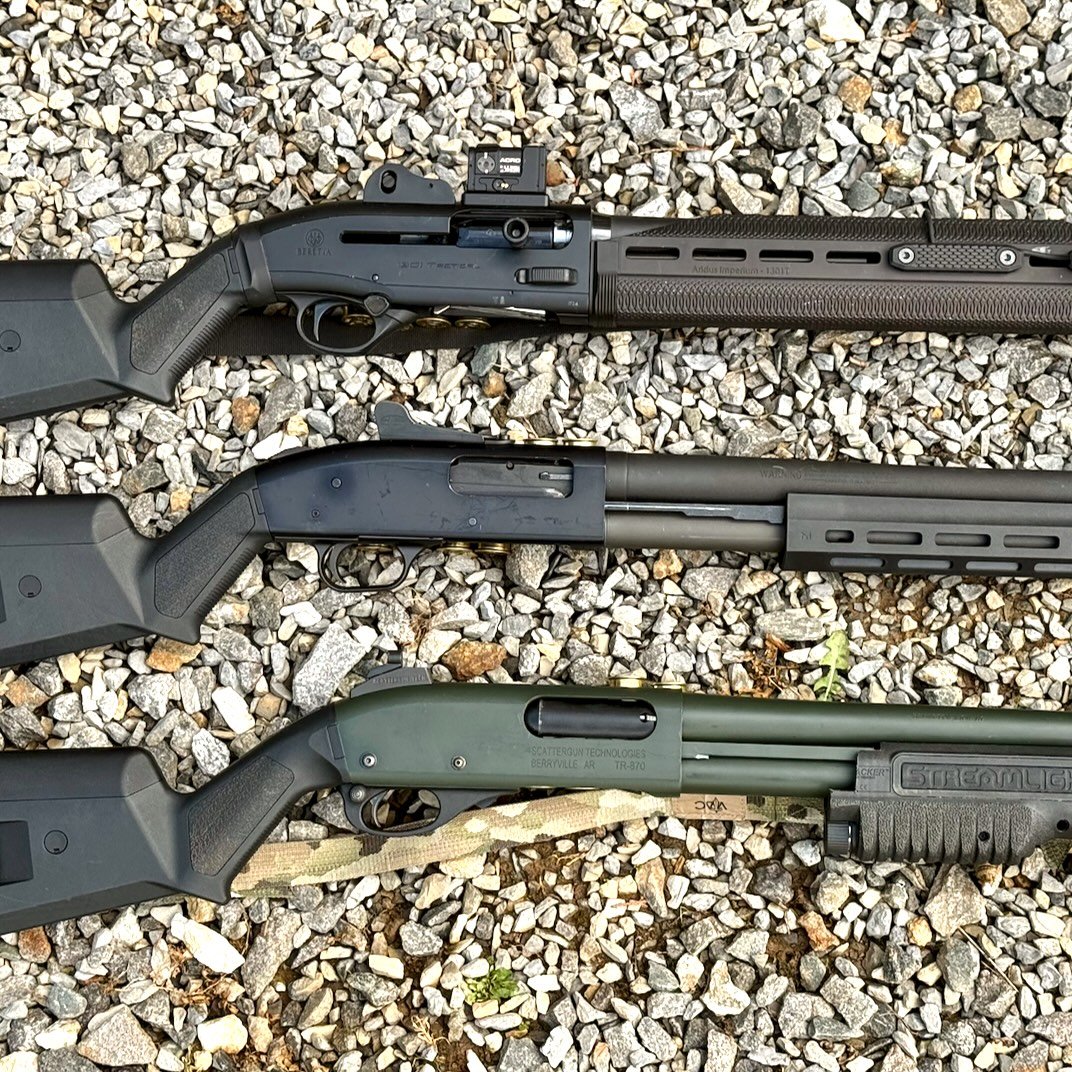
However, I think the semi-auto is the way ahead for shotguns. Both the pump and the semi require training and practice. The semi-auto is quite a bit more user friendly, though. It requires less “energy” to run, and places less congitive load on the shooter. it’s just easier.
That said, my choice isn’t necessarily your choice. I’m just pointing out the pros and cons of the various fighting shotguns out there after attending several classes, doing a LOT of practice, carrying one overseas, and depending on it on duty as a cop. Ultimately, the decision is yours!