Straw Man Arguments Against the Defensive Shotgun
I like guns. As such, I like reading articles about guns, watching videos about guns, and listening to podcasts about guns. I especially like shotguns, so I consume quite a bit of content about shotguns. As such, I run across at least some content that is unfavorable to the defensive shotgun. Oftentimes the titles of these articles or videos is along the lines of “shotguns suck for home defense” or “why a shotgun is a terrible choice for home defense.” One common thing about all of these videos is they often use straw man reasoning to explain why shotguns are bad. Today I’m want to refute some of the straw man arguments against the defensive shotgun.
This article contains affiliate links. Using these links gives us a small commission but costs you nothing. Please consider using our Amazon link to support this blog.
If you would rather listen to this blog post, or watch it with some tangentially related B-Roll, here ya go:
Shotgun Straw Man Arguments
What is a straw man? A straw man argument is an logical fallacy where someone on one side of an argument attacks an exaggerated, extreme, or absurd version of the other side’s debate. The absurd point isn’t necessarily germane to the point, but is easy to tear down. A person creating a straw man argument really isn’t arguing the original point, they are creating a weak replica that is easy to knock over. Like a set of clothing stuffed with straw would be; it doesn’t have much bearing on the topic at hand, but on the surface it might seem to. If I haven’t explained it well, there are plenty of examples just a Google search away.
Many articles and videos of people bashing shotguns create straw men by putting the shotgun in the worst possible position. They will use poor quality ammunition, compare a very basic shotgun to a tricked out, multiple-tax stamp AR, or expect it to do things that are far outside any reasonable expectation of what a defensive shotgun needs to do.
I believe this is out of misunderstanding of the shotgun, how to use it, and what it is capable of.I get the impression that most of the bloggers, youtubers, and podcasters making this content have not taken high-quality shotgun training. Many of them are from the military. If there is one family of weapons that the military is worse at teaching than pistols, it is shotguns that are used for anything outside a breaching role. Shotguns are not rifles, and they have to be manipulated a little differently to make them work well. If you understand that and have some training and practice under your belt, the apparent gap between shotguns and everything else is quite small.
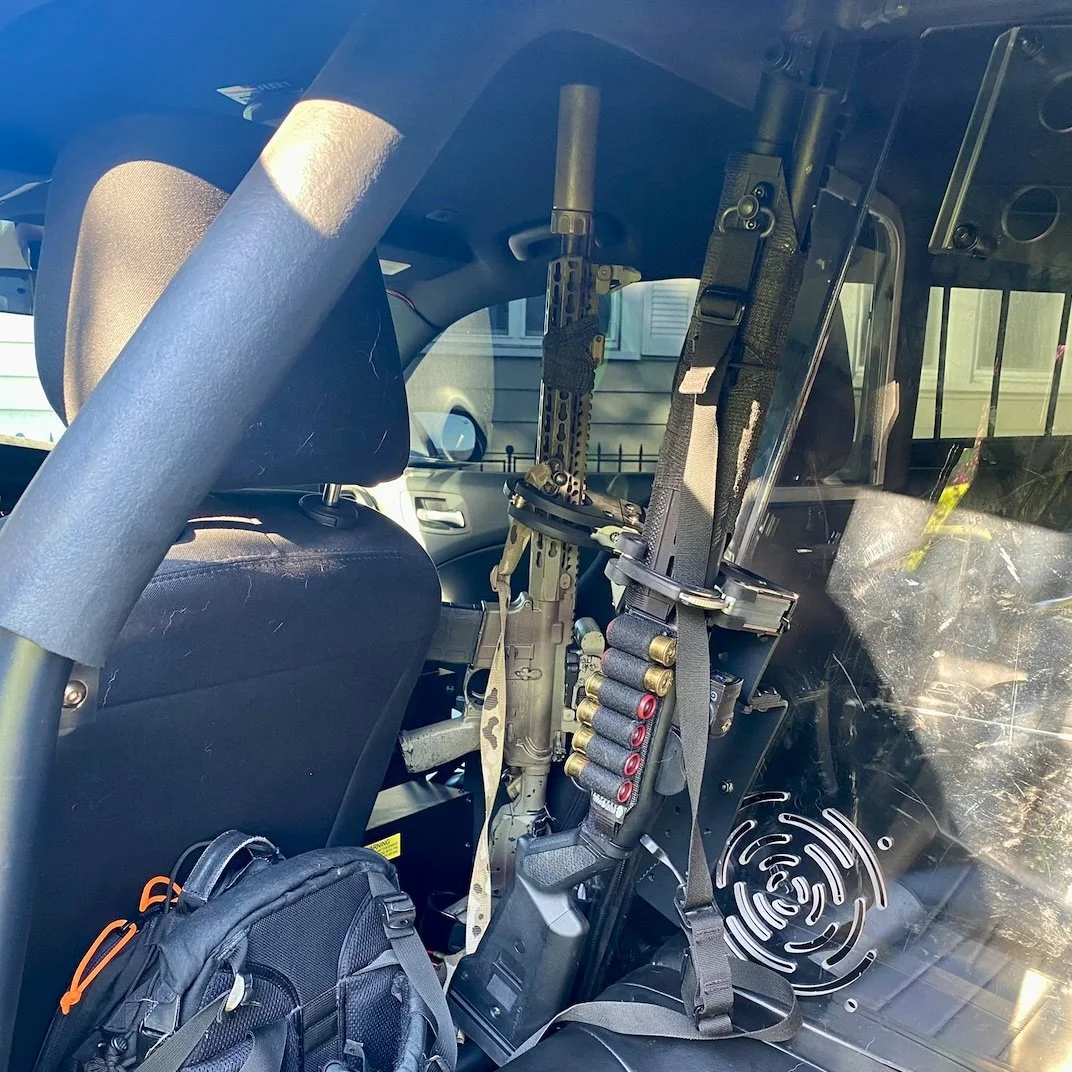
If I get out of the patrol car with a long gun, 9 out of 10 times it will be my 1301.
Before we get into this I want to be clear: I am not saying pistols, rifles, or PCCs are bad choices for home defense. I’m also not saying shotguns are the best choice. I’m just saying that SHOTGUNS ARE NOT A BAD CHOICE. Let’s step outside the internet echo-chamber for a moment and acknowledge that rifles, pistols, AND shotguns can all be effective weapons. Just because one is good, doesn’t mean the other is bad.
To say shotguns suck or are are a bad choice spreads confusion, and is either intellectually dishonest, or reveals ignorance of and/or personal biases against the shotgun. The truth is, the user is a lot more important than the equipment. I could defend my home with a revolver, a pump, semi, or even double-barrel shotgun, rifle, PCC…and so can you. With mindset and training, the gun really doesn’t matter all that much.
Straw man: Shotguns are low-capacity weapons.
This is probably the most common straw-man that gets trotted out against the shotgun: it’s single-digit capacity. I have written about this before in an article entitled “Shotguns Are Not Low Capacity Weapons.” I’ll say a lot of the same stuff here.
What typically happens in these videos is that the personality in question will fire the shotgun’s entire payload as quickly as possible. They will then demonstrate how long it takes to manually load five, six, or seven rounds into the gun. They will then compare this to reloading a semi-automatic pistol or AR-15. The difference is quite large, but what does this have to do at all with the defensive use of the shotgun?
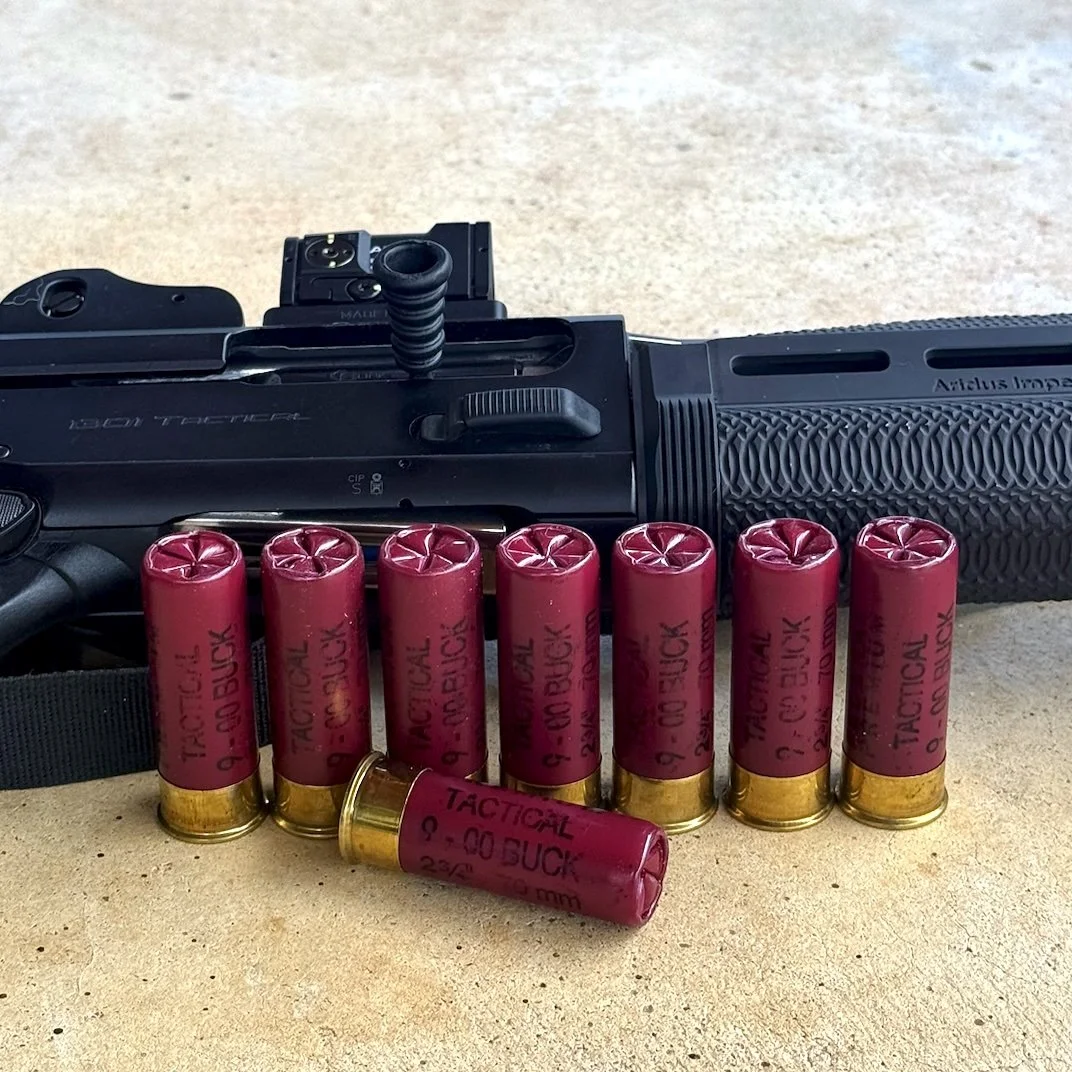
It’s hard to fathom any remotely plausible home defense scenario in which eight rounds of slugs or 00 Buck would be insufficient to solve the problem. Yes, there are fewer rounds in a 12-gauge shotgun than in a Glock 19 or AR-15, but I’m curious why that really matters.
As a shooting community we have come to accept that a shot from a pistol is not the same as a shot from a rifle. Pistol rounds are not nearly as devastating as rifle rounds. Some still turn their nose up at the idea that a shotgun, firing a slug or shot column almost ¾ of an inch in diameter can be more powerful than a rifle. Shotguns are devastating when loaded correctly and fired accurate. You don’t need to shoot someone five or six times in the chest to achieve the desired result. In a shotgun skills class I took with Tim and Ashton, Tim referred to this as “servings.” A Glock 17 holds a couple “servings,” an AR holds five or six servings, and a 5-shot shotgun holds five servings.
I assume this is merely anchoring bias, a cognitive bias that “anchors” our impressions based on an initial reference point. The first exposure most of us had to capacity was 15+1 in handguns and 30 in a rifle. Because we are anchored at these numbers, we automatically perceive anything else as “low.” The shotgun is not a low-capacity firearm, however. There’s no need to run a Bill Drill on a bad guy with your properly loaded 12-gauge shotgun.
Straw man: Loading a shotgun is slow or difficult.
The way this gets demonstrated is to shoot the shotgun dry, then reload with the worst possible technique. Usually the shooter empties the shotgun, then administratively reloads from a pocket. Obviously this isn’t going to be very fast. There are demonstrably faster ways to load a shotgun. All rely on the shotgun being set up correctly, but this is also true of reloading an AR or pistol; if you don’t have a spare magazine, you aren’t going to be able to affect the reload. In my opinion the best reloading setup is the “shotgun card” like those from Vang Comp (my favorite) and ESSTAC (pretty good, too).
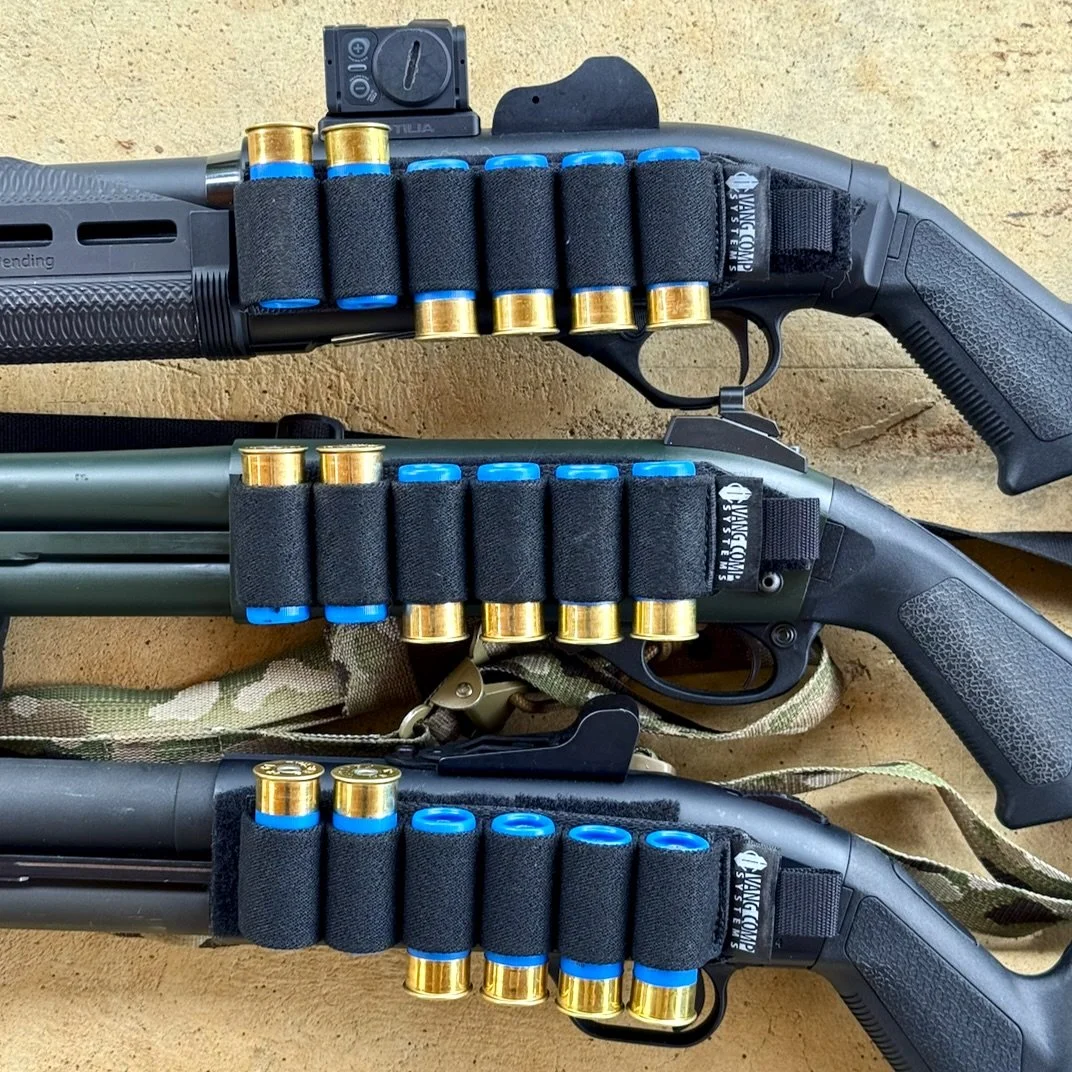
All of my shotguns are set up for these Velco-backed shotgun cards. It is cheap and easy (and non-permanent) to do so, and let’s you share your shotgun cards across multiple guns.
If the gun is completely empty, a much faster method of reloading is the violin reload. This is a pretty well-known technique in shotgun world…but shotgun world is pretty small compared to AR/Glock world. It also works well with the short-stocking technique mentioned a little later on this article. Another way Youtubers make reloading look slow is to run the gun completely dry. It strains credulity to imagine any home-defense scenario, even with three or four bad guys, where I would run the gun completely dry. Instead, if you’re not shooting, you should be loading.
The vast, overwhelming majority of home defense scenarios can be solved with one or two rounds of buckshot or slugs. The extreme outliers might take three or four. You should be reloading these rounds as you have the opportunity. As they say in shotgun classes, “if you’re not shooting, you should be loading.” This is actually an advantage over detachable magazine-fed weapons: the ability to keep your gun topped off, rather than removing the entire feeding source to reload.
Straw man: You can’t be precise with a shotgun.
This is a variation on the old “you don’t even have to aim!” The root of this argument is that shotguns fire a wide pattern. As a result they are unsuited to shots requiring precision. This is patently false…assuming the right ammunition is used. In most videos denigrating the shotgun, cheap buckshot is used to demonstrate unacceptably large patterns. Again, this is a straw-man argument: the presenter in question presents the shotgun in the worst possible light to prove their point.
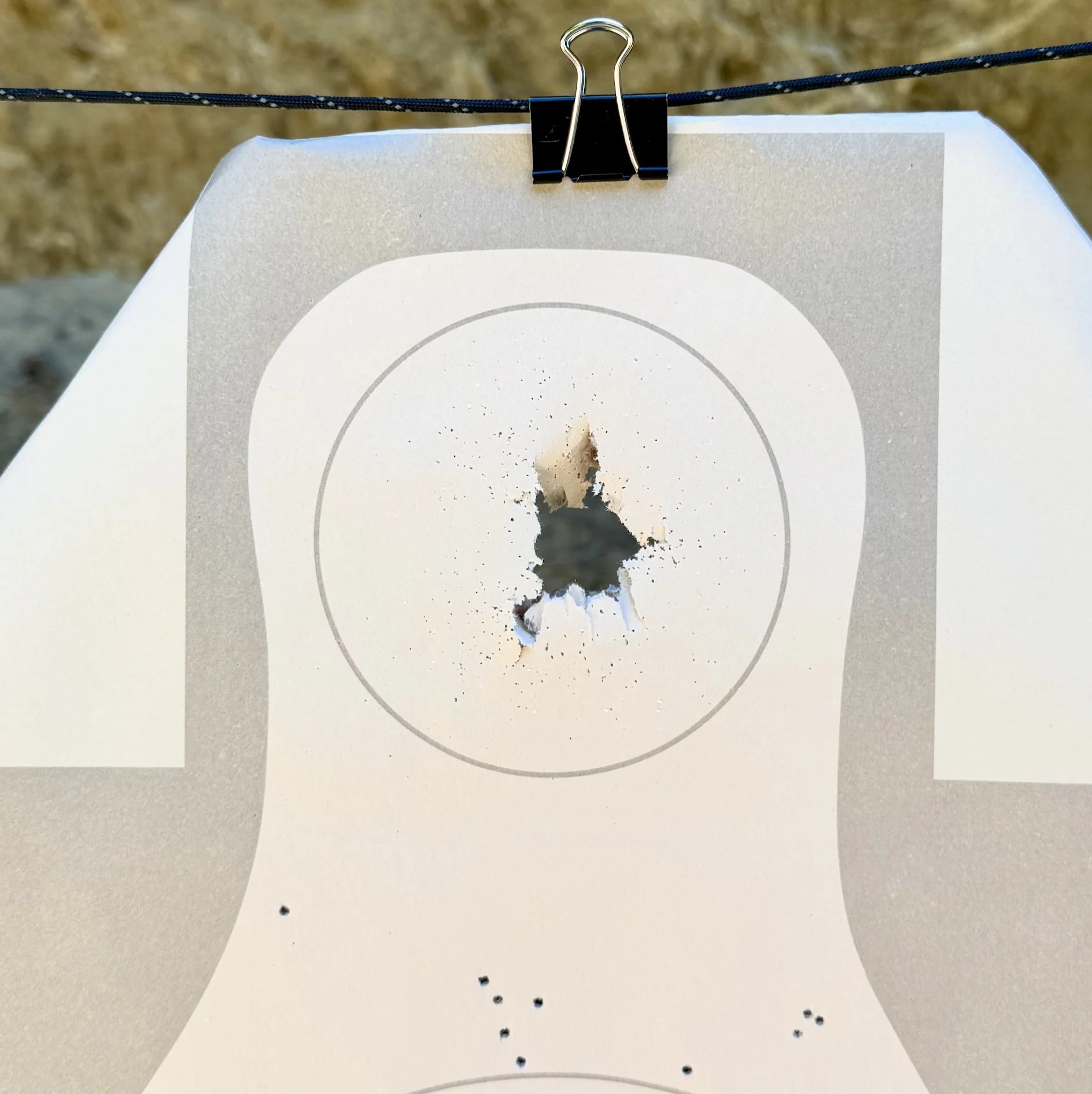
A 7-yard shot with Federal Flite Control buckshot. This is the 9-pellet version; the 8-pellet buck holds and even tighter pattern, though at this range it would be virtually indistinguishable.
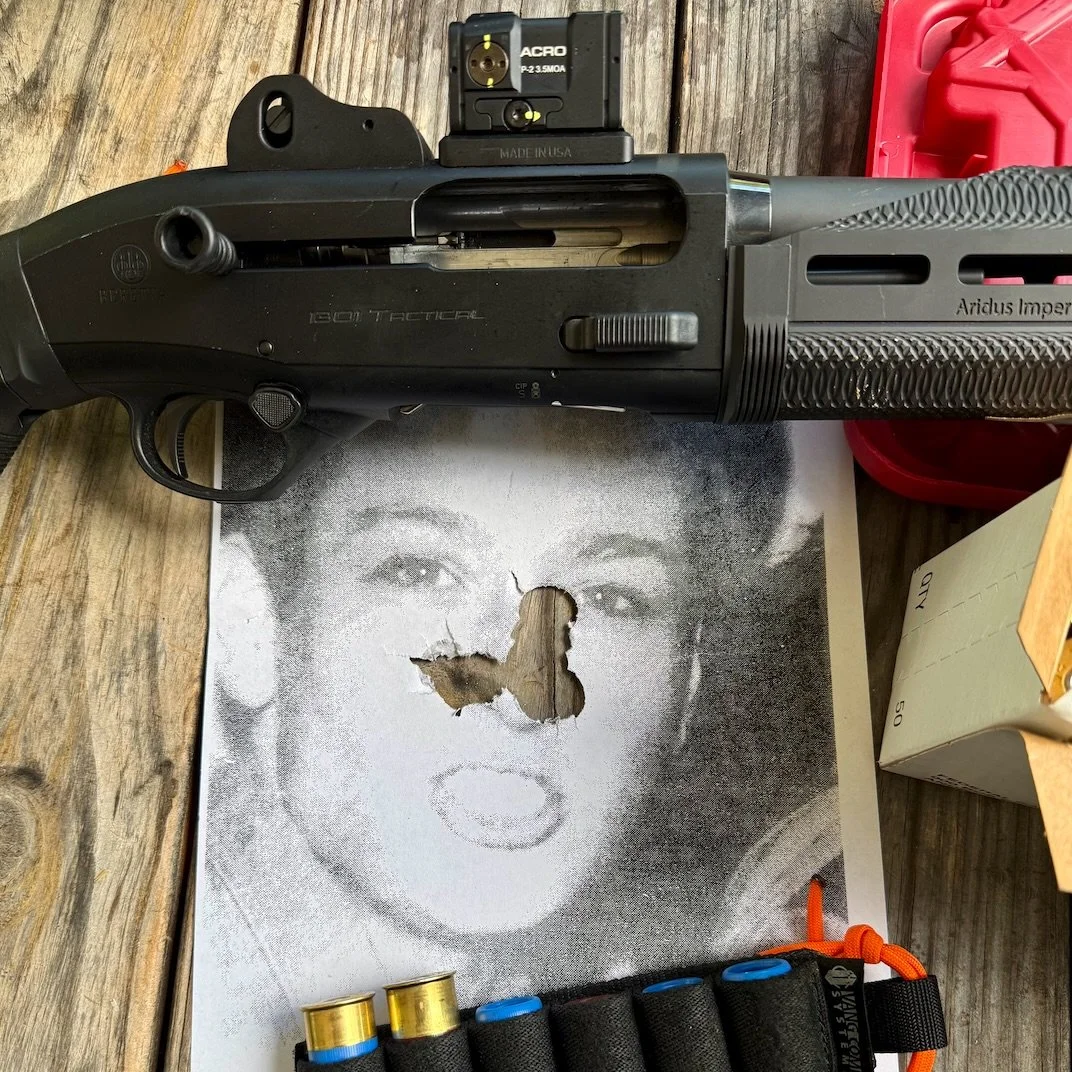
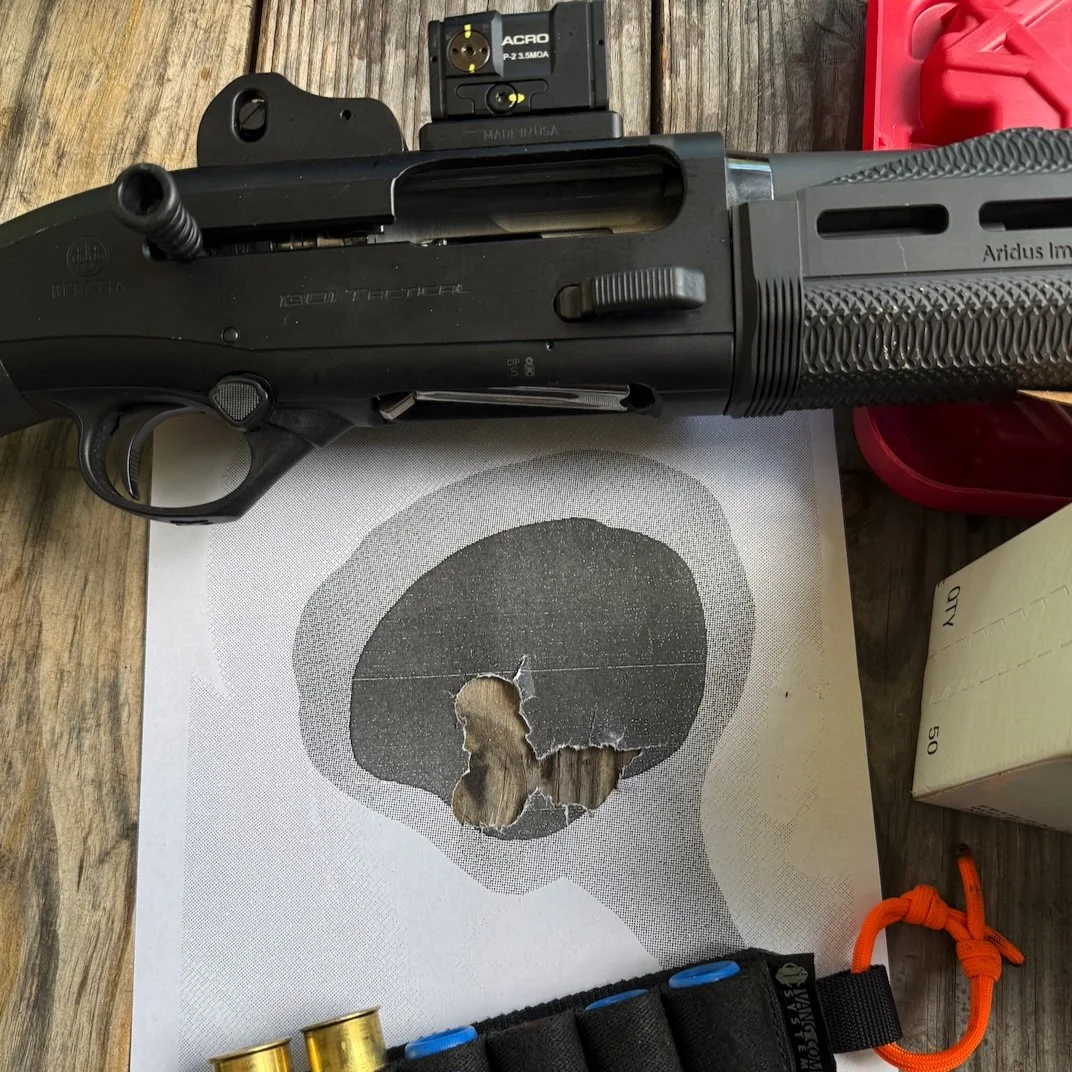
A shotgun loaded with high-quality ammunition can be extremely precise. I attempted to demonstrate this in my last post about using birdshot in defensive shotguns. At seven yards, a round of Federal Flite Control buckshot keeps all pellets in a single hole, about an inch in diameter. I also demonstrated the use of slugs, which I used during the solo active shooter response class I took back in May of this year. I was able to cleanly keep slugs in the head of a hostage target at distances out to fifteen yards (the furthest we shot in that class).
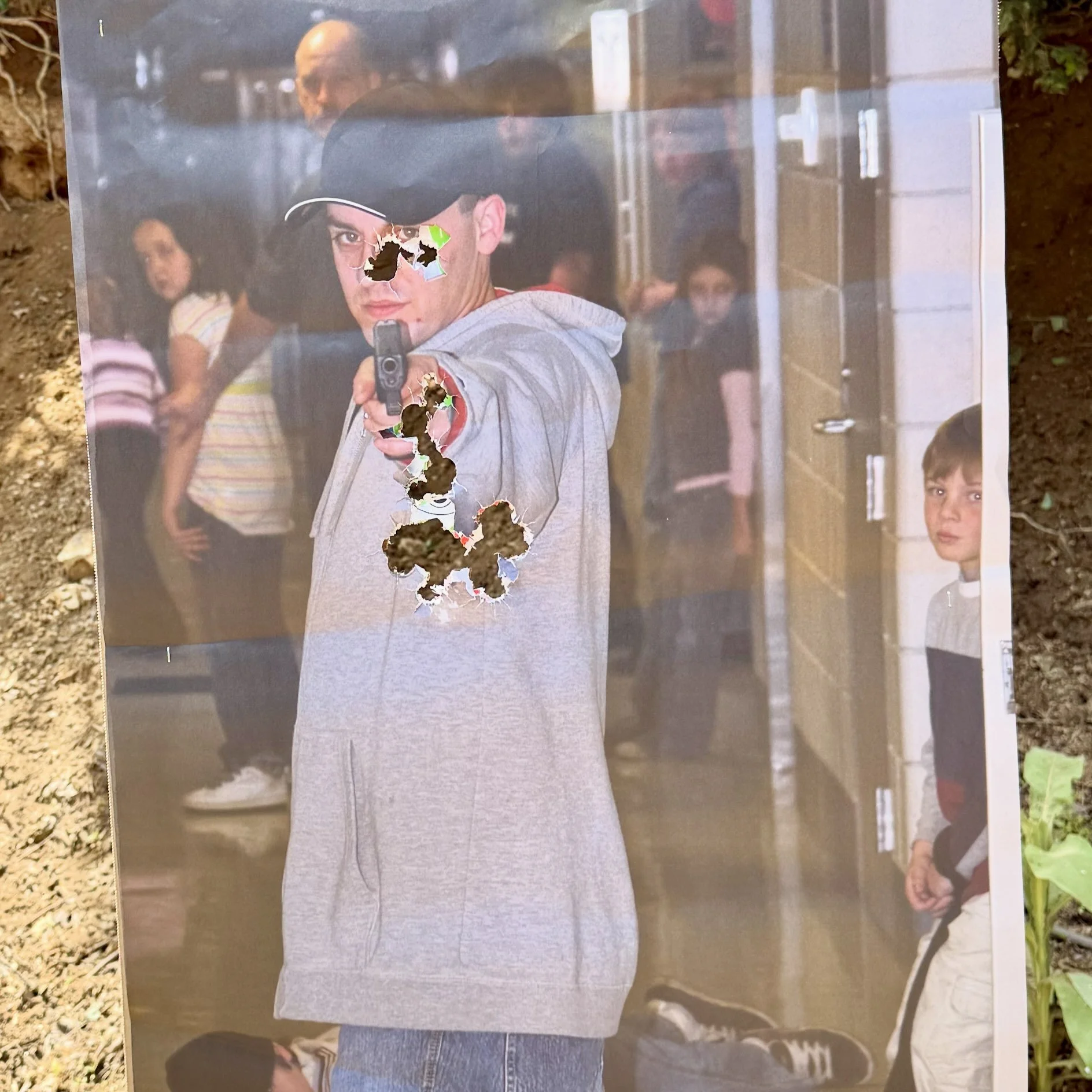
Shots fired from 3 to 15 yards, while shooting on the move, during a solo active shooter response class. These were fired with Federal Low Recoil slugs. These aren’t “precise” as in sniper shots, but they are certainly accurate enough for this high-risk scenario.
None of my demonstrations or protestations are going to be as impactful (pardon the pun) as a shooting involving San Diego Police Officer Ross Bainbridge. On 11/13/2016, Bainbridge made a successful hostage rescue shot with a PD-issue Remington 870 shotgun firing Federal Flite Control 00 buckshot. The incident report is downloadable from San Diego’s website HERE, and the video can be found online. Bainbridge was later awarded San Diego’s Officer of the Year. You can be precise enough with a shotgun to take a hostage shot, if you know the shotgun and its ammunition.
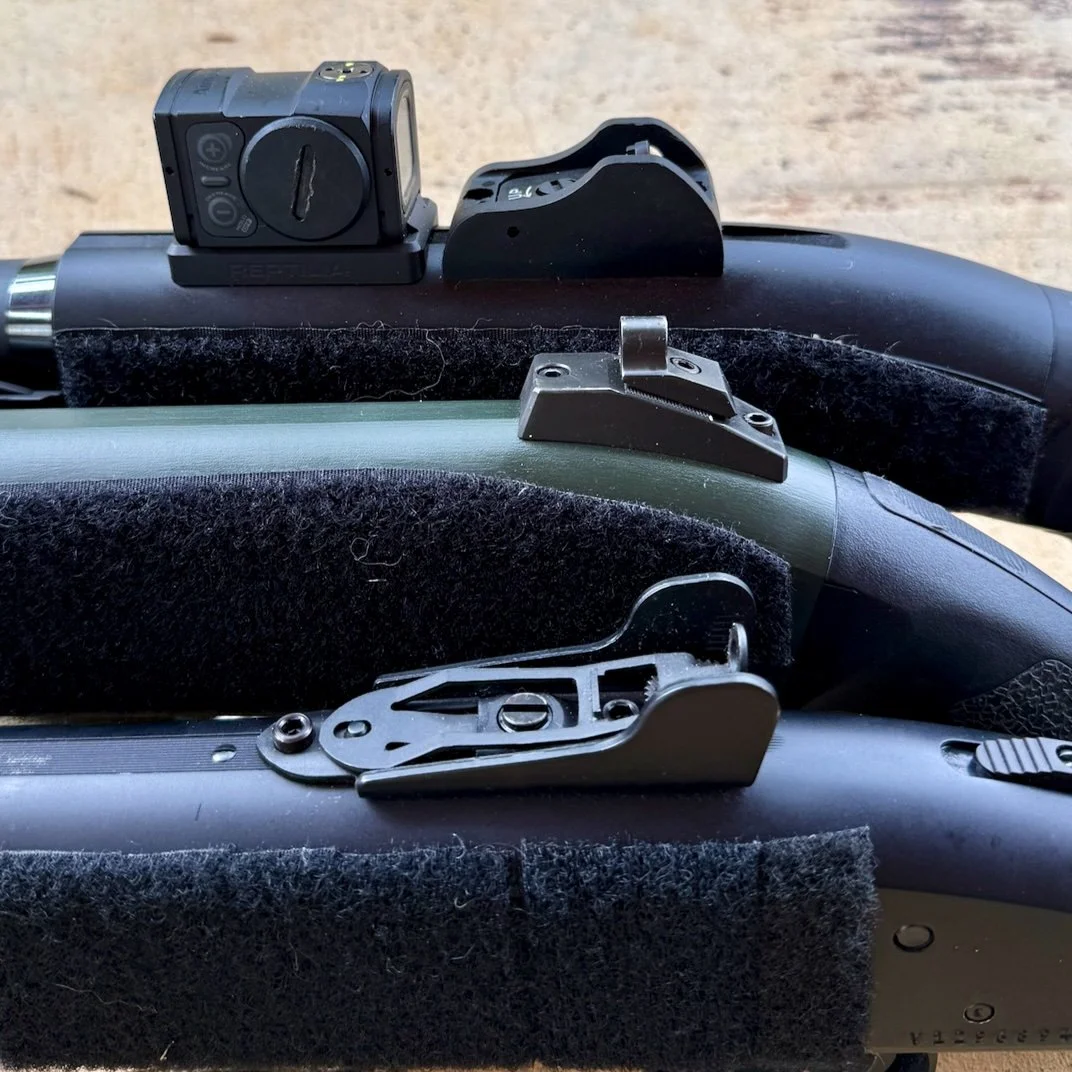
Optics and/or proper sights go a long way to making shotguns precise…but then again, you wouldn’t expect to be very accurate with a rifle lacking sights.
Straw man: Shotguns are too big/heavy.
I didn’t think this was a big argument. However, I saw weight mentioned in at least three videos, and length mentioned in two. So let’s address both. There are a couple of things to think about here. First, as it pertains to length, we are talking only about “tactical” or defensive-oriented shotguns. Sporting shotguns actually are too long. With 24, 26, or even 28-inch barrels, the tubes on these shotguns is nearly as long as some short-barreled rifles. But that’s not what’s being compared. There are also AR-15s with 20, 22, and even 26-inch barrels, but all of the guys setting up these straw man arguments are using fairly short ARs, and sometimes even SBRs or AR pistols.
So, for this portion I compared my patrol rifle - a pretty average AR-15 in every respect - with a couple of my shotguns. Let’s take a look.
Length: Generally speaking, defensive shotguns are a bit longer than AR-15 rifles. I compared three shotguns against my pinned and welded, 14.5-inch BCM carbine. This length is probably about the most common out there, with some longer and some shorter. Note: I did not extend the stock fully to give the shotgun a more favorable impression; I left it at about the halfway mark, which is where I keep it for shooting with my duty vest on.
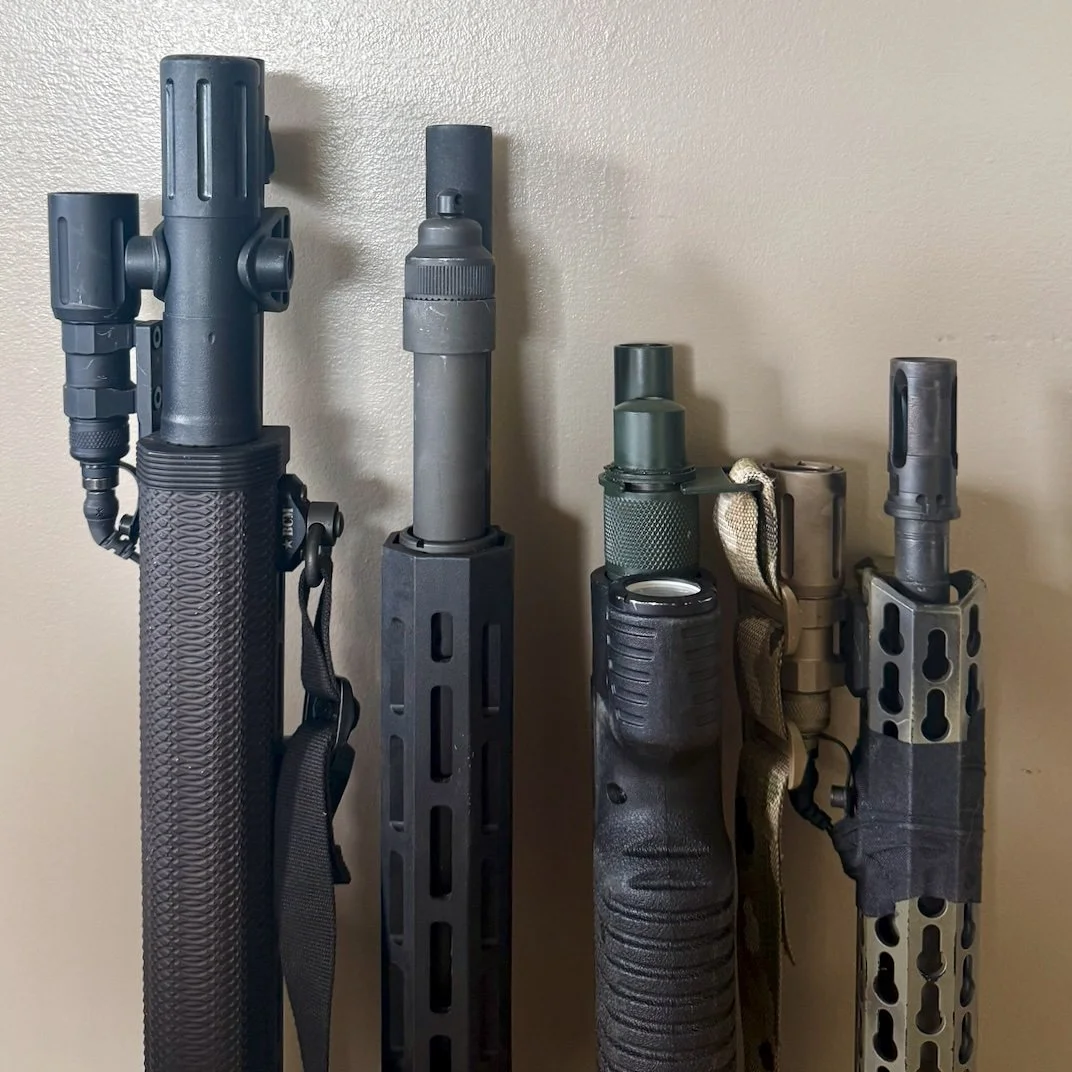
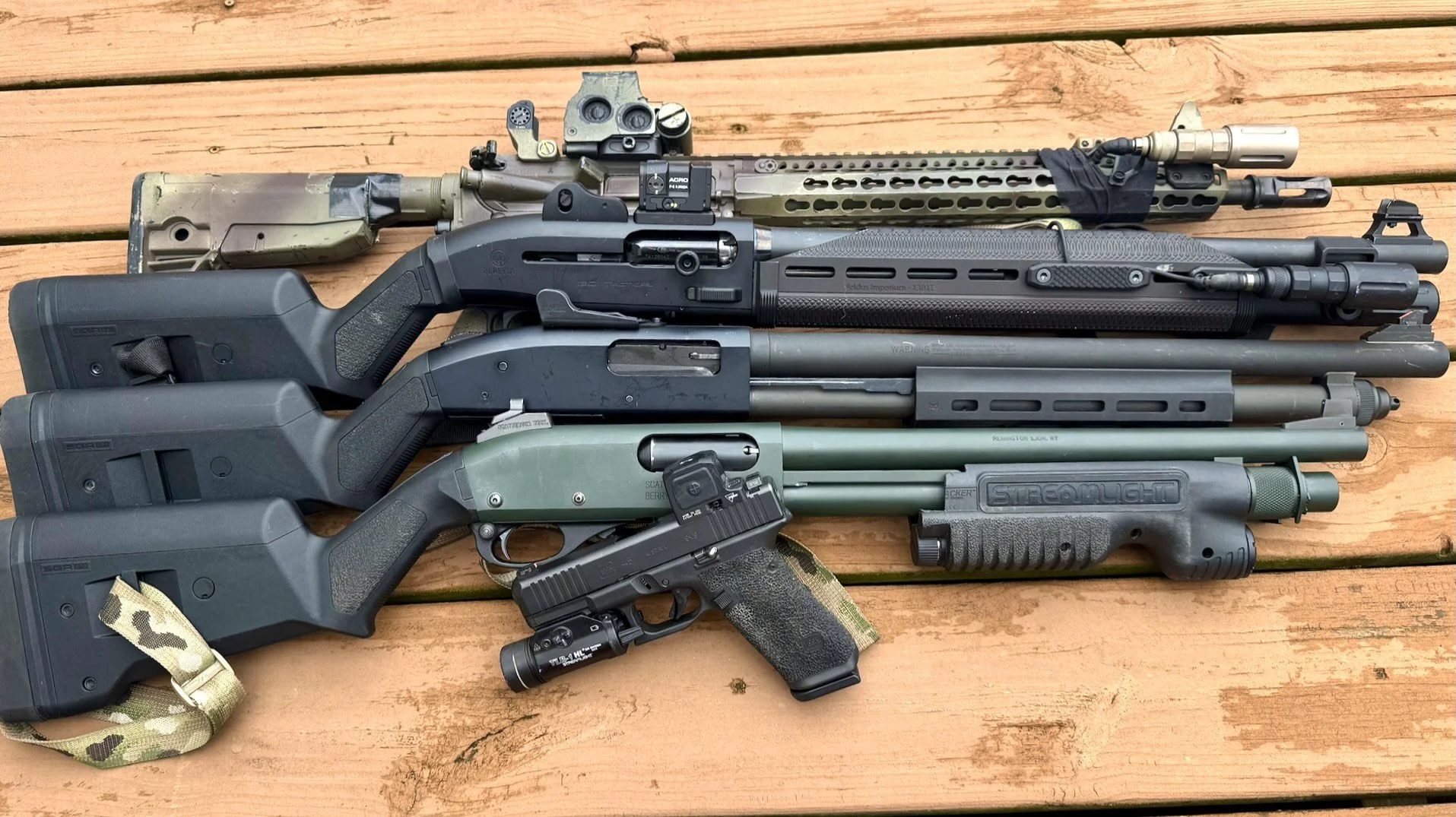
L-R: Beretta 1301 (18.5-inch barrel), Mossberg 590 (18.5-inch barrel), Remington/Scattergun Technologies 870 SBS (14-inch barrel), and 14.5-inch pinned/welded BCM Recce.
The shotguns were a 14-inch 870 (that is registered as an SBS), a 18.5-inch Mossberg 590, and an 18.5-inch Beretta 1301. The rifle was the shortest of the bunch. The SBS’d 870 was very close, with the Mossberg being just a couple inches longer and the 1301 being about four inches longer. In this case rifles (at least 14.5 inches and lower) are the clear winner. But, to quote the late Paul Harrell, is that enough difference enough to make a difference?
I have personally cleared buildings as a cop with the longest shotgun in the above list, the 1301, and will do it again tomorrow if called to. Is shorter better? Sure. Is it a huge difference-maker? Even as a guy who carries a gun professionally, that small amount of difference really isn’t a big deal. I seriously doubt it makes a huge difference as it pertains to residential defense. And there are also techniques like the short-stocking that can help with the length of the shotgun if you feel it is too long. you can also buy or manufacture an NFA Short-Barreled Shotgun that will still be exceptionally capable.
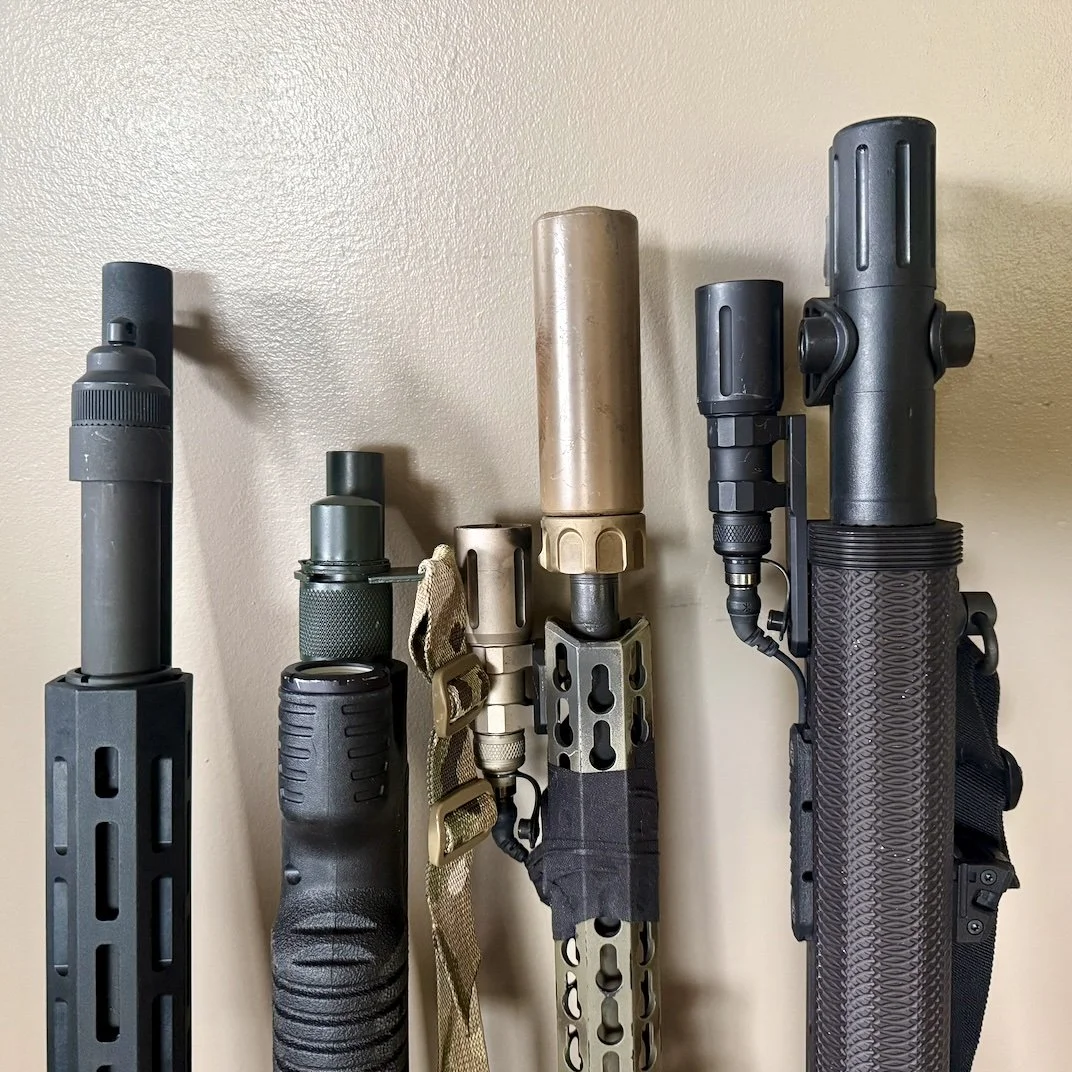
I like shooting suppressed, and likely so do many of you. Adding a Surefire SOCOM Mini makes is the second longest gun here; adding the can and a 30-rounder makes it the heaviest, too…by a lot. But I’m trying to give the rifle every benefit of the doubt, so as not to build my own straw man.
Weight: While shotguns are longer than ARs, they aren’t necessarily heavier…or heavy. I weighed my AR and two shotguns for comparison. The AR is a 14.5, pinned/welded BCM carbine. It isn’t loaded down with accessories; it has a small light, iron sights, an EOTECH, and a sling. The AR weighed in at 7.9 pounds with a loaded 20-round magazine inserted (I keep a 20-rounder in it in my patrol car for ease of removing from the car’s gun rack). Keep in mind, my AR is not very cool, and doesn’t have a lot of stuff on it. It definitely stays toward the low end, weight-wise.
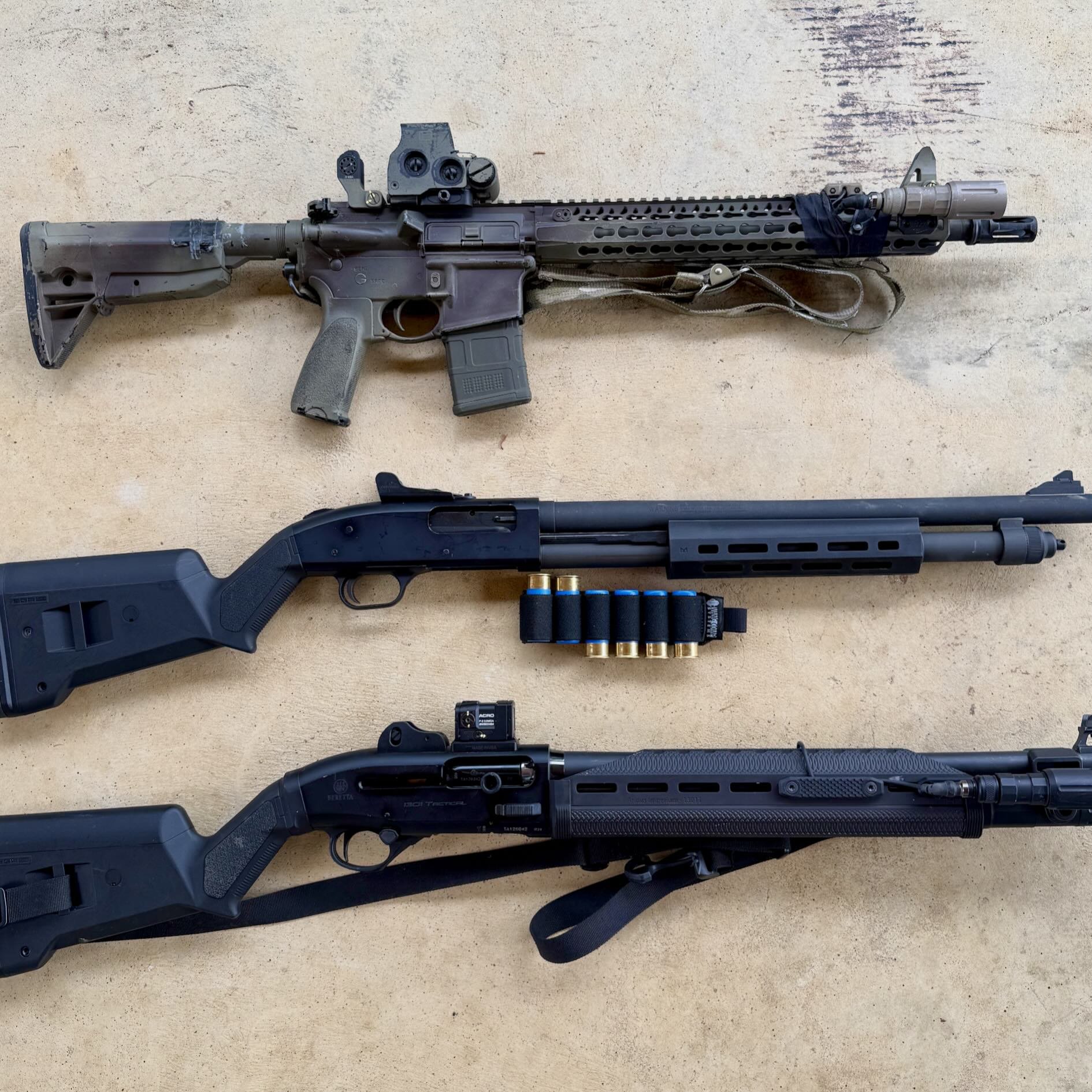
Top to bottom: the AR weighed 7.9 pounds, the Mossberg 590 weighed 7.9 pounds, and the Beretta 1301 weighed 8.4 pounds. Heavier? Yes. Heavy? No.
Next I weighed the shotguns: a Mossberg 590 and a Beretta 1301. The Mossberg was equipped with almost nothing other than its factory sights. Loaded with 4 in the magazine tube and 6 more in a Vang Comp shotgun card, the Mossberg 590 weighed in at 7.9 pounds, exactly the same as the AR.The Beretta 1301 weighed more than the AR-15, but only modestly so. Equipped with a light, an optic, co-witnessed irons, an ESD sling, and loaded with 7 rounds of Federal slugs, the 1301 weighed 8.4 pounds, just a half-pound heavier than the AR. But let’s be real; had the AR been equipped with laser aiming module, LPVO, magnifier, suppressor, and the other Instagram-worthy stuff, it could easily exceed 10 pounds.
Bottom line: shotguns really aren’t all that heavy, as long as they are outfitted properly. They will weigh about the same as an appropriately outfitted AR.
Straw man: Training is required to be effective with a shotgun.
This is maybe my least favorite straw-man argument about the shotgun because OF COURSE YOU NEED TRAINING TO BE GOOD! “Shotguns suck because you have to train to get good with them. The average person just isn’t going to do that.” Why does this one bother me so much? First, it bothers me because no one is going to be good at anything they don’t practice - period. A workout program is completely useless if you won’t do the exercises. We know the average person won’t do them…but does that mean the workout suck? No, of course not.

Unrelated, my buddy Shawn’s coffee mug.
It bothers me because you will have to train with ANY firearm to get good at using it! There is no gun in existence that you can be highly proficient with in the absence of training. I know this by watching many of the cops I work with; they have had 40+ hours of training in the use of a handgun, and most barely pass what Tom Givens would call our annual “field sobriety test.” Our test is not an outlier; most LEO quals are designed to ensure that most people in the agency qualify with minimal annual training. Is a rifle easier to shoot? I would contend that yes, a rifle is easier to shoot than either a rifle or a handgun. However, as evidenced by watching untrained cops attempt to qualify, YOU NEED TRAINING and ONGOING PRACTICE to be proficient with a rifle, too.
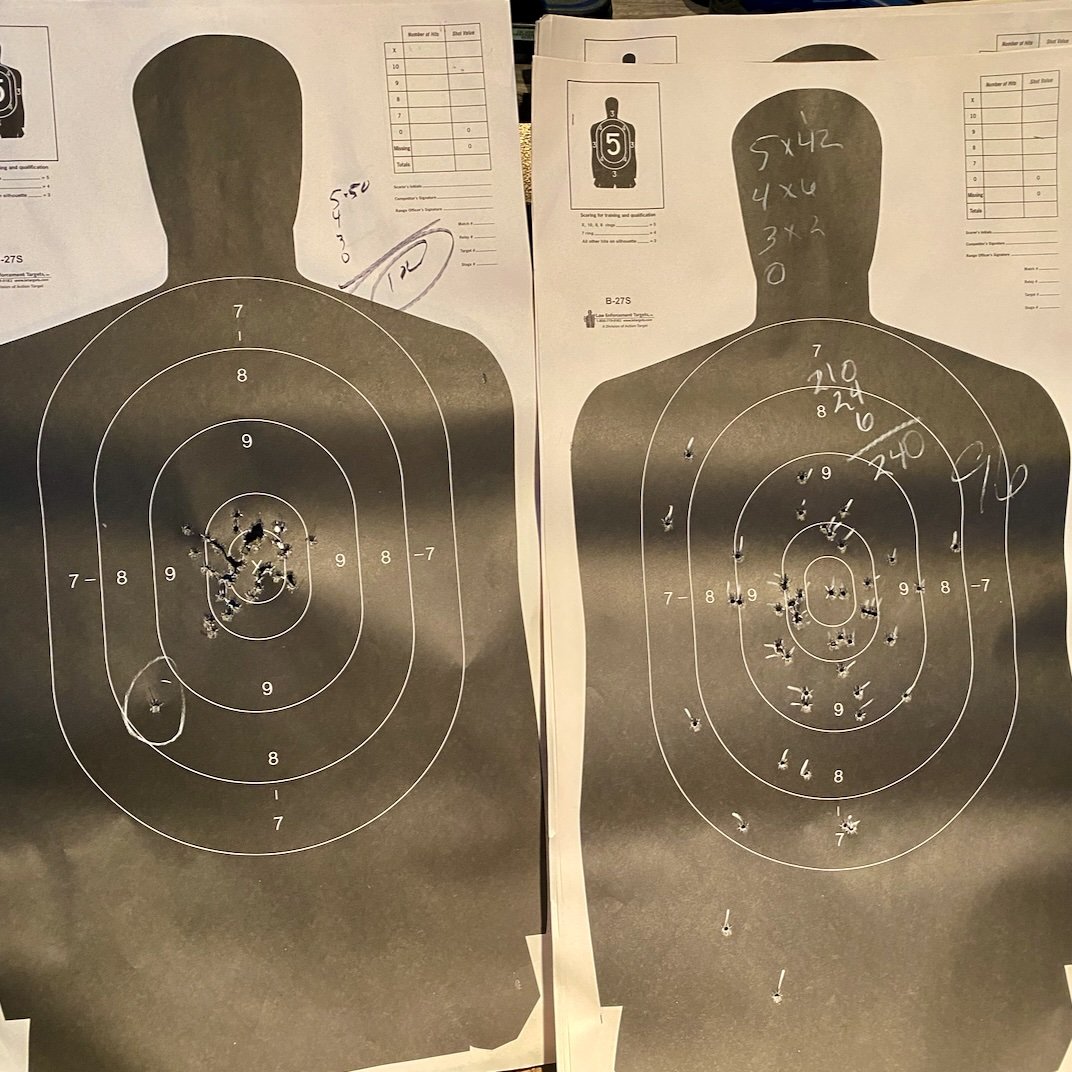
Two LE qualification targets. The target on the left scored 100%. The target on the right scored 96%. There is a huge difference between these two targets; much more than the mere 4 points’ difference would indicate. And this qualification immediate follows 40+ hours of training. Is anyone making a case that handguns don’t require training?
Next, this one particularly galls me because the people saying it - enthusiasts who push for training with everything else - understand the value of training. You have to train with anything - pistols, rifles, PCCs, knives - anything to be proficient! This is not peculiar to the shotgun, it applies to all weapons.
Shotgun straw man: Shotguns recoil too much.
It’s true: shotguns recoil more than intermediate-caliber rifles, PCCs, and handguns. Mitigating that recoil is entirely possible, however. It doesn’t have to be painful, punishing, or even distracting. You don’t have to be a He-Man to do it, either. There is a two-pronged approach to mitigating recoil.
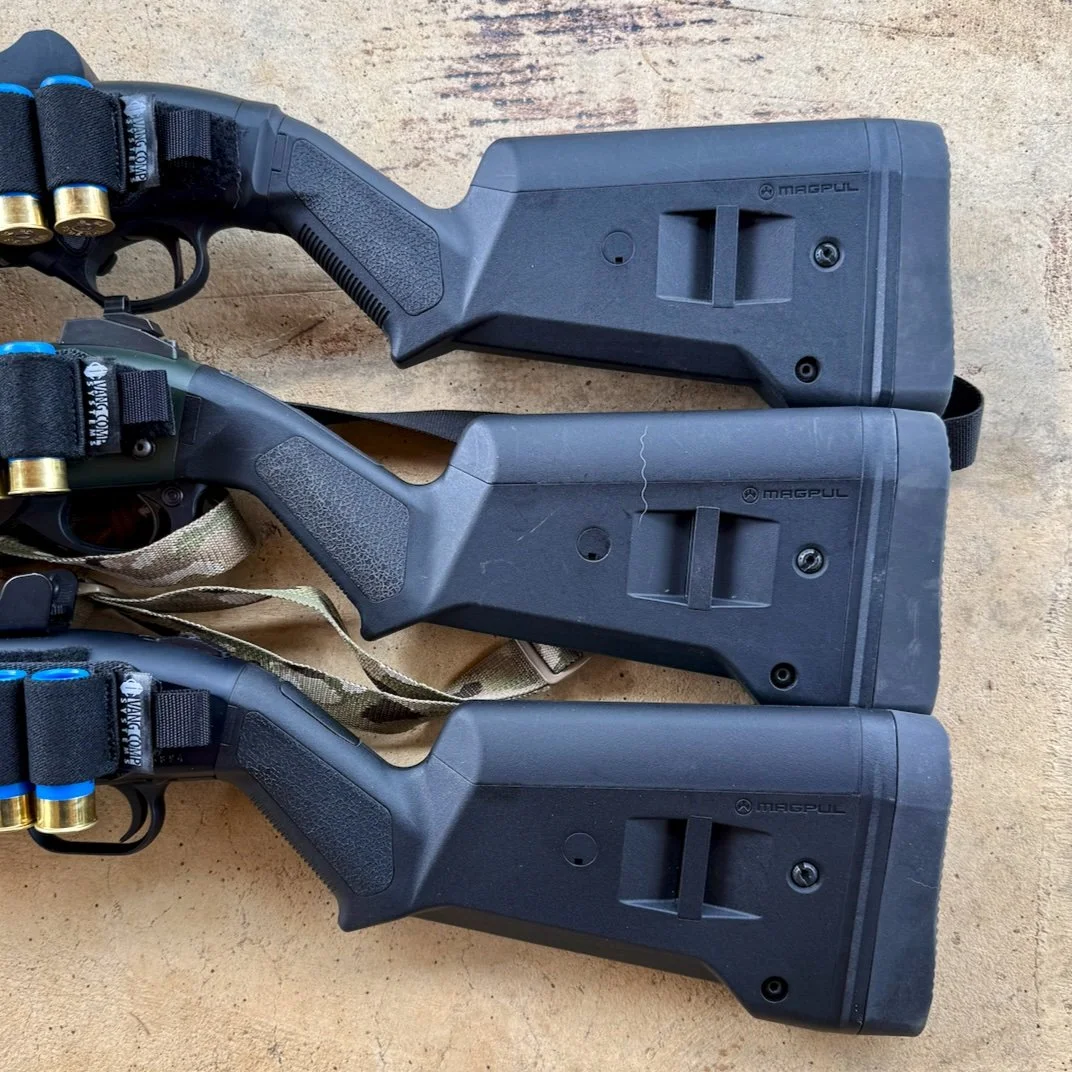
The first is gear-related. To effectively mitigate recoil with a shotgun, you need a stock of the correct length. Most factory stocks are far too long. Though I resisted it for a long time, the best shotgun stock on the market is the Magpul SGA stock. It has adjustable length of pull and is is incredibly comfortable to shoot with. This is THE shotgun stock that I have on all my defensive shotguns. Another gear-related consideration is ammunition. You don’t need three-inch magnum, 000 Buck. I run reduced recoil ammo - whether buck or slugs - in all my shotguns. There’s nothing to be gained from heavier kicking loads.
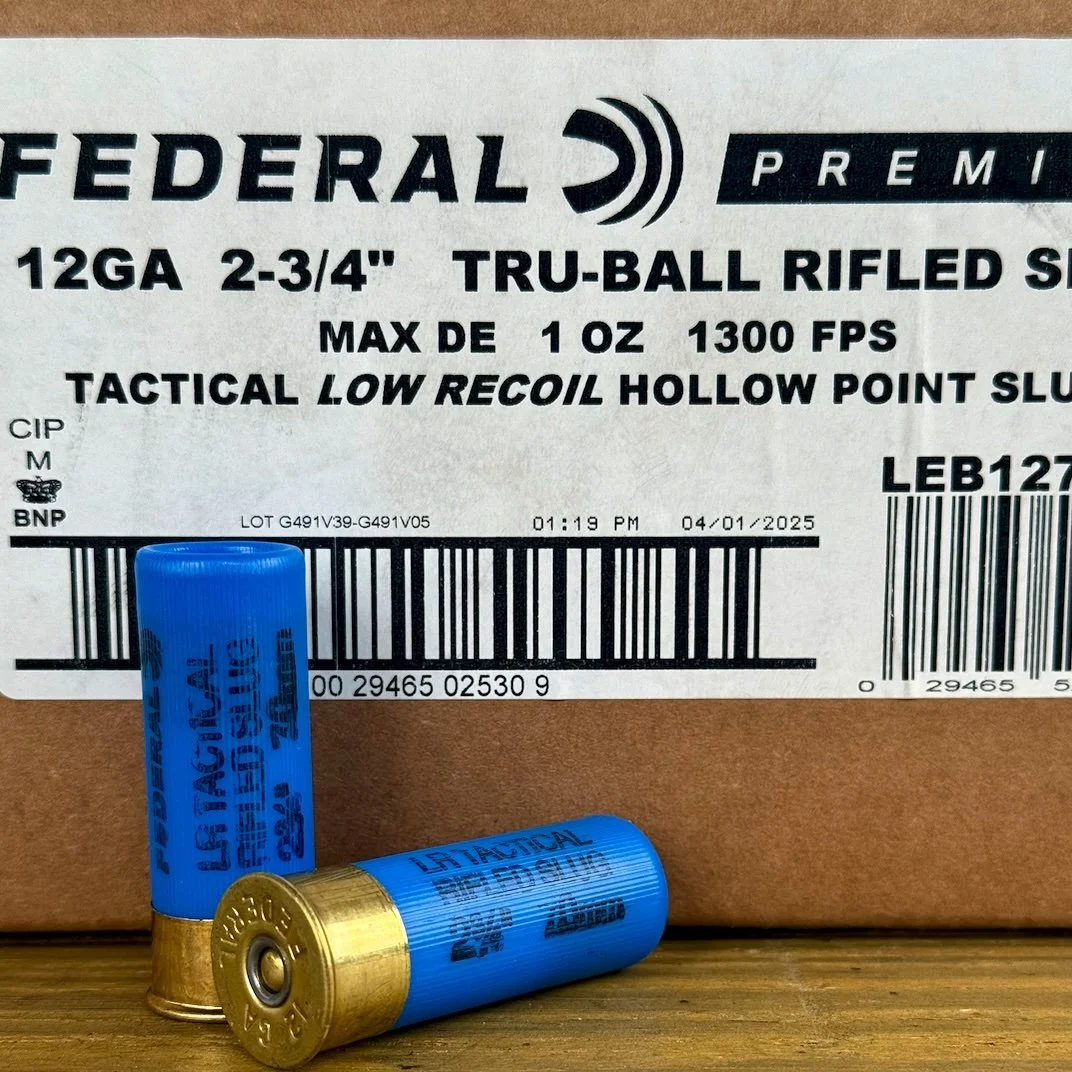
A 1-ounce slug traveling at 1,300 feet per second carries 1,641 ft-lbs of muzzle energy, or P=Plenty (the breachers here will get that joke). Bottom line, you don’t really need to push a slug or buckshot any faster than that to get good effects on a human target.
The other prong to recoil mitigation is technique, which can easily be achieved through training. The Push-Pull Technique popularized by the Haughts is a game-changer when it comes to managing the recoil of a shotgun. It becomes a total non-issue, even when firing full-house buckshot. I won’t try to explain the technique here, but you can watch Rob Haught explain it HERE. It is difficult to overstate the difference it makes.
Closing Thoughts
Shotguns aren’t for everyone…but neither are pistols or ARs. Shotguns can be incredibly effective. To get the most out of them, though, you need to set them up correctly, get high-quality training in their use, and practice with them. But, that’s the exact same thing I would say for a rifle or pistol. There’s no free lunch. There’s no magic gun that you can put in anyone’s hands that doesn’t require some level of skill to basically operate, and a decent level of skill to operate well.
If you’re using a shotgun for home defense, don’t be discouraged by the negative stuff you see online. Consider the source. Also consider that some extremely knowledgeable, experienced, and highly trained people like Tim Chandler, Greg Ellifritz, Steve Fisher, Erick Gelhaus, Tom Givens, Rob & Matt Haught and many, many more all depend on the shotgun. And if you’re making a video about how shotguns suck…maybe take a class or two first and make an educated comparison, instead of letting your lack of understanding drive you to set up straw men.