Five Shooting & Self Defense Myths
I keep a running list of article ideas for this blog. Recently I went through this list and found several items that didn’t seem like they would fill a complete article. Some of these are “gun shop wisdom” kind of things, and some of them are myths that I commonly encounter on the internet. Regardless of their provenance, I dislike all of them and would like to address them. For lack of a better title, I’m going to call this Five Self Defense Gun Myths.
This article contains affiliate links. Using these links gives us a small commission but costs you nothing. Please consider using our Amazon link to support this blog.
If you'd like to listen/watch on Youtube, you can find this article here:
#1: Mostly Shoot a Full Sized Pistol
I’ve heard this one twice, recently, from two instructors I really respect, independently on two separate videos/podcasts. I’m not going to name them because they likely know something I don’t. However, I still disagree with the underlying premise.
I see this one at a lot at the classes I attend. When it’s range time, everyone takes off their P365 or Glock 43 or J-Frame and straps on a gunbelt. They’ll spend the day shooting out of an open-carry rig, with a full-size pistol with a large weapon-mounted light. Then when the range is over, they pack all that gear up, and put their little gun back on. Obviously this doesn’t apply to everyone. Some folks shoot their little guns and do it well. And some actually carry that big gun all the time. But those shooters are certainly in the minority.
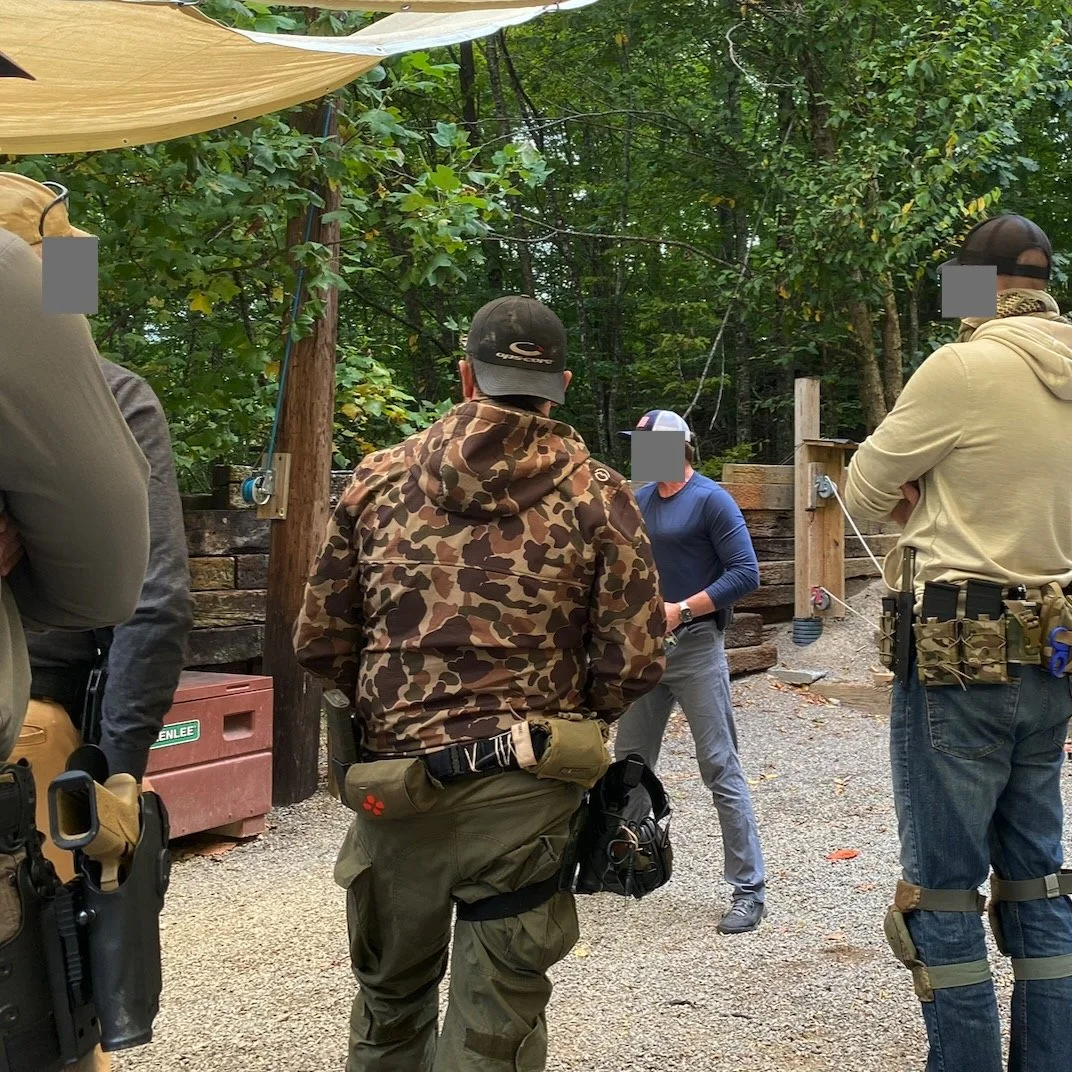
The gear the average gun guy seems to run in class…
I think this creates two problems. First, it fails to train the skills that are most likely to be needed. Gabriel Suarez says - and I agree - that the concealed carry handgun is the sword of the modern samurai, and you should be “scary good” with your carry pistol. I think you should spend maximum time and effort training with the gun that you actually carry. The second problem is that you develop unrealistic expectations. If you spent the whole day on the range running .20 splits with a Glock 17 then need to use your 43, do you have a realistic idea of what you are capable of?
Though I now sometimes shoot my duty sidearm (a Glock 45) in classes, I have spent most of my training time shooting my EDC pistol. I have taken it to multiple classes including the first Cognitive Conclave, Justin Dyal’s Intermediate Pistol and Simon Golob’s On Demand Performance. I have also spent two full years of daily dry practice with it, and if I go to the range, to is the most likely gun to be shot. I can do “full-size things” with this pistol, because I put the time in. Also, because I didn’t really know how much easier a full-sized pistol was to shoot, I didn’t put limitations on myself when I started training with this gun. I was unable to take my EDC 1911 to Tom Givens’ Protective Pistolcraft class, so instead I spent five days shooting a P365XL, and I can promise you, it’s totally doable.
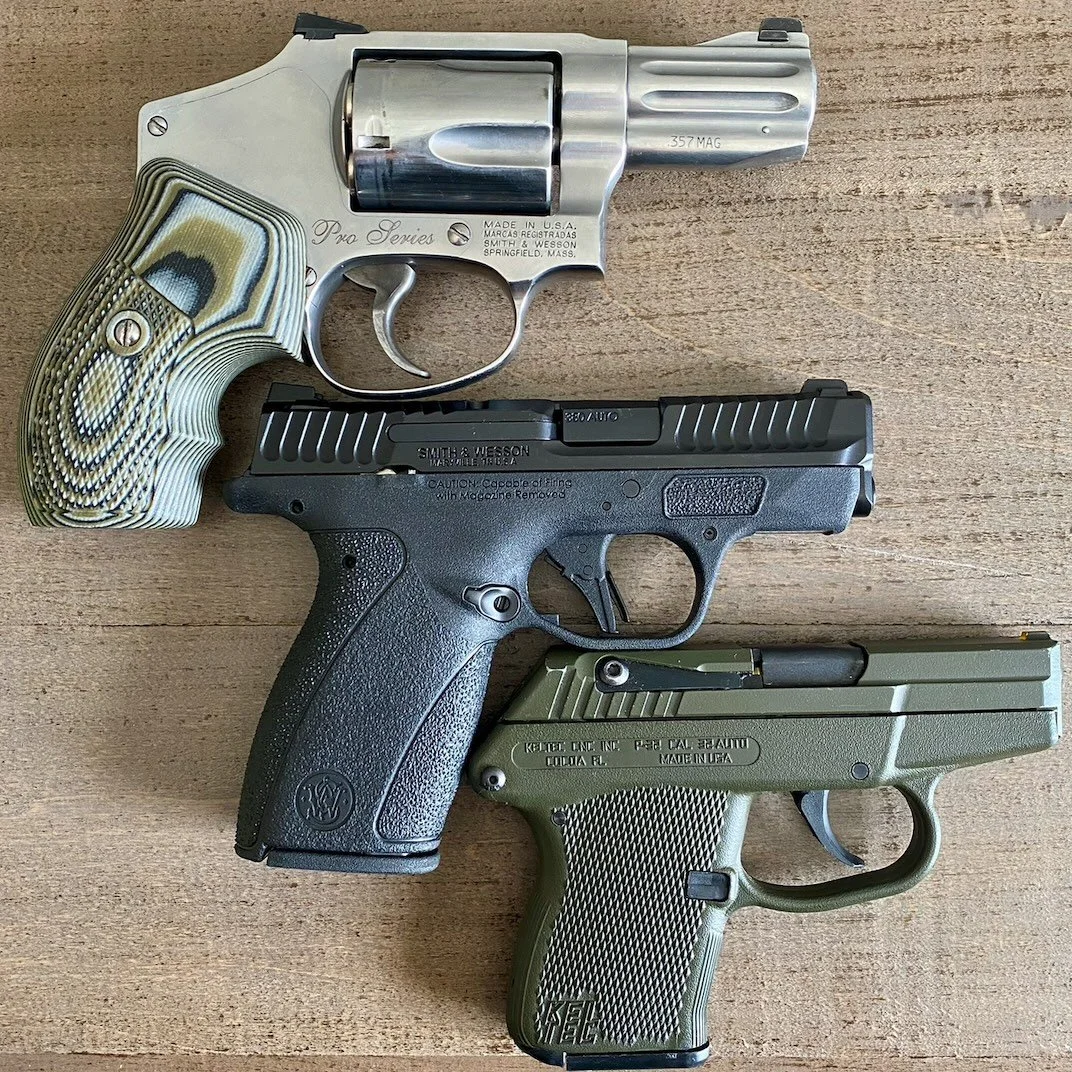
…versus what they actually carry.
There is a caveat here. If you are brand new, it might be worth your time to start with a big gun. But if you’re a serious practitioner, I think you should shoot what you actually carry about 90% of the time.
Bottom line: I think if you’re going to carry a small gun like a P365 or Glock 43, you need to shoot it. If that gun is too small and uncomfortable to get through a class with, you might need to think about sizing up a bit, to say a P365XL or G48. I agree with Suarez: you need to be scary good with your EDC handgun.
#2: Shooting Beyond 25 Yards is Murder!
The Elisjsha Dicken shooting did a lot of dispel this myth. At a a shopping mall in Greenwood, IN, Dicken stopped a mass shooter with shots as far away as forty yards. Still, this one pops up from time to time. In fact I heard it recently enough to inspire this whole article.
“If you’re shooting at more than X yards, it’s not self-defense, it’s murder.”
I think this one comes from a pretty common phenomenon: having a pet scenario that you imagine your shooting looking like. Early in my concealed carry life I imagined that if I got into a shooting, it would look a certain way. The bad guy would be a certain distance from me (and of course, always directly facing me). He would also be more or less stationary. I would remain cool and calm, and surgically place two or three bullets directly into the sternum, he would drop, and I would be the hero. But fights are much more dynamic than this. Bad guys tend to move when being shot. They don’t stand there like a B27 silhouette. And they aren’t always at the predictable 3-yard distance.
First, if you can murder someone at 25 yards, isn’t it reasonable that they can murder you a the same distance? Sure, shooting someone who is standing 25 yards away holding a knife is pretty questionable, all other things being equal. But if someone is shooting at you? Since a bullet can cover that ground in a tiny fraction of a second, I can’t think of a good reason the distance by itself would disqualify you from claiming self defense. I regularly shoot pistols at 25 yards and well beyond, so I know exactly how dangerous a pistol shot can be at distance. In fact, I’ve shot my Kel-Tec P32 at 100 yards and made hits, a challenge to be sure, but doable.
Of course this assumes the rest of the fact-pattern supports a self-defense claim. You must be innocent, the threat must be imminent, if avoidance is possible (especially as distance increases) you should probably attempt it. And your use of force must be reasonable. Also, consider who is around the bad guy; if he’s standing in a crowd of innocents, shooting from fifty yards away may not be the best course of action.
Bottom line: I’m not telling you that you need to be prepared to shoot your pistol at 100 yards, just that there is no arbitrary distance at which self-defense claims stop.
#3: Small Guns = Small Problems
I hear this one a lot, because I have written quite a bit about small guns I have reviewed a lot of compact revolvers, and a couple years ago I went on a deep dive with deep concealment guns. A lot of people told me that sights didn’t matter because these guns are only “for bad breath distance” or “belly guns,” and the like. I beg to differ, but one comment that exemplifies the bunch is below:
“…on a deep concealment micro-compact meant for use at conversational distances, it [an optic] seems to be an especially dumb idea…”
~James Tarr, Smith & Wesson Bodyguard 2.0: Full Review on GunsandAmmo.com
The heart of this argument seems to be that small guns are for small problems. It seems to revolve around an idea that a small gun will only use it when you’re in a very close-range fight. Unfortunately, I lack the ability to predict if and when I might be in a fight for my life. I also lack the ability to predict the nature of that fight - what it will look like, where it will occur, or how resilient by adversary will be. When I carry an ultra-concealable gun, it’s not because I know I won’t run across any “big” problems.
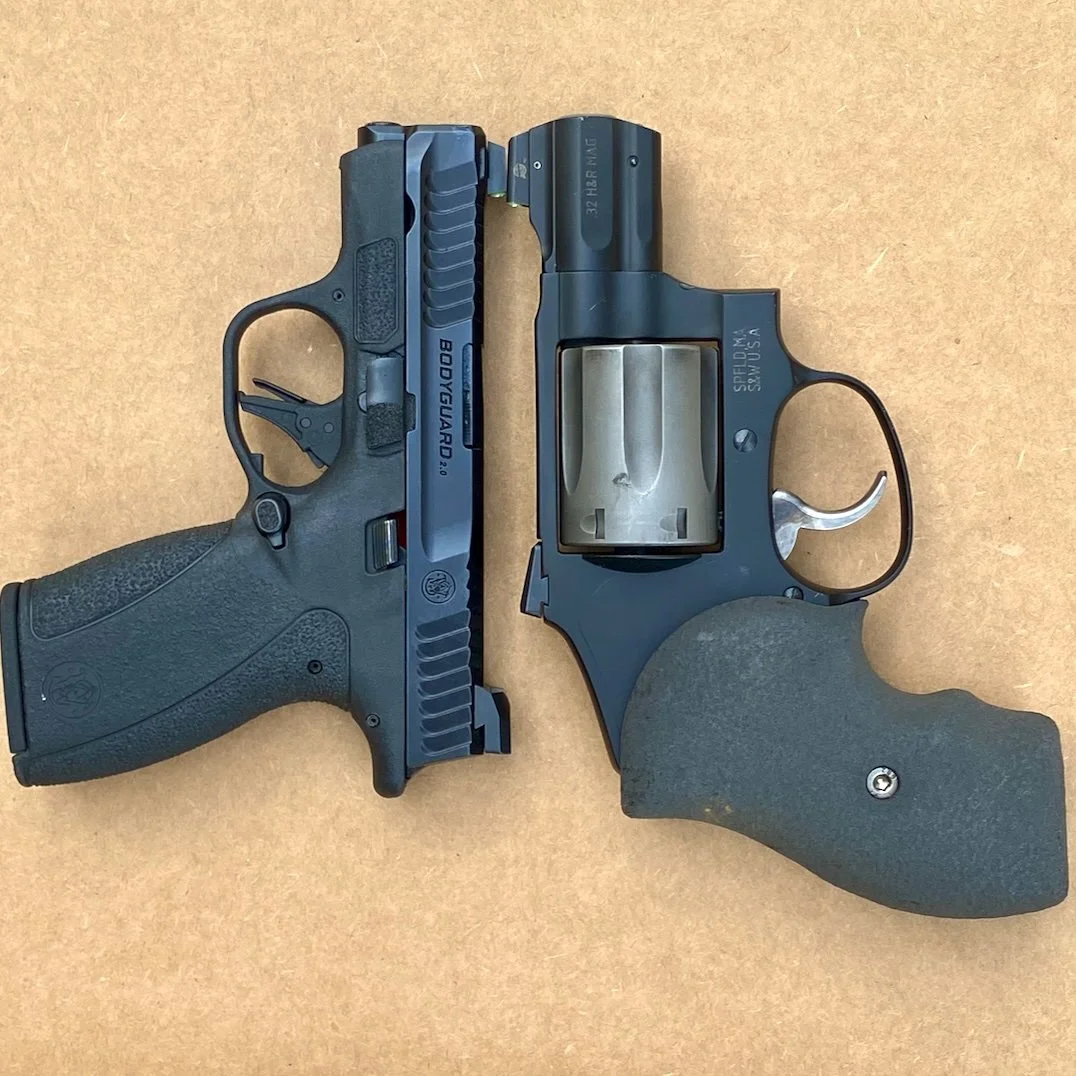
Two “belly” guns.
Rather, I carry a small gun only occasionally, when circumstances prevent me from carrying anything larger. There is one recurring circumstance in my life that requires me to carry a deep concealment gun. The gun absolutely MUST remain concealed at all times - I can’t get into why, but it would create life-altering problems for me if the gun were exposed. Paradoxically, this situation also puts me at greater risk of being assaulted and needing a firearm - a real paradox. Would I like to have a bigger gun on me? Absolutely! Unfortunately, doing so creates its own, much more likely risks.
The fact is, there is no such thing as a “small” gun problem. When facing a deadly force threat, no one is going to be thinking, “that’s fine, this is belly gun distance, so I’m glad I’ve got my belly gun.” We’ll all be wishing for something much larger and more powerful. Carrying something bigger and more powerful isn’t always an option, though. Small guns aren’t for small problems, they are for when you can’t carry anything larger.
Related: sorry, but I don’t care what the gun was “meant” or “intended” for. I care much more about what role it can fill for me. I know that very few people out there have a serious need for a deep concealment or hideout gun…but some do.
#4: ONE “Right” Way to Do Anything
This is a another one that really gets to me: the dogmatic instructor with THE way to do something. I had a few of these in the police academy. They would start screaming at me if I used the slide latch to release the slide on a reload.
“RACK THE SLIDE! In a gunfight you’re not going to be able to find that tiny little button!”
Many instructors get hung up on THE way to shoot. The fact is, there are several ways to do just about every shooting task, from grip to stance to…whatever. I am not a big fan of the Weaver stance. However, there are certainly shooters out there who could beat me on any measurable standard while shooting from the Weaver stance. Using the slide latch? I seriously doubt that is going to be the factor that gets me killed in a gun fight. Some instructors are going to tell you that you’re going to die in the streets if you don’t “scan and assess” after each drill, and others will tell you it’s just useless “gun kata.”
Now, with that said, there are probably objectively better ways to do some things than others. And even if these ways aren’t totally objective, an instructor should absolutely express his or her opinion. Hell, that’s why I’m paying to go to the class: to hear the instructor’s take on the topic. But demeaning students, or acting like there is only a single correct way to do something is probably more about your ego than anything.
And to be clear, if you’re a student, this is a two-way street. I’ve seen students in classes who explain to the instructor why they can’t (or more likely “won’t”) do it the instructor’s way. I’m always curious why you would you pay to go to an instructors’ class and not try it out. And on that note, that there are perhaps rightER ways of doing some things, especially for new shooters. These are things that will make it easier in the long run; you may be getting OK hits with a subpar grip, but once you begin shooting faster, a weak grip will handicap you.
And the same goes for gear. I promise you, there are guys out there who can run circles around you with Beretta 92s, Ruger RXMs, 1911s, hell, even revolvers, or whatever other gun you don’t like. Keep in mind that equipment is a distant secondary consideration compared to the level of training of the individual running it. =
Bottom line: If you’re a student or instructor, don’t get too dogmatic about any given tool, technique, or procedure.
#5: Revolvers Are Simple and More Reliable
This one contains some truth, and some exaggeration. First, revolvers are not mechanically simpler than semi-automatic pistols. The trigger of a revolver has to transfer force in two directions simultaneously. The cylinder must line up rather precisely with the barrel each and every time the trigger is pulled. This requires bearing surfaces that move in arcs, and thus, must be finely fitted. Legacy revolver designs require some hand-fitting to get all these parts working correctly. Like 1911s (which also aren’t mechanically “simple” compared to Glocks and similar), revolver parts are not “drop in.”
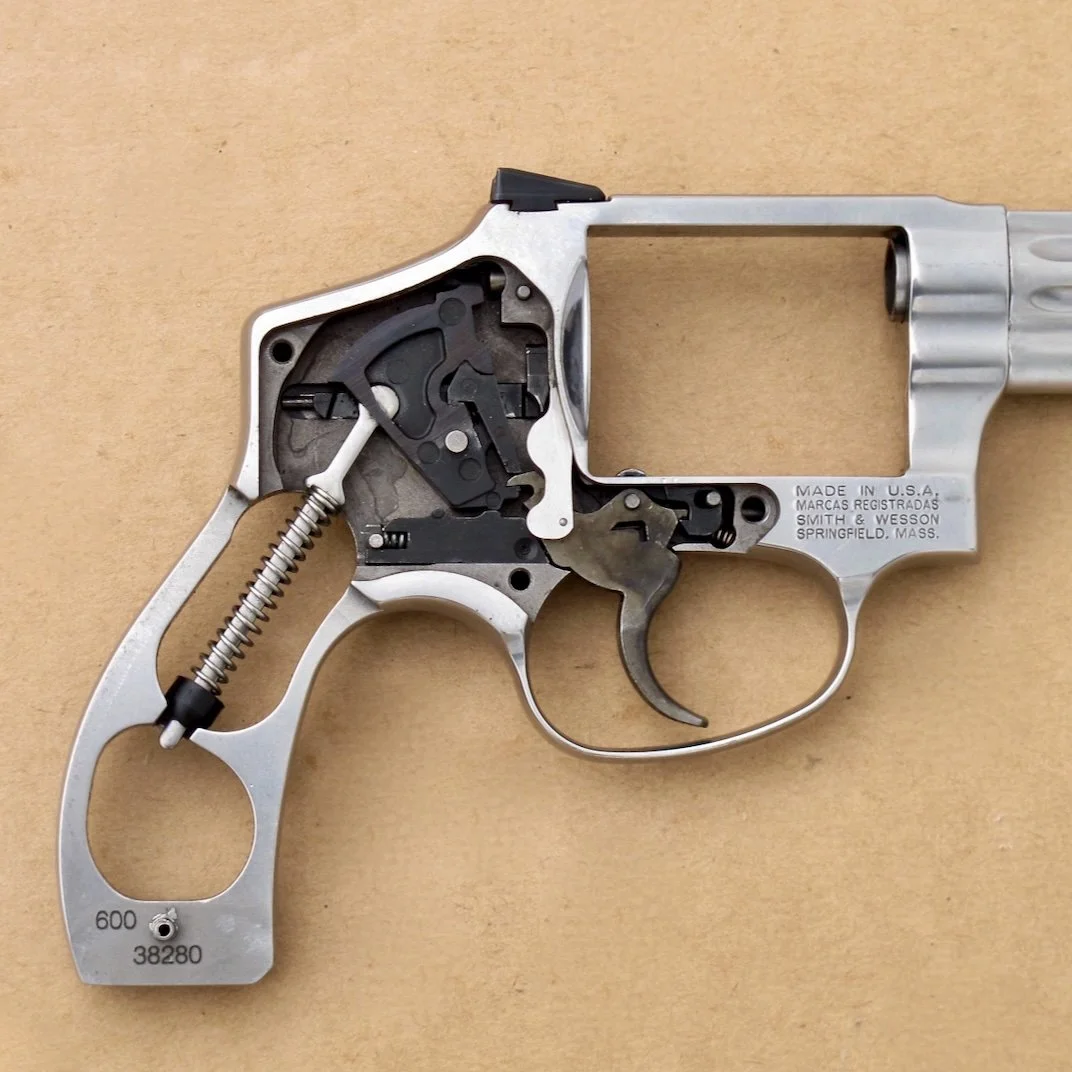
Serious steampunk vibes.
It seems like Smith & Wesson has forgotten this. The recent crop of revolvers from S&W is a hot mess. I detailed this in an article that pointed out all the problems I had with three editorial samples, as well as the issues some Youtubers including Nightwood Guns (.32 Ultimate Carry, 386 Night Guard, 586 L Comp, 640 Black), HRFunk, and Dick Fairburn have had. And Ruger is having serious manufacturing problems as well, though I’m not as familiar with them.
And there’s also the myth that revolvers are inherently more reliable than semi-automatics. I’ve had all sorts of malfunctions with revolvers. These include a locked-up cylinder due to a backed out ejector rod, crud under the extractor star, brass under the star, light strikes, pulled bullets, sticky cases, and more. I’ve had a trigger that would pin to the rear and a cylinder that could be pushed past the cylinder stop when reloading. There are a TON of things that can go wrong with a revolver, as detailed in Mike Wood’s incredibly detailed article on same.
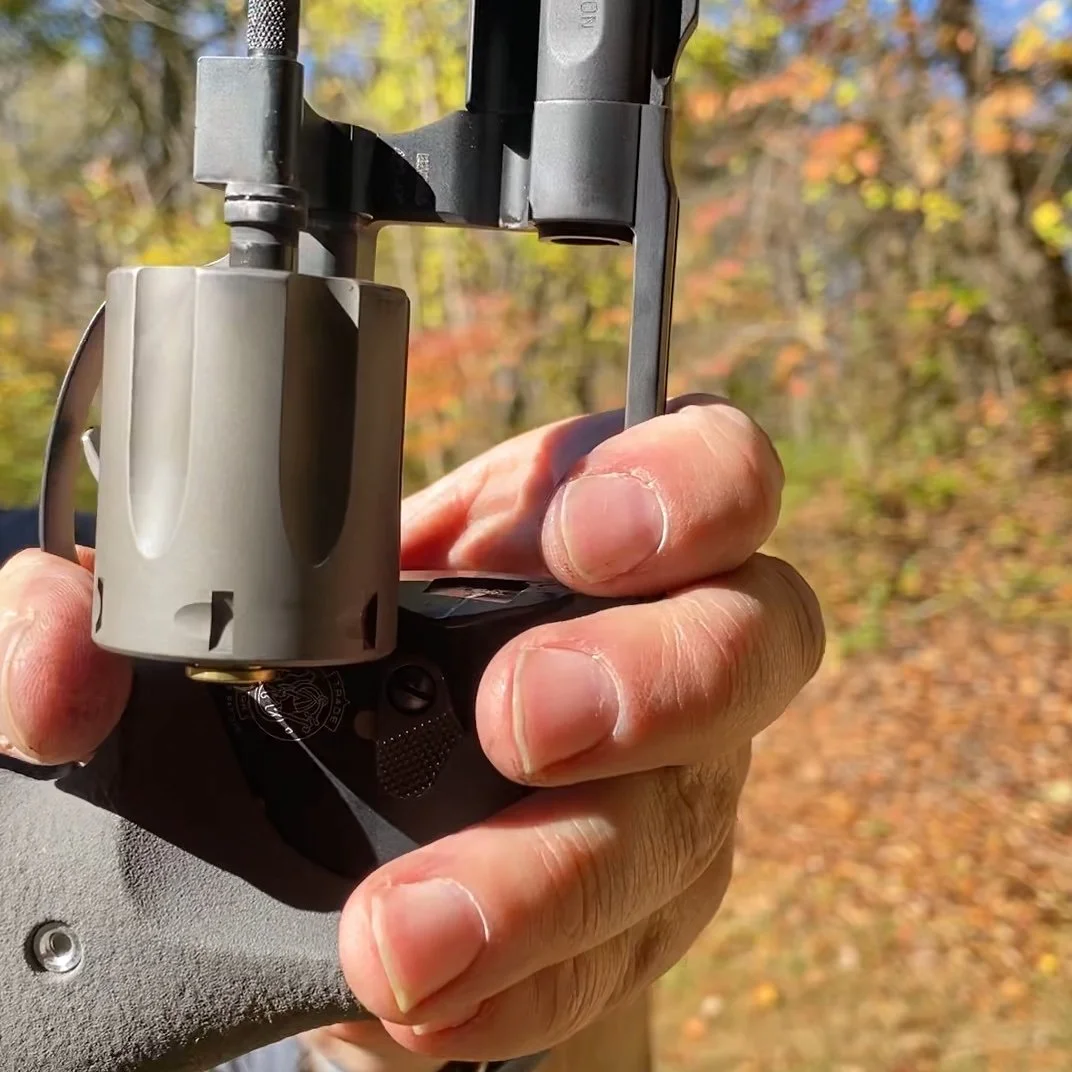
This absolutely should not happen.
With the current decline in production quality (and quality control, which is a related, but separate issue) revolver malfunctions are more likely with newer guns than old ones. Currently I am extremely skeptical of new production revolvers. It’s hard for me to recommend anyone spend hard-earned money on guns that may or may not work when there are so many reliable semi-automatic handguns out there.
That’s It… For Now!
And that’s all I’ve got for today. I’m sure a few new gripes will pop up at some point. In the meantime, stay tuned!