This is the first in a three part series on terminal ballistics. In this first part, I’m going to take a look at how pistol bullets achieve stops. In part two, we’ll take a look at what pistol bullets do (and don’t do), address caliber concerns, and things like penetration, and expansion. In the third part, we’ll talk about tactical anatomy and where you need to aim to end fights quickly. Along the way we’ll dispel some myths like “stopping power” and “knockdown power” and perhaps even address the question of 9mm versus .45 ACP. I almost hate to wade into these waters, but this debate seems never ending so, I might as well throw my hat in the ring.
This article contains affiliate links. Using these links gives us a small commission but costs you nothing. Please consider using our Amazon link to support this blog.
Featured image retrieved fromhttps://en.wikipedia.org/wiki/Ballistic_gelatin#/media/File:Aimed_Research_Sub-Microsecond_Photography_of_Federal_Power-Shok_100grn_.243.JPG
If you'd like to listen/watch on Youtube, you can find this article here:
Useful Takeaways of this Article
Ultimately, I suppose this is a caliber debate, so lets get the bottom line up front. The following bullet points will be the ultimate point of this whole series of articles.
There are three ways that bullets cause “stops”: they can cause the bad guy to choose to stop, or force him to through blood loss, or cause interruption of the central nervous system.
The only singular targets that can guarantee a timely stop through exsanguination (bleeding out) are the heart and aorta/vena cava.
The only way we can guarantee an instantaneous stop is to interrupt the central nervous system (brain or spine).
Thus, if we make a CNS hit or a heart/aorta hit, caliber is fairly irrelevant compared to accuracy because a stop (either instantaneous or on a timer) is virtually guaranteed.
If we do not make a CNS hit or heart/aorta hit, again caliber is fairly irrelevant compared to accuracy, because a timely stop may or may not occur.
First, I would like to stress (over and over and over again) the importance of accuracy to win a gunfight. Marginal hits with any caliber cannot guarantee a stop. Period. Full stop. Nor can marginal hits with “magic” bullets guarantee a stop. The latest, greatest hollowpoint - or now the “external hollowpoints” - cannot guarantee a stop without hitting something vital. To guarantee a stop, we must hit something that matters. Most of the human body is fairly unimpressed with handgun bullets. Someone shot with a pistol - unless hit in one of a few small areas - can continue to be a deadly threat to you for quite some time, if they choose to be.
Second, if you are shot, you should not assume that you are done. Again, most of the human body is fairly unimpressed with pistol bullets. Unless you are shot in one of a few, select areas, you will have some time before becoming unconscious. You should keep fighting - or, once fighting is over treating injuries - until you solve the problem or lose consciousness. Jared Reston said it best when he said, “I’m never going to know I lost a gunfight. I’m just going to keep fighting until the lights go out.”
Type of Stop: What is a “Stop”?
We are engaged in outcome-based shooting. We are shooting to achieve a specific goal; that is, the cessation of imminent or active use of deadly force, surrender, compliance, or flight. In layman’s terms, we are looking for the bad guy to “stop doing whatever he was doing that made us start shooting him in the first place.” The first time I heard it phrased so plainly was from Chris Baker of Lucky Gunner Lounge.
“In layman’s terms, we are looking for the bad guy to “stop doing whatever he was doing that made us start shooting him in the first place.”
Not only do we need the bad guy to stop “whatever he was doing that made us start shooting him,” we need him to stop NOW. Remember, if we are doing something that justifies deadly force, someone is doing something to us that can literally kill us. We have exhausted all lesser options, and there is a very real risk that we will die if we don’t stop that person.
To achieve a stop, we have to accomplish certain definable goals. Often, this stuff is left up to magical thinking. Things like “hydrostatic shock” or “knockdown power” or “slap effect” are thought to be responsible for causing a stop. We may explore some of these terms later in this series, but for now let’s just call them what they are: totally meaningless. Pistol bullets merely initiate a mechanical process. If we make a good shot, that process can result in a satisfactory stop. If we don’t make a good, definitive hit, we are leaving the choice to stop (or not) up to the bad guy.
There are four types of stop that are commonly talked about. These are the mobility stop, the psychological stop, the timer stop, and the switch stop. The remainder of this article will explore each of these in much greater detail.
The Mobility Stop
The “mobility stop” or “mobility kill” is a term borrowed from military armor. It refers to knocking a tank off its tracks, immobilizing it, and rendering it ineffective on the battlefield. I have heard this same terminology applied to the pelvis shot. It’s not a great technique, and I’m going to address why. This should also help you to answer the question, “why didn’t they just shoot him in the leg?” the next time you hear it.
"I welcome the chance to refute the belief that the pelvic area is a reasonable target during a gunfight. I can find no evidence or valid rationale for intentionally targeting the pelvic area in a gunfight. The reasons against, however, are many."
~ Dr. Martin Fackler
The mobility stop is thought to be caused by damage to bones or other other physical structures that limit an adversary’s ability to move. There are some big problems with this, however. First, bones are occult (hidden), making them rather difficult to hit. We have some clues about where major bones are, but if the adversary is wearing clothing, and/or is padded with a layer of fat, making a pinpoint shot on a bone may be difficult to say the least. This is complicated further if the adversary is in motion, which he is likely to be.
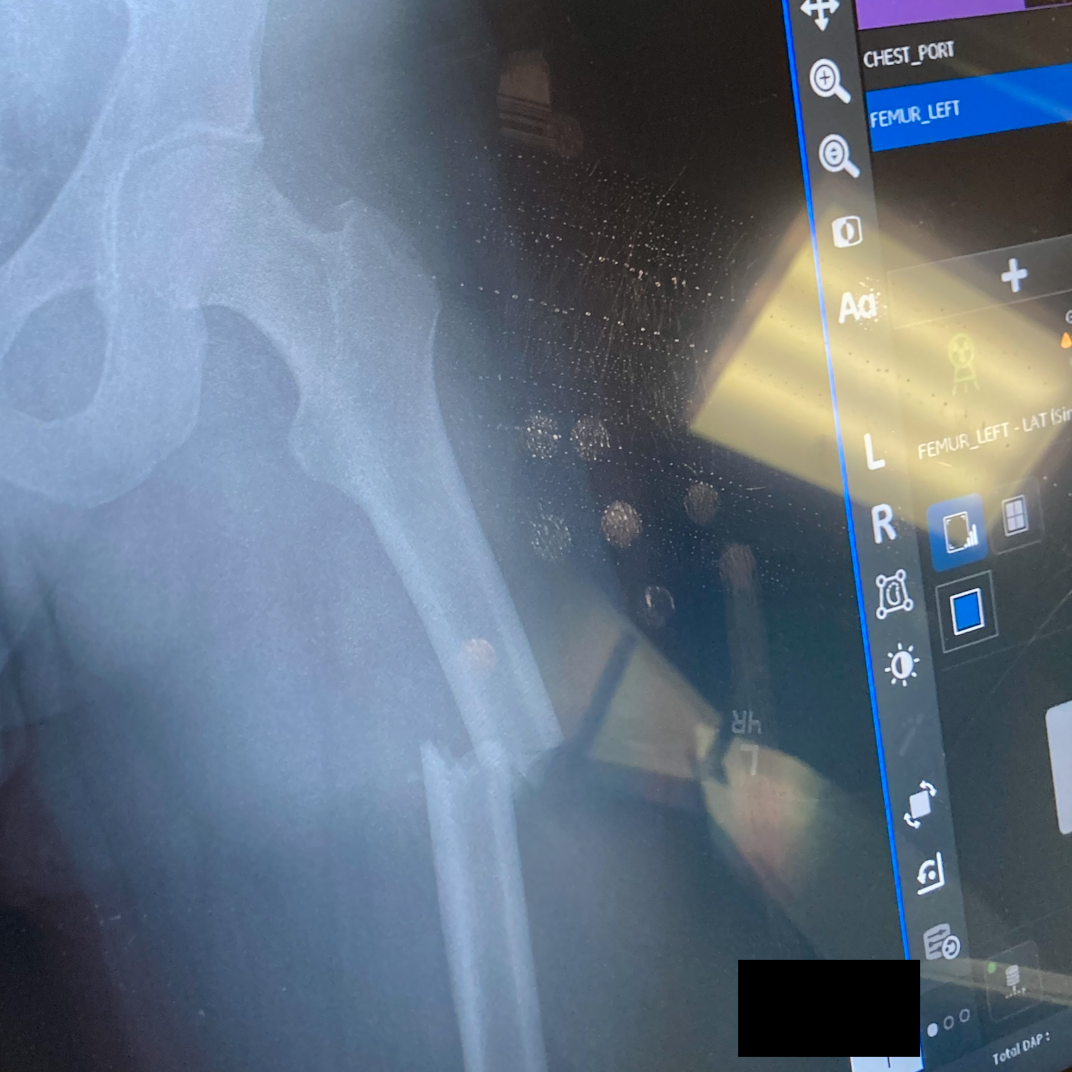
Additionally, attempting a mobility stop may not achieve the desired result. Bones - especially large bones that support the body weight - are extremely tough. Pistol bullets may or may not achieve the desired results on a large bone like the femur. And even if we do achieve a solid hit that breaks bone, the bad guy may not react the way we expect him to. The photo above shows an x-ray of a broken femur. This femur belonged to one of my patients who was in a car crash. When my partner and I arrived on scene, the was standing beside the vehicle and started walking toward us. This is an important lesson that we’ll visit in the next section: pain is not an equally effective motivator for everyone.
Mobility Stops: What About the Pelvic Shot?
Toward the end of my time in the military, I started seeing the pelvic shot become a thing in my circles. I’m sure it had made its rounds elsewhere before this, but this is where I first encountered it. The rationale was that the head is small and usually in motion, and the pelvis is larger and perhaps easier to hit. I also remember being told the pelvis “is full of bones and large vessels.” No one bothered to tell me what all this critical anatomy was, so I just assumed they were correct.
The pelvis is full of large bones. Unfortunately for us, the bones in the pelvis are very resilient. The iliac crests of the pelvis (the large, “elephant ear” looking structures prominent in your waist) may take several pistol bullets without causing pelvic instability. These would certainly be painful wounds, but as we’ve seen, not everyone responds to pain (we’ll take about other factors that influence this in the next section). Additionally, the vessels in the pelvis aren’t as profligate or as large as advertised. The largest vessels running through the pelvis are the femoral arteries, and these are a very small and fairly well-protected target.
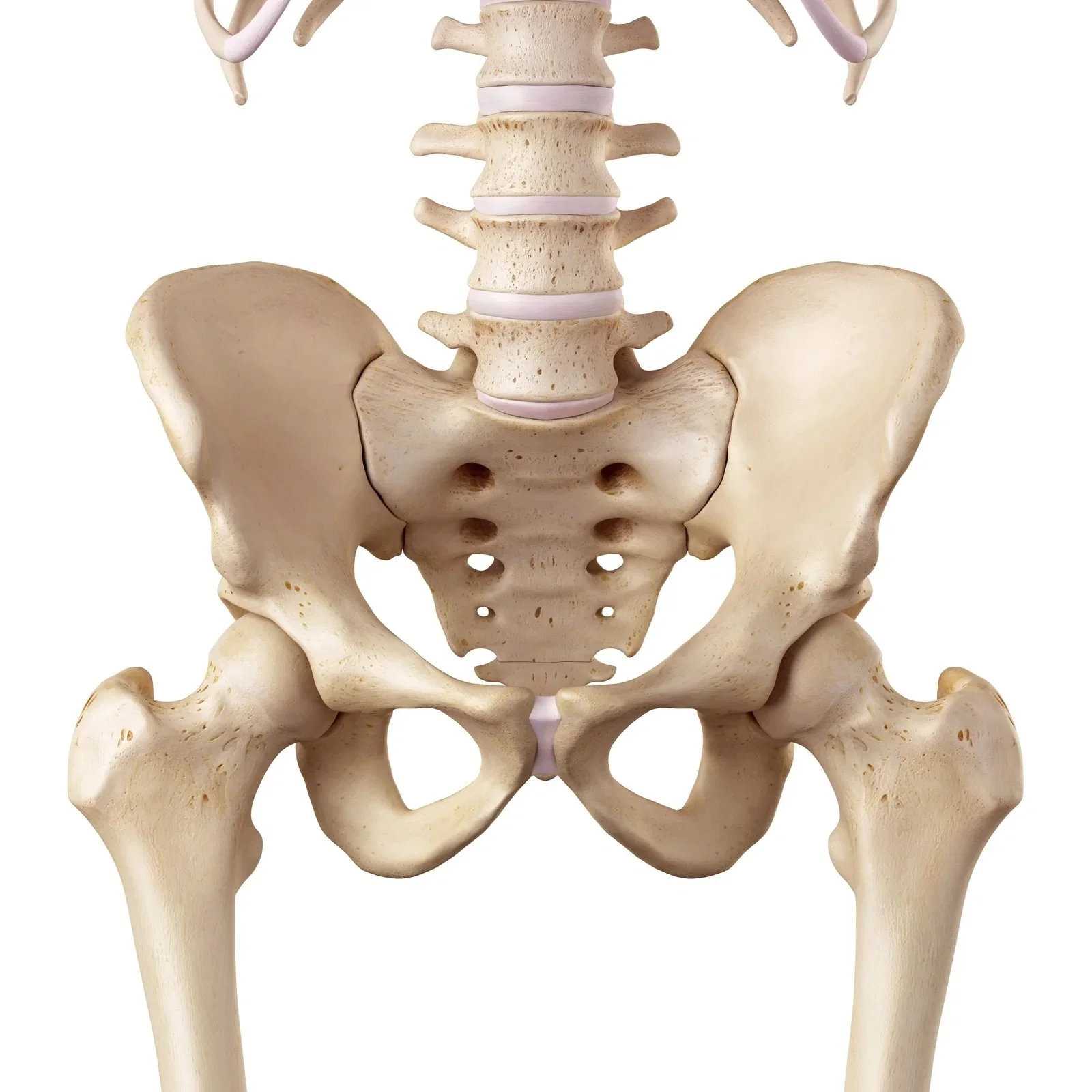
Image retrieved from https://www.arlingtonortho.com/conditions/hip/hip-anatomy-of-the-hip/
We also need to remember, in regards to mobility stops, that even if we have achieved a mobility “stop,” we haven’t necessarily eliminated the threat. A bad guy who is “down but not out” can still hurt us, especially if he is armed with a gun. Even if his ability to ambulate has been completely removed, he is still a potential threat. And finally, if all of the above doesn’t address, “why didn’t they ‘just’ shoot him in the leg,” it’s important to remember that shooting someone in the leg is deadly force and can be fatal. Though a leg shot is unlikely to stop a fight (and very unlikely to do so quickly unless it achieves a psychological stop), it is absolutely deadly force and comes with all the hazards of deadly force.
Should You Ever Attempt a Mobility Stop?
My opinion on the mobility stop is that it should be avoided…so long as other, better choices are available. If, however, a shot on a pair of feet or a knee, or an elbow is all you have presented to you, it may be worthwhile to take it. In the extremely unlikely event you are in fight with someone behind cover, you may need to attempt the “take what you can get” shot. The other occasion when taking a pelvis shot may be indicated is when angles of fire make shots to the upper torso/head unsafe. Even in a gunfight you still have to be aware of your target AND what is beyond it.
Let me reiterate: the mobility stop is not a primary or even a secondary engagement strategy - this is getting well down in the “contingency” and “emergency” portions of the P.A.C.E. plan.
If for some reason the pelvis shot is the best shot available to you, there are some things you can do to increase your chances of success. First, the structures most likely to be effective are the femoral heads - the top part of the femur that connects to the pelvis. When your grandma falls and breaks a hip, this is typically what is broken. Breaking this bone has the highest likelihood of taking a bad guy to the ground. Next, shooting side-to-side through the pelvis (left-to-right or vice versa) doubles your chances of hitting something good. Also a bullet traveling laterally through the pelvis will do more damage to bone, and have a doubled (though still small) chance of hitting a iliac/femoral artery.
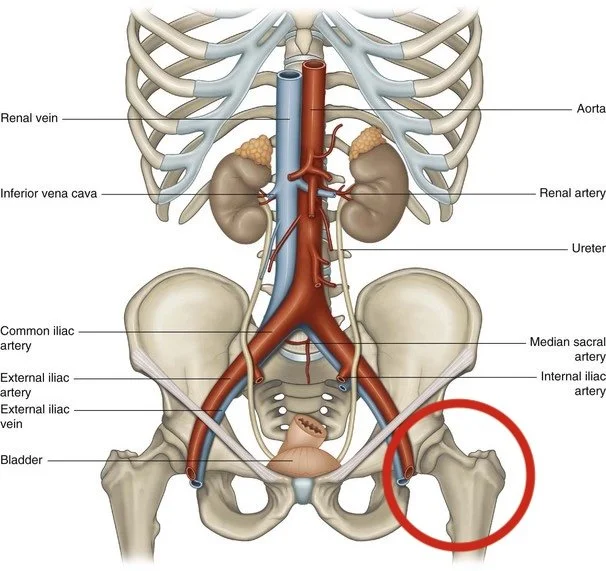
The femoral head (circled in read) and the external iliac arteries are the most effective areas in the pelvis. However, they are deeply hidden and difficult to hit. Image retrieved from https://musculoskeletalkey.com/iliac-vessels/
Finally, the best thing you can do to increase the effectiveness of the pelvis shot is to use a rifle or properly loaded shotgun (buckshot or slugs). Rifles and shotguns have so much more destructive potential than pistols, they are much more likely to cause immobility/incapacitation from a pelvis shot.
Mobility Stop Case Study: Gabriel Tauscher
For each type of stop I try to offer a relevant case study. The best mobility stop case study I was able to track down was the case of Gabriel Tauscher I won’t steal Gabriel’s whole story, but I will give you the highlights. For a full accounting of the story, his appearance on the American Warrior Show was fantastic, as was his YouTube interview with Tom Grieve.
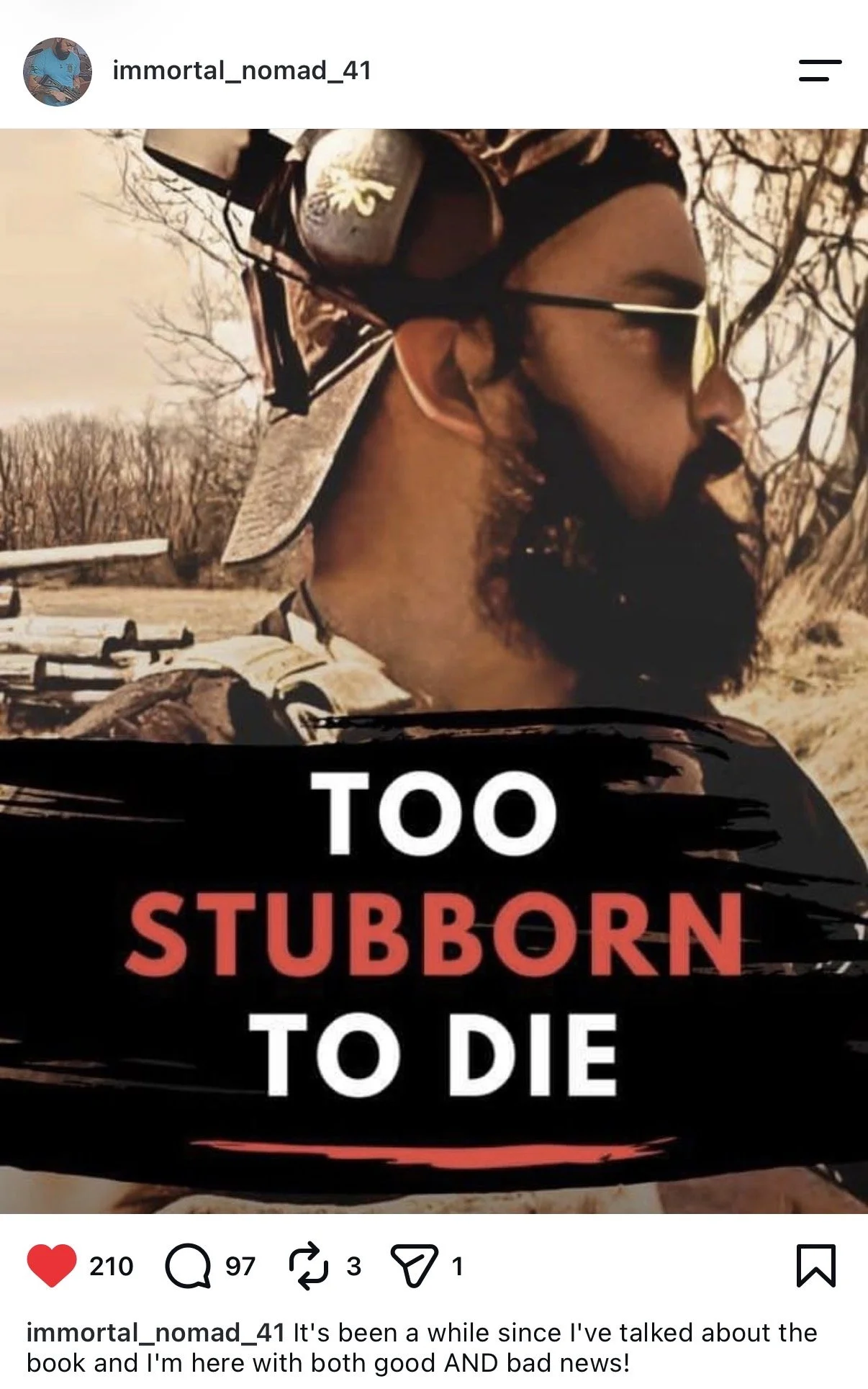
An image of Gabriel Tauscher retrieved from his Instagram page, @immortal_nomad_41
Gabriel was dating a woman with an unstable ex-boyfriend. The ex-boyfriend had made a number of threats, so Gabriel was making sure his girlfriend got home safely. The ex-boyfriend ambushed Gabriel, shooting him 15 times with a .45 ACP. It’s fairly safe to say that a mobility stop was achieved: Gabriel’s shooting arm was completely inoperable. He was still able to draw his handgun, though. With his weak (right) hand, Gabriel drew his HK VP9 from the 8 o’clock position and fired it upside down, pulling the trigger with his pinky.
Even though a mobility “stop” was achieved, Gabriel was still able to get his gun out. Getting to the pistol and firing at the bad guy ended the fight. Has a mobility stop ever worked? Sure, but it’s not reliable enough to depend on as a first-line intervention in a fight for our lives.
The Psychological Stop
The next kind of stop is the psychological stop. I am reminded of a quote from one of my favorite movies when considering the psychological stop. The quote is from the Cohen Brothers’ excellent Oh Brother Where Art Thou? George Clooney’s character, Ulysses Everett McGill says, “It’s a fool who looks for logic in the chambers of the human heart.” He’s basically saying that you can’t depend on humans to make good decisions; we are ruled far more often by irrational emotion than logic and reason. This is why the psychological stop is, at best, unreliable.
Physiologically, no caliber or bullet is certain to incapacitate any individual unless the (central nervous system) is hit. Psychologically, some individuals can be incapacitated by minor or small caliber wounds. Those individuals who are stimulated by fear, adrenaline, drugs, alcohol, and/or sheer will and survival determination may not be incapacitated even if mortally wounded.
- Special Agent Urey W. Patrick, Handgun Wounding Factors and Effectiveness, July 14, 1989.
Factors Influencing the Psychological Stop
I believe we could also call the psychological stop the “choose-to” stop, because that is what it is. The bad guy is choosing to stop based on some combination of factors. Some of these factors might be reasonable to us, and some of them may make no sense whatsoever. And some of them may not even be articulable by the bad guy himself. Some of the factors that might play into a psychological stop include:
Simple value judgement: is what I’m going to get out of this worth the risk? Should I live to fight/steal/deal/get high another day? Some bad guys might be making value judgements about the amount of money they can get out of a person/situation, versus their risk of getting hurt. While a bad guy might happily rob a convenience store, he may be far more reluctant to rob one with a patrol car sitting out front.
Assessment of likelihood of winning: Not all bad guys shrink from a fight. Some are looking for a fight. But they are also constantly assessing their likelihood of winning. This is called the “victim selection process;” are you heads up, do you look fit, are you assertive (but not aggressive)? You are probably not the ideal victim. Some bad guys will move on to greener pastures if they are unsure of their chances of winning a fight. This also applies to cops and is called “officer presence.” Do you look squared away with a clean, fitting uniform? Are you fit? Alert? Professional?
Fear/Intimidation: The bad guy may suddenly find a deep reserve of self preservation when you draw your gun or start shooting at him. One classic example of fear/intimidation stop is the mighty muzzle flash of the old .357 Magnum revolvers. Mas Ayoob recently mentioned espoused this idea, and Darryl Bolke has mentioned it recently too (as exemplified starting at 11:00 in this video). Does a loud noise and a huge muzzle flash cause bad guys to get scared and quit? I’m sure it has happened, but I’m equally sure I would not bet my life on it. It does fail, as we will see in a case study at the end of this section.
Pain: Pain may play a role for some. As we’ve seen with the mobility stop, it may not play nearly so big a role with others. This is exacerbated by excited mental states, drug intoxication, or mental illness.
Other factors that make some sense: The bad guy may be making calculations, like “is this a third strike?” He may be thinking, “my kids are here and I don’t want them to see me fight this guy.” Alternatively, he may be thinking, “my girlfriend is here and this guy just insulted me - I’m going to kill him.” Unfortunately we have no way of knowing what’s going through a bad guy’s head, what will be a big deal, and what won’t be a big deal.
Factors that make no sense whatsoever: We also have to realize that there are factors that are likely to make no sense at all to a reasonable, rational, sane, sober person. Criminals do not think like we do. I will explain this more, but if they though like you and I, they would not be criminals.
The psychological stop may occur at any time during the encounter. It may occur well before the bad guy even approaches us. This is ideal: if we “pass” (or “fail,” depending on how you look at it) the victim selection process), the bad guy will likely move onto an easier victim. How do you do this? First, don’t look like an easy target: get your head out of your phone, get in the gym and get in shape, be confident, be assertive, but don’t be aggressive.
The psychological stop may occur when you draw your gun. As John Hearne says, “some bad guys just want to see your gun, and then they’ll leave.” It may occur when you fire at them and miss. It might occur after you hit them in a non-vital area…or when you hit them in a vital area but before they succumb. The fact is, we can’t predict when it will happen because it is at the discretion of the bad guy. Unless we FORCE a stop, it is ultimately his choice.
I’m not saying the psychological stop is bad. In fact, it is a wonderful thing if we can get it. The fewer rounds we fire, the safer the general public is. The lower the level at which we can resolve the situation, the safer we are, too. We’re also safer from criminal and civil liability. If you don’t have to shoot, the are far fewer things. you can be charged with, than if you shoot someone. The simpler and easier we can resolve the situation, the better. Unfortunately…
The Psychological Stop is Not Dependable
As I mentioned, the psychological stop is a wonderful thing if we can get it. And if we do, great! But we shouldn’t plan to get it, because it may not work. In many cases it does, but - demonstrably - in some cases it does not. Again, “it’s a fool who looks for logic in the chambers of the human heart.” Criminals do not think like we do, and they do not think rationally or logically. This isn’t just my opinion; criminals exhibit:
Low future orientation. This is a lack of long-term planning abilities. Career criminals aren’t thinking about retirement, or spending time with their grandkids, or saving up to buy a house. Things that would be a disaster to me - like getting evicted from my house or fired from my job - are no big deal at all to a serious criminal. I can’t stress this enough, but CRIMINALS DO NOT THINK LIKE YOU DO.
A tendency toward sensation-seeking/immediate gratification: Would you rob a gas station or fight a cop? I’m guess if you’re reading this article you would say, “hell no!” The reason? You know you’d probably get caught. You also know that the money would not go very far, and certainly would not be worth the risk. And it definitely would not be worth spending years in prison for. But bad guys don’t think like this. The money from that gas station could fund an extravagant meth binge, or give them status in their friends’ eyes, or get them laid. Again, with a lack of long-term planning ability and tendency to impulsivity, bad guys aren’t thinking through the whole situation, just living in the moment.
Disregard for future costs: prison is a huge deterrent for me. I would do almost anything to avoid spending my life in a cage with career criminals. But that is because I have a deep regard for future costs. The fact that you are reading this article demonstrates a propensity toward considering future costs; you are actively preparing to prolong your own life. Criminals do not think like this. It may never occur to them that they could be hurt or killed in the crime they are about to attempt, or that they could go to prison for it.
Intimate familiarity with interpersonal violence: Unlike the average person, criminals are very familiar with interpersonal violence. Many of violent criminals were abused and/or witnessed abuse as children. Many are privy to violence on a regular basis, which serves to normalize it. Many criminals have had guns pulled on them. Quite a few have been shot at. Some have been shot before. A few - even in my small community I know this is the case - have been shot by police or armed citizens and lived to tell about it. Do you really think these people are going to be terrified of you just because you pull a gun on them?
For these reasons, we can’t depend on a psychological stop. But that’s not all. These reasons all assume that a criminal is thinking more or less cogently. But what happens when substances or mental illness complicate the situation?
Intoxication and mental illness can drastically impact the success a psychological stop. Someone who is high on methamphetamine or alcohol (yes, alcohol is a drug, I wish we’d stop categorizing it separately) may not be quite as in touch with their self-preservation instincts as the rest of us. They may not feel pain the same and will certainly have lowered inhibitions. Their long-term planning will be severely impaired. And the same goes for mental illness; people who are mentally ill are not making good decisions. In fact, they may actively want to die. Alternatively, there are people out there who literally do not care if they live or die. And there are people who want nothing more than to die.
"Well, that's a point we always make. You never see any gun writers or internet warriors volunteering to go downrange and take a few hits (from a .380)."
~ Brent Wheat, GUNS and American Handgunner Podcast "Is .380 Enough?" 12:15
All of the considerations above is what drives me so crazy about stupid quotes like the one above. I agree that you don’t see gun writers volunteering to be shot with anything. However, on my last shift ((less than 72 hours ago as I write this) I had a man literally pleading with me to shoot him (I didn’t, and made sure he got to the hospital). I’m not worried about the gun writers, or any of the other healthy, well-adjusted population. I’m more concerned with career criminals who may have been shot before, the violently mentally ill, the intoxicated, and the people who literally don’t care if they live or die.
The Problem with the Psychological Stop
That’s a lot of words to say this: the psychological stop relies on a person who is making demonstrably poor decisions to suddenly start making rational, logical decisions. This person is already doing something that is unfathomable to me or you. They are taking an action so extreme that the best choice we have is to pull out a gun, in public, in a place where we would normally never consider shooting a gun, and begin shooting them. They are violating social norms and mores, and violating the law.
Psychological Stop Case Study: Trooper Coates
I can relate a lot to South Carolina State Trooper Mark Coates. Trooper Coates was a former Marine, a paramedic, and a law enforcement officer - all attributes that, myself, can claim. Trooper Coates made a traffic stop on November 20, 1992. The stop seemed to be going OK. The subject was compliant and friendly. Trooper Coates asked if he could search the vehicle and the subject hesitated before giving consent. Then he followed Trooper Coates to the vehicle. At this point Trooper Coates decided to search the individual.
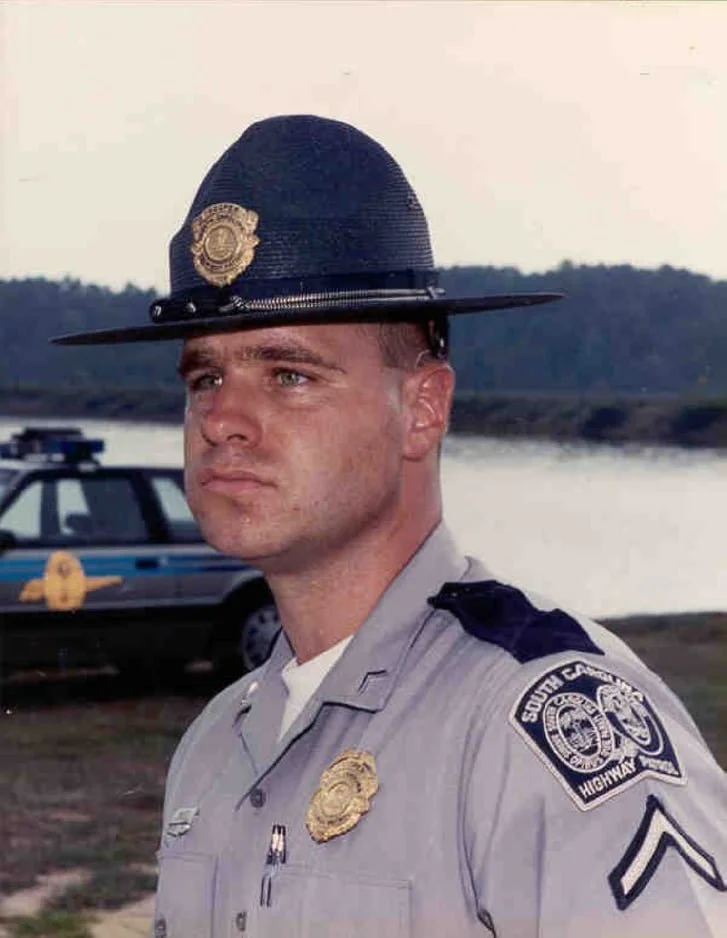
Image retrieved from https://www.odmp.org/officer/420-trooper-mark-hunter-coates
At this point the subject attacked Coates and the fight went to the ground. The subject produced a single-action, NAA mini-revolver in .22 (sources differ on whether it was .22 LR or .22 WMR). He fired one round at Coates. The bullet was stopped by the Trooper’s vest. Coates fought him off, got to his feet, and emptied is .357 Magnum revolver. Five of six rounds hit the subject in the chest. Coates backed away and called for backup. At this point the subject raised the revolver and fired a second round. This round struck Coates (sources vary on whether it penetrated the arm first, or went under his arm as it was raised to make the radio call, the the video is VERY grainy) and penetrated to his aorta. Trooper Coates died on the side of I-95 a few seconds later. The subject died 32 years later in prison. The subject lived longer in prison that Coates’ entire life.
This should have been a psychological stop. Coates had so many factors in his favor. He had military and LE training. He was wearing body armor. He worked out regularly and the subject was fat and out of shape. He had good officer presence. And he shot at the subject six times with a .357 Magnum, at night, and hit him in the chest five times. Sources also vary on the bullet; it ranges from 110-grain JHPs to 145-grain Winchester Silvertips, but all agree it was magnum ammo. If we could place any stock at all in the psychological stop, Trooper Coates should have gotten one.
This is why we can’t depend on the psychological stop. Unfortunately, Trooper Coates didn’t strike anything that provoked serious hemorrhage or disrupt the central nervous system. Even though he had every advantage going for him, the bad guy wasn’t forced to stop, so he chose not to stop. Most likely, anyone who would attack an armed citizen would be more easily dissuaded, but it isn’t a guarantee. To guarantee a stop we need to cause exsanguination or interrupt the central nervous system .
Exsanguination Stop: Setting Timers
Next up in the hierarchy of ways we can achieve a stop is exsanguination, also known as profound blood loss or bleeding out. Why do we need to make someone bleed out? As we saw with Trooper Coates, we cannot count on people who are already making bad decisions to suddenly begin making good decisions. They might and if so, great, but if they decided to continue trying to kill us we must remove their physical ability to do so.The goal is not to kill them, it is to incapacitate in order to remove their ability to continue presenting a deadly force threat.
The way this works is very simple. The brain is incredibly sensitive to deficits in oxygen and glucose. If you know someone who is diabetic, you have probably seen their sugar get low and their mental status become altered. The same goes for respiratory conditions that inhibit breathing or oxygen transfer; a lack of oxygen will very quickly become a problem. The brain’s lack of either of these nutrients for a short period of time leads to unconsciousness and eventually death.
You have probably also witnessed this if you have participated in combative sports or martial arts systems that utilize blood chokes. If you’ve ever been choked out - or nearly choked out - you’ve accomplished a similar thing, but mechanically. By restricting the arteries in the neck that supply the brain, you’ve successfully deprived the brain of oxygen and glucose. It doesn’t take more than just a few seconds before your vision begins to close in, gets dark, and you go to sleep.
To accomplish the same against someone who is trying to kill us, using pistol bullets, we have to provoke massive blood loss. We have to strike structures that will bleed rapidly and profusely. Even so, achieving unconsciousness will take some time, which is why we colloquially call this “setting a timer.”
The will to survive and to fight despite horrific damage to the body is commonplace on the battlefield and on the street. Barring a hit to the (central nervous system), the only way to force incapacitation is to cause sufficient blood loss that the subject can no longer function and that takes time. Even if the heart is instantly destroyed, there is sufficient oxygen in the brain to support full and complete voluntary action for 10-15 seconds.
- Special Agent Urey W. Patrick, Handgun Wounding Factors and Effectiveness, July 14, 1989.
Many of us know the concept of “setting a timer” but very few of really absorb what that means. In a lot of police shooting videos I’ve seen lately, the cops are shooting some guy who just keeps advancing. The conclusion of the commenters is to blame the ammunition or the caliber, but truly consider the quote above: Even if the heart is instantly destroyed, there is sufficient oxygen in the brain to support full and complete voluntary action for 10-15 seconds. Fifteen seconds is a LONG TIME!
How Much Blood Does It Take?
So, how much blood loss does it take to render someone unconscious? The good news is that we know almost exactly how much. The bad news is, it’s a lot. The human body has really good compensatory mechanisms for blood loss. When you experience serious blood loss, all these mechanisms kick in to keep your alive. The body prioritizes the brain, attempting to keep it alive the longest.
First, the average adult male contains between 5 and 6 liters of blood. When you have lost between 750 and 1,500 milliliters of blood (that’s about 25 - 50 fluid ounces), your body will be in a state called Compensated Shock. It is called “compensated” because the body’s backup systems can compensate for the blood loss, at least for a while, and keep you functioning. It does this by speeding up your heart and respiratory rates (you have less blood, so each blood cell has to cycle through the system faster).
Your body will also begin to shunt blood away from non-mission-critical systems to keep the really important stuff alive. This is why nausea and cool, clammy skin are common symptom of shock - blood is taken away from the digestive system and the skin, to keep more important stuff alive (brain, heart, lungs). Somewhere in this spectrum of losing around 20% of one’s blood, mental status and motor function will begin to decline somewhat. They will remain intact enough to fight. Keep in mind that this is also influenced by drugs on board that may mask some of these symptoms.
How much blood is 1,500 milliliters? It’s actually quite a lot. I filled up my Vitamix pitcher to 1,500 milliliters and was actually surprised at how much fluid it was. This loses some of its impact being water; if that were full of blood that would be a shocking image.
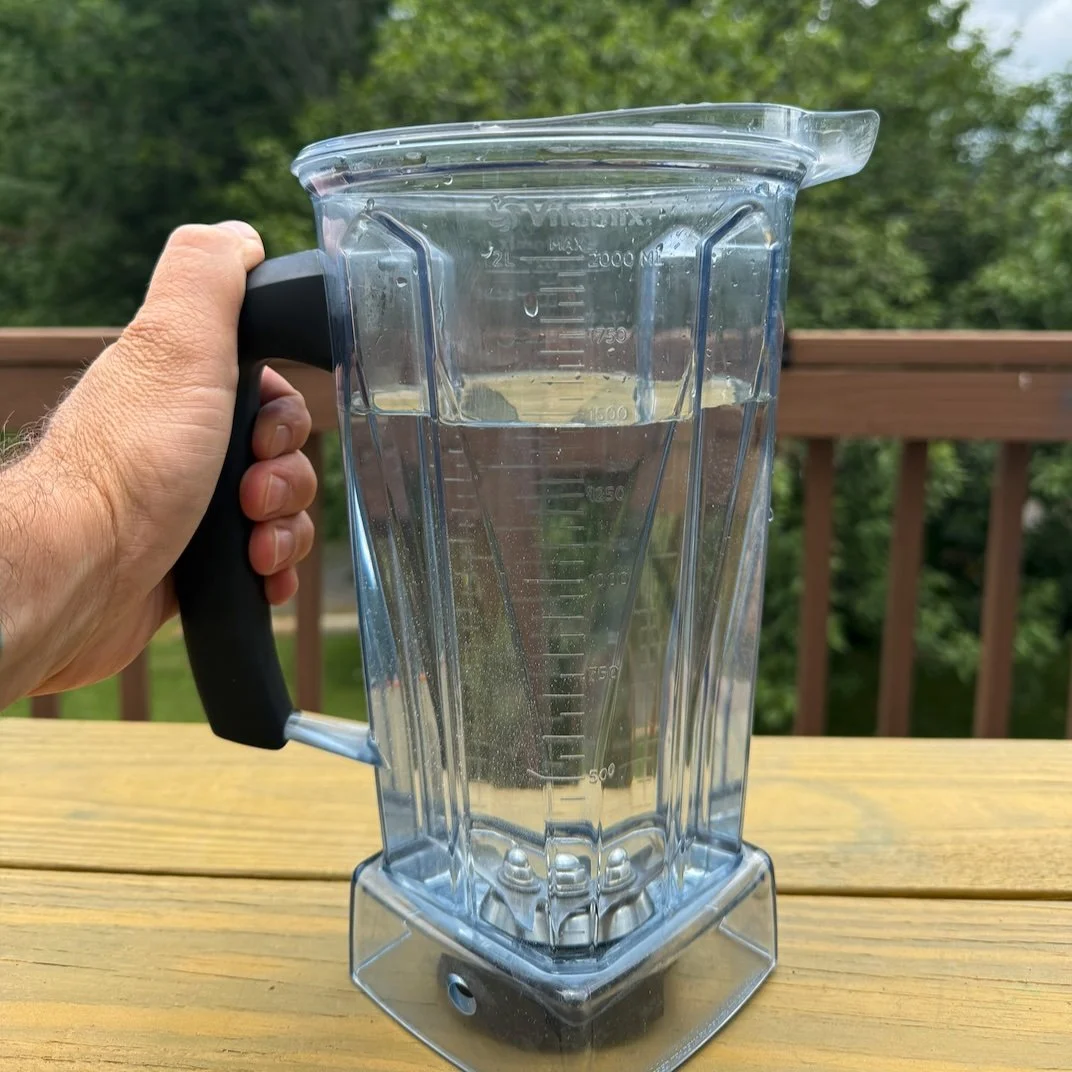
Next, I poured it out on my porch. Some of the water ran off the porch, but most of it stayed on. This is a roughly 10’ x 8’ area, though it is an irregular pattern. If you’re watching the video, I placed my duty pistol down as a size reference: it is a Glock 45 with a +2 extended magazine, RCR optic, and Streamlight TLR-1HL.

Why did I do this demonstration, and why am I going on about this? Well, if you take a look at that water - which represents blood - you may be surprised at how much it is. Keep in mind that you can lose this much blood and still be conscious, alert, and capable of defending yourself. That’s one side of it - if I looked down and saw that much of my own blood on the ground, I’d be a little nervous to say the least, but don’t quit! You could still survive this much blood loss and have a full recovery.
On the other hand, look how much blood we have to get out of someone’s circulatory system. If I shot someone and they had bled this much and still weren’t down…again, I’d probably be a little nervous. There is a good chance we’d get a psychological stop by this point…but if not, we have to keep going. So how much blood loss is required to produce unconsciousness? At 2,000 milliliters of blood loss the body goes into decompensated shock. At this point the compensatory mechanisms are no longer enough to keep up, and the body beings to fail. At this point we would expect to see a profound loss of motor function, altered mental status, and unconsciousness shortly after.
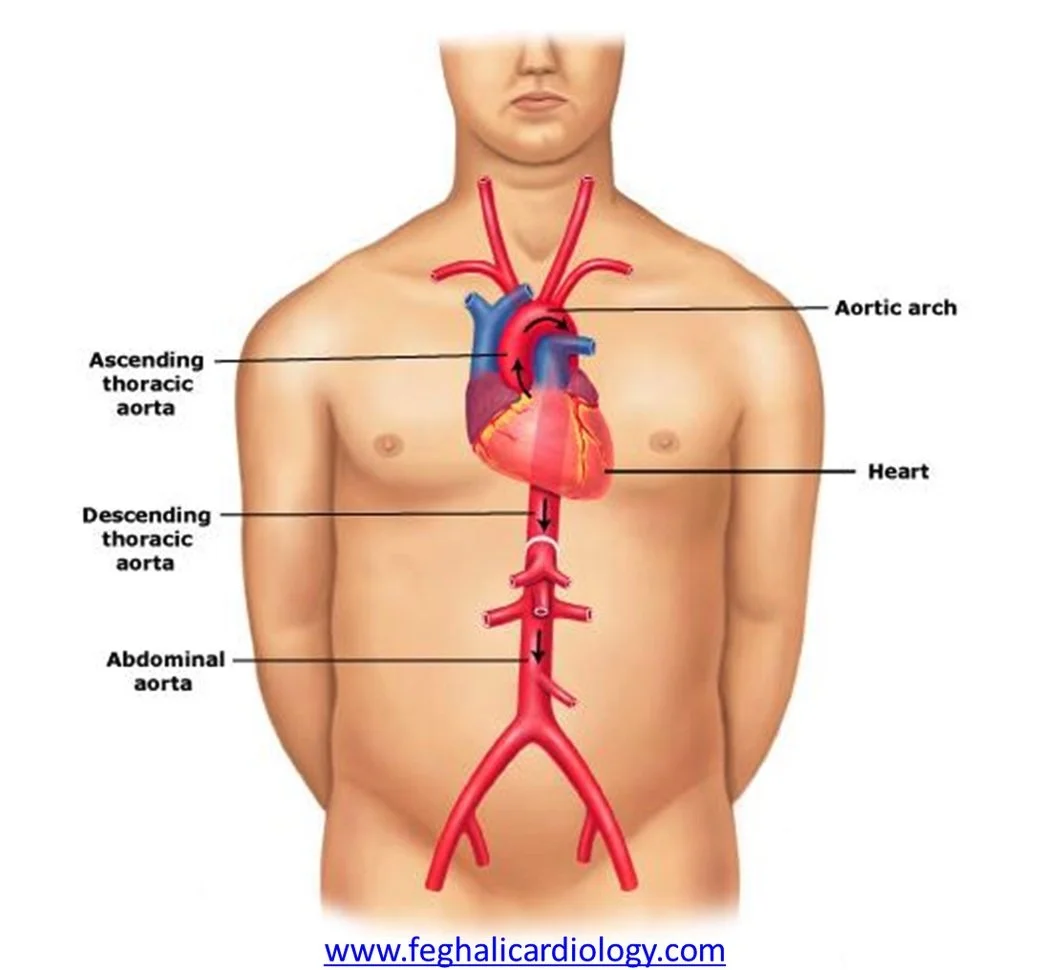
Image retrieved from https://www.gadacanada.ca/aorta-taad
The sheer volume of blood loss that is required to produce unconsciousness should tell you that your latest, greatest bullet design or carrying a caliber that is 1/10th of 1 inch larger in diameter will ultimately make very little difference. What will make a much more substantial difference is striking something that will bleed rapidly and profusely. We will talk more about that in the third part of this series when we discuss tactical anatomy. For now though, I will say that the heart, aorta, and vena cava are what you need to set a fast timer. Why did Trooper Coates’ assailant survive five .357 Magnum rounds - the ultimate “one shot stopper,” the bullet that some say has “lighting bolt effect” - to the chest? Because none of those bullets struck anything that bled rapidly enough to incapacitate him.
Timer Stop Case Study: Timothy Gramins
The timer stop…takes time. Sometimes it’s simply not feasible to wait for the timer to be done because during that time, the bad guy is still trying to kill us. The case of Timothy Gramins of the Skokie, IL Police Department is a well-known one. Sergeant Gramins was involved in a car chase with a bank robber. The chase terminated in a gunfight. Gramins was armed with a Glock 21 in .45 ACP loaded with 230-grain Speer Gold Dot hollowpoints.
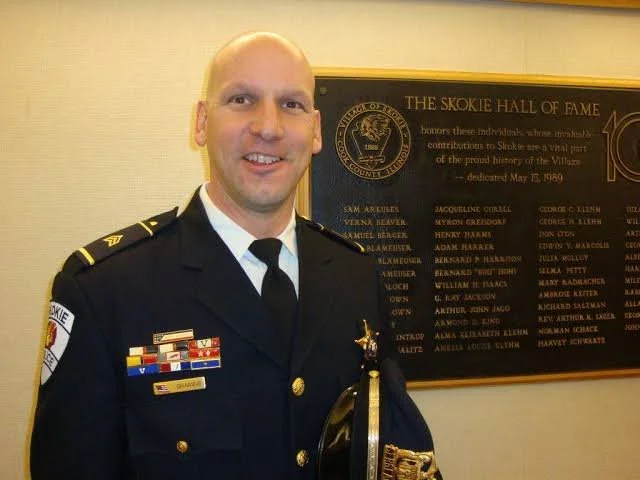
Image retrieved from https://patch.com/illinois/skokie/decorated-officer-promoted-to-sergeant
Gramins shot the suspect - a Gangster Disciple who had vowed to kill a cop - 14 times with his .45 handgun. The bad guy had been hit in both lungs, the diaphragm, the right kidney, the liver, and the heart. “In time,” in Gramins’ words, these wounds would have been fatal. Despite his wounds he continued fighting. Gramins was down on the ground when the bad guy bent over the look under Gramins’ patrol car. Gramins fired three carefully aimed shots to the head that finally ended the 56-second gunfight. When the fight was over Gramins was uninjured. He had only four rounds left, having reloaded twice and firing 33 of the 37 rounds he carried on duty. If you’d like to listen to a podcast with Sgt. Gramins, this episode of the Concealed Carry Podcast is fantastic.
If they guy was shot in the heart, why wasn’t he down? Remember the quote from Special Agent Patrick at the top of this section? Even if the heart is totally destroyed, the bad guy still has as much as fifteen seconds to avenge his own death. Also keep in mind the massive amount of blood you can lose and still be functioning. Timers take time. It’s important to internalize that so you aren’t surprised if you’re ever unfortunate enough to experience this phenomenon first-hand.
It’s also worth mentioning Gabriel Tauscher again. Gabriel was hit in to the brachial and femoral arteries. Though neither was completely transected, both bled like you would expect a compromised artery to bleed. It took roughly 10 minutes for police to arrive, at which point they applied tourniquets to his left arm and left leg. And, having been shot 15 times with a .45, he was still conscious when they arrived. Timers take time. The only thing that can guarantee an instantaneous “stop” is an interruption of the central nervous system (CNS).
The CNS Stop: Flipping Switches
This one is pretty simple and won’t take long. The only thing that can guarantee an immediate stop is an interruption of the central nervous system, specifically the brain and cervical spine. The brain is certainly the larger and more “visible” of these two targets. Both the brain the the spinal cord are protected by tough bone. The skull can deflect bullets, and certainly has in some cases. A compromise of the cranial vault, into the brain will certainly end a fight quick, fast, and in a hurry.
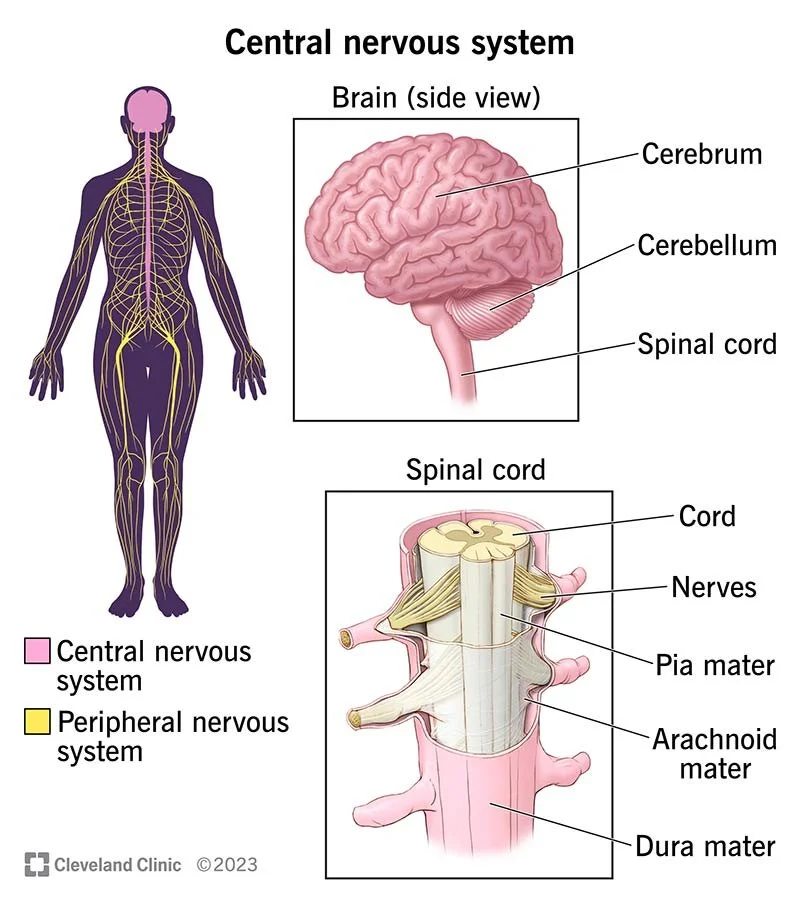

Image retrieved from https://my.clevelandclinic.org/health/body/central-nervous-system-cns
Accuracy is paramount. As we’ll see in Part 3, the whole skull is not created equally. We have to place bullets precisely, though I don’t think the head is the uber-diffcult target it’s made out to be.
CNS Stop Case Study: Jared Reston
Detective Jared Reston of the Jacksonville, FL Sheriff’s Office has one of the most dramatic gunfight tales out there. I am not going to steal his story, but I will examine a couple of lessons from it. The full story, with Reston telling it, is in the two-hour YouTube video linked below. It is HIGHLY recommended.
Detective Reston was working an off-duty assignment. He chased down a shoplifter, a fight ensued, and the shoplifter produced a gun. He shot Reston in the face with a Glock 21 in .45 ACP. Fortunately the round hit Reston in the lower jaw and did not penetrate into the cranial vault or the spinal column.
Though shot six more times, Reston continued to fight his adversary. Despite putting multiple rounds into the bad guy, he would not go down. The two men ended up at very close range, so Reston pulled him in, pressed his pistol to his head, and fired three rounds. These shots interrupted the central nervous system, ending the fight instantaneously. Timers take time, and sometimes we don’t have that time. If a fight needs to be ended RIGHT NOW, there is only one way to guarantee that, and that is a shot to the central nervous system. In the third installment we will look at optimal shot placement to guarantee an interruption of the CNS.
The Point
That was a lot. There is still a lot of ground to cover. In the next installment in this series (planned for two weeks from now) we’ll talk about what pistol bullets do, how they work, what they don’t do. I’ll give you my preferences for caliber, bullet weight, favorite hollowpoints, etc. We’ll talk about ballistic gel testing, too. For now, though, I’ll leave you with the takeaways from today’s discussion.
Accuracy is the most important factor in ending a gunfight. You must hit something important - the brain, spine, heart, or great vessels - to end a fight in a timeframe that is meaningful to your survival. A lung shot or liver shot will kill…fifteen minutes from now. We need to end the fight in fifteen seconds, if not immediately. Accuracy really, really matters.
Finally, if you are shot, do not assume that you are out. Keep fighting. I hope I have successfully demonstrated that you can lose a tremendous amount of blood and still fight. I hope Gabriel Tauscher has demonstrated that you can be immobilized and still prevail. I hope Detective Reston demonstrated that you can be shot in the face and still live to fight another day. Don’t give up!