Choosing Defensive Shotgun Ammunition
I have written several defensive shotgun articles over the past couple of months. Today I will (most likely) wrap up this series with this one on defensive shotgun ammunition. I already wrote about birdshot for defensive use and why I think it’s a terrible idea. In that article, however, I didn’t discuss what I think is the best possible shotgun ammunition. Let’s talk about it.

This article contains affiliate links. Using these links gives us a small commission but costs you nothing. Please consider using our Amazon link to support this blog.
If you'd like to listen/watch on Youtube, you can find this article here:
Types of Shotgun Loads
One of the commonly touted benefits of shotguns is the sheer versatility of ammunition types you can run through them. Some of these types of ammunition are appropriate for home defense, and some are not. Let’s take a look at the three big categories here: birdshot, buckshot, and slugs.
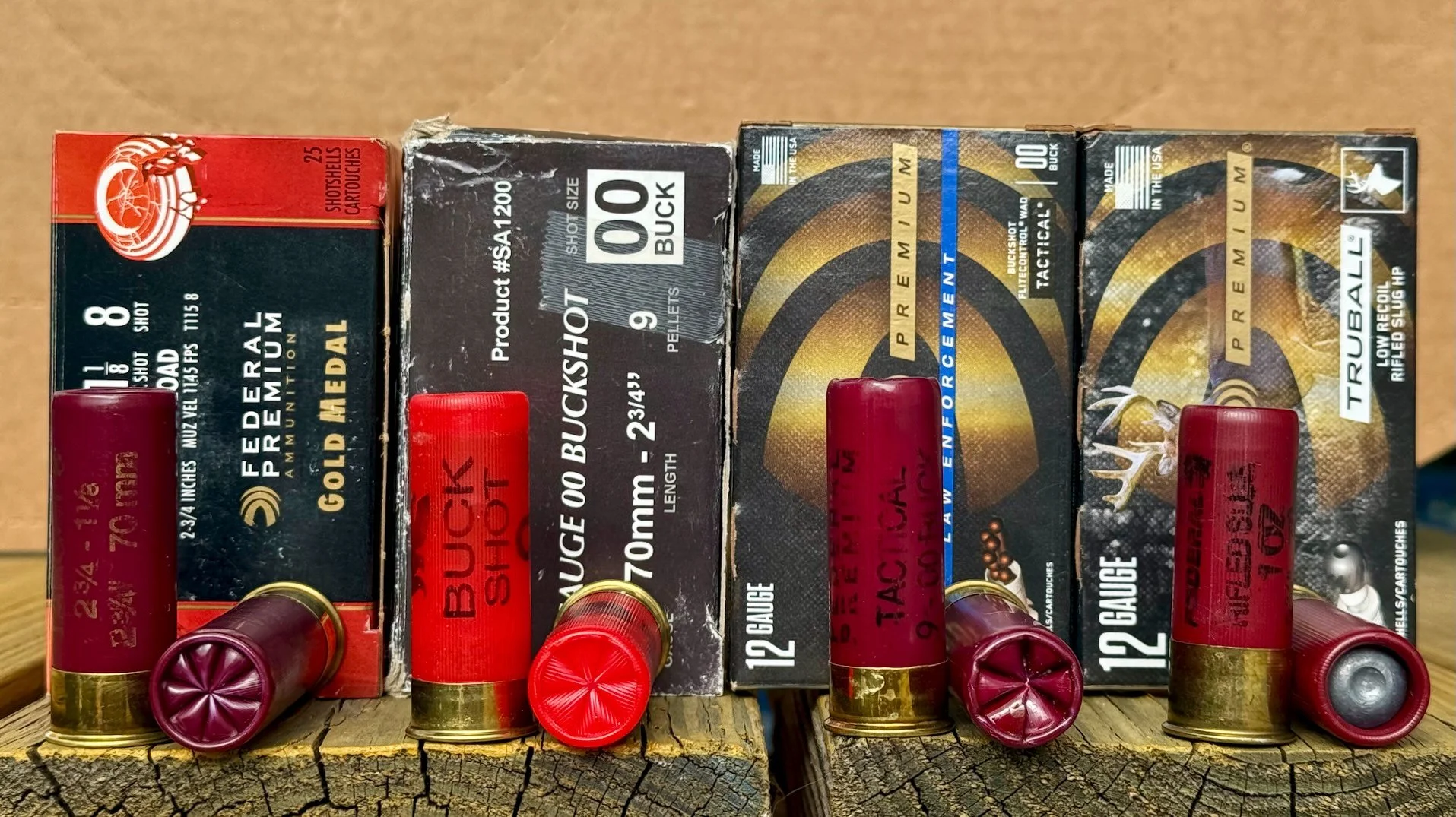
Poor: Birdshot
Birdshot consists of hundreds of small pellets. They are designed to spread, enabling hunters to shoot small, fast-moving game. The size of the pellets is usually given as a number, like #6 shot of #9 shot. The larger the number, the smaller the shot; a one-ounce load of #6 shot contains about 235 pellets, and a one-ounce load of #9 shot contains about 550.
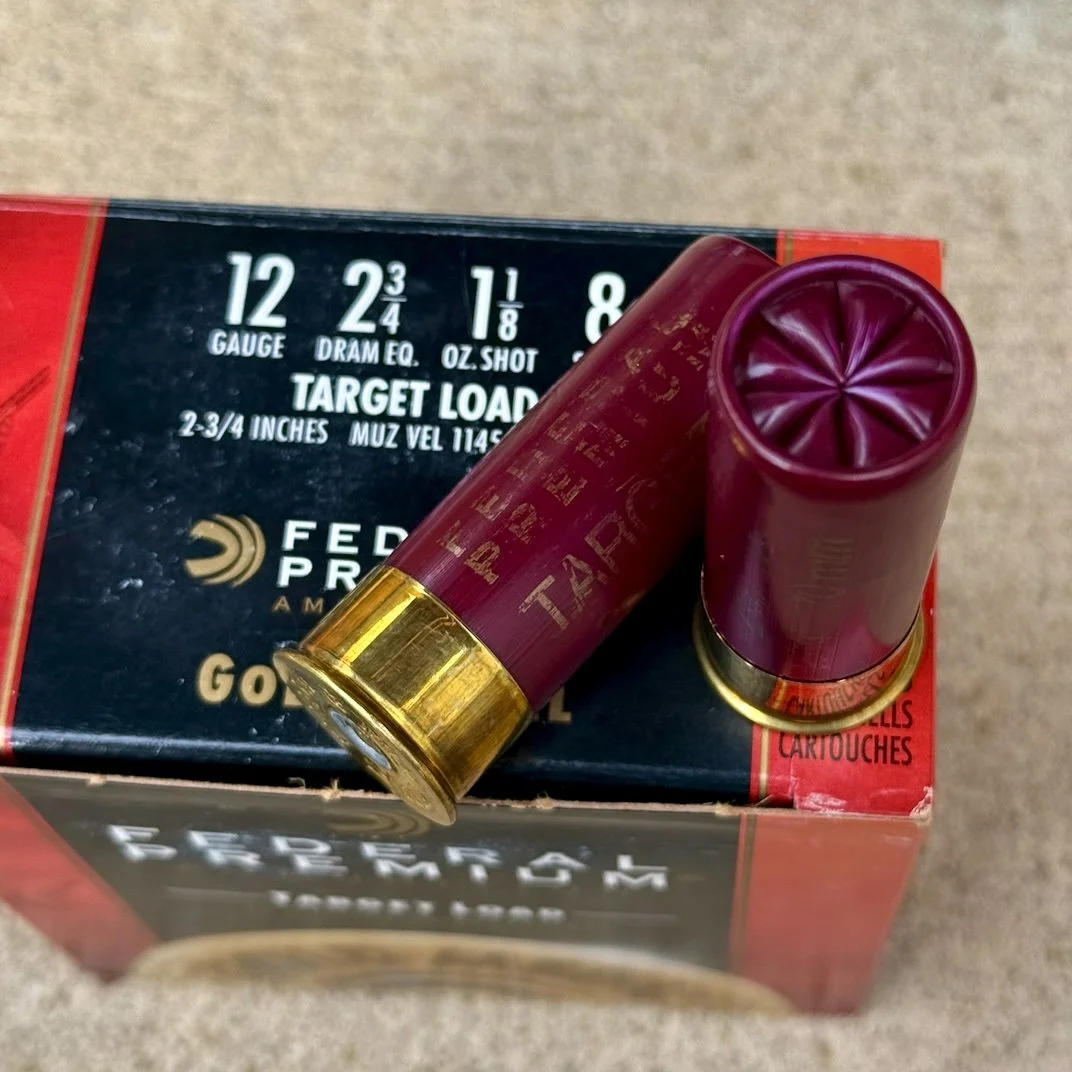
Birdshot pellets are extremely small and light. They are designed for shooting birds and small game like squirrels. They do not penetrate well on larger animals, like humans. Birdshot can be fatal at very close ranges, but there are a number of reasons it is not ideal for defensive use. First, these tiny pellets can’t guarantee sufficient penetration to reach something vital, like the heart or aorta. They might if the target is standing full-frontal, with only light clothing, and at very close range. If he is in profile requiring a shot through the upper arm before getting into the thoracic cavity, birdshot likely isn’t going to do it. If he is a bit further away than you anticipated, or wearing a leather jacket, the likelihood of a successful stop goes down precipitously.
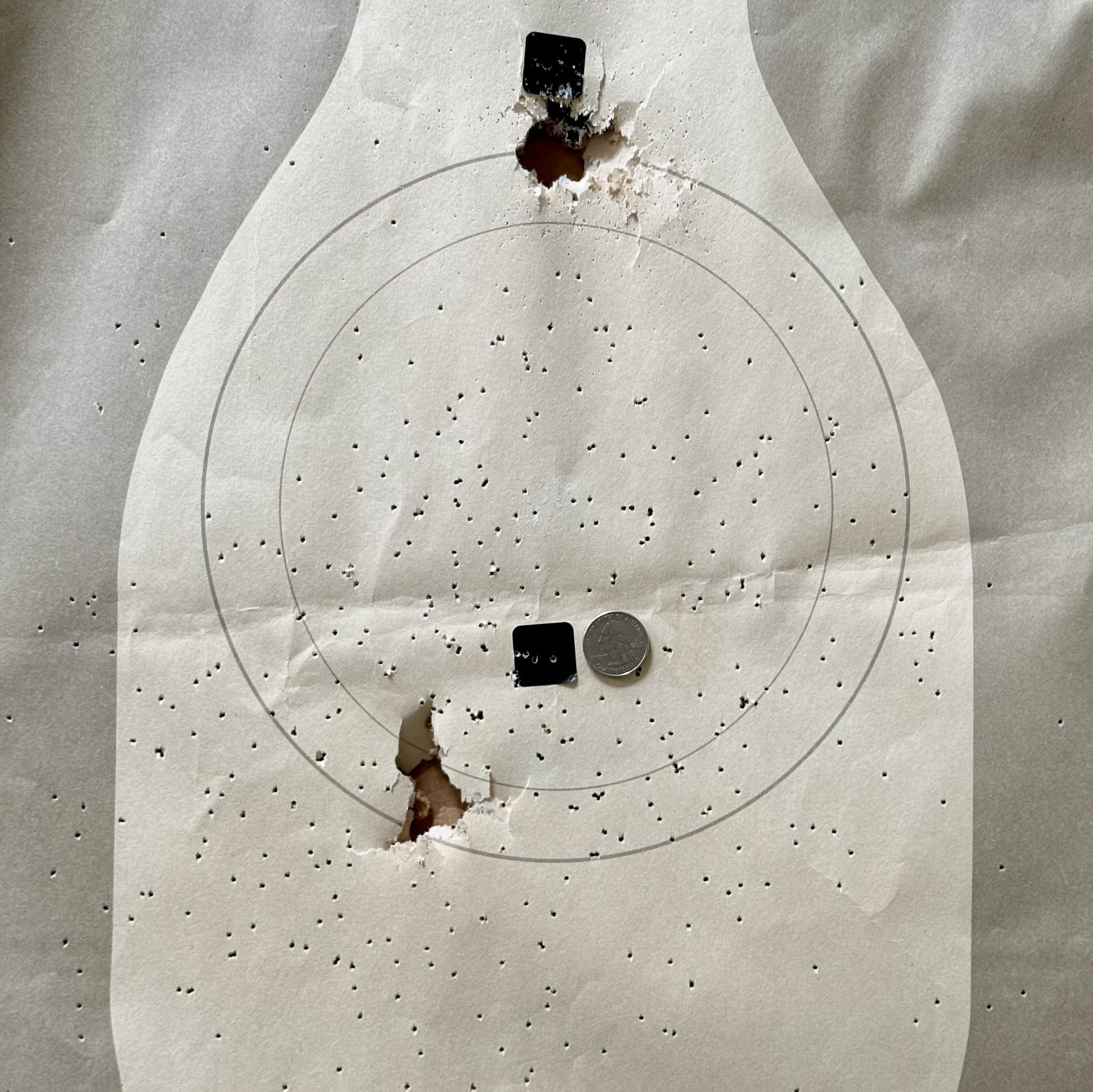
A load of #6 birdshot fired at 7 yards/21 feet. The black pastie was the aiming point (the large hole at 12 o’clock was created by buckshot). The spread on this is completely unacceptable; the pellets are too far apart to reliably achieve good penetration and they cannot be contained on a human-sized target.
Next, outside of a few feet it is difficult to guarantee 100% pellet accountability. Even a single errant pellet is deadly force, and you are legally and civilly responsible for each and every one. If you put your kid’s eye out, you’ll also have to live with the moral and social consequences. Finally, what is the benefit? Supposedly the benefit is reduced penetration through interior walls. Birdshot will absolutely penetrate two layers of sheetrock, though. We also have to remember that there’s no free lunch; if it won’t penetrate well in building materials, it won’t penetrate well in bad guys.
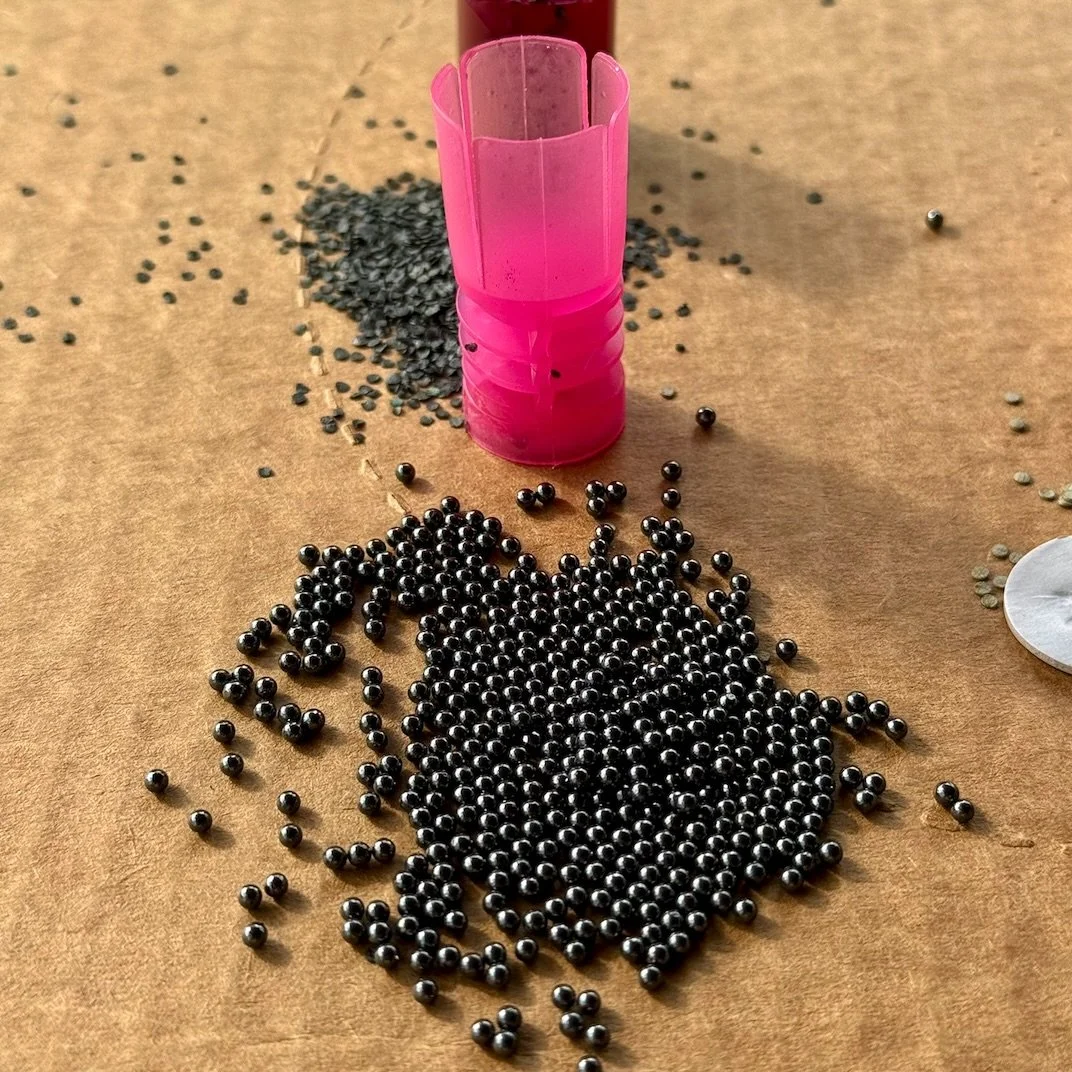
Birdshot loads consist of powder, a wad or shot cup, and. the shot itself. The shot cup helps to keep the shot together in a tighter pattern as it moves down the barrel.
Rather than seeking a round that minimizes the consequences for missing, you’re much better off improving your shooting abilities and using ammunition that will guarantee a successful stop with as few rounds fired as possible.
Buckshot
The most popular, most highly-recommended shotshells for defensive purposes contain buckshot. Buckshot pellets are designed for defensive use and/or hunting medium-sized game, like whitetail deer. Buckshot rounds contain far fewer, but much larger and heavier pellets. Like birdshot, there are several sizes of buckshot, but in my opinion, the only one worth considering is 00 (or “double-aught”) buckshot. A round of 00 buckshot contains eight or nine, .33-caliber pellets weighing 54 grains each. Individually these aren’t terribly powerful projectiles, but taken together they are absolutely devastating.
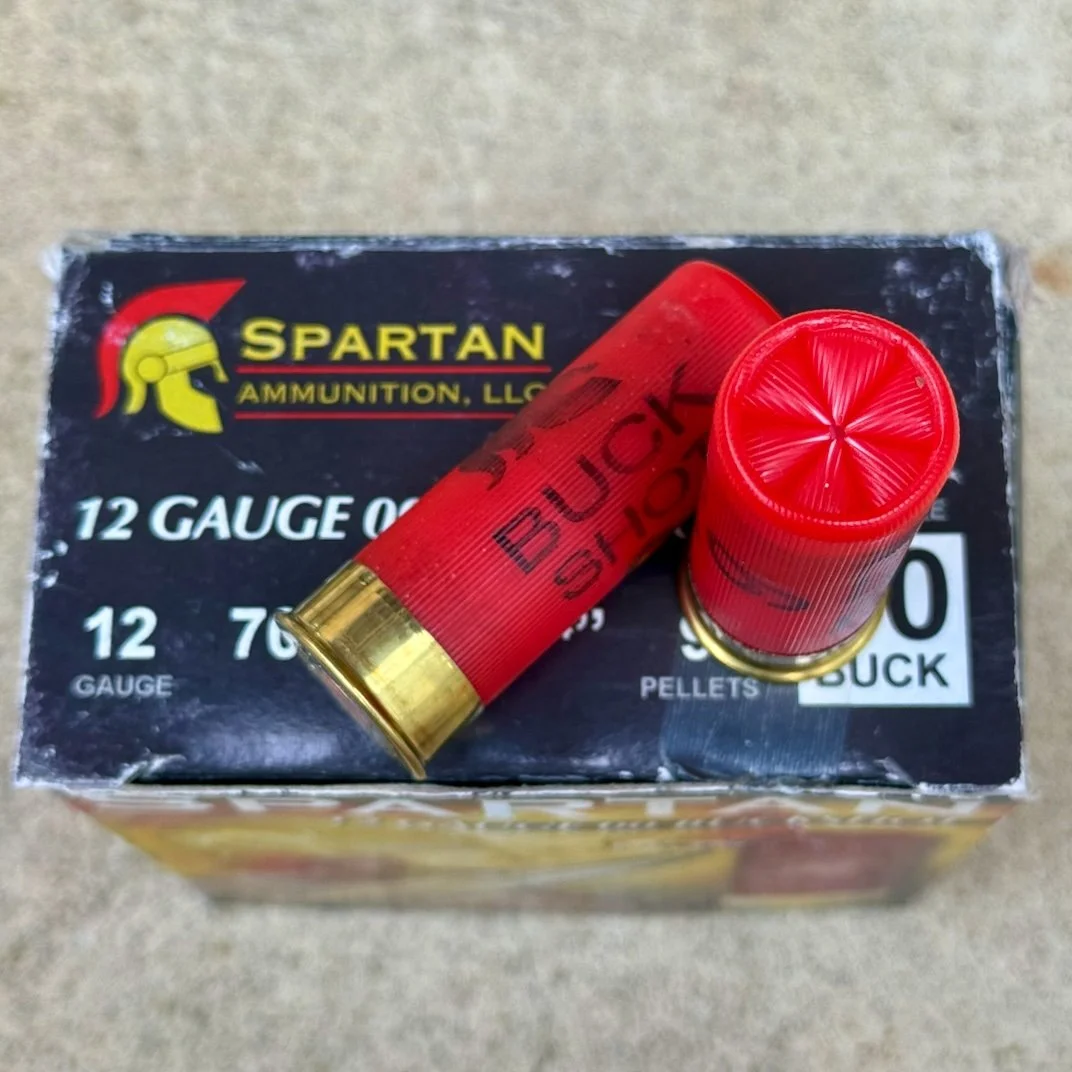
Not all buckshot is created equally, though. There is some buckshot I would discourage using. First, I would stay away from 3-inch magnum (and certainly the longer 3 1/2-inch) buckshot shells. You get a few more pellets, but at the cost of reduced shotgun capacity and much more recoil. Frankly, the perceived benefit just isn’t worth it. I would also stick with good ol’ 00 Buck. Some like the larger 000 (.36-caliber) buckshot, and some like the much smaller #1 or #4 buck. If almost all the experts are recommending something, though, there is probably a reason, and pretty much everyone worth listening to recommends 00 buckshot.
Within the buckshot “family,” there are a couple of variations. Let’s look at each of them.
Good: Traditional Buckshot
Traditional buckshot has remained relatively unchanged…well, basically since buckshot was invented. It consists of a powder charge, a wadding, and 9 pellets of soft, lead buckshot. That’s pretty much it. Buckshot in its traditional form has taken many thousands of deer, and stopped thousands of bad guys. It’s what cops used for a century or more. Though newer, “fancier” buckshot has come along, good, old fashioned buckshot is still nothing to sneeze at.
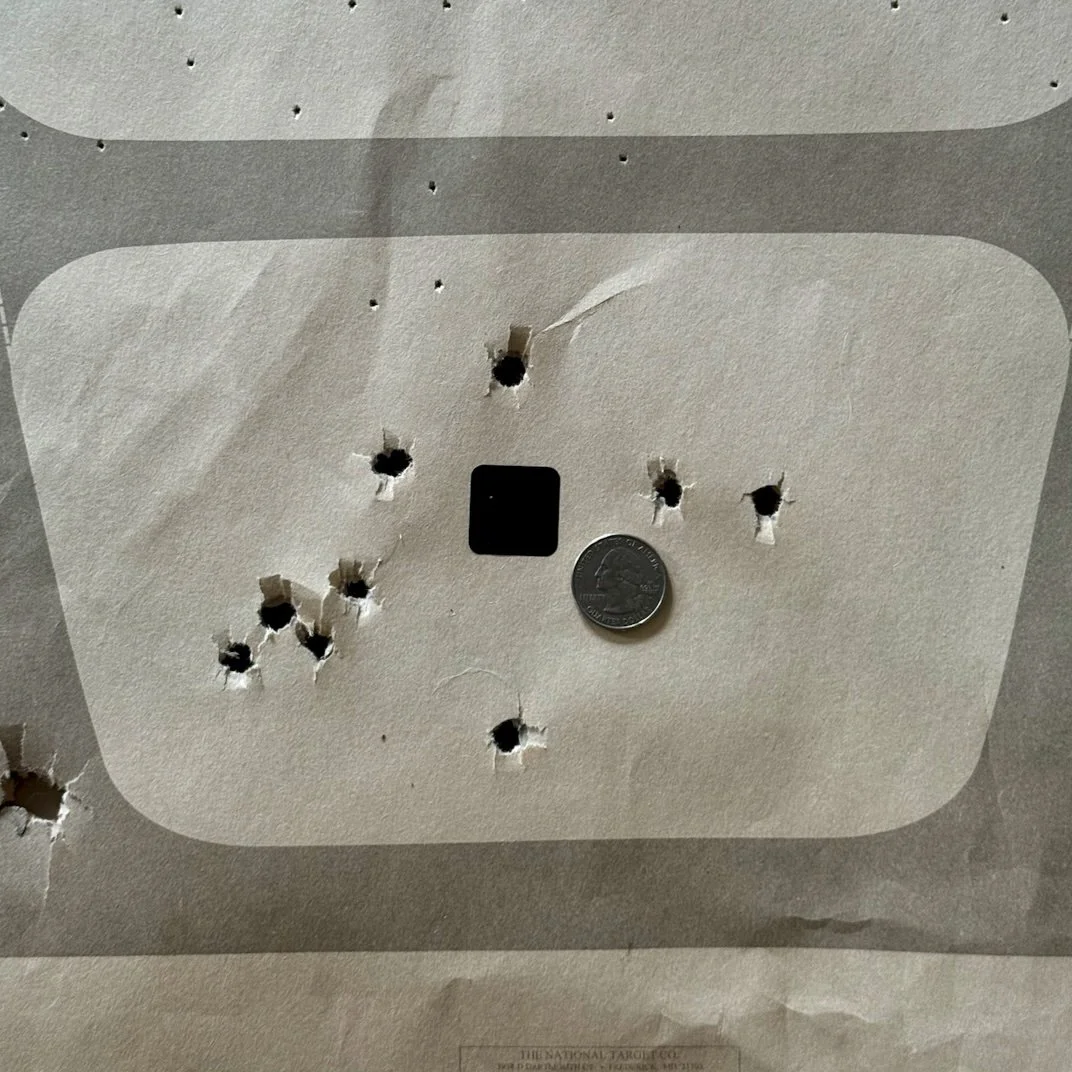
Traditional buck will open up quite a bit. At home defense distances, I don’t think this is a problem. The image above shows a pattern of extremely inexpensive Spartan 00 Buckshot at 10 yards/30 feet. This is about the maximum home defense distance, and all of these pellets could still be covered by my hand. They would easily fit within a human-sized torso, even if presented in profile. This would also still create a devastating wound, and end a fight immediately.
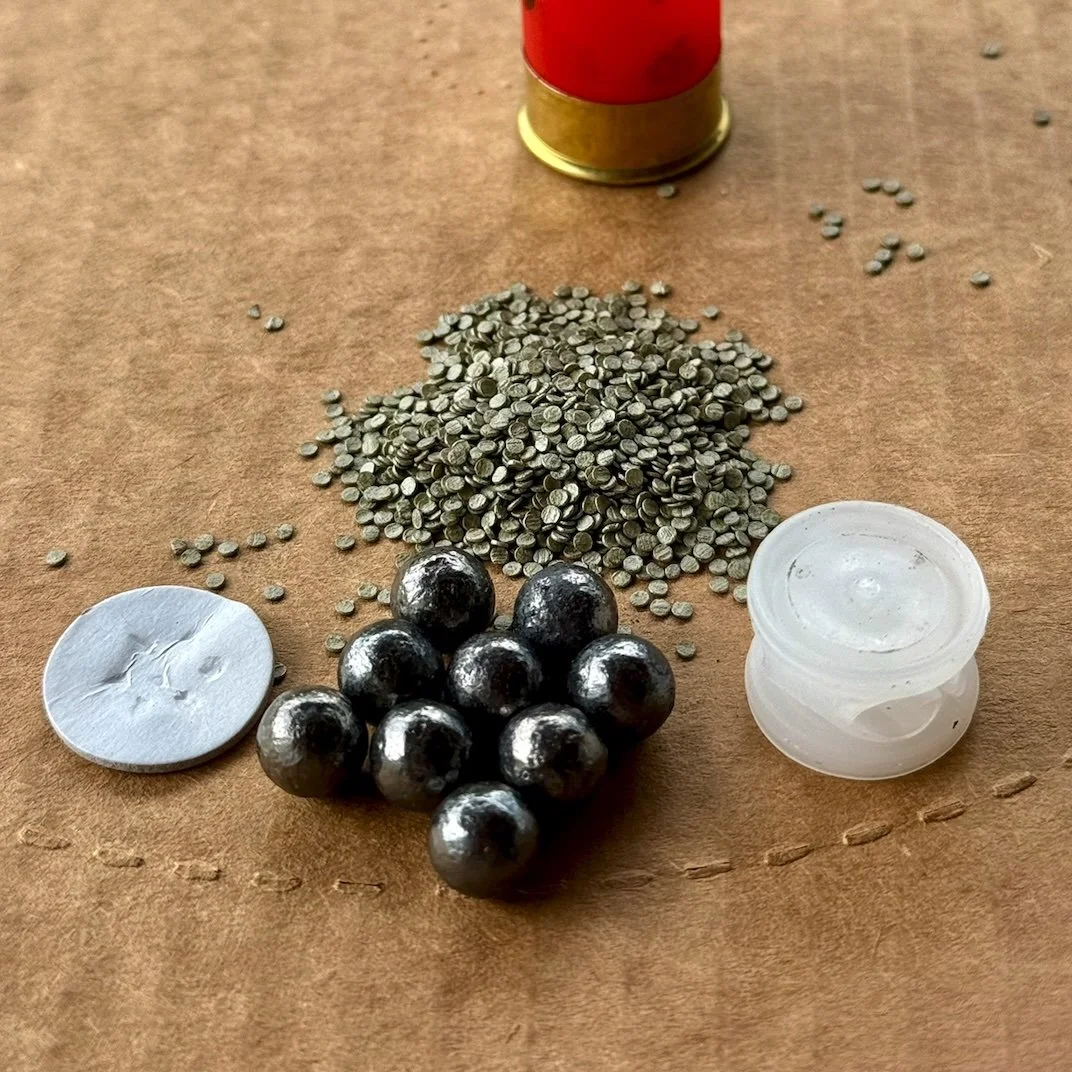
Note the very rudimentary wad/shot cup in this load of cheap 00 Buck.
The only issue with traditional buckshot is how it performs in individual guns. It is absolutely imperative that you pattern your ammunition in your gun. You need to understand how it patterns at various distances. Sometimes the increase in pattern size is linear, and sometimes patterns just fall apart after a certain distance. You need to know this before you send a load of buckshot down the hallway in your house. Don’t count on gun-shop wisdom like “it spreads one inch every yard.” That’s just not reliable, and certainly not reliable enough to bet lives on.
Better: Federal Flite Control
The divide between buckshot basically boils down to this: Flite Control vs. Everything Else. Flite Control buckshot represents a massive leap forward in buckshot design. Flite Control (stylized as FLITECONTROL) buckshot holds a much tighter pattern than traditional buckshot, at much longer distances. Flite Control buckshot will put all pellets through a single hole out to about seven yards/21 feet. At ten yards the pattern as opened only to about fist-size.
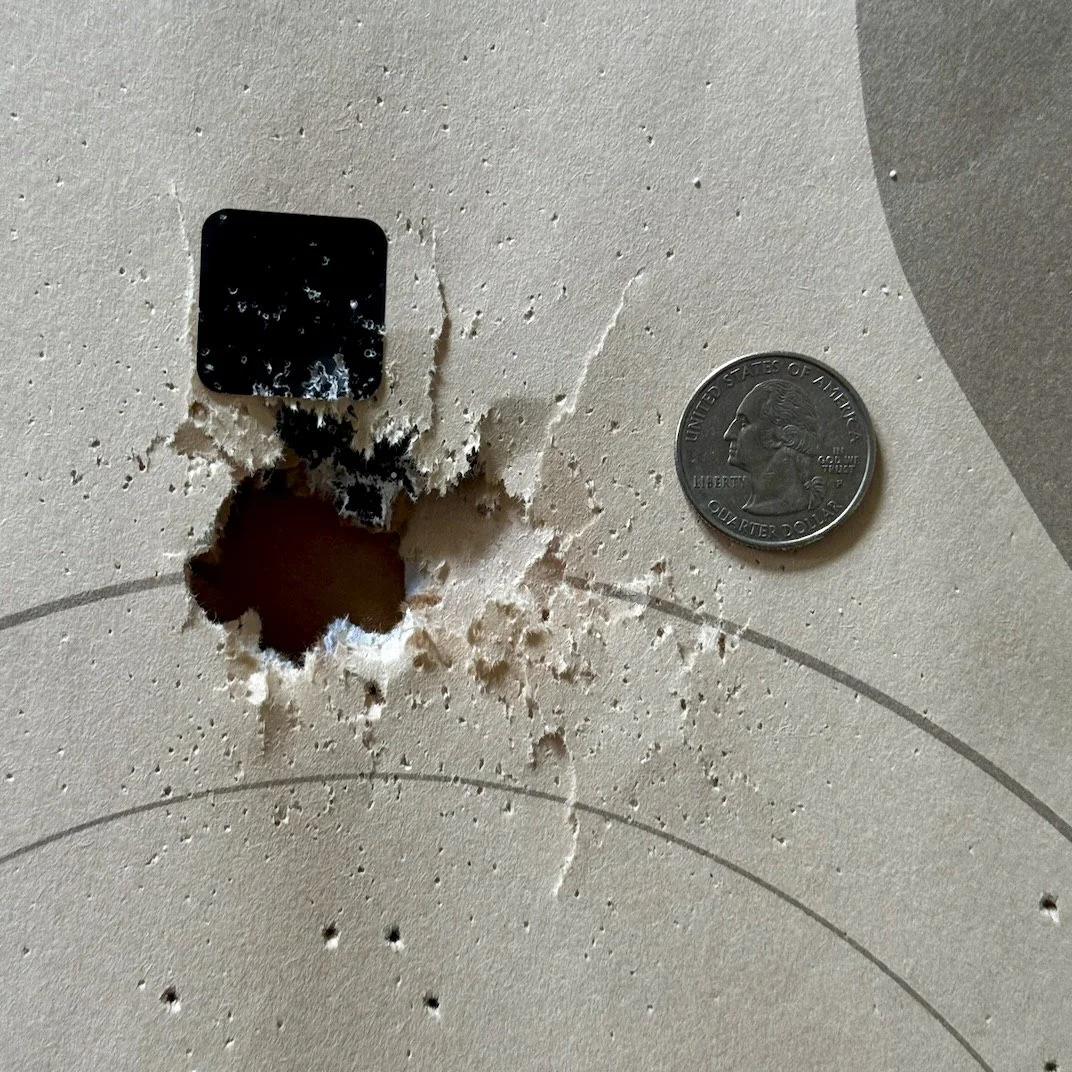
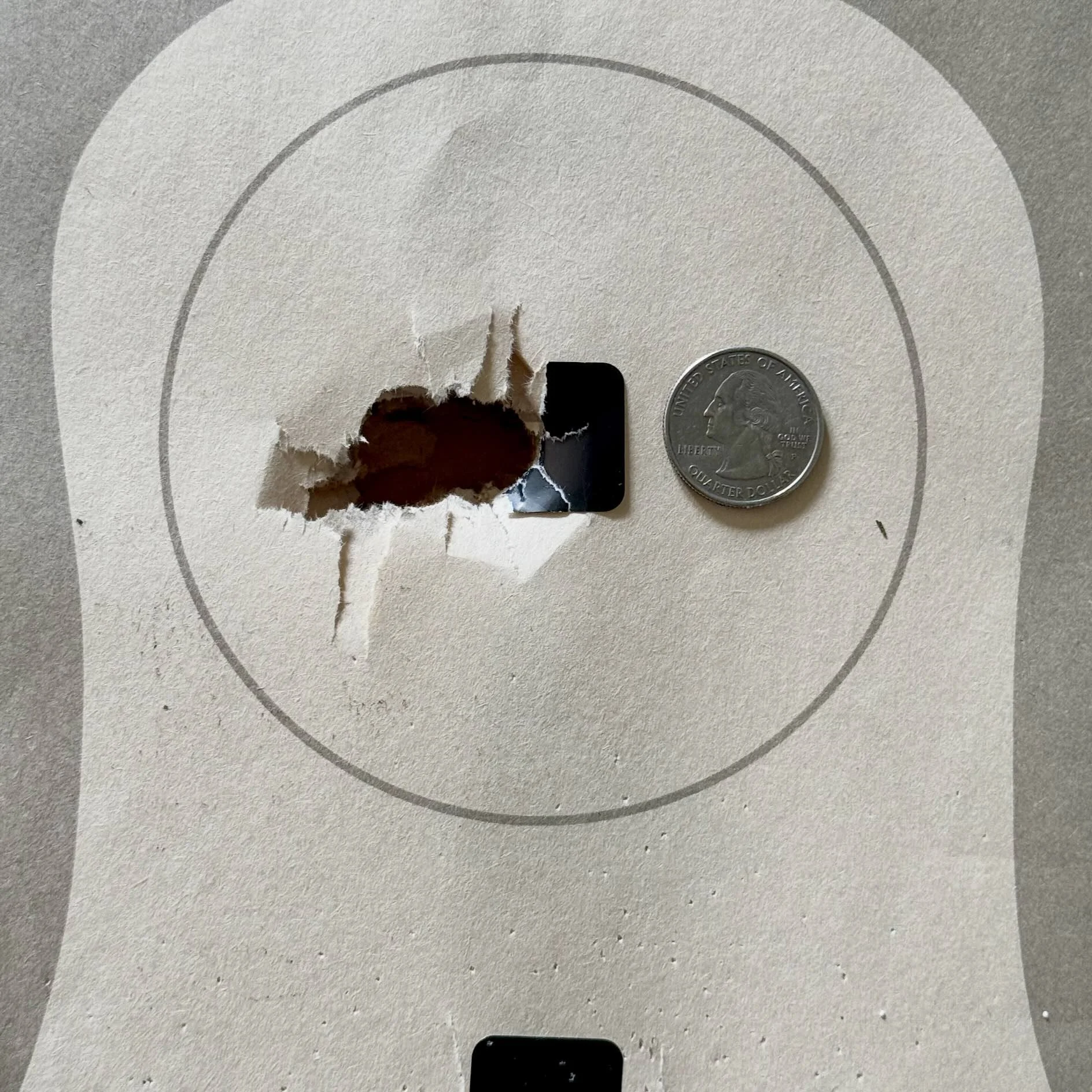
A load of Flite Control buckshot at 7 yards is still putting all pellets through a single hole roughly the size of a quarter.
Why this matters: Flite Control allows you to confidently extend the range of the shotgun. There is a greater range at which you know all of your shots are going to be within an acceptable area. They also allow you to safely make shots in closer proximity to others. Look at the case of San Diego police officer Ross Bainbridge, who made a hostage shot with a department-issued Remington 870 and Flite Control Buckshot. Next, as the pellets start to separate, they lose a lot of their multiplicative effect. By keeping pellets closer together, it also allows the shotgun to retain it’s tremendous power at greater ranges. It is unlikely this matters inside a home, but for longer ranges Flite Control opens up a lot of possibilities.
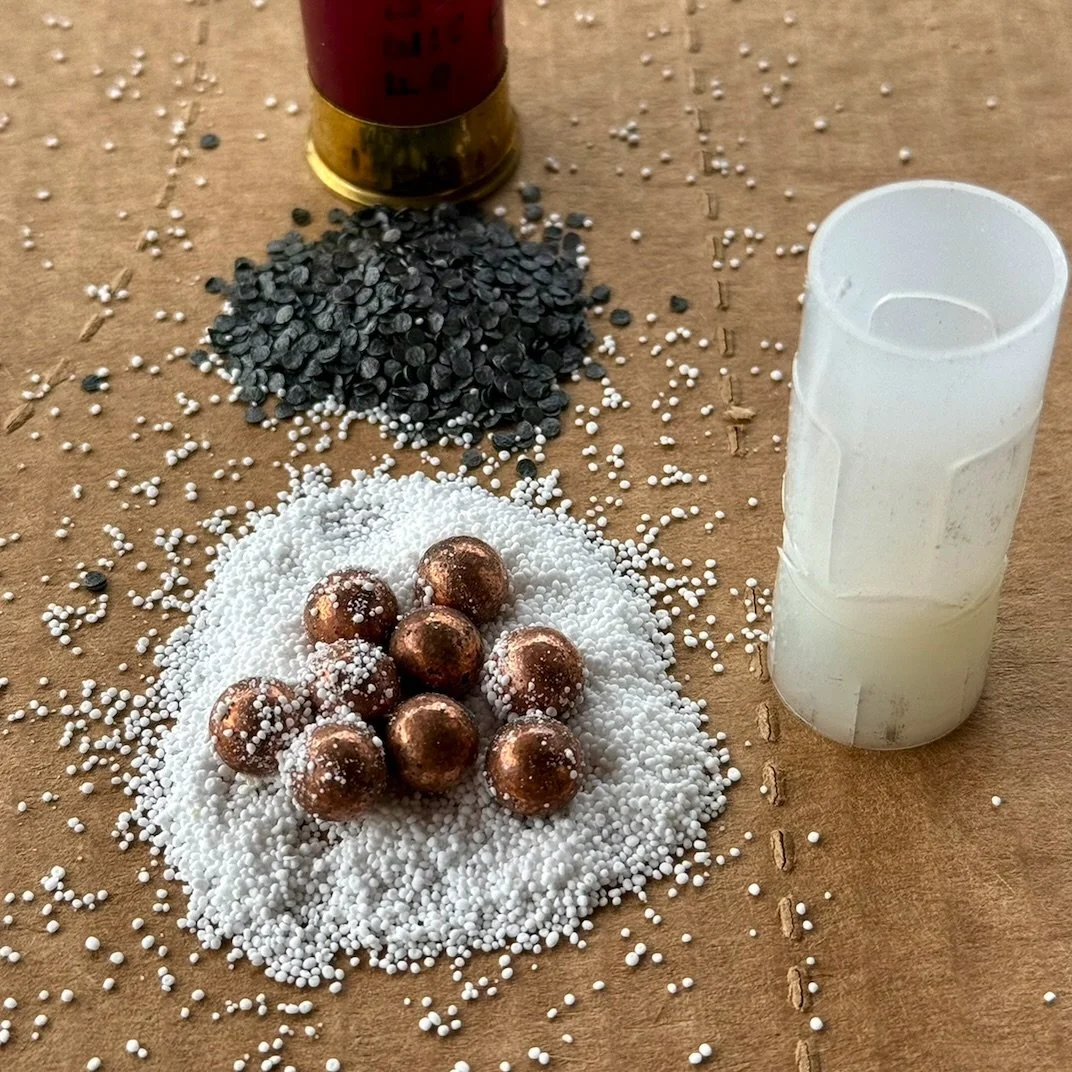
How it works: Federal made several improvements to buckshot to make Flite Control the tightest shooting buckshot on the market. First, they plated it with copper, making it harder than lead. This helps to prevent it from deforming as it flies down the barrel. Pellets that are round will fly truer than pellets that are deformed. Next, they added powdered plastic buffer around the pellets. This white substance (called “grex”) also helps prevent pellet deformity. Finally, they cram all of this into the Flite Control wad. This wad is very hard compared to normal shotgun wads, and helps keep the pellets together longer. It also peels away from the shot column more gently. All of this makes Flite Control shoot unbelievably small patterns, and extends the shotgun’s effective range quite a bit.
Best: Low Recoil Flite Control
The undisputed champion: the best possible Flite Control load is the 8-pellet, low recoil load (SKU: LE133 00). There are a couple possible benefits to this load. First, the eight-pellet loading has very light recoil, allowing you to get back on target faster. Only having eight pellets also helps keep the pattern tighter. With 9-pellet buckshot there is a tendency to have one pellet deviate from the pattern slightly. At distance this effect can be a noticeable but frankly, at any plausible home defense distance it is unlikely to make a difference.
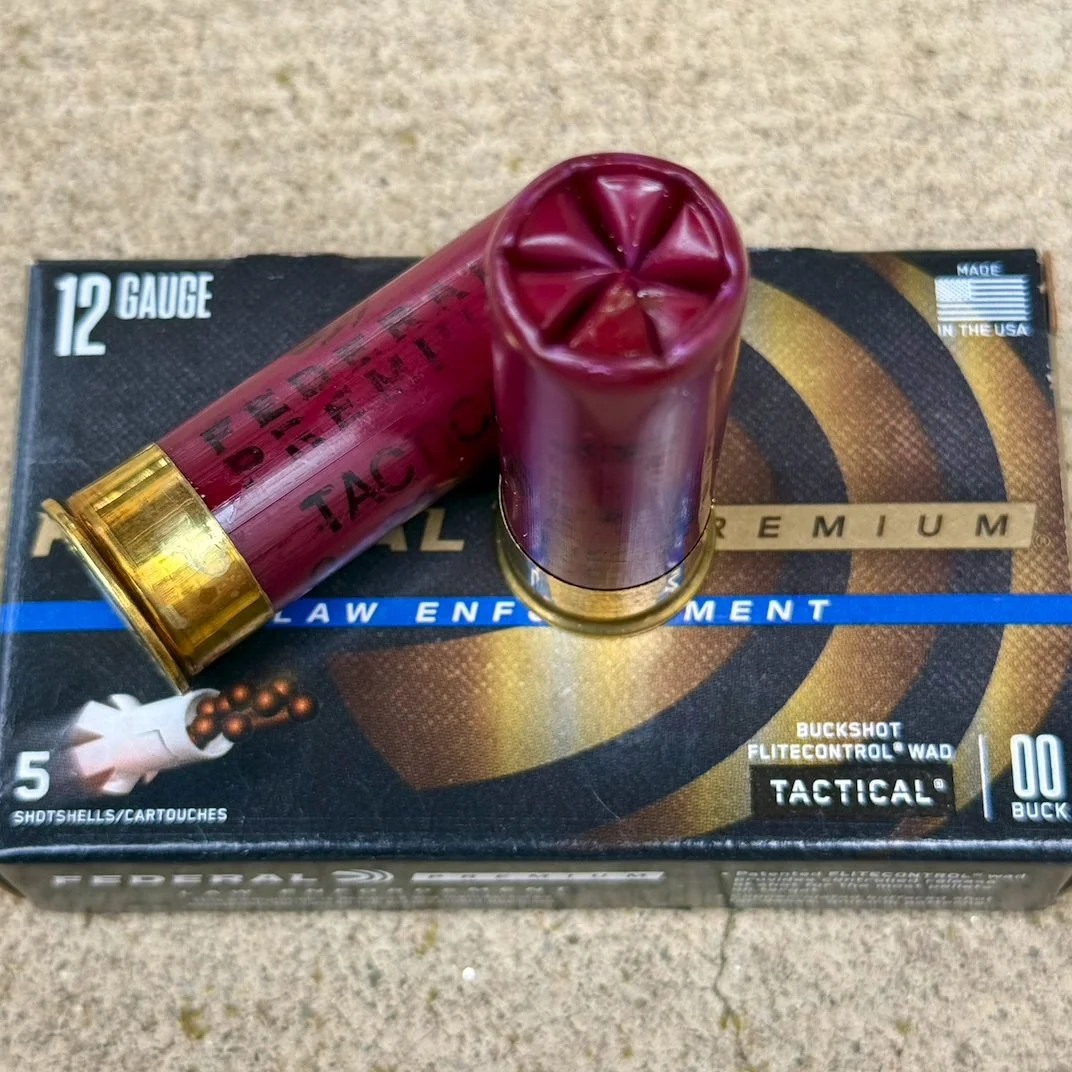
A few years ago people got very…on the spectrum about this load. You couldn’t find it anywhere, and I was really kind of bummed that I couldn’t find it. Recently, as I’ve been shooting a lot of 9-pellet Flite Control, I’ve been wondering what all the fuss was about. My agency issues (and I own a bunch of) the 9-pellet, low recoil Flite Control (SKU: LE132 00). It works just fine out of my Beretta 1301 and Mossberg 590 at 25 yards and in. The “ninth pellet flier” phenomenon seems to be just a tad overblown.
I do have a strong preference for the low-recoil variety, however. This makes buckshot far more enjoyable to shoot. Most typical buckshot has an advertised velocity of somewhere around 1,500 - 1,600 feet per second. The low recoil stuff with be around 1,200 and the difference is very noticeable.
Hotly Debated: Slugs
The final category of shotshell is the slug. A slug is a single chunk of lead rather than multiple pieces of shot. Like, shot there are several types of slugs including sabot slugs and Brenneke slugs. Both are designed for specific purposes, and neither is appropriate for defensive use. The soft, Foster-type slug (also called a “rifled slug”) is the best choice for defense against human beings.
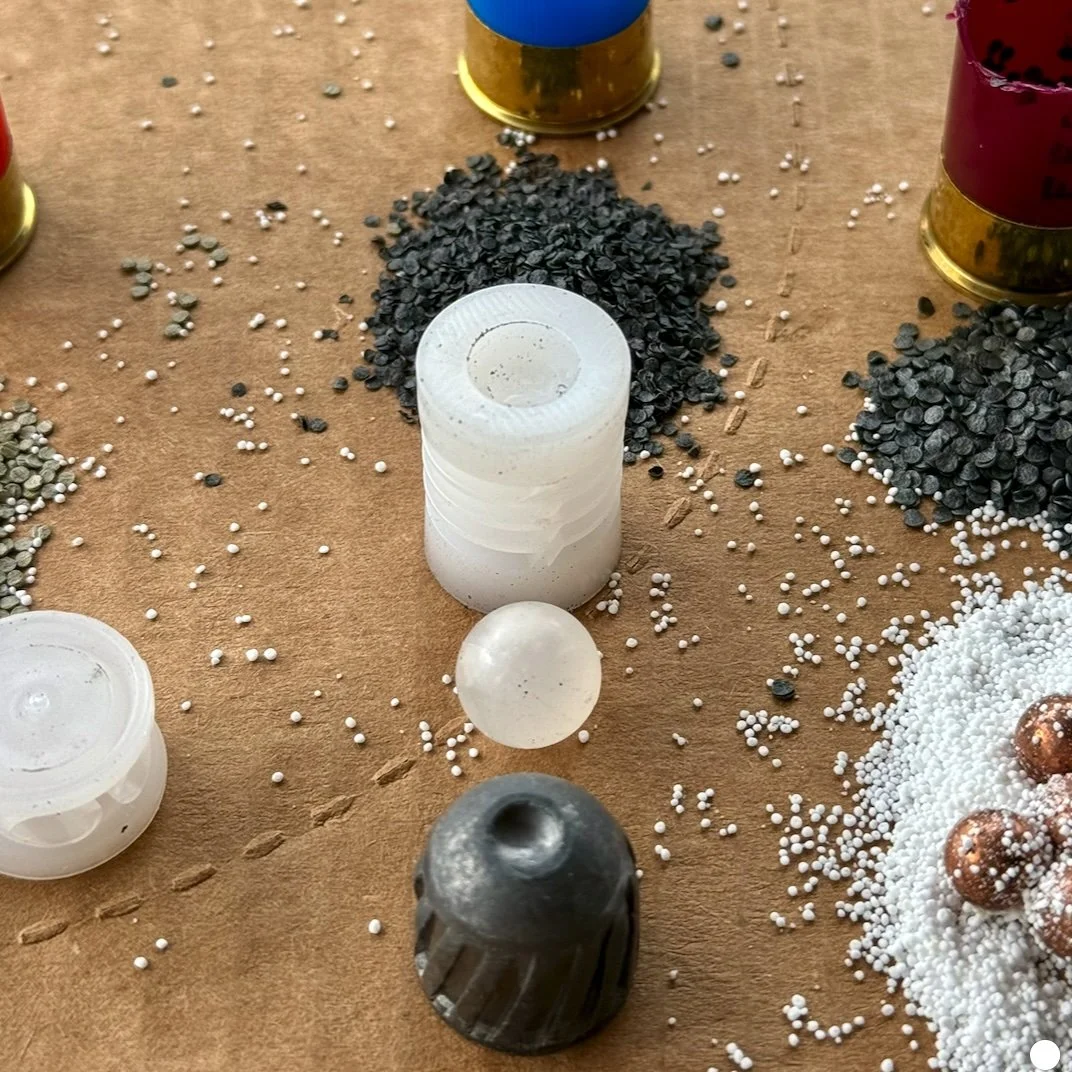
The Foster slug typically weighs 1 ounce and has a hollow base. It has rifling grooves cut into its sides to promote stabilization in flight. A slug can extend the shotgun’s range from 25 yards or so, out to about 100, provided your know your shotgun and its holds - slugs being only slightly more aerodynamic than a ‘78 Square Body pickup.
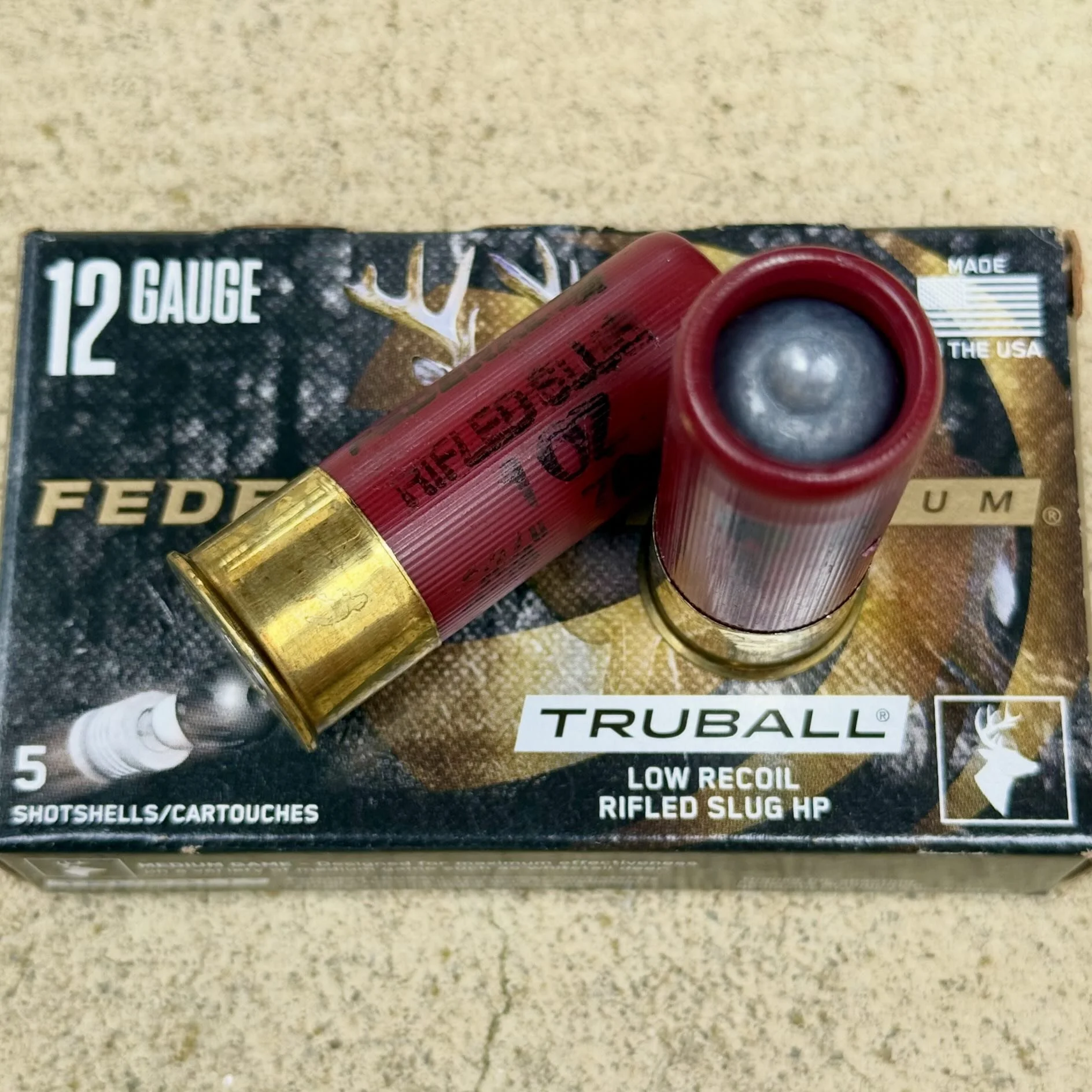
The slug doesn’t get a lot of love due to concerns of over-penetration. Even Chris Baker, whose opinion I generally hold in very high regard says that slugs are prone to severe overpenetration. However, I’ve heard Dr. Gary Roberts say that the soft, Foster-type slug won’t overpenetrate in humans. Additionally, Dr. DiMaio, in his book Gunshot Wounds: Practical Aspects of Firearms, Ballistics, and Forensic Techniques, Third Edition, is of the opinion that slugs aren’t prone to overpenetration in human bodies.
So I’m not sure where all the overpenetration concern comes from… Unless it is concern about missing your target. If you miss, the slug will penetrate a lot of stuff. But then again, so do pistol bullets. If you’re going to use slugs (or rifles, pistols, buckshot, or birdshot) you must hit your target! I keep my 1301 stoked with slugs in my cop job, becasue they are fantastic at getting through auto bodies and glass. Nor do I have a problem with them for general home defense. That said, I’m not sure slugs bring a huge benefit over buckshot to the average home defender. However, I’m equally unsure that they bring some tremendous downside.
Some Other Non-Recs
I thought this should go without saying, but someone mentioned it to me, so… Here we go.
First, avoid less-lethal shotgun rounds like bean bags and rubber buckshot. If you fire your shotgun at someone, it will likely be considered deadly force. Intentionally targeting certain areas of the body, even with bean bags and rubber buckshot is considered deadly force, even for those trained in the use of such tools. I don’t want you to kill someone, but I also don’t want you to be hurt or killed because you used ineffective ammunition. Use something that will force the bad guy to stop trying to hurt you or your family, like Federal Flite Control Buckshot.
Next, absolutely, 100%, without question, avoid “exotic” ammunition. There is a market for this stuff that is apparently, still thriving. Rounds like the “flechette” (a bunch of steel darts) or the “gaucho” (two slug-like balls connected by a wire) are not widely tested. They may work…or they may not. Nor are they used by any law enforcement agency anywhere. And they are crazy expensive, meaning you won’t be able to practice much with them.
Wrap Up
Stick with good ol’ tried-and-true buckshot. In my opinion, the Federal 8- or 9-pellet, low recoil, Flite Control buck is your best choice. If you can’t find that for whatever reason, any decent quality 00 buckshot should do fine at home defense distances. If possible, though, find some low recoil buckshot. And no matter what you do, pattern it! Shoot it on paper at various distances and know how much that pattern is (or isn’t) going to open up. If you shoot slugs, find some low recoiling Foster slugs and make sure you shoot them and know where they are going to hit relative to your sights.
And that’s about it. You’re not going to find something that is quite as efficient at ending fights as the properly loaded 12-gauge shotgun.