Terminal Ballistics III: Tactical Anatomy & Defensive Marksmanship
Welcome to Part III of my series on terminal ballistics. In Part I we talked about the types of “stops” that pistol bullets produce. Part II explored what handgun bullets do, and some myths about what they do not do. In this part we are going to cover tactical anatomy or defensive marksmanship - where we need to aim and what we need to hit to enforce a physiological stop.
This article contains affiliate links. Using these links gives us a small commission but costs you nothing. Please consider using our Amazon link to support this blog.
If you'd like to listen/watch on Youtube, you can find this article here:
Recap of Parts I & II
If you have not watched/listened to/read the previous two articles in this series, I strongly recommend you do so before proceeding. To quickly recap the points covered in those articles:
Pistols stop bad guys in one of three ways. The first of these is the psychological stop. In this case, the bad guy chooses to stop based on infinite variables including (but certainly not limited to) fear, pain, value judgment, or an assessment of their likelihood of winning the fight. Psychological stops are very common, but are unreliable, as they leave the decision in the hands of the attacker, who is already operating well outside social norms and reasonable behavior.
Pistol bullets can enforce a physiological stop by “setting a timer” or initiating blood loss. Once enough blood is lost, consciousness will be lost and the bad guy will be unable to continue fighting. It is called a timer, because losing sufficient blood - literally pints of blood - takes time.
Pistol bullets can enforce a physiological stop by “flipping a switch” or interrupting the central nervous system. The central nervous system (CNS) consists of two main components: the brain and the spinal cord. These are the only two physiological structures in the body that can enforce an instantaneous stop.
To set a timer or flip a switch, the bullet must penetrate deeply enough to reach the heart or great vessels, or compromise the cranial vault or vertebrae and damage the brain or spine. =
Pistol bullets don’t possess any magical powers. They don’t produce hydrostatic shock or have knockdown power. We know this because despite being shot multiple times with .40s, .45s, and .357 Magnums, and even rifles, some individuals keep fighting, long after they “should” have stopped.
Again, I encourage you to read/listen to/watch Part I: How Pistols “Stop” Bad Guys and Part II: What pistol Bullets Do (and Don’t Do).
Some of the more common gunfight myths we’ve heard over the years are as follows [emphasis added]:
2. “45 ball drops them all.” Ditto 8mm, 357 SIG, 338 Win Mag, etc, etc, etc.
~ Dr. James Williams, ER/ICU/Trauma Physician 35+ years, SWAT Medic, coiner of the terms Tactical Anatomy and Xray Vision
The Goal of Defensive Marksmanship
The psychological stop is a wonderful thing if we can get it. The fewer rounds we fire, the safer everyone is. The fewer rounds fired, the lower the likelihood that a bullet misses or passes through the bad guy, injuring or killing an innocent. The fewer rounds fired, and the faster the encounter is over, the lower the likelihood that we will be killed or injured. The fewer rounds fired, the lower the odds the bad guy will be killed, and the less force we use on the bad guy, the lower our potential legal jeopardy will be in the aftermath.
Unfortunately, the psychological stop is not dependable. The bad guy you have to shoot might be a wimp committing his very first crime, who runs away as soon as you pull a gun. Or he may be a convicted felon who has spent years in prison, been shot before, is high on methamphetamine, and is saving face in front of his friends. While shooting to enforce a physiological stop we can hope to get a psychological stop but we must fight as if we won’t get one.
The goal of defensive marksmanship is not to “shoot to kill.” I’m honestly not concerned with “killing shots” or “lethality.” in fact, if possible, I’d greatly prefer not to kill my attacker. It relieves me of so much potential liability. Unfortunately, making rapidly incapacitating shots often has the unfortunate side effect of death.
There are lots of targets in the human body that will kill. Shooting someone multiple times in the lungs is likely to be fatal. A bullet to the liver or spleen needs bright lights and cold steel, quickly to avoid a fatal outcome. Bullets to other organs will kill as well, but unfortunately, none of these will reliably incapacitate within a time-frame that is meaningful in a gunfight. I often hear “lung shots” or “heart/lung shots” mentioned as a viable target. As I write this I just returned from the National Tactical Officer’s Association (NTOA) Tactical Emergency Medical Support (TEMS) class. From their literature, a tension pneumothorax takes at least ten minutes to develop. This is NOT a meaningful time-frame in a gunfight.
Meaningful Time-Frame in a Gunfight
What is a time-frame that is meaningful to a gunfight? Even a pretty poor shooter can dump thirty rounds from a Glock in 15 seconds. That’s a pretty leisurely pace of just two rounds per second. Even if we factor a pretty slow, 5-second reload in there, that’s still only 3 rounds a second. No one reading or watching this would be bragging about firing 30 rounds in quarter of a minute. But that’s an incredible number of rounds coming at you, and any one of them can be lethal. Any one of them can put you in a wheelchair. Any one of them can force you to change an colostomy bag several times a day for the rest of your life. Any one of them could reduce your quality of life in innumerable ways. So stopping the fight as soon as possible is of the utmost importance. Every single second matters.
Due to the sheer volume of killing power that can be sent our way in a few seconds, we need the fight to be over as close to instantly as possible. Every additional second or fraction thereof is an additional opportunity to for you to be killed or injured. When someone is trying to kill you, you need to the fight to end immediately. To stop a fight fast means trying to hit “bleeders” that will cause rapid exsanguination and unconsciousness, or to interrupt the central nervous system. On the other hand, putting bullets into the lungs, the liver, the spleen, or the guts are all potentially “killing” shots, but will take minutes to cause unconsciousness. This is an unacceptable length of time when we are literally fighting for our lives.
Let’s get into where we need to aim to provoke rapid incapacitation. We will address exsanguination first. I will discuss the anatomy and physiological responses to bullet wounds, then where to aim on a normal, clothing-wearing human.
The Body’s Bleeders
To cause rapid exsanguination with a handgun, we have to strike something that bleeds…a lot. As discussed in Part I, the brain is incredibly sensitive to deficits of oxygen and glucose, both of which are carried by blood. When we reduce blood pressure enough, the brain is deprived of fresh blood and unconsciousness results. This is why we must cause MASSIVE blood loss to force a stop. A little bit of blood can look like a lot of blood, but if you recall from Part I, you can lose 1,500 milliliters (a liter and a half) and still be conscious and functional. Sometimes, depending on mental state and a bunch of other factors, many unknowable, you can stay awake and in the fight after losing much more blood. The case of Bradley Kasal is one such example.

An example of 1,500 milliliters of water poured onto a porch. Glock 45 with light, optic, and extended magazine for size comparison.
In 2004, First Sergeant Kasal was shot seven times in the legs with 7.62×39 rounds. He was also impacted by almost four dozen pieces of grenade shrapnel at very close range. Despite losing an estimated 60% of his blood volume, Kasal kept fighting. Even as he was being carried out of the building by other Marines, Kasal still has the presence of mind to maintain trigger finger and muzzle discipline on his Beretta M9 service pistol (and his Ka-Bar fighting knife). The photograph of Kasal was as famous as any taken during the Iraq war, and he later received the Navy Cross for his actions that day.
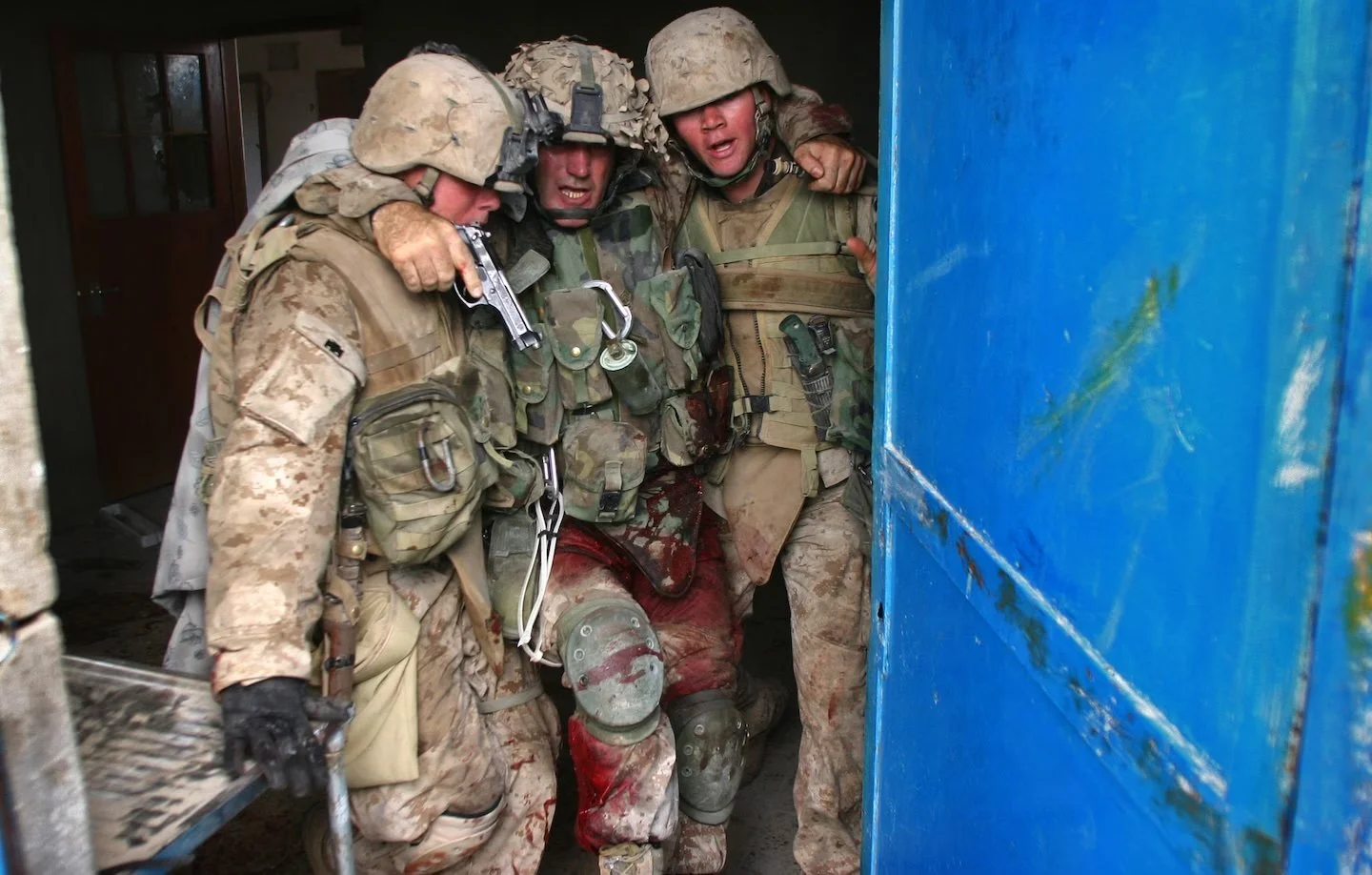
The iconic image of 1stSgt Kasal, retrieved from https://www.washingtonpost.com/opinions/more-iraq-veterans-deserve-the-medal-of-honor/2018/03/23/c29e6e0c-2dd5-11e8-b0b0-f706877db618_story.html
My point is that it can take a whole lot of blood - liters of blood - to make someone lose consciousness. How do we provoke massive blood loss, the kind of blood loss that forces unconsciousness in seconds? We have to strike major vessels. While a larger bullet or greater expansion may cause more blood loss, unless that bullet strikes a major vessel, any subsequent blood loss is highly unlikely to be profuse enough to cause unconsciousness in seconds.
The Great Vessels
The image below shows the major arteries of the body. There are certainly other smaller arteries, but these are the large-bore hoses that feed the body are called the “great vessels." For the sake of brevity I simplified those down into “the aorta” in previous articles in this series. Today let’s look at all of them, including the aorta, the vena cava, the pulmonary vein, and the pulmonary artery.
The largest vessels in the body are the aorta and the two vena cava. The aorta produces especially profuse bleeding for two reasons: its large diameter, and the high pressure it is under from the heart. The aortic arch (coming off the top of the heart) is the source for all blood pumped to the body. As such, it is under the highest pressure. A compromise of the aorta will yield the fastest possible exsanguination. I’ve personally witnessed it happen, and it takes mere seconds.
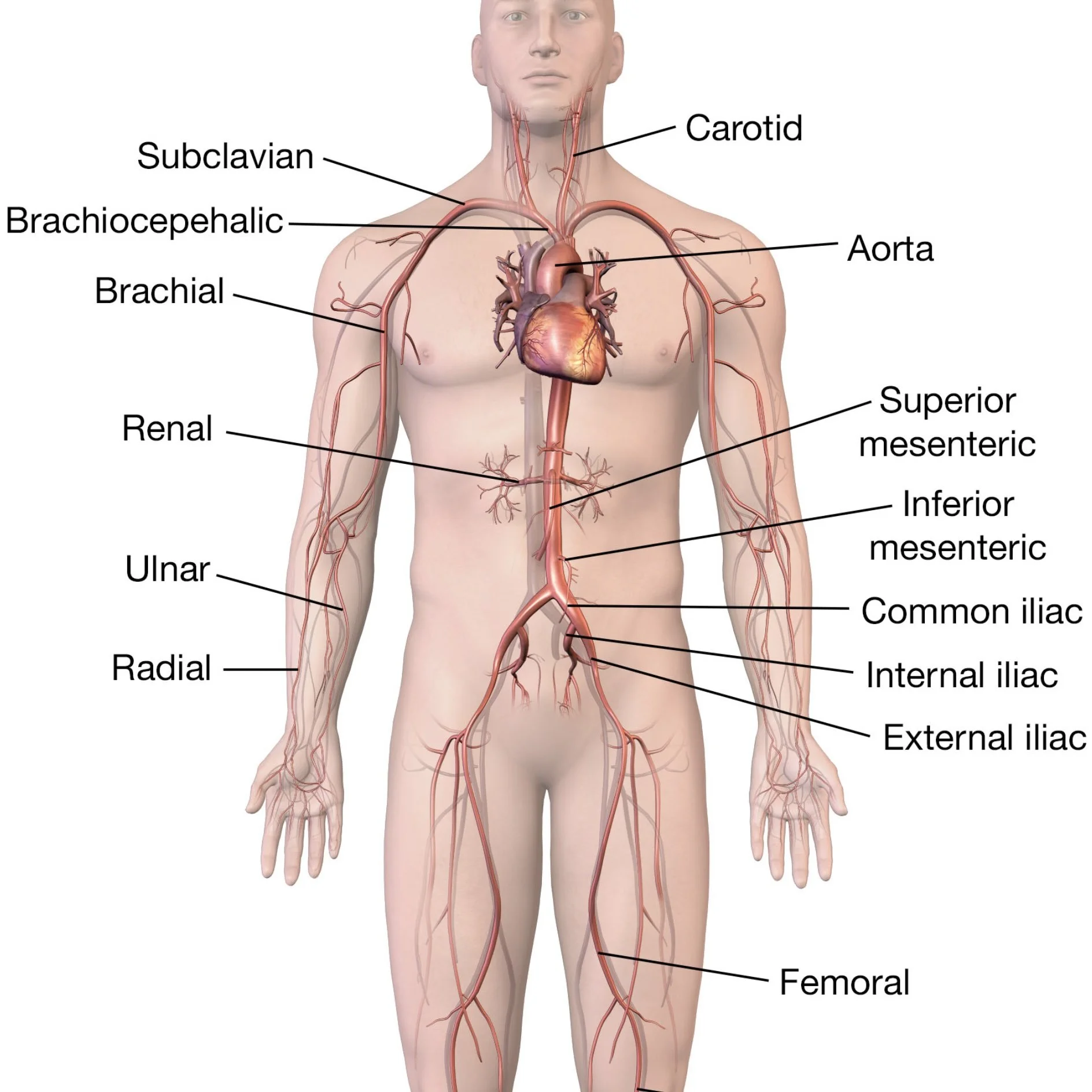
Image retrieved from https://medmovie.com/topic/cvml_0429a/arterial-anatomy/
The inferior and superior vena cava are under lower pressure. Both are responsible for feeding the heart oxygen-poor blood that can be reoxygenated and sent to the rest of the body. The inferior brings blood from the lower body, the superior from the upper body. Poking a hole in either vena cava will cause a breakdown of the system as the heart can no longer receive incoming blood. This will be slower, however, as there are two vena cava supplying blood to the heart. While this is still ultimately going to be a show-stopper, it’s going to take more time than a hole in the aorta.
Also very close to the heart is the pulmonary artery, which carries oxygen-poor blood to the lungs for gas exchange, and the pulmonary vein that brings oxygen-rich blood back to the heart for distribution to the body. The aorta is the prime target among these for rapid incapacitation. However, compromising any of these vessels is going to cause massive, internal blood loss and rapid incapacitation.
The Heart Itself
Of course, the heart itself is a major “timer” in the system. Putting a hole in the heart will certainly cause it to bleed profusely, but maybe more importantly it will shut down the body’s pump that moves blood, ultimately causing circulatory collapse. The immediate effect on the heart depends on the structures within the heart that are affected. The heart is a complex organ. It is a mechanical pump, but being muscle it also has its own circulatory requirements. It also has its own electrical system consisting of several components. The heart is surrounded by a tough sac called the pericardium that can cause complications with penetrating trauma.
A bullet striking the heart may cause sudden cardiac arrest, an immediate cessation of effective cardiac activity. Cardiac arrest will cause incapacitation about as fast as any “timer” - say, 10-15 seconds, max. A bullet striking the heart may cause some combination of lesser results. These including a cardiac arrhythmia, or the heart beating in a non-life-sustaining rhythm like ventricular tachycardia (with pulse). If untreated this will lead to death, but it make take quite a bit longer. Again, it depends on the particular structures within the heart that are destroyed. This is why even with superb accuracy it sometimes takes multiple rounds to stop an attacker.
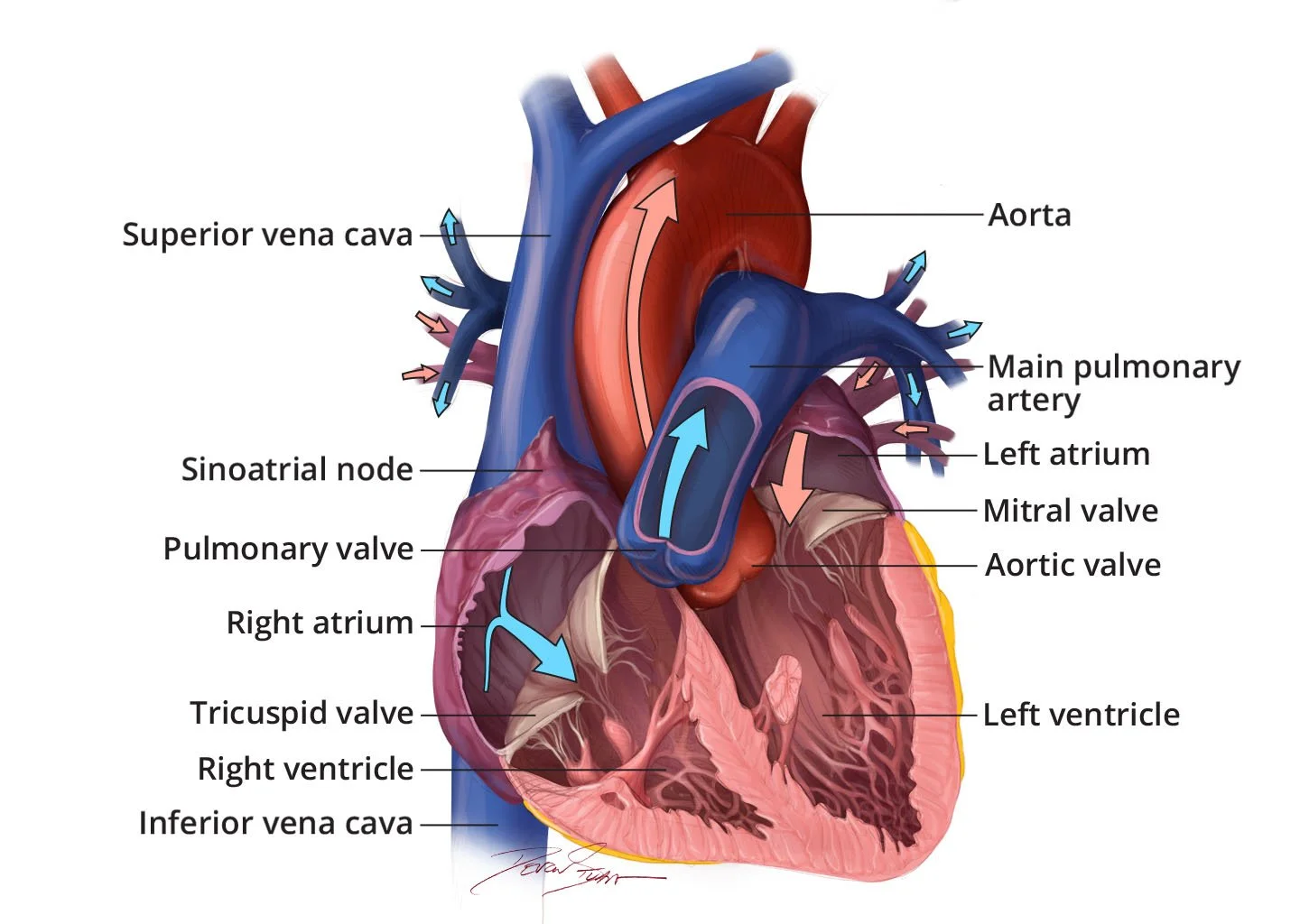
A good cutaway diagram of the heart, retrieved from https://www.nhlbi.nih.gov/sites/default/files/inline-images/NHLBI_Fig01_final02_01.jpg
The heart may continue pumping to some degree, but have a greatly reduced ejection fraction (that is, the amount of blood being pushed into the aorta and out to the body). If, for instance, the left ventricle is punctured but still pumps, the blood it pumps will take the path of least resistance. Some of that blood will exit the bullet hole(s), and some will exit via the aorta. This will also have the secondary effect of filling the pericardial sac with blood, causing cardiac tamponade, which will also result in a lowered ejection fraction. Ultimately this is almost certainly a terminal condition, but may take quite a bit longer to incapacitate.
If you recall from the case of Officer Gramins (discussed in detail in Part I),his adversary was shot in the heart (with a .45 ACP!). A timer had certainly been set, but the bad guy chose to use that time to fight. If you’ve wondered how this is possible…that’s how.
Other Vessels
If you refer back to the image of the major vessels of the body, there are certainly other large vessels. Among the largest are the decsending aorta (broken into the thoracic and abdominal aorta), the iliac/femoral arteries, the subclavian arteries, which divide into the carotids and brachials. Make no mistake: a laceration of any of these vessels is a big deal. A complete transection (completely severing) is an immediate, life-threatening emergency. I’m not advising you that these aren’t very serious, immediate injuries.
Excluding the descending aorta, injuring just one of these vessels is unlikely to produce the stop we want in a gunfight. As I write this, I completed the aforementioned National Tactical Officer’s Association (NTOA) Tactical Emergency Medical Support (TEMS) yesterday. One point directly from their lecture is that it can take two to four minutes to bleed out from a femoral artery. In a gunfight, one minute is a very long time, let alone two or three. While these are dangerous injuries, they are suboptimal from a targeting standpoint because, relative to the large mass of the heart and great vessels, they represent very small targets that are geographically distant from each other within the body, and individually are slow to produce a stop.
The Takeaway Regarding “Timer Stops”
The heart and the great vessels that surround it make up the primary target within the torso. This represents a reasonably large target which, if hit, provides a reasonable certainty of ending a fight within a meaningful time-frame.
The Central Nervous System
As I have repeated over and over, and demonstrated through case study, a timer stop sets a timer. The operative word there is “time.” It takes time for those shots to become effective. What happens in the meantime is left to the bad guy’s discretion. He might lie down, run away, or continue trying to kill you but regardless, it’s his choice. He gets to decide how he spends his last moments.
A shot to the central nervous system (CNS), however, will end the fight immediately. Remember, in a fight for our lives, every second counts. Every sliver of time the fight continues is a moment that you could lose your ability to walk, your eyesight, sustain an injury that requires 25 surgeries to correct, become paralyzed, or die. Your life could end in sheer terror, lying on cold asphalt in some place that has never before been significant to you, but that has now become one of the most significant landmarks of your life, staring up at the person who killed you. Ending the fight IMMEDIATELY is imperative.
Of late I’ve heard at least a couple Youtubers say that going for a headshot could demonstrate “excessive force” or something similar. The theory is that shooting at the head demonstrates an intent to kill above and beyond self-defense. I’m neither an attorney nor an expert on deadly force, so I’ll leave that for your own research where you live. I would strongly recommend knowing what the law actually says, though. Both of these Youtubers said something like “I’ll shoot ‘em in the chest a couple of times, and only if that doesn’t work will I transition to a head shot.”
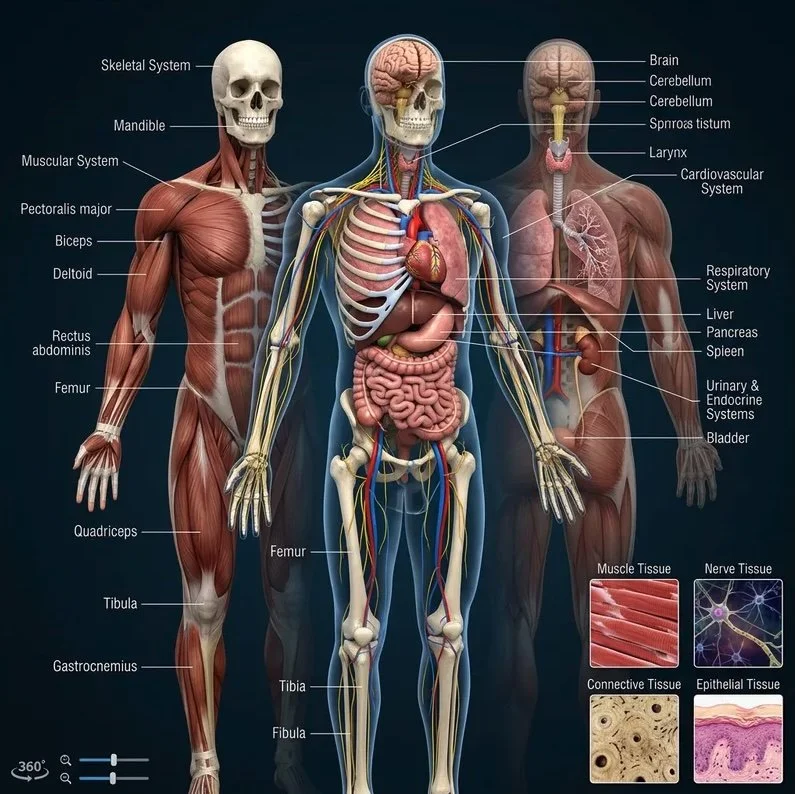
For example, Dick Fairburn says, “…a deliberate headshot should only be your choice in rare circumstances where you have to have an instant stop…” I don’t subscribe to this, and would contend that when someone is literally trying to take my life, I have to have an instant stop. If someone poses a credible, deadly-force threat - a threat so extreme that I am both legally and morally justified in pulling out a gun in my local grocery store or doctor’s office or restaurant and firing shots in public - I need to end that threat instantly. I can’t afford the luxury of shooting them in the leg, and if that doesn’t work transitioning to the chest, and then to the head. If I’m assuming all the legal, civil, and moral responsibility of using deadly force, I’m going to use it as swiftly and effectively as possible. If a CNS shot is available to me, I will likely take it.
I am not telling you what to do, merely telling you how I train and my philosophy on the matter. I practice headshots a lot. The reason? It is the largest viable target that can guarantee an instant stop. Even if I shoot someone in the chest and completely destroy the heart, I know for a fact that they can remain a threat for up to 15 seconds. If the bad guy is using a gun, every second he is using deadly force is a threat to not only my well-being, but to everyone around, to people driving by, to mothers cooking breakfast, or children still in bed in nearby houses. Since my life and the lives of everyone within range of the bad guy’s bullets is in mortal danger, I have to end the fight NOW. Not later, not in a little bit, not after I’ve tried a few other things, not seconds from now…NOW.
The Brain & Cervical Spine
The brain and spine are the two components of the central nervous system. Responsible for delivering electrical signals to the body, significant damage to either of these fragile and inelastic structures will cause instantaneous immediate incapacitation. The spine is a very occult target relative to the brain. It may be somewhat more visible from the rear of the attacker, depending on his individual anatomy. The skinnier an individual is, the easier it will be to visualize the cervical spine, but the head is nearly always visible, making in the preferred target in an self-defense situation.
Historically, law enforcement has trained on the “no reflex shot,” or a hit to the medulla oblongata. This is beginning to fall from favor though, as not even a perfect hit to medulla can completely guarantee an absence of muscle contractions. In reality, I have found no cases of anyone fighting after sustaining penetrating trauma to the cranial vault. If you get a bullet into the skull the fight is over. And that’s pretty much that - there really isn’t much more to say about the pathophysiology of a head shot.
Defensive Marksmanship
Now we know what to hit, internally, and how it forces a stop. But that doesn’t necessarily translate well to external, anatomical landmarks.
CNS Shot Landmarks
As mentioned previously, a lot of my training is geared at headshots. Within a distance/scenario where a headshot presents as a viable shot for me, that is my primary option. I need to end the fight as quickly and efficiently as possible with as few rounds fired as possible. The brain is protected by the skull. The skull is thick, tough bone, and has many compound angles. As a result, bullets sometimes glance off the skull. There are various reported cases of bullets tracking around the skull, just under the skin, causing no real harm to the bad guy. As we’ve also seen in Part I, a poorly placed shot in the head from a .45 ACP failed to take Jared Reston out of the fight. He took six more shots and killed the man who fired them. Marksmanship matters.
If the bad guy is facing you, the easiest shot is the ocular window. This is the triangle formed by the outside edges of the eyes and the tip of the nose. The forehead is thick and tough, so you want to keep shots below the eyebrows. The two targets below are outstanding practice targets for CNS shots.
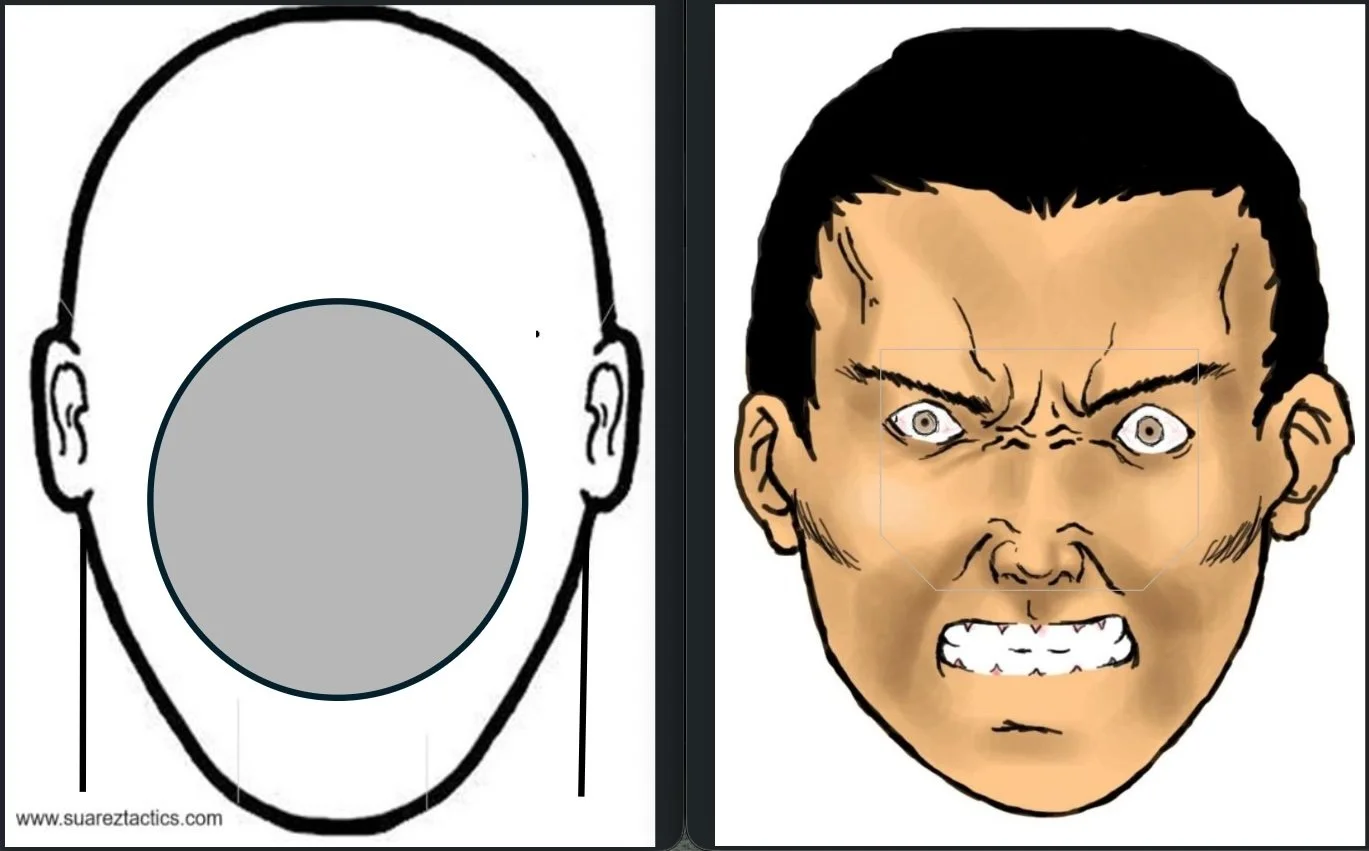
Two targets I train with regularly.The Suarez CT target on the left is from Suarez Tactics as a download when you join his Patreon as a free member: https://www.patreon.com/suareztactics/posts/suarez-ct-target-121430222 . The Angry Face target on the right is from John Hearne as a free download from his Two Pillars Training website: https://twopillarstraining.com/wp-content/uploads/2025/10/angry_face_target.pdf .
Of the two targets above, I tend to favor John Hearne’s a bit more. First, it is photorealistic. The eyes make it a bit more realistic and help mentally prepare one for a deadly force incident. Just as importantly, the scoring zone is subdued, forcing you to look for anatomical landmarks. I do use both of these targets regularly, however.
We must also prepare to have to shoot at angles other than straight on. Are you ever justified in shooting someone in the back of the head? The answer is an unequivocal “yes.” If that person is a mass shooter, is still an articulable threat to you, yes, you have the right to shoot that person in the side or back of the head. If he or she is facing away from you, the occipital protuberance (that bony knot on the back of your head) is a good place to aim. If he is in profile, or at some angle to you, pretend the subject is wearing a headband. Attempt to get a 90-degree impact, just below the headband. The closer the angle is to 90-degrees, the less likely it is to be deflected, and the more likely it is to penetrate completely through the brain, provoking an immediate stop.
Timer Stop Landmarks
The timer stop, as we have learned, sets a timer. When a bullet pierces the heart or a major blood vessel bleeding starts and/or the circulatory system otherwise begins to fail. The timer can take what feels like forever in a gunfight, but that’s just the reality of a timer stop…it takes time. Why would we choose a timer shot over a CNS shot? My philosophy on this is that the chest presents a reasonable secondary target when I am unsure of being able to make a headshot. If I have concerns about a missed bullet striking a hostage or innocent bystander, a chest shot is likely a better choice. Additionally, the chest provides its own “backstop” in the event the relevant portion of the chest is missed. Let me explain more.
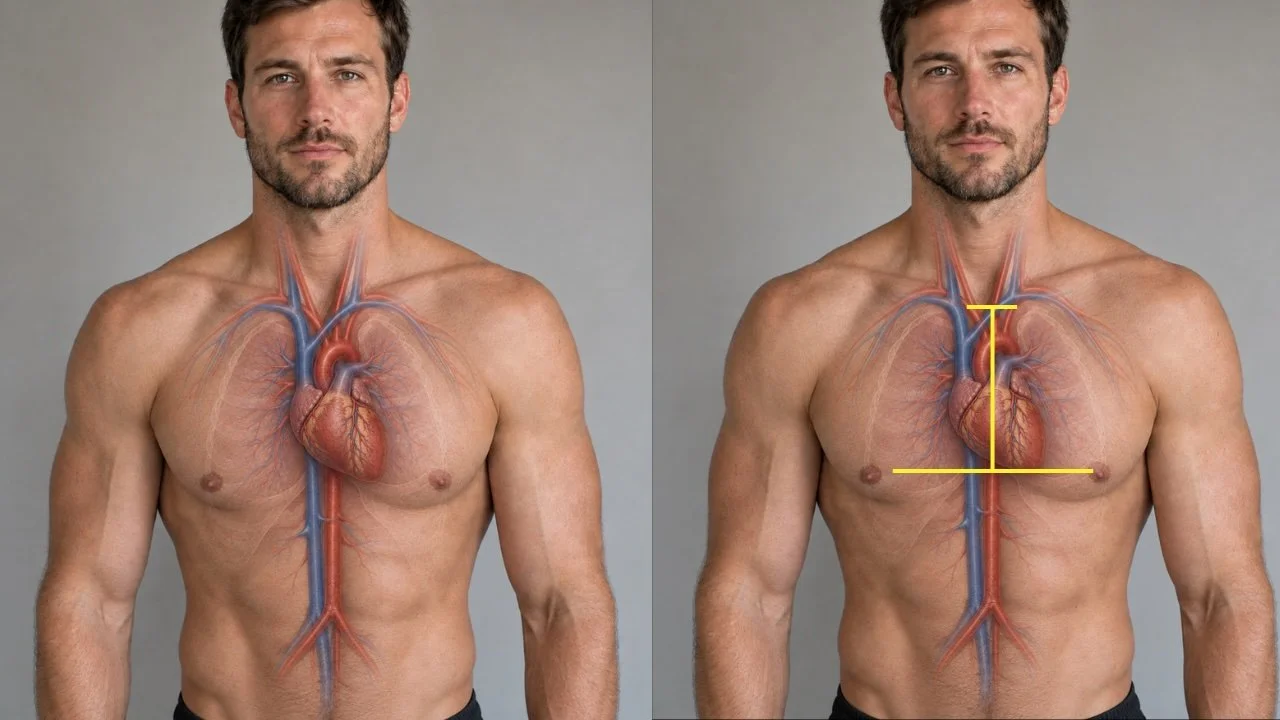
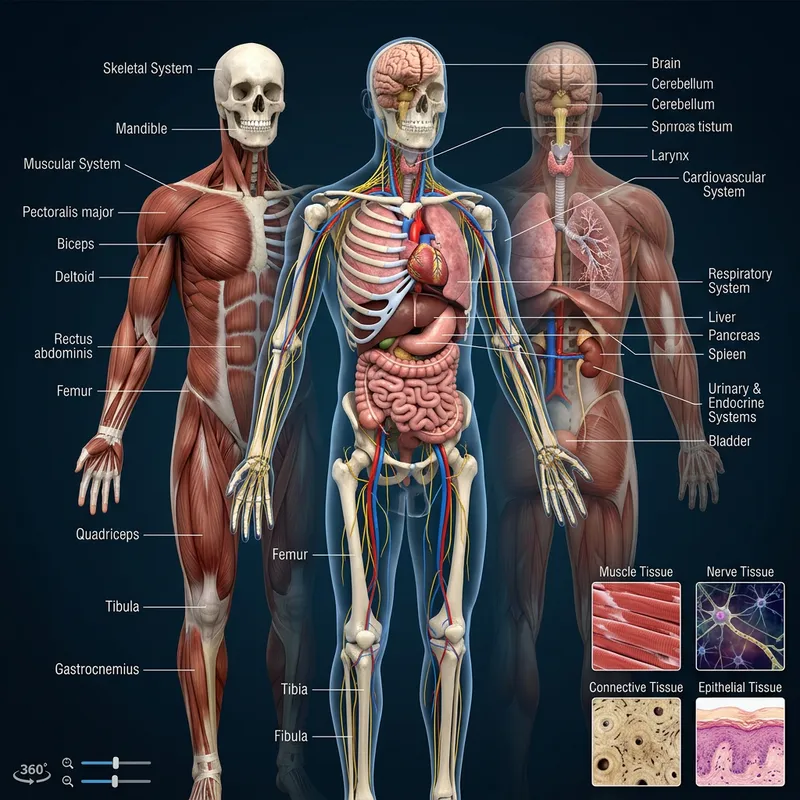
AI-generated images courtesy of ChatGPT. The internal anatomy here isn’t perfect (the rib cage is far too small) but this is close enough for our purposes.
Getting shot anywhere in the chest creates an extremely dangerous wound. But we’re doing ourselves and our students a disservice when we train to shoot “at the chest, or “center mass” or go for a “heart/lung shot.” These are very imprecise terms driven by poor understanding of human anatomy, limited training, and low expectations of students or ourselves. These terms give the impression that a shot anywhere in the chest is equally effective. This is not the case. We now know that to force a stop through exsanguination we have to hit the heart or great vessels. THAT is we should be aiming at, not the “chest.”
The most effective target for doing so is the heart and the associated large vessels that are bundled behind the sternum: the aortic arch, thoracic aorta, superior and inferior vena cava, and pulmonary veins and arteries. Relative to the whole chest, these are small targets, so we must be precise and we must be accurate. The anatomical landmarks we should be concerned with are the suprasternal notch (the big divot at the intersection of the sternum and collarbones, also called the jugular notch), the nipple line (in a healthy, adult male), and the centerline sternum.
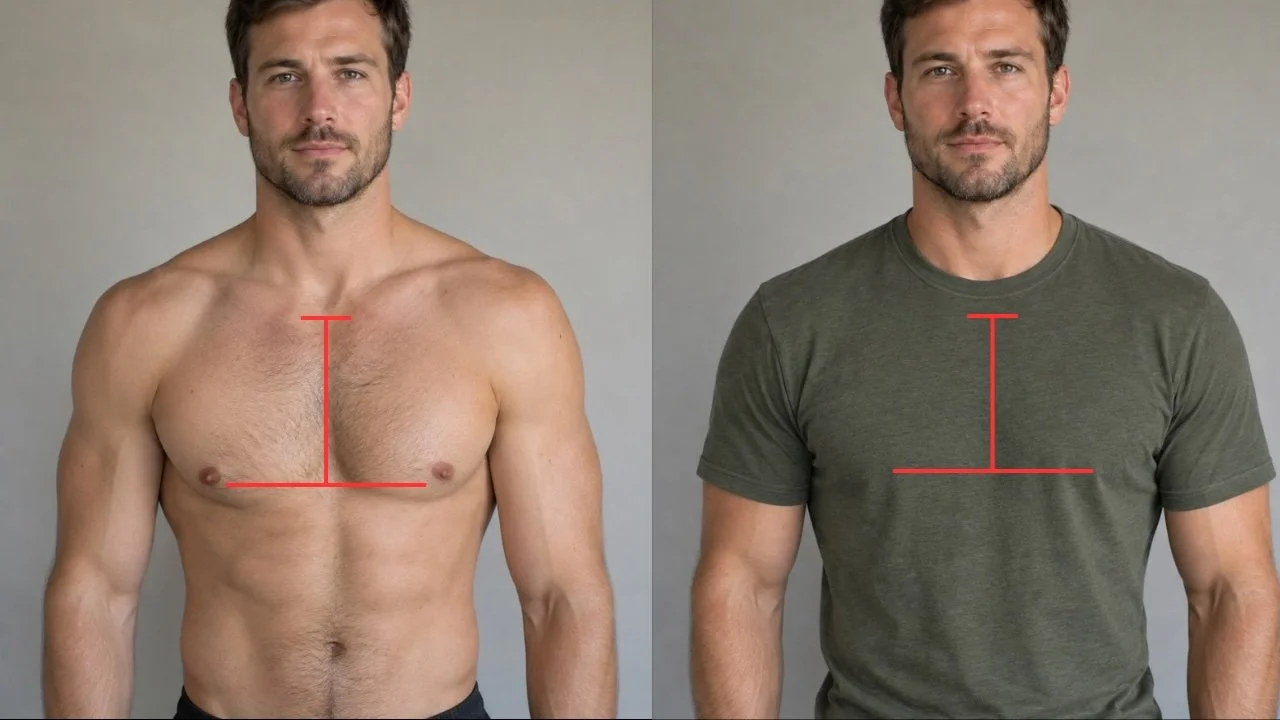
When we get right down to it, we have about a 6 inch high by 4 ½ inch wide target area, behind the sternum. Since our bad guy is likely to have clothing on, I will offer you another, more appropriate landmark for clothed individuals: the armpits. I asked ChatGPT to make an “average” adult male. Obviously this guy is not average, he is jacked compared to the average individual. And he is wearing a fairly tight-fitting shirt. On the average person, the armpits of the shirt will correspond roughly with the nipple line of a healthy adult male. The point here is, in a fight for our lives where a head-shot is not an option, we need to aim at the sternum, below the suprasternal notch, and above the nipple line/armpit line.
That’s what you need to shoot at for a frontal shot. Obviously, we also might have to take a shot at some other angle. If the bad guy is close enough, and for whatever reason a CNS shot is not available, we will have to calculate a trajectory through the body, to the heart. Hunters intuitively understand this; game came come in at varying angles. I will leave that to your own exploration. I sometimes use John Hearne’s 3D “Tac Man” targets for training. They are pricey, but enable to you to visualize shooting a 3D, rather than a 2D target.
And since we’re on the subject of targets, let’s address training targets that will set you up for success should you find yourself in a gunfight.
Choosing Anatomically Relevant Targets
Anatomical relevance was a topic that I was introduced to by Tom Givens. Choosing targets is an entire block in his Protective Pistolcraft class, and it was one of the most interesting to me. Anatomically relevant targets are targets that train us to shoot where we actually need to shoot. You should choose your targets carefully. I firmly believe the can condition yourself to shoot at an anatomical location unlikely to actually stop a threat.
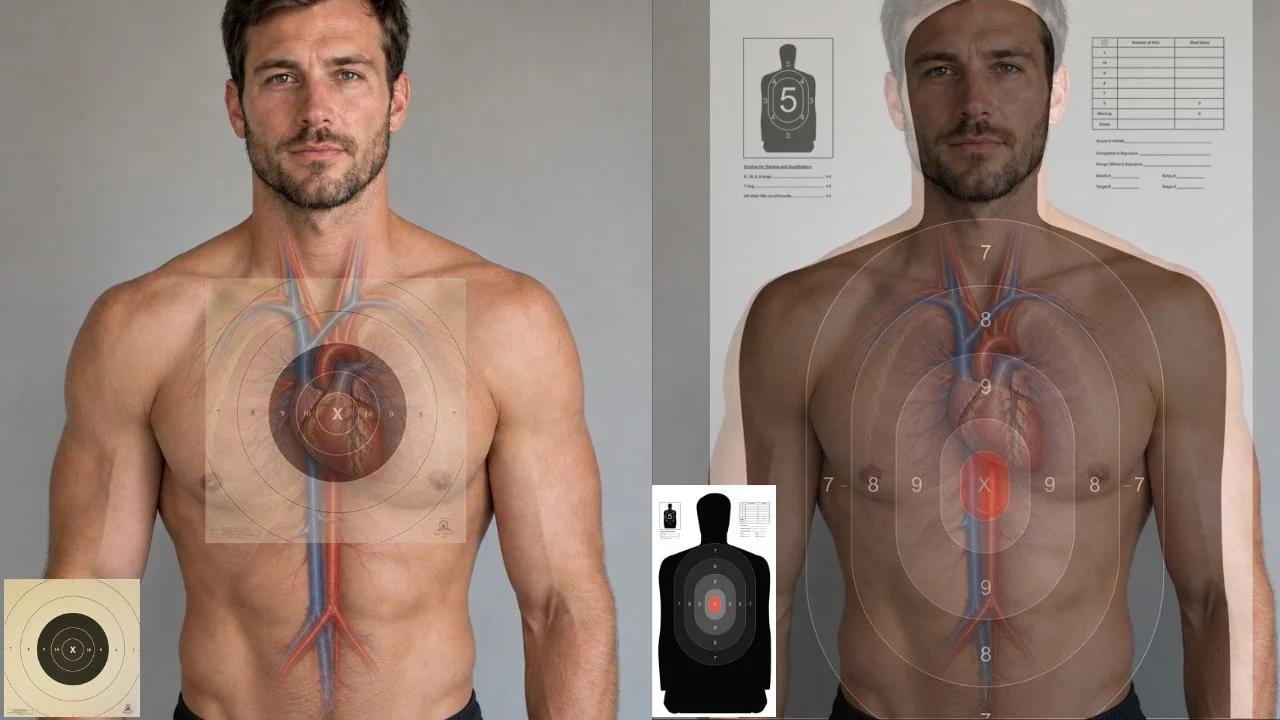
Let’s compare the anatomical relevance of the two targets above. On the left is a B-8 Repair center. Some say that shooting bullseyes has no anatomical relevance, but I disagree. That 9-ring is a 5.5-inch circle, which is just about ideal for representing the heart and great vessels. The 10-ring is a 3.36-inch circle, just about ideal for training the ocular window shot. This target can tell you a lot about your ability to place shots precisely enough to achieve a rapid incapacitation.
What about the B27 on the right? This puts the prime scoring area a bit low (and probably a bit lower on a realistically-sized person). Anecdotally, I’ve seen the aftermath of several officer-involved shootings with shots in the subject’s low abdomen. Is this because they are aiming true “center mass” as taught by the B27 (and then probably adding a bit of their own low-left)? I think it probably is. The B27 is a notoriously poor target. If you must train on one, you can choose to shoot an anatomically-relevant scoring area, however.
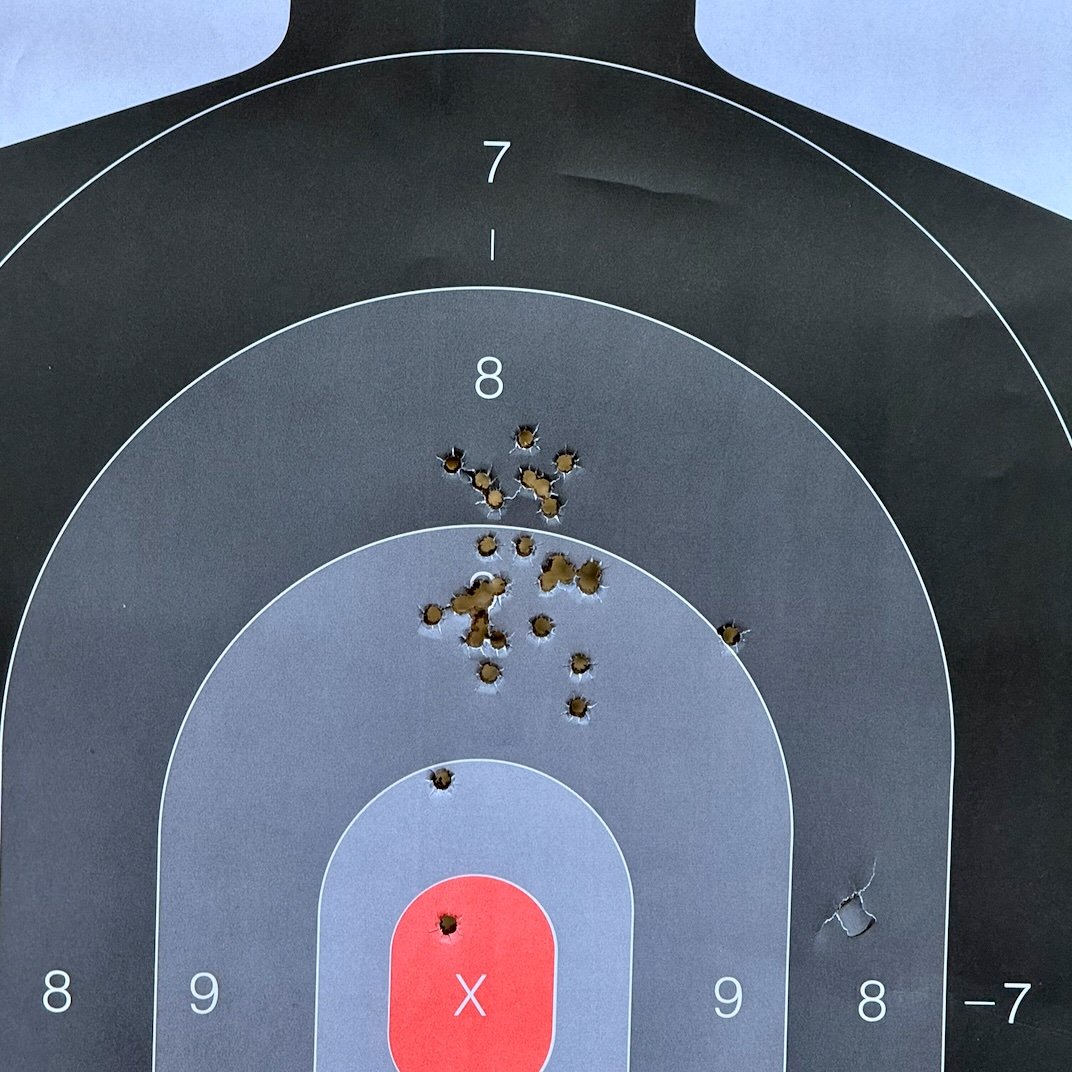
Side note if you have to qualify on a B27: you can still shoot at an anatomically relevant area. Since all shots within the 8-ring are full-value, I have recently begun making a conscious effort to shoot at the line between the 8 and 9 rings, in the upper chest (I did drop a couple of at the 25). I still shoot 100s, but don’t build training scars.This is my most recent qualification with my off-duty pistol.
Lets look at two more targets (below) quickly and I’ll wrap this up. The target on the left is a USPSA target; the one on the right is an IALEFI “Q” target (there are a lot of Q targets with the bottle shape; this is a good representation of many of them). I shoot on both of these targets a lot, and overall I think they’re decent targets. But let’s address a couple things.
First the relationship of the head to the chest. I’ve heard some complain about this, but I honestly don’t think it’s a huge deal. In a fight you aren’t going to move the gun up to the head some prescribed distance; you’re going to move the gun until the sights are where you want them. And this distance already chances as we increase or decrease range, so I honestly don’t see that as a problem.
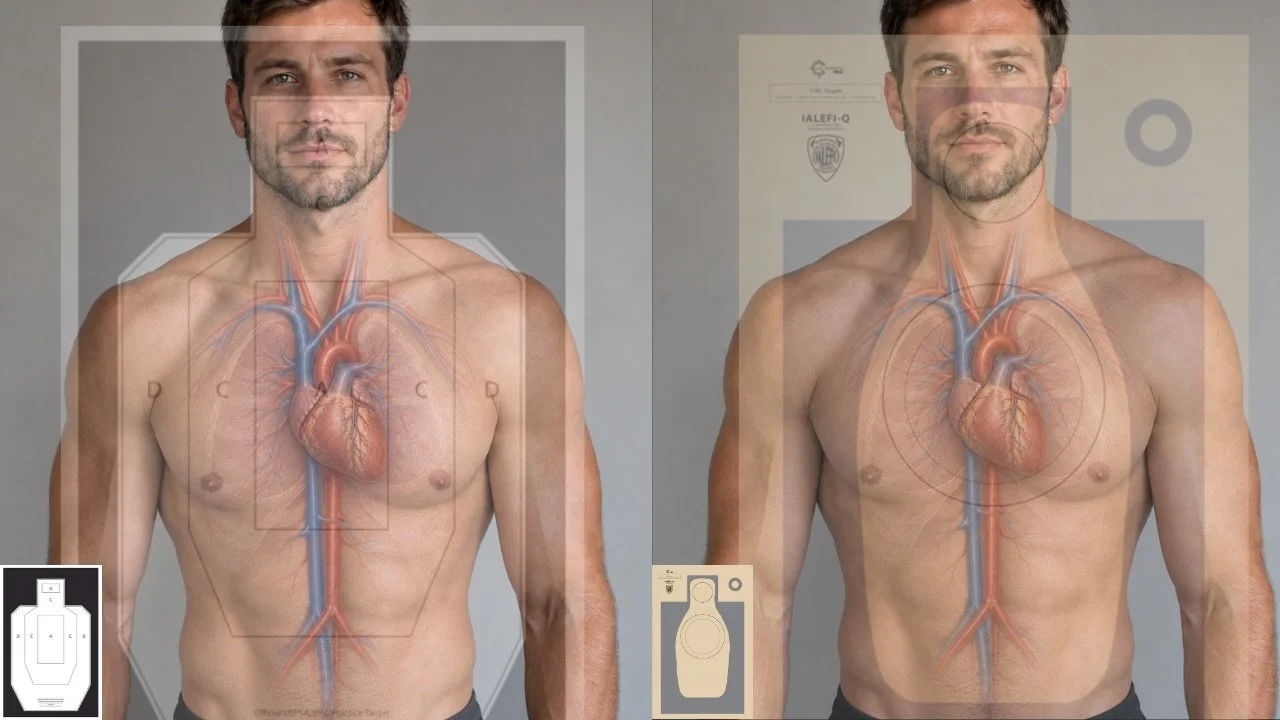
The bigger problem is the size of the primary scoring zone. This dude is pretty large. Still, that 6-inch by 11-inch A-zone is pretty damn generous. A lot of the stuff in there isn’t going to provoke an immediate stop. Same for the 8-inch circle, and definitely for the 10-inch circle; for the purposes of causing an exsanguination stop, there’s an awful lot of “empty space” in those circles. I’m not saying these are bad targets and again, I’ve used both of them a lot. But be realistic. You’re line-break at the bottom edge of the A-zone probably isn’t doing much (and your C-zone shots certainly aren’t). Kyle Lamb likes using the upper half of the A-zone, and I can definitely get behind that.
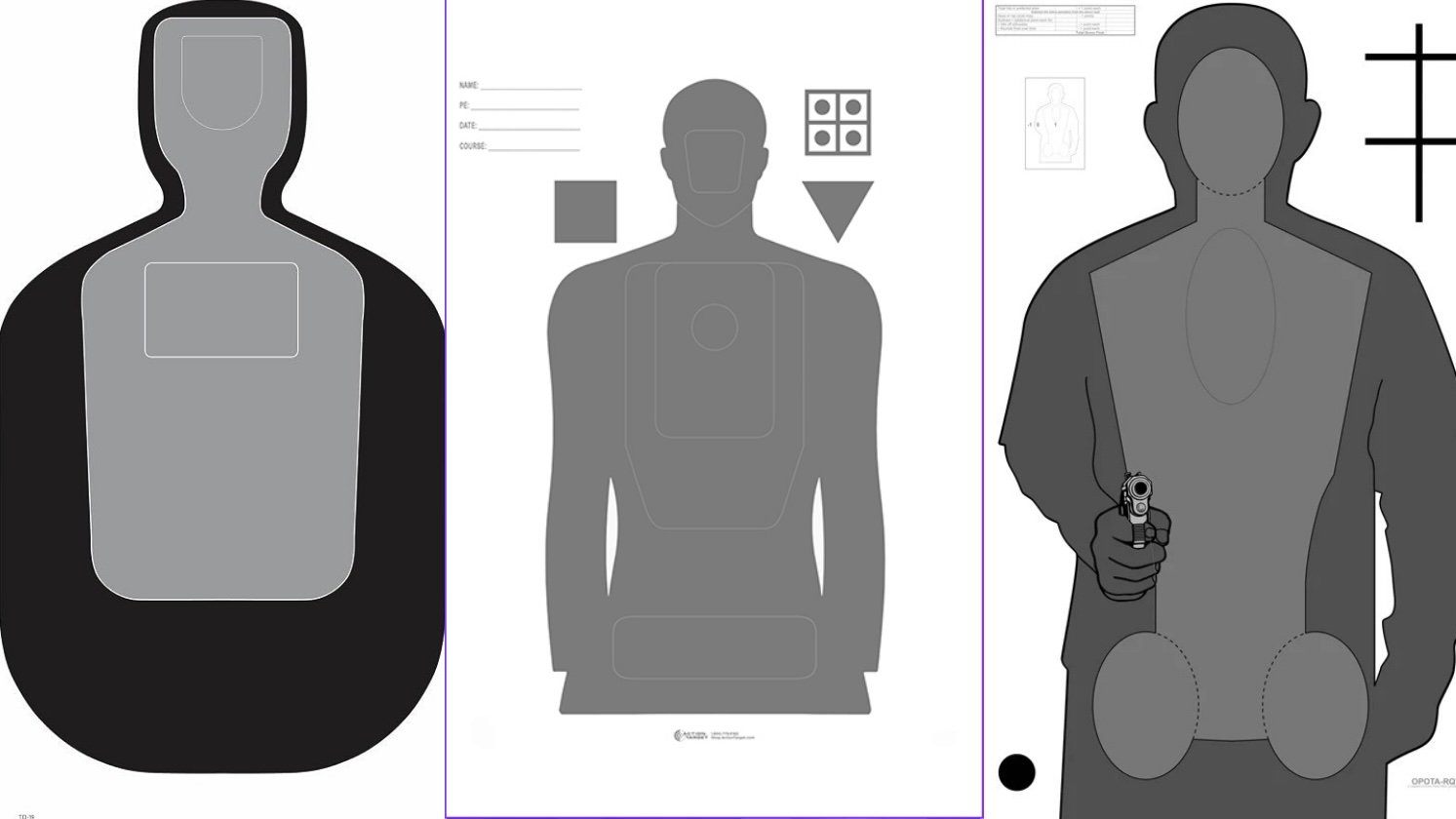
If you are using one of these targets, you should occasionally shoot something with a tighter accuracy standard (like the lowly B8 bullseye - 9-ring = effective body shot, 10-ring = effective CNS shot). When shooting on these targets for defensive/duty training, I would insist on very clean scoring (no line breaks, etc. - these are already very generous scoring areas!). There are two other targets that I like as well, that I believe are worth your consideration. They are, from left to right, the TQ-19, the Indiana law enforcement IN-QT target, and Ohio’s OPOTA target. All have anatomically relevant head and chest scoring zones. Well, maybe Ohio’s head area could be a little more strict, but overall, these aren’t bad targets. I’ll let you check those out on your own.

Closing Thoughts
I have a few more things I want to say, but this is already very long, so I’ll wrap up. It matters little what high-speed, low-drag bullet you’re using, what caliber you’re shooting, or what gun you’re carrying, relative to hitting something that matters. The things that matter.To quickly recap today’s installment:
The CNS stop is the most reliable “stopper.” When in a fight, your life and the lives of everyone within pistol range are endangered; you must end the fight as soon as possible.
To reliably place a bullet into the cranial vault, target the ocular window (the triangle formed by the corner of the eyes and the tip of the nose).
To reliably cause an exsanguination stop, aim for the sternum; centerline, between the suprasternal notch and the nipple line.
Consider your targets carefully, and choose one that present anatomically-relevant scoring areas.
And that’s pretty much it. It’s possible I will think of something else I want to say on this topic, but I believe that wraps up this series for now. If you have any specific questions, feel free to reach out! Thanks for your patience with this series of very long articles!