Dry Practice Safety Protocol
The only thing more unpopular than dry practice is dry practice safety. With a couple dry practice articles in the pipeline, however, I would be remiss if I didn’t cover this. I do a huge volume of dry practice, so the chances of a mishap are pretty big. Every single day I unload my gun, draw it and pull the trigger a bunch, then reload it. One moment of inattention and a round is going through something it shouldn’t. That’s why I have developed this safety regimen and stick to it religiously. If you dry practice a lot (or even a little), you need some kind of dry practice safety regimen, ritual, or protocol. This article should give you a few ideas about how to make that happen.
This article contains affiliate links. Using these links gives us a small commission but costs you nothing. Please consider using our Amazon link to support this blog.
If you'd like to listen/watch on Youtube, you can find this article here:
This isn’t the only way to be safe when dry practicing, but it is what works with my living situation. After two and a half years of daily dry practice, I have yet to have a negligent discharge (knock on wood!), thanks to this safety protocol. If you’re planning to start dry practicing, take the pieces of this system that work for you and adapt them to your situation. Add or subtract what makes sense for you.
Remember there are two basic types of dry practice safety measures: Those that mitigate the risk of a round going off, and those that mitigate the damage if a round does go off. Everything I talk about in this article will cover one of those two concepts. Most cover the first category, and attempt to prevent accidentally firing a round in the first place.
The Danger of Dry Practice
Several years ago I wrote an article about dry practice safety on RevolverGuy.com. In it I included a bunch of quotes I found from around the internet, downplaying the importance of dry practice safety. Some of those are:
“Just to clarify, what is your definition of ‘dry practice’?”
“I’m lost…what are you dry firing with to need a backstop?”
“If your that unsure of your ‘gun handling at home’, I’d save your practice until you have a berm (at the range) in front of you.”
“I think you may be missing the key point of dry fire.”
“Just do what I do. Take the bullets out of the gun. Stick you finger in the chamber. No bullet? Start dry firing.”
Dry practice is extremely dangerous. By its very nature, dry practice is usually conducted in placed where you wouldn’t actually shoot a gun. The reason is that we do it in areas that are not ideal for live fire. If we went to the range to dry practice, we would definitely have to worry less about all these safety protocols. One of the huge reasons for dry practicing, though, is so we don’t have to go to the range. We can knock it out at home to save time and expense.This incurs significant risk; a bullet fired does not have all the inherent safety measures of a bullet fired at a range.
Though I live alone, I am probably an anomaly for a man my age. Most of you probably have others living in your home who would be placed at huge risk by a stray bullet. Statistically, you also probably have neighbors living much closer to you than my neighbors. If a bullet is fired and strikes one of these people you face a gamut of consequences, depending on where you live. If you live in (or travel to) Arizona, for instance, you face felony charges merely for discharging a firearm within city limits.
If the worst happens and you kill someone, you may face manslaughter or negligent homicide charges. That’s in addition to any civil action taken against you, like a wrongful death lawsuit that could bankrupt you. A single moment of inattention could cost you everything and change the course of your entire life. And, worst of all, you will have to live with that for the rest of your life. This is not a mistake you want to make. The consequences are just too big.
Making matters worse, if you commit to dry practicing on a regular basis, your risk rises further. Each and every time you handle a firearm, you incur a bit more risk. If you dry practice, say, 365 days, you have a chance to screw up each and every one of those days. So it pays to put some safety measures into place.
Time of Day
I choose the time of day when I am at my sharpest. For me, that is first thing in the morning. I wake up, work out, and shower. Once I’m dressed I dry practice. I like this because it gives me some focused practice before I walk out the door. If I get in a fight, I have practiced my firearms manipulation skills as close as possible to the fight.
This also plays an important safety role. First thing in the morning is as sharp as I’m going to be. If I wait until after work, I’m going to be tired and less attentive. Not only is that going to have an impact on safety, it’s also going to mean I am less focused and get less results out of my hard work. Your time may vary, but early in the morning works best for me.
Designate a Dry Practice Area
I am not a fan of dry practicing just anywhere around the house. I remember old gun magazine articles recommending dry-firing at characters on TV. I think this is a terrible idea. It normalizes pointing the gun around the house and pulling the trigger. I do not want to normalize this behavior; I may be tired, or just inattentive one day, and pull out my gun to fire a “dry” shot, only to realize my gun is loaded. This is extremely dangerous to neighbors and members of your household, and to your continued freedom.
After that, light switches, electrical outlets and bad guys on TV become targets. Don't laugh about the bad guys on TV as targets. They move pretty fast, and scene cuts all work together to make hits challenging.
Instead, I designate a dry practice area and that is the ONLY place I dry practice. If I’m not in there, I don’t draw my gun, I don’t press triggers, and I don’t needlessly handle guns. When it’s time to dry practice, I go into the dry practice area. When I come out of there, dry practice is over. My dry practice area is in the third bedroom of my home. This bedroom is my gym and my dry practice training area. Some of you may not have the luxury of designating a whole room, but there are some things you can do to make it as safe as possible.
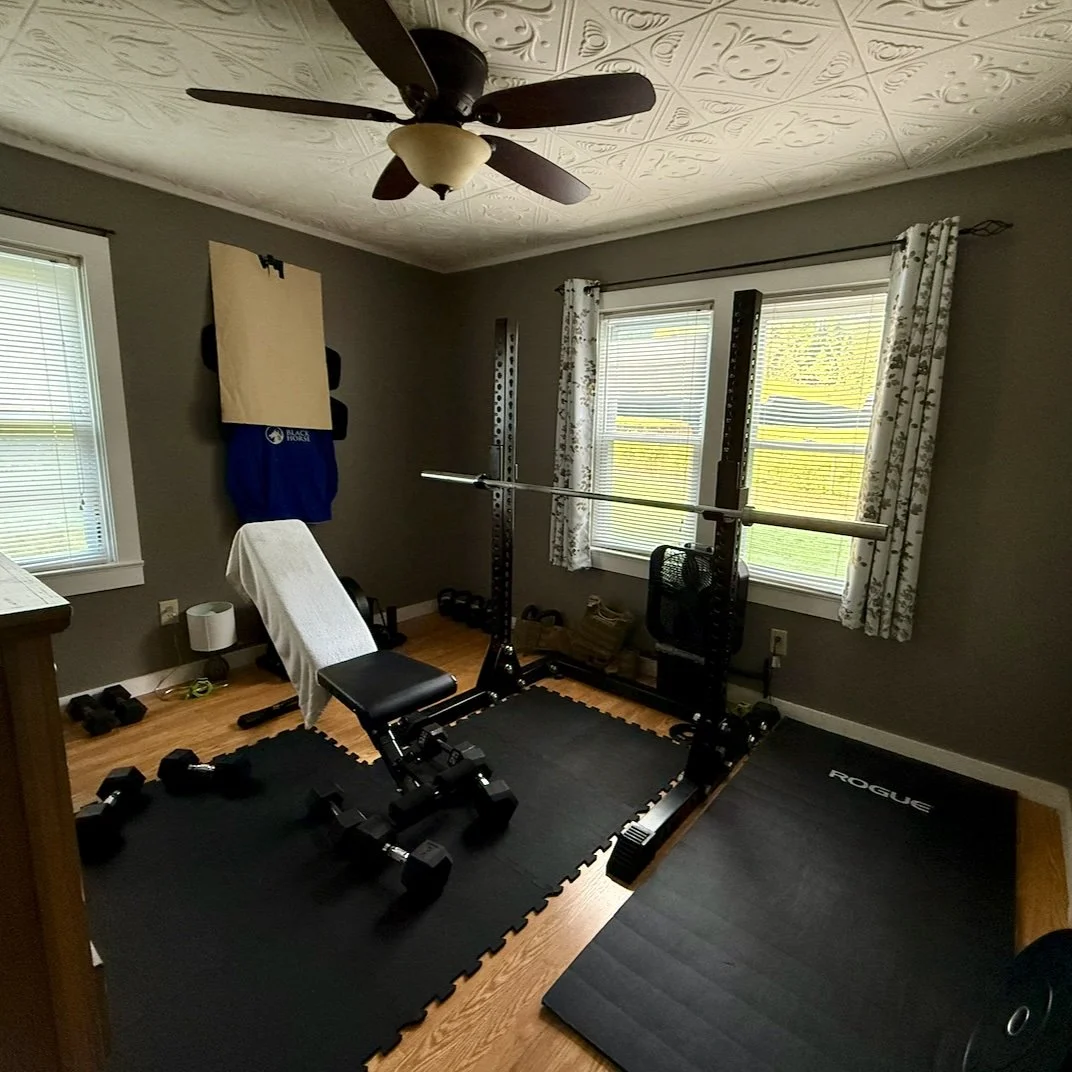
First, choose a spot that provides the safest direction to point your gun. This direction should minimize risk to everyone around you. In my dry practice area, a negligent discharge would impact a hill behind my house. The worst thing a bullet could hit is a cow, which would cost me a couple thousand dollars and some uncomfortable conversations with my neighbors.
Next, choose a spot where you are unlikely to be with a loaded gun. You don’t want to build a habit of drawing and pulling the trigger in a place where you regularly are with a live handgun; the risk of a mistake is very high. I never take my loaded gun into my gym. I realize some may not have the luxury of designating a whole room to dry practice; if not choose a spot where you would almost never normally stand. At one place I lived, I would stand inside the closet looking out; it was very unlikely I would just be standing inside the closet.
Dry Practice Targets
There are a couple of factors here. First - ideally - your targets should have a bullet-safe backstop. I have already briefly touched on this; if you don’t have a bullet safe backstop, you should at least have a safe direction where another human is very unlikely to be. My dry-practice direction is the cow pasture behind my house. A bullet would have to travel pretty far, over some pretty high hills to get to my neighbors in that direction. .
If you don’t have a safe direction (i.e. you live in a more “normal” neighborhood or an apartment complex) you need a bullet-safe backstop. Why? Because we make mistakes. In researching this article I ran across even more people online who act annoyed at the idea that someone would want to use a backstop to dry practice. I sincerely hope that none of them live anywhere near me; I don’t want to be the victim of their mistake.
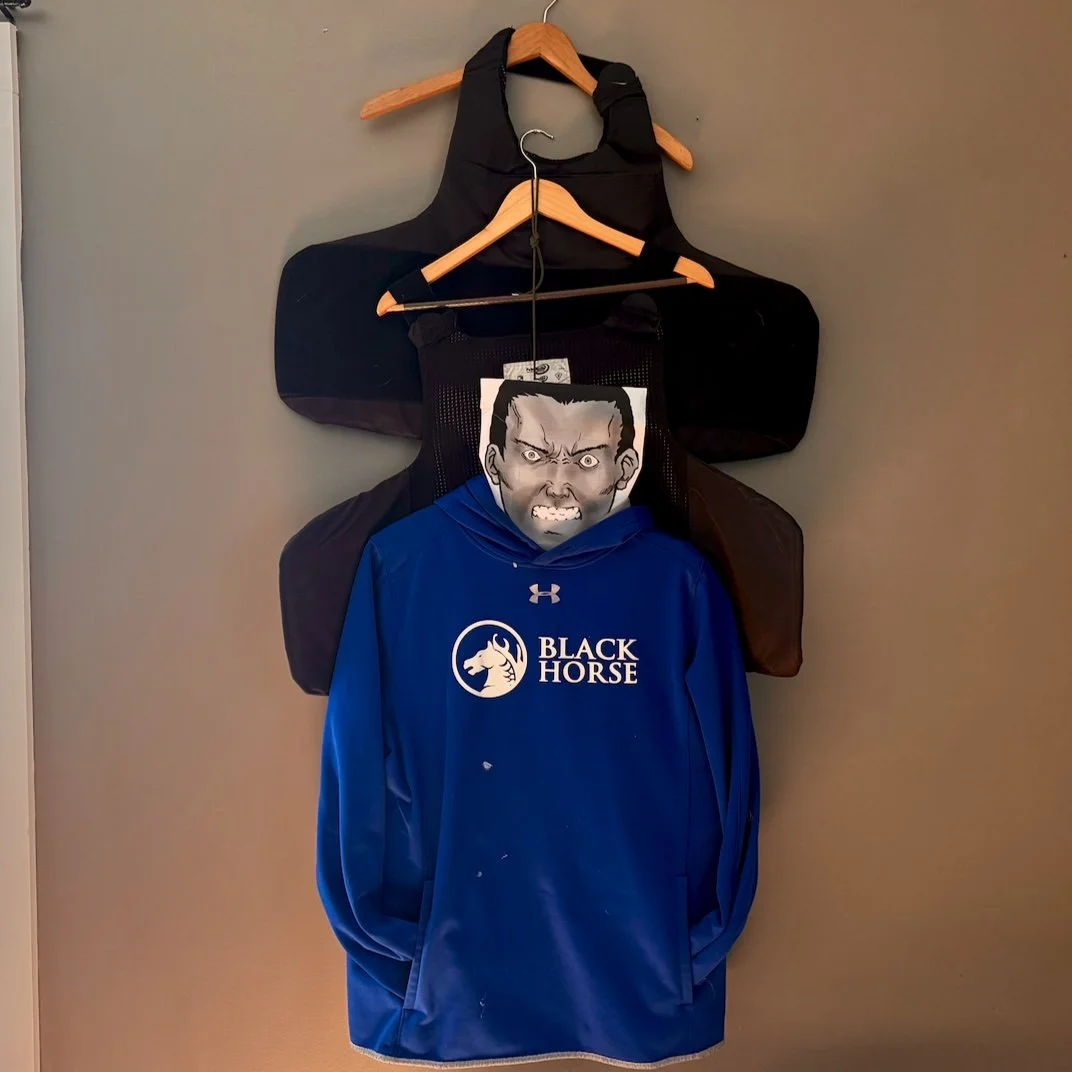
Just because we are “dry practicing,” we are not permitted to point the gun in the direction of another human being and pull the trigger. It will probably be fine…but if we make a mistake, it could cost us - and the other person - everything. The stakes are incredibly high, and life-altering. There are a few things you can use as a backstop. I have a couple old, long-expired ballistic vests. They have been stored well, so I’m confident they will still stop bullets. If you don’t have a ballistic vest, you can buy used/expired vests online with a little searching.
The other target precaution I take is to cover or take down my dry practice targets before I leave the training area. If I do walk in there with a loaded gun (a practice I try to avoid) I don’t want to shift gears into dry practice mode. Covering the target gives me a visual signal that it is not dry practice time.
Ammunition Quarantine
Another feature of my dry practice area is a strict ammunition quarantine. No live ammo comes into my dry practice area - EVER. This means that I unload my gun before I go into my dry practice area. If I have put on my gun for the day and forgotten something - my coffee or phone - in the dry practice area, the gun comes off before I go back in there. If I walk in there, my mind on something else, I don’t want to inattentively draw and put a live round into the wall.
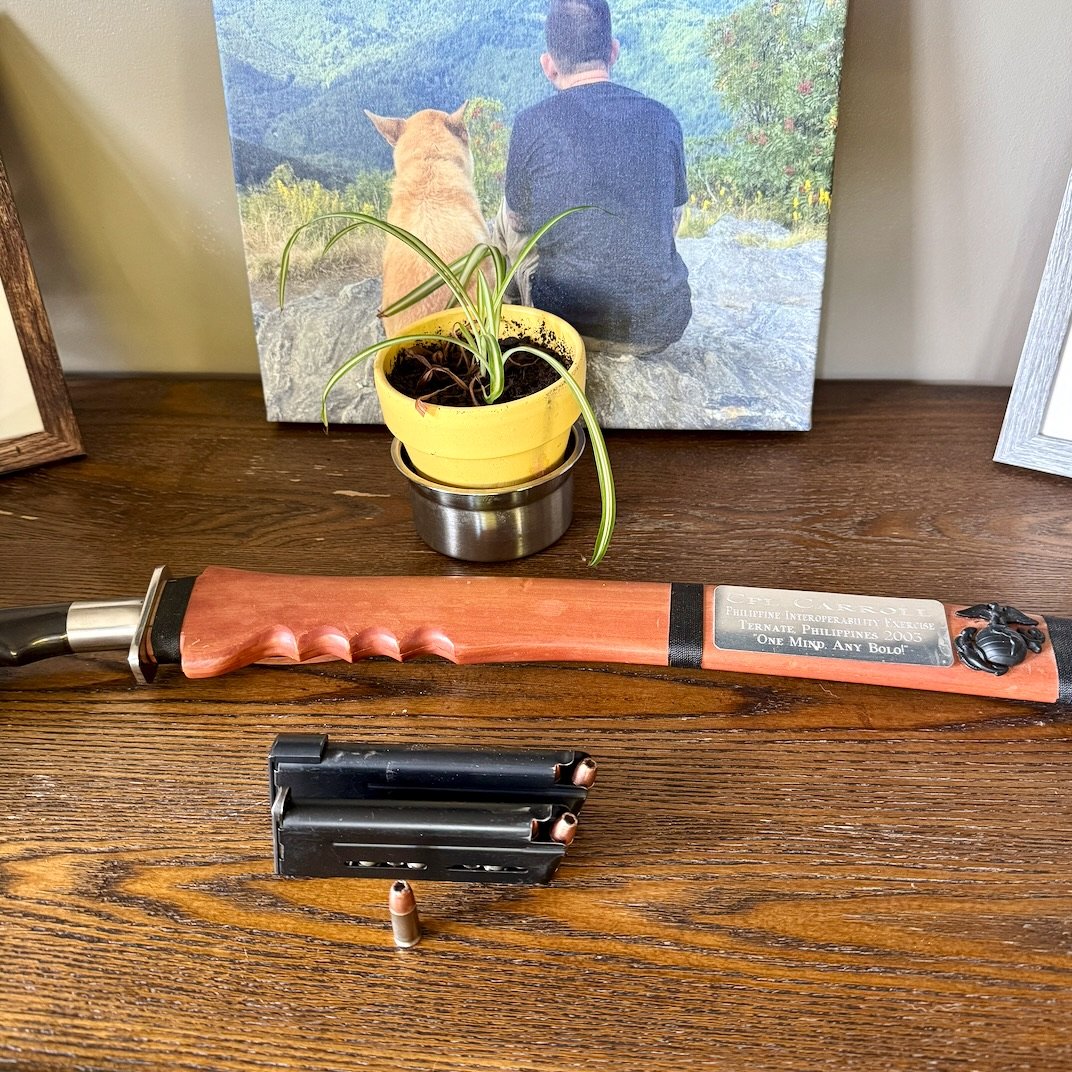
For the sake of consistency, I unload in the same place every day: in my living room. Before I go to my dry practice area, I make sure I see the same things on the coffee table every day: the mag from my gun, the round from the chamber, and my spare magazine. You definitely don’t want to forget that spare magazine of live ammo.
Use Dummy Rounds
Dummy rounds are important for dry practice. They allow you to work on things like malfunctions and reloads. They also provide a significant safety margin. Two objects can’t occupy the same space; if a dummy round is in the chamber, a live round can’t be there. Most dummy rounds are visibly different from live rounds. This gives me a warm/fuzzy every time I press check my gun while dry practicing. I use Ready Up Gear’s Dummy Rounds that I recently reviewed.
As part of my ammunition quarantine, I only load my snap caps in the dry practice area. My snap caps and practice magazines live in my dry practice area and don’t leave. When I take my unloaded gun into the dry practice area, I load my practice magazines up with dummy rounds/snap caps. This gives me an opportunity to inspect each and every one that goes into the magazine. I’m not mindlessly stuffing the magazine, I’m watching each and every round that goes into the mag, ensuring each one is a dummy.
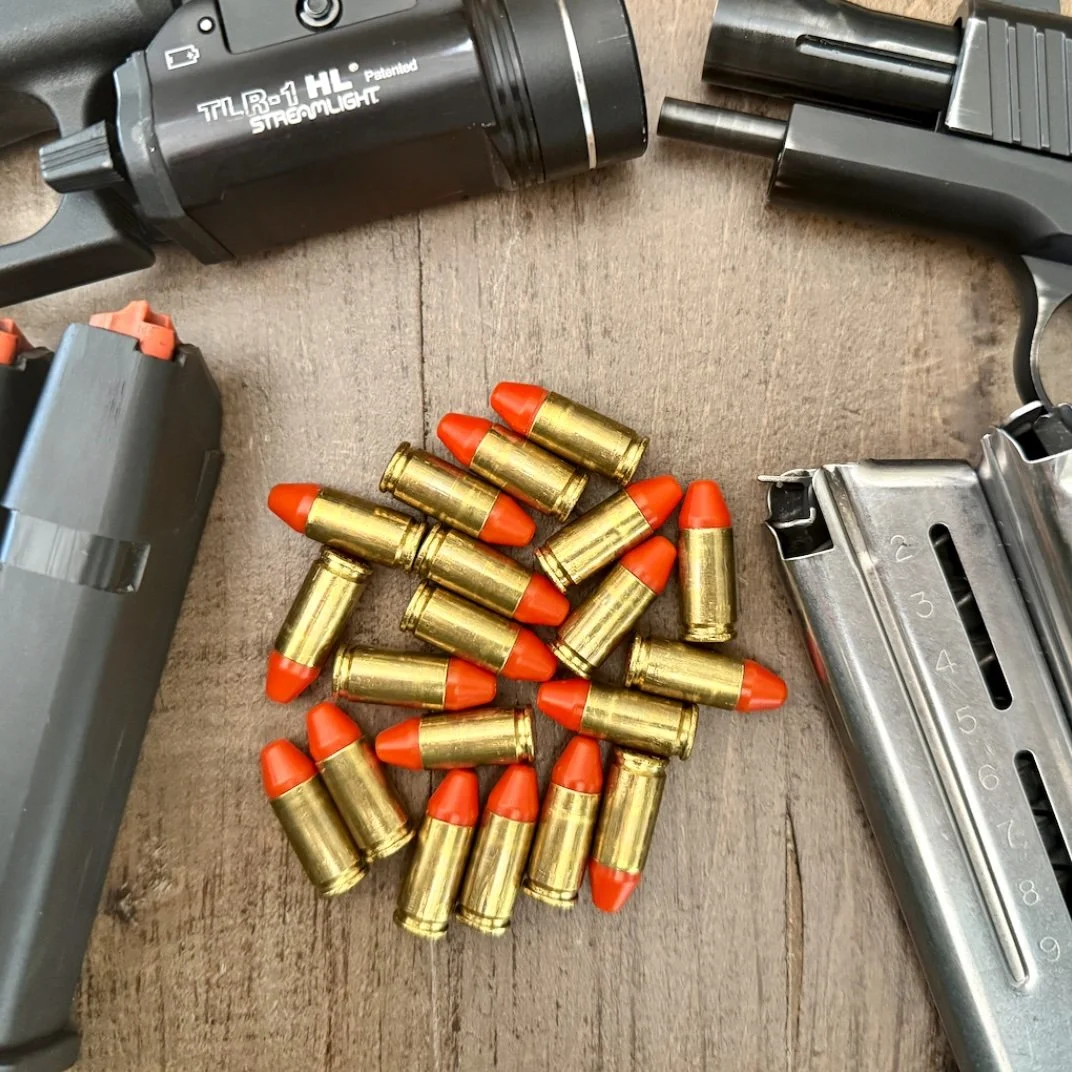
Though it is tempting to leave that 17-round Glock magazine loaded for the next day’s dry practice session, I unload all dummy rounds and count them each time I finish dry practicing. There are two reasons for this. First, if I came into the training area and my mags are loaded, I don’t get to inspect each and every one as I load them. Secondly, when I unload each one, I count them back into the bag. This ensures that one didn’t get left in my gun when I hit the street - a different but perhaps more dangerous safety problem.
Unloading the magazines also gives me a clear mental signal that dry practice is finished. You can also say, out loud, “I am finished dry practicing” which will have a similar effect.
Conclusion
This might seem like a lot of overkill. The bottom line is I’m not so cocky as to think that I could never make a mistake, especially dry practicing nearly every single day. The more frequency goes up, the most risk goes up and the consequences of a mistake could be my very freedom. These measures are intended to make sure I don’t make an irrepairable screw-up.
To quickly recap, I choose to dry practice during my sharpest time of the day - the morning. I designate an area, with the safest possible direction. I observe a strict ammunition quarantine, never taking live ammo in there. I load magazines with dummy rounds immediately before dry practicing, and unload them afterward. My target is bullet-safe, and it is covered when not in use. This system has kept me safe for an immense amount of dry practice. It might seem like overkill, but with the stakes being so high, is it really?