Training Elevated: DADBODD Visual Shot Timer
One of the most impactful training class I have ever taken was the first Cognitive Conclave (full review here). In this class Erick Gelhaus, John Hearne, and Lee Weems trained students to a higher standard. Rather than just doing scripted drills over and over, they came up with training methods that forced students to think, and shoot well while doing so. Unfortunately, rolling a lot of those lessons into my own training - especially since I usually train alone - has been difficult. A new training aid that promises to fix some of that is the DADBODD “visual shot timer” by Taylor at Defenders & Disciples.
Disclaimer: I was loaned a very early prototype of the DADBODD for this review. While I had access to an early adopter rate of $149 for a DADBODD, I missed the deadline to my own detriment. I am friends with Taylor but get nothing from the sales of DADBODD whatsoever - no affiliate links, no kickbacks, no free products, etc. The thoughts in this article are mine and mine alone.
However, this article contains Amazon affiliate links. Using these links gives us a small commission but costs you nothing. Please consider using our Amazon link to support this blog.
Artificiality in Firearms Training
Training will never be perfect. As John Hearne talks about quite a bit in his “Who Wins, Who Loses, and Why” talk, there will never be a training methodology that is a perfect analogy to a real-world shooting. There are a number of contrivances built into even the best training. First, we know we are training. We plan what we need to wear and what we need to pack the night before. We think about what we’re going to do on our way to the range.
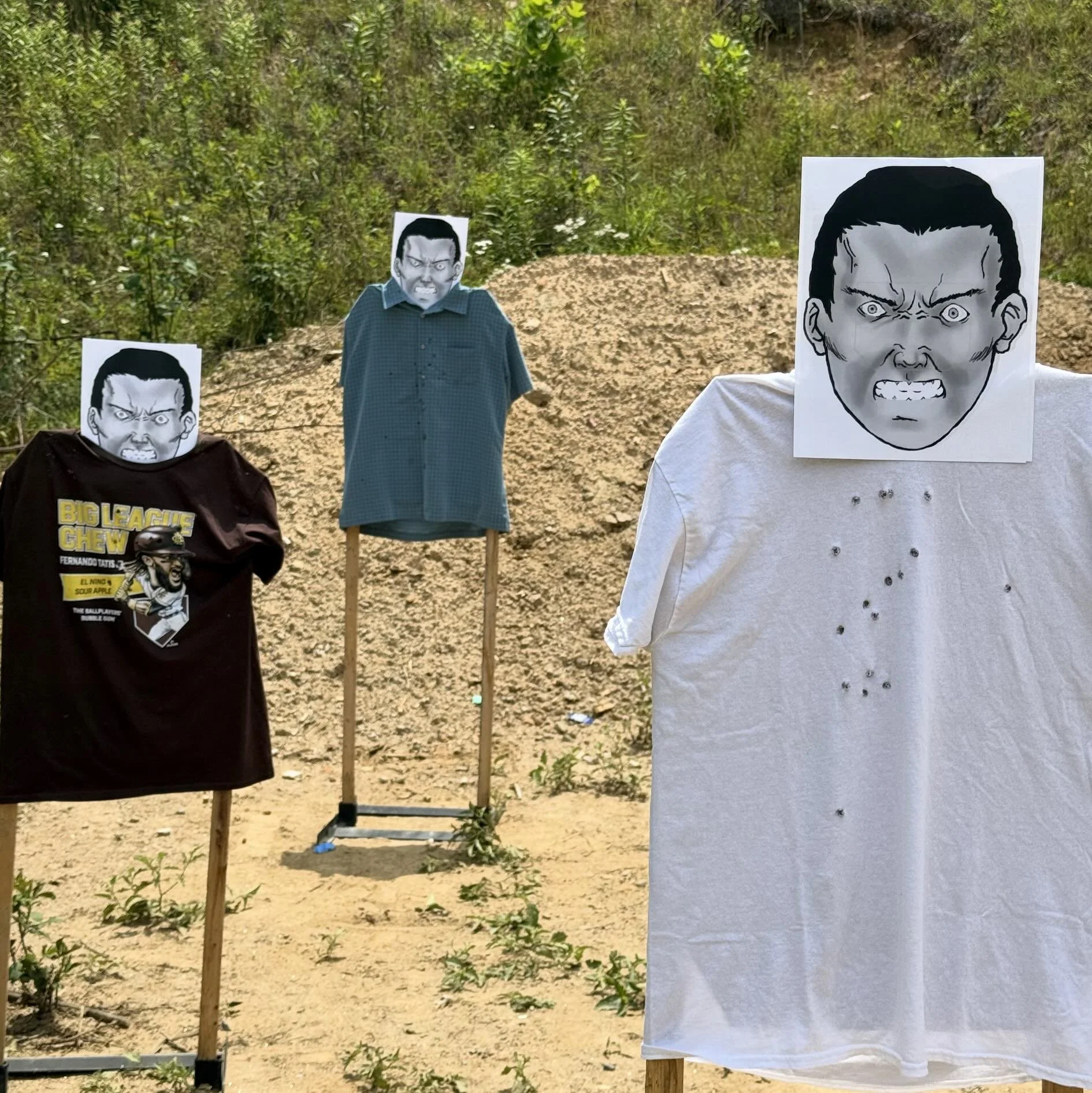
A photo from the last range I ran for our SWAT guys. I had the guys shoot targets with t-shirts and faces, combined with the “blue tape drill” I learned from Gelhaus. This was A pretty high-speed training session for most law enforcement officers, but pretty simplistic in the grand scheme of things.
When we get there we set up targets. We put on eye and ear pro that we don’t normally wear. Then after all this mental preparation, we proceed to shoot the plan we have made for ourselves. Or, if we are lucky enough to have an instructor facilitating our range session, he tells us what drills to shoot. Honestly this might be one of the best things about going to a class - someone else planning a high-quality range session for you. We’re told what the time limit is, how many rounds to shoot, and where to put them. Unless you are shooting on a very sophisticated range with complicated, expensive knock-down targets, there isn’t much thinking involved in firearms training.
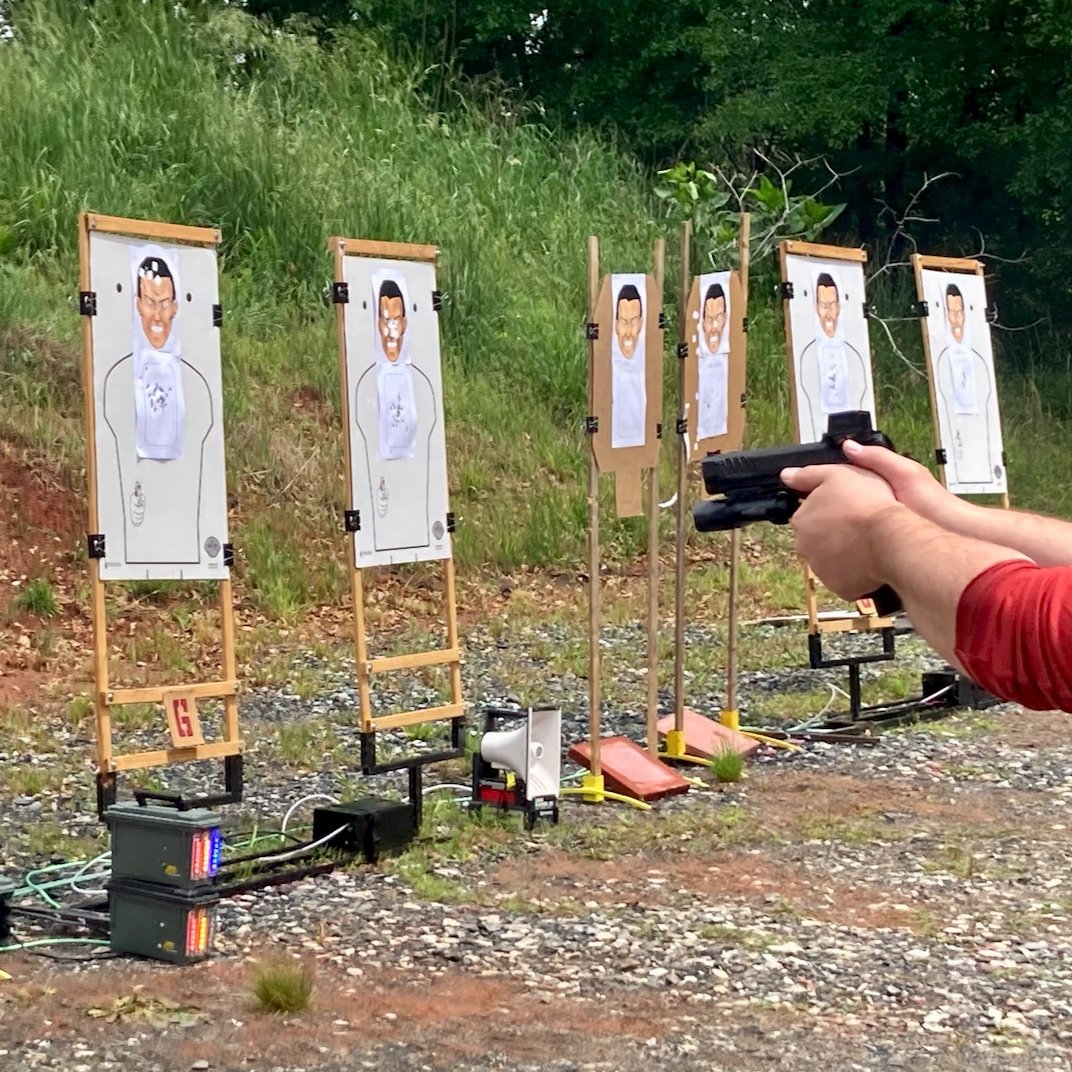
Photo from the first Cognitive Conclave. note the green boxes with lights on them in front of target 6. This was a John Hearne invention; the different colors and combinations of lights meant different things.
I have heard some instructors refer to this type of training as “firing squad training.” And that’s not far off. We start shooting very mentally prepared to shoot. When we queue up for our next drill we know exactly how many rounds we will fire. We know what target(s) they will be on. Most detrimentally we know that nothing will change between the moment the timer goes off and we are finished with our pre-scripted string of fire.
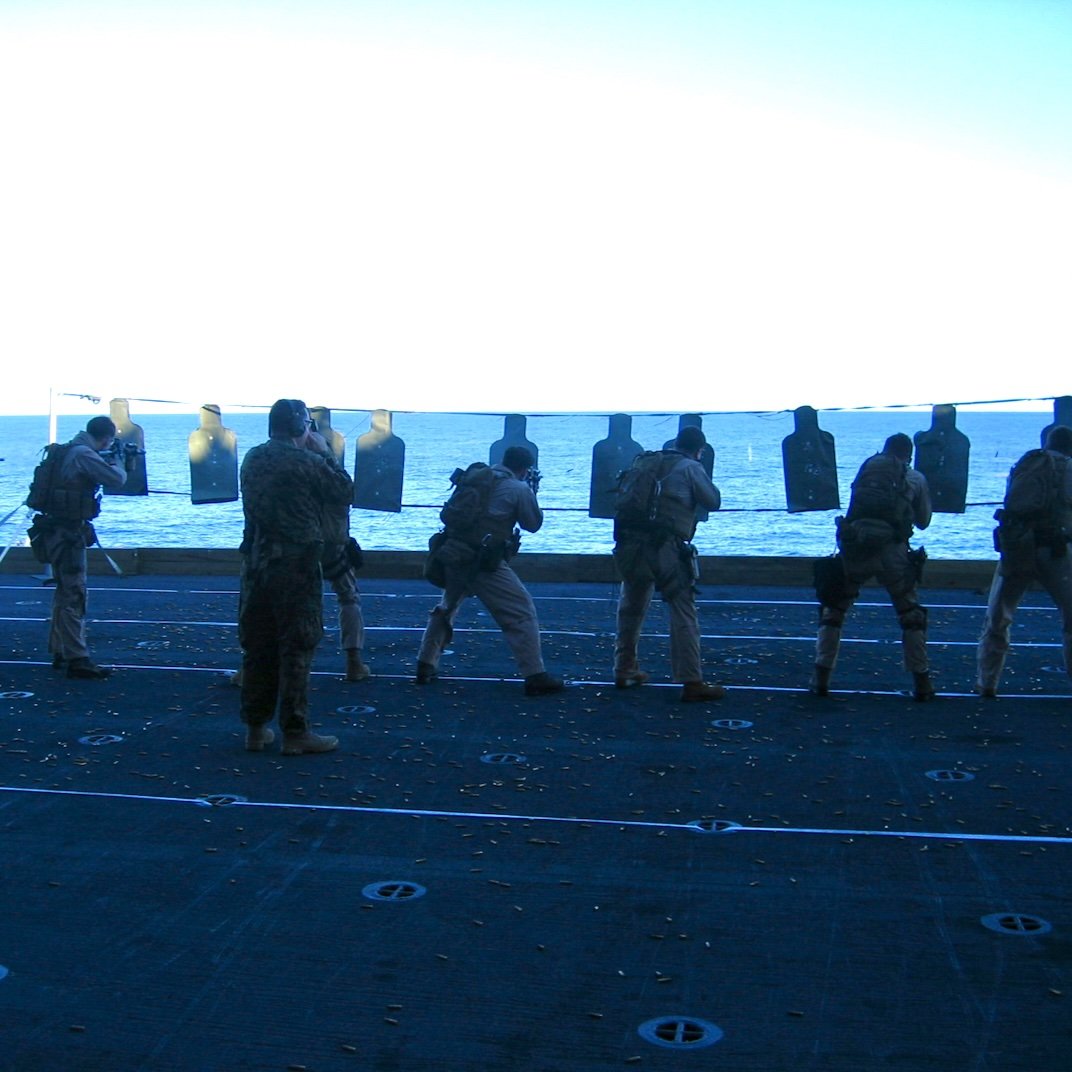
My unit - the very first company of MARSOC operators - doing a shipboard range 19 ½ years ago. Our guns, optics, lights, lasers, suppressors, and just about everything else has evolved significantly in the past two decades. But we’re still calling “‘up’ drills” like it’s 2007. It’s time for that to change.
The other big problem with most firearms training is that it revolves around an audible stimulus. When the instructor says “THREAT!” or “UP!” we shoot. When the buzzer goes off, we draw our gun and shoot. But this isn’t the way things work in real shootings. Shootings are almost always driven on visual stimulus rather than audible stimulus (the acorn incident aside). Against living, breathing, sentient adversaries, we shoot when they pull a gun or when they lunge toward us with a knife. Auditory stimulus might be a clue - when we hear shots being fired at us we draw and take cover - but we don’t shoot at sounds, we shoot at things we can see.
Fortunately my friend Taylor saw a way to fix many of these firearms training problems with his invention: the DADBODD.
Enter the DADBODD
I don’t know a better way to explain the DADBODD succinctly other than to call it a “visual shot timer.” The full acronym stands for Defenders And Disciples Behavioral Optical Decision Device (Taylor knows how I feel about the acronym, so I’ll leave it alone). The DADBODD is poised to revolutionize the way we do firearms training, and for several reasons. Before we get into those reasons, let me explain what it is.
As I said, “visual shot timer” is a good way to think of it. Taylor essentially married a laser to a shot timer. Instead of a buzzer going off, the laser fires, creating a visual stimulus. When you see the laser, you draw your gun and fire…until the laser goes away. It records your shots, just like a shot timer. It records the time to first shot, your splits, and importantly, how many rounds you fired after the stimulus went away. If you’re worried that you’ll need to carry this and a shot timer around in your range bag, fear not: the DADBODD also words as a regular, old shot timer.
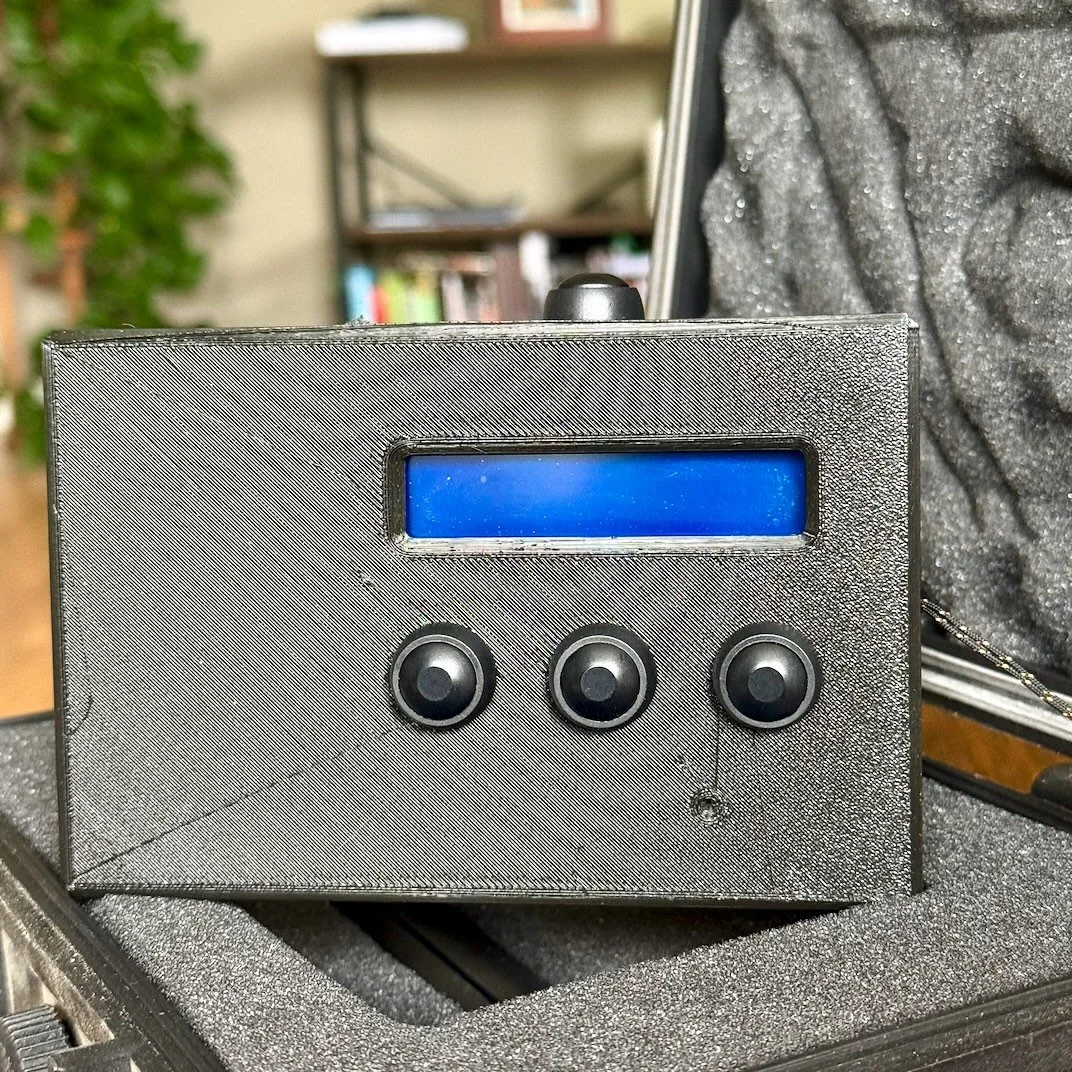
The DADBODD Taylor loaned me was a very early version. The “visual shot timer” functionality was the same but don’t worry - the new version is smaller, looks way cooler, and is a much more refined design.
The DADBODD does a heck of a lot more than that, and I’ll get into that shortly. Briefly I want to describe my own experience with it. Taylor loaned me an older, much less refined version of the DADBODD. I had several occasions to use this myself. I also had several opportunities to test this on some highly-trained friends. All loved working with the DADBODD and were impressed with exactly how much it impacts your firearms training. Short story: it makes a BIG impact.
How the DADBODD Impacts Training
This sounds like a pretty simplistic idea. you may be wondering how this changes training for the better. I’m happy to tell you because I’m a big believer in the DADBODD.
First, the DADBODD trains us to react to visual stimuli rather than auditory stimuli. This alone should be enough to convince you that you need a DADBODD. The world is visual. As humans and as predators, vision is the sense with which we predominantly experience the world. Our training should reflect that. Old school shot timers with a buzzer do not train us to react to visual cues. The DADBODD does. One reason you might not like the DADBODD is that your times will probably suffer, at least initially. You will find, as I and many of my friends did, that you are not as fast when you have to look for something, rather than just listen for the old, comfortable, predictable buzzer. Discomfort equals growth, though. Embrace it! It might not make you Instagram famous, but it will make you more resilient in the real world.
Second, the DADBODD trains us to STOP shooting. No training that I have ever attended prior to 2023 trained me to stop shooting. Yet we know that to continue shooting after the threat has ceased to be a threat is legally hazardous to us. Once we have achieved a stop - once the bad guy has stopped doing whatever he was doing that made us start shooting him - we need to STOP using deadly force on him. The DADBODD does this by making the laser go away and recording how many times we shoot after the stimulus is gone.
Third, the DADBODD pushes us to focus on the threat. Now I’ll be honest with you guys: I was a “hard front-sight focus” guy for a long time. That’s how I came up in Marine Corps Force Recon and Special Operations shooting packages, and that’s how I stayed for a long, long time. Several years ago when I finally made the switch to pistol mounted optics, this mindset held me back. It was the reason I didn’t like pistol mounted optics; they don’t work well with this technique. When I finally realized that and started focusing on the target, my ability to use a pistol-mounted optic skyrocketed. And I also realized a lot of other benefits I’d been missing out on.
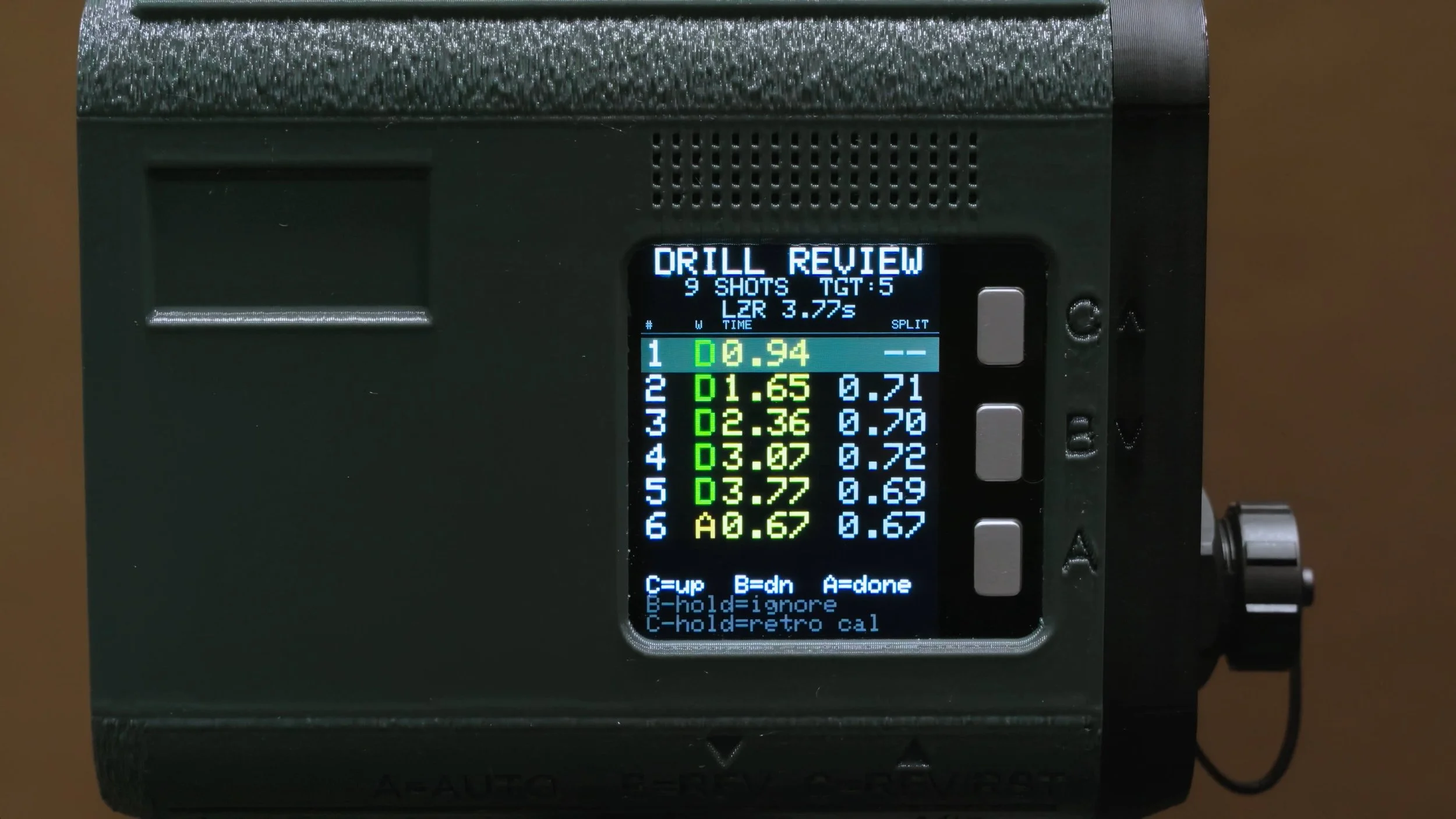
Shots marked with a “D” were fired during the stimulus display; the shot with an “A” was fired after it went away.
One reason is that the threat is likely to be moving. And this is not just moving side-to-side, toward you or away from you. He is probably doing things with his hands. Some of those things, like dropping a weapon, should influence your behavior. To continue shooting someone after they have dropped the gun/knife/bat/table leg/crowbar/whatever is legally dubious. I would also contend that it is morally dubious. And if that’s not enough to sway you, several years ago I wrote a very long article discussing the legal, financial, moral, and social reasons you don’t want to shoot and/or kill someone, and the way your life will change if you do. I strongly recommend reading it.
How do You Use the DADBODD
The DADBODD can be used like any other shot timer…but it requires a tad more consideration because the laser has to have line-of-sight to the target. When using it with two people, the DADBODD can be used in manual mode. In this mode one shooter runs the DADBODD while the other shoots the drill. You know, just like you probably run your shot timer. If you’re shooting alone, it can be mounted on a tripod and used in Auto mode. In this mode, you can specify a delay or use a randomized delay before the laser fires. The laser can be set to fire for a set duration, or a random amount of time, with a minimum and maximum display time.
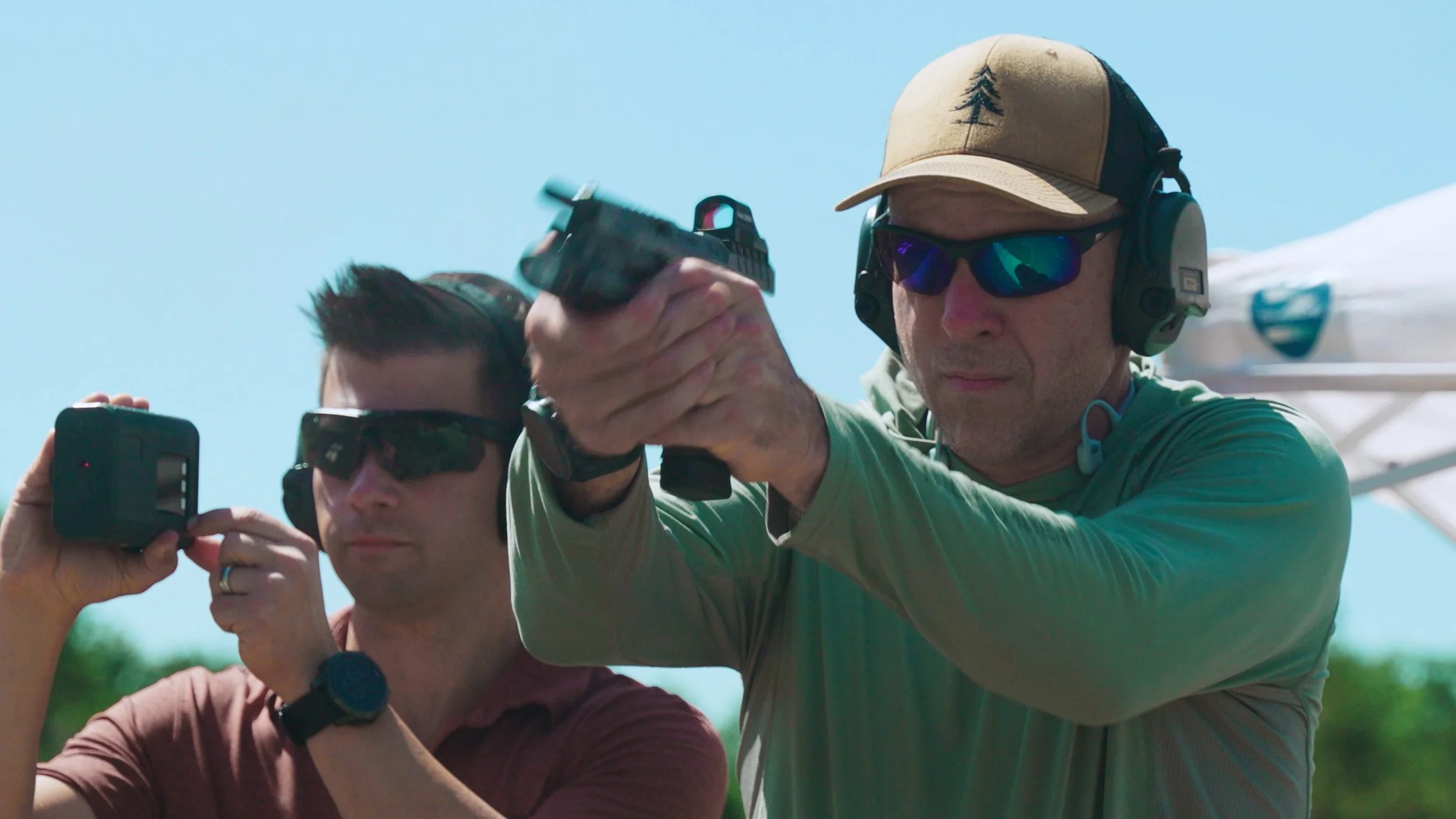
One common complaint with the DADBODD (and one that I experienced when I brought it out for a SWAT training day) is the brightness of the laser in outdoor conditions. If you shoot indoors, this is not going to be a problem for you. On sunny days it can be difficult to see the laser. Taylor uses the brightest laser that is allowed by law, and on that won’t damage your (or your students’) vision. And there is a pretty easy fix: reflective material. Taylor sells reflectors that make the laser visible out to 100 yards. You can also buy reflective panels on Amazon or at hardware stores that will work to make the laser more visible in bright sun and at longer ranges.
As mentioned earlier, the DADBODD can be used as a regular shot timer. It beeps, it has mic sensitivity adjustment, and all that. With the popular PACT Club Timer II going for $130 and the Competition Electronics ProTimer going for well north of $150, the DADBODD isn’t really that expensive. It costs a bit more than a shot timer, but those shot timers can’t do what the DADBODD does. On the other hand, the DADBODD gives you the “visual shot timer” aspect, as well as the regular old shot timer we all know and love.
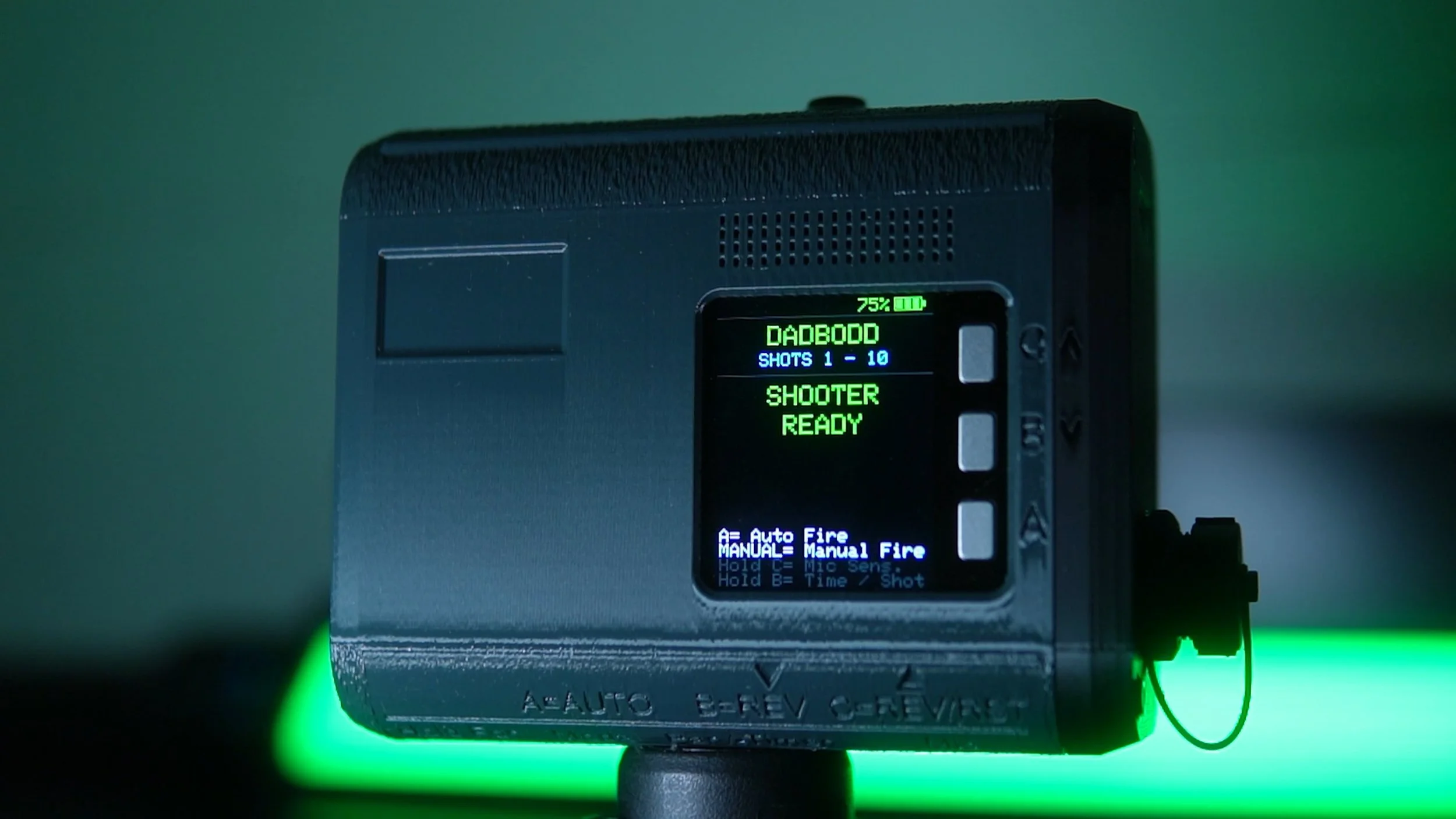
The DADBODD can also be used with the Mantis X system for dry and live fire. I will admit that this is a little outside my lane; if you have more questions about that I recommend checking out Taylor’s video discussing this feature-set. Even though I don’t currently use a Mantis system, I recognize it’s potential, and really like the cooperation between these two training aids.
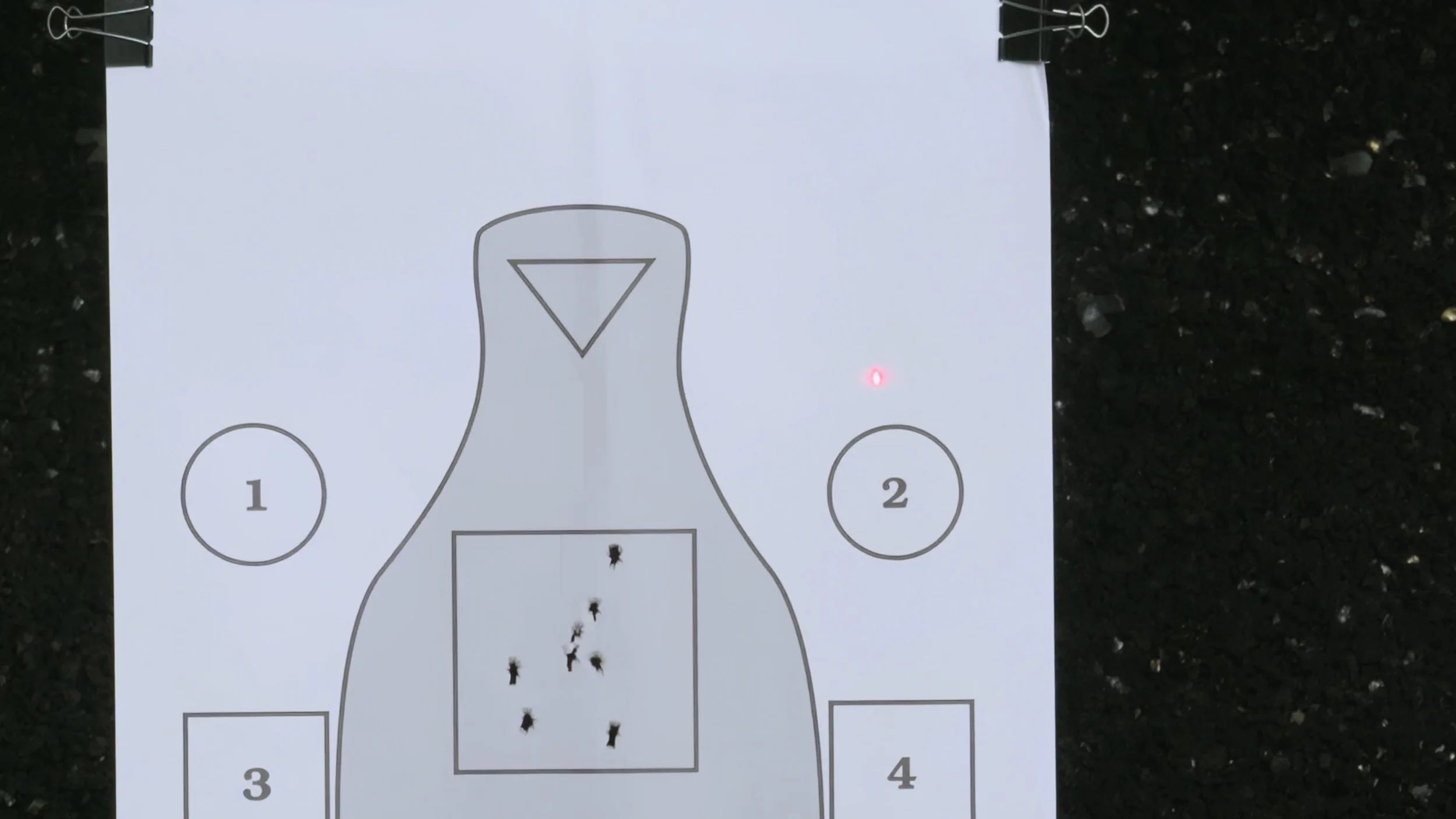
The DADBODD stimulus being displayed on the target. This requires you look at something other than where your shots are going…just like in a fight.
The DADBODD is thoroughly packed with features…and knowing Taylor I seriously doubt he is going to be satisfied leaving it as-is. He already has a plan for software updates to make the DADBODD more user-friendly and pack in more features to increase your training value. Don’t sleep on this one, guys. If you take your training seriously this is a tool you want in your range bag.
Where Do I Get One?
If you’re interested in this, the time to strike is NOW. Taylor has a Kickstarter campaign going on, and it ends in just a few days. Fortunately the project has exceeded its funding goal by a third, so this project will be moving forward! If you’re not in on the initial Kickstarter, though, it may be a little while before you can order one…just so you know. You’re probably also wondering how much it costs: the pricing for a basic DADBODD is $199. You can also upgrade to a premium package that lets you choose from a variety of colors other than basic black, includes a hard case, reflective panels, and a Swiss ARCA adapter for tripod mounting. This package costs $299.
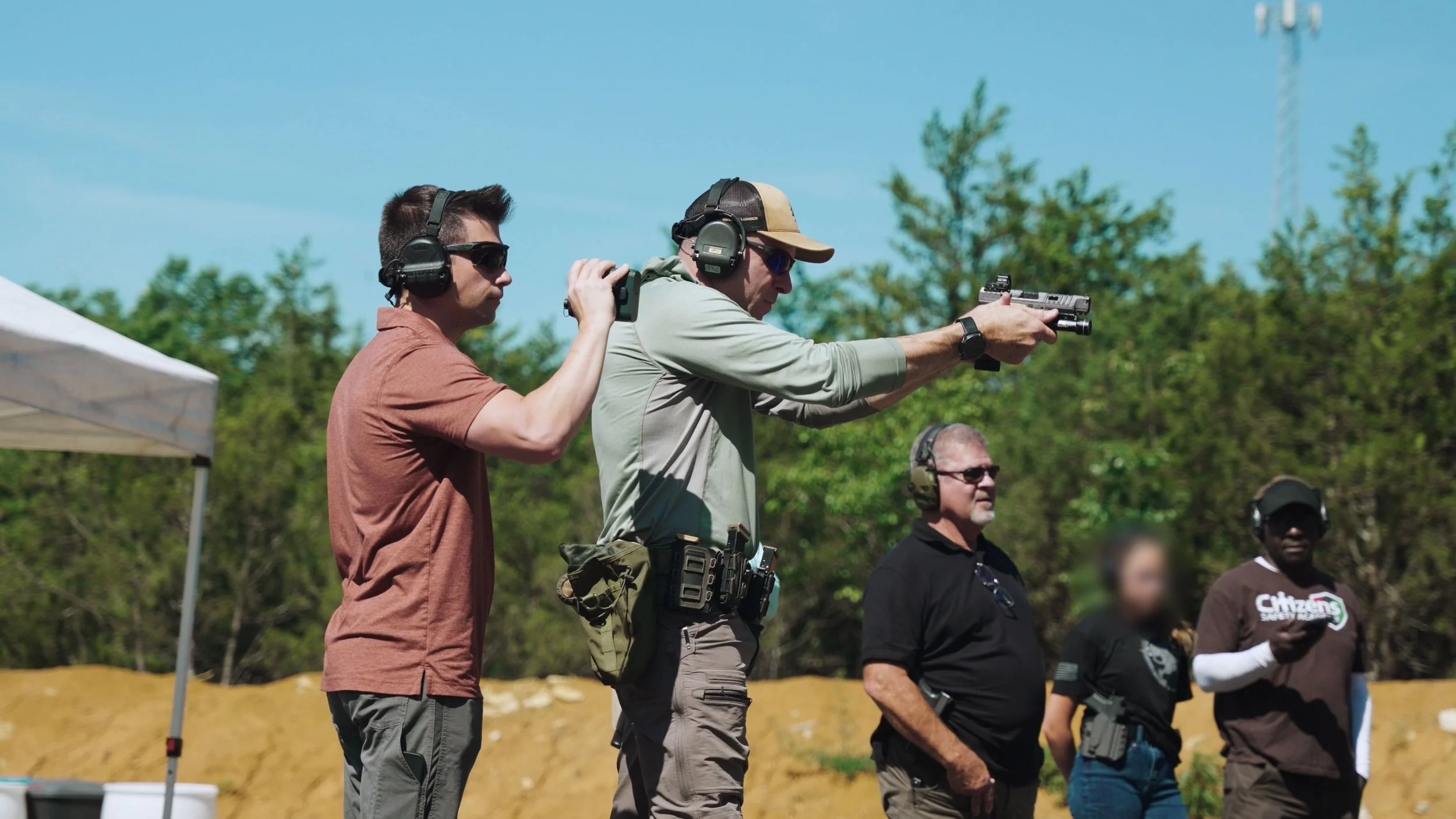
You may have questions about Kickstarter. Kickstarter allows Taylor - the guy taking the risk on this thing - to reduce his risk. He puts the project out there. If you support it, you fund him directly, before he has to invest in all the materials, and the time in assembly (believe me, he has already invest considerably in this!). If the project reaches its funding goal - which it already has - you will be charged and Taylor will begin shipping units out. There’s no additional charge later - you pay the cost of your unit in advance of it being built by this one-man shop. Keep in mind this is already a working project, not just a good idea. It's just not in mass production yet. Kickstarter funding will allow Taylor to take this from a passion project to being commercially viable. If you believe in buying American and supporting small business, it’s time to put your money where your mouth is. This is how you take those words and put them into practice.
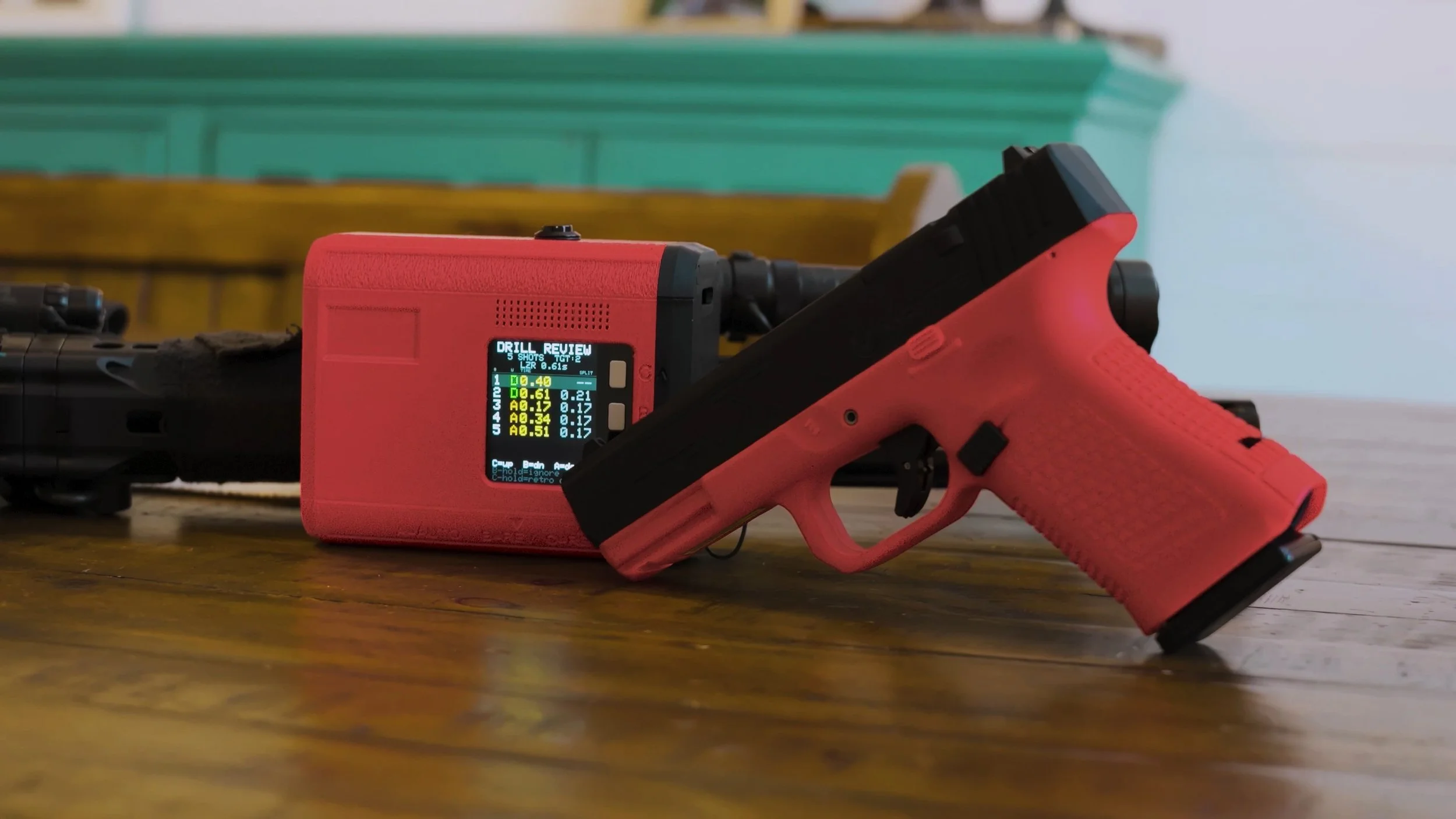
The cost may sound like a lot, but keep in mind it takes the place of a shot timer, which will cost you over $100 by itself, and it has the visual function. The DADBODD also works in tandem with the Mantis system, one more value-add. And it’s American made by a former cop and Marine Corps veteran - what’s more patriotic than that? And it’s also going to give you plenty of training value, which makes it well worth the cost, in my opinion. Head over to Taylor’s Kickstarter today and pick one up. And while you’re at it, check out his Youtube channel, Defenders and Disciples.