AAR: Level 1 Venomous Snake Handling Course
A couple weekends ago I attended the Level 1 Venomous Snake Handling Course put on by The Rattlesnake Conservancy. This was a little outside my normal lane of training…hell this is one of the more esoteric classes out there for “tactical” guys. My buddy Adam categorized this as one of my “most interesting man in the world” classes. In any case it was a truly fascinating! Let me tell you about it!
Full Disclosure: I paid full price, out-of-pocket for this class. When the staff learned that I was a first responder, a portion of my tuition was reimbursed. This was through a grant and is available to any first responder subject to grant funding. I have no relationship with The Rattlesnake Conservancy whatsoever.This article contains Amazon affiliate links. Using these links gives us a small commission but costs you nothing. Please consider using our Amazon link to support this blog.
Basic Details
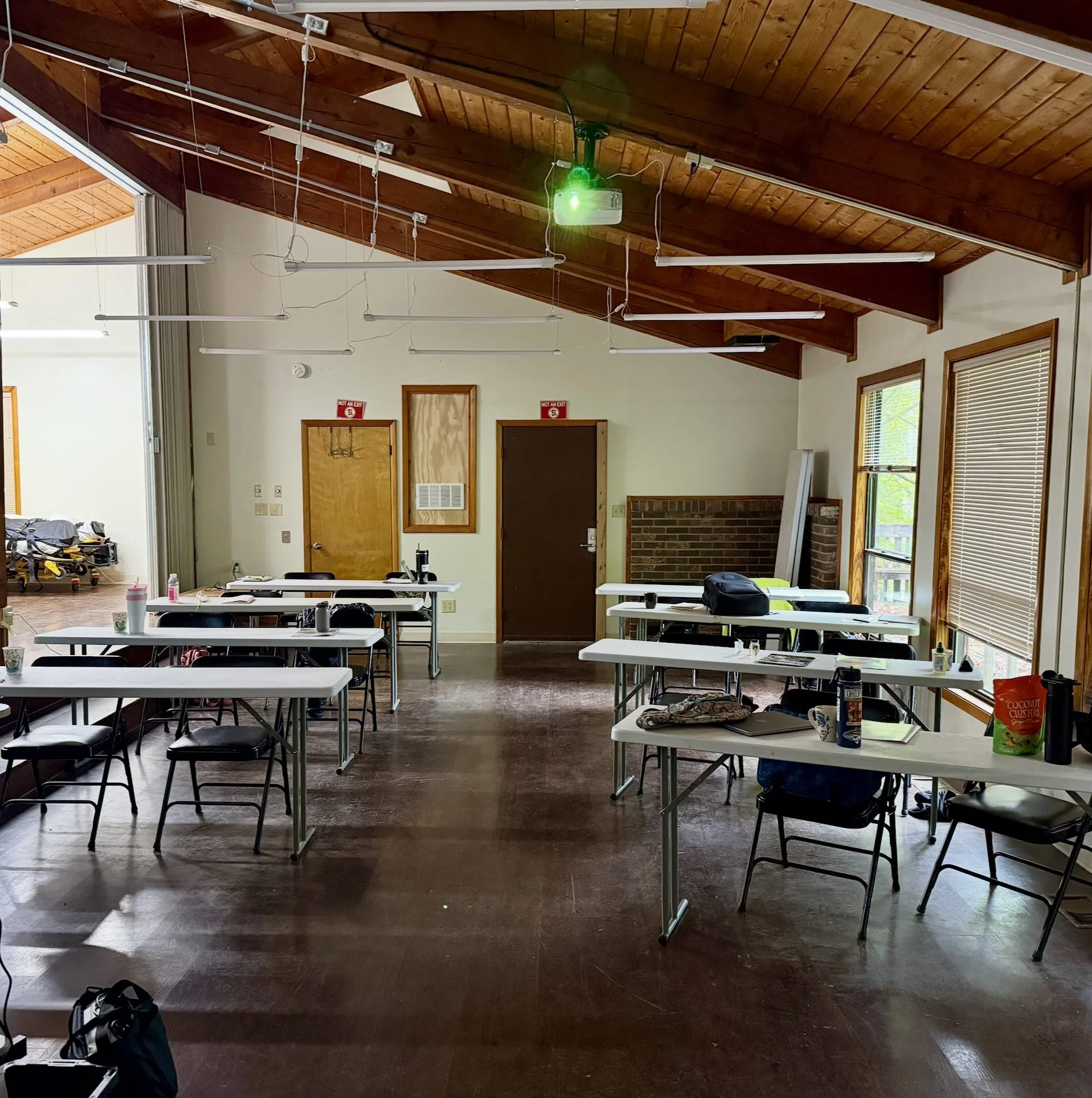
The Level 1 Venomous Snake Handling Certification Course was a two-day class held over a weekend. This one was held at the Nantahala Outdoor Center in Bryson City, NC. This facility has a number of classrooms and…well, a little bit of everything including whitewater rafting zip-lining, mountain biking, guided fishing trips, lodging for your group, and Wilderness EMT classes. Cell service was a bit spotty, but there was Wi-Fi in the classroom. The best part was that the Appalachian Trail runs right through the campus. Since I packed my lunch I was able to eat quickly then walk a mile or so up the trail and be back in time for class to start back up.
There were three instructors: Tiffany Bright, Sean McKnight, and Jake Swisher. All were knowledgeable, professional, and approachable. There were 13 students in the class. Interestingly the class was predominantly women, by more than a 3:1 margin. Students hailed from Massachusetts, North Carolina, Ohio, Texas, and Virginia. I was interested to notice that with the exception of Texas, I’ve lived in all the states represented in the class.
Level I Venomous Snake Handling
This class is put on by The Rattlesnake Conservancy. The Rattlesnake Conservancy is a non-profit dedicated to protecting rattlesnakes. Rattlesnake populations are in decline, and their home territories continue to shrink as we throw up apartment buildings, Walmarts, fast food joints, and gas stations. The mission of the TRC is to protect these valuable species. Many people have questioned why we want to protect rattlesnakes, or made comments like “you don’t need to take a class to kill ‘em.”
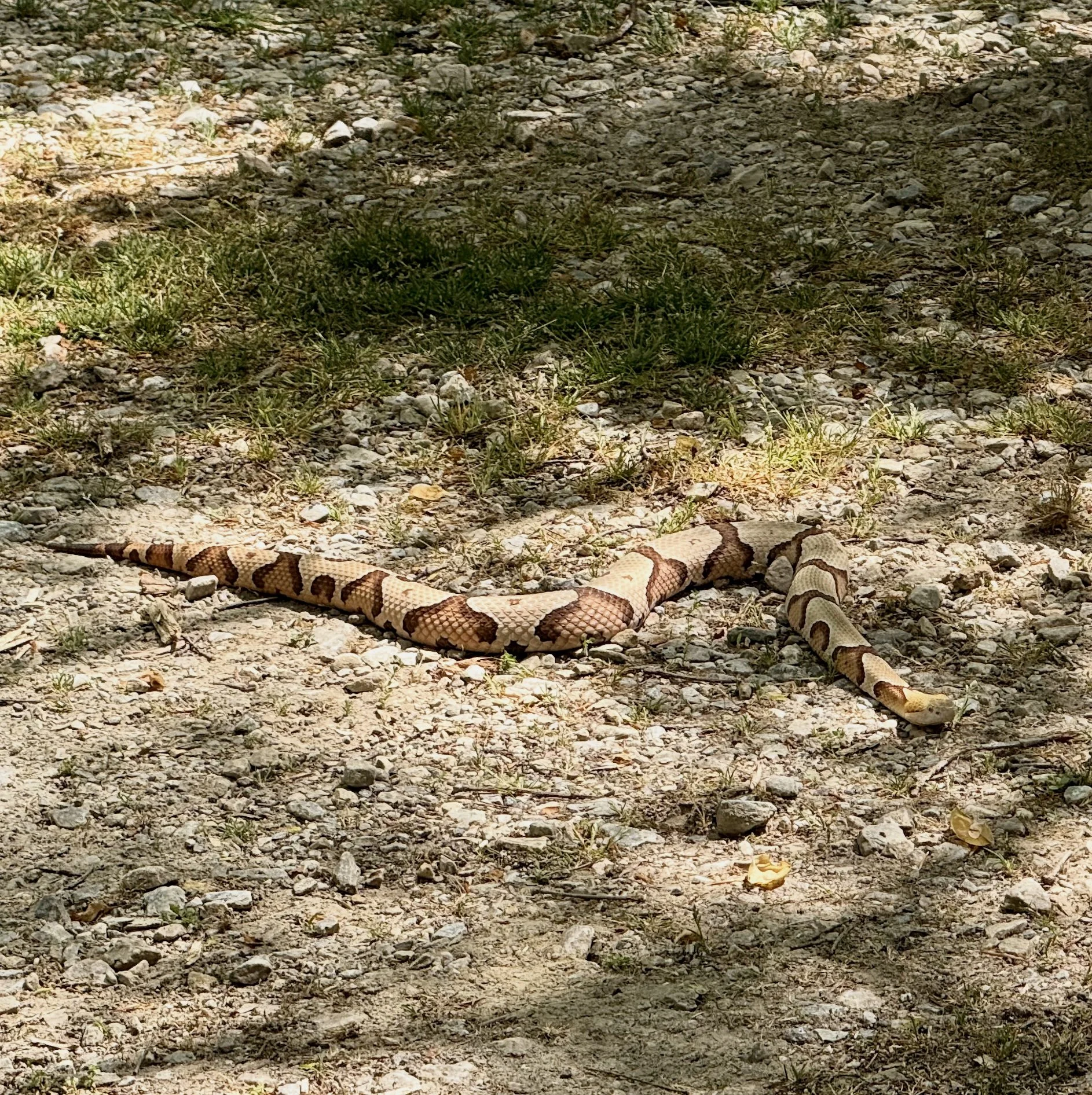
An eastern copperhead (Agkistrodon contortrix) used in the class.
The first class given was the reason rattlesnakes are so important. First, rattlesnakes eat a prodigious number or rodents each year. The average rattlesnake will also kill 4,500 ticks a year by eating infected hosts, and reduce host populations, which keep tick numbers low. Ticks cause all sorts of problems to humans like Lyme disease, which is rising as rattlesnake populations decline.
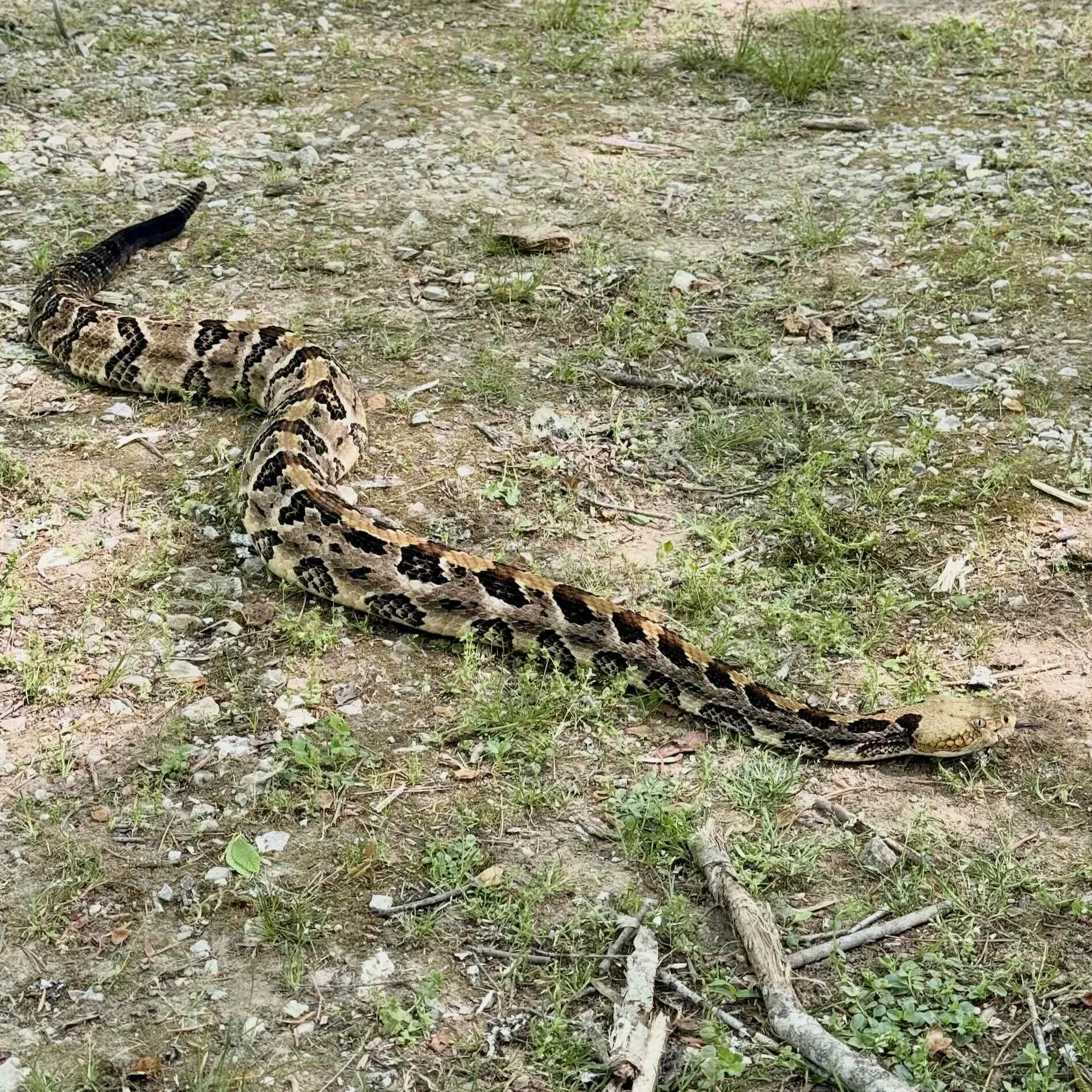
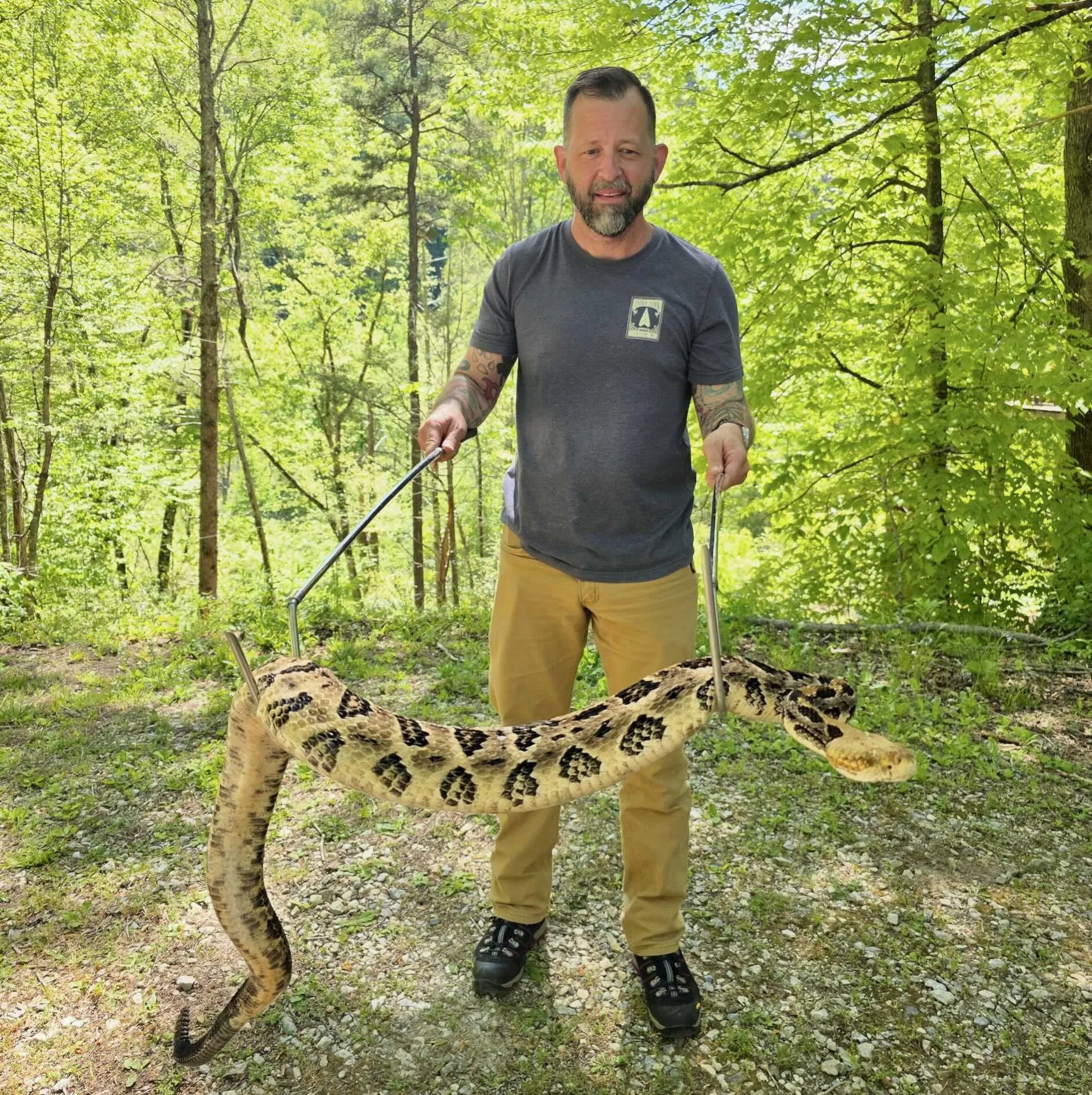
A timber rattlesnake (Crotalus horridus) that we handled in the class.
If that doesn’t bother you, you should be concerned about Alpha-Gal Syndrome, an allergy to red meat caused by Lone Star Ticks. A rattlesnake bite can be treated; once you have AGS you’ll never eat a steak or burger again. Healthy populations of rattlesnakes also reduce the prevalence of diseases like Rocky Mountain Spotted Fever and hantavirus.
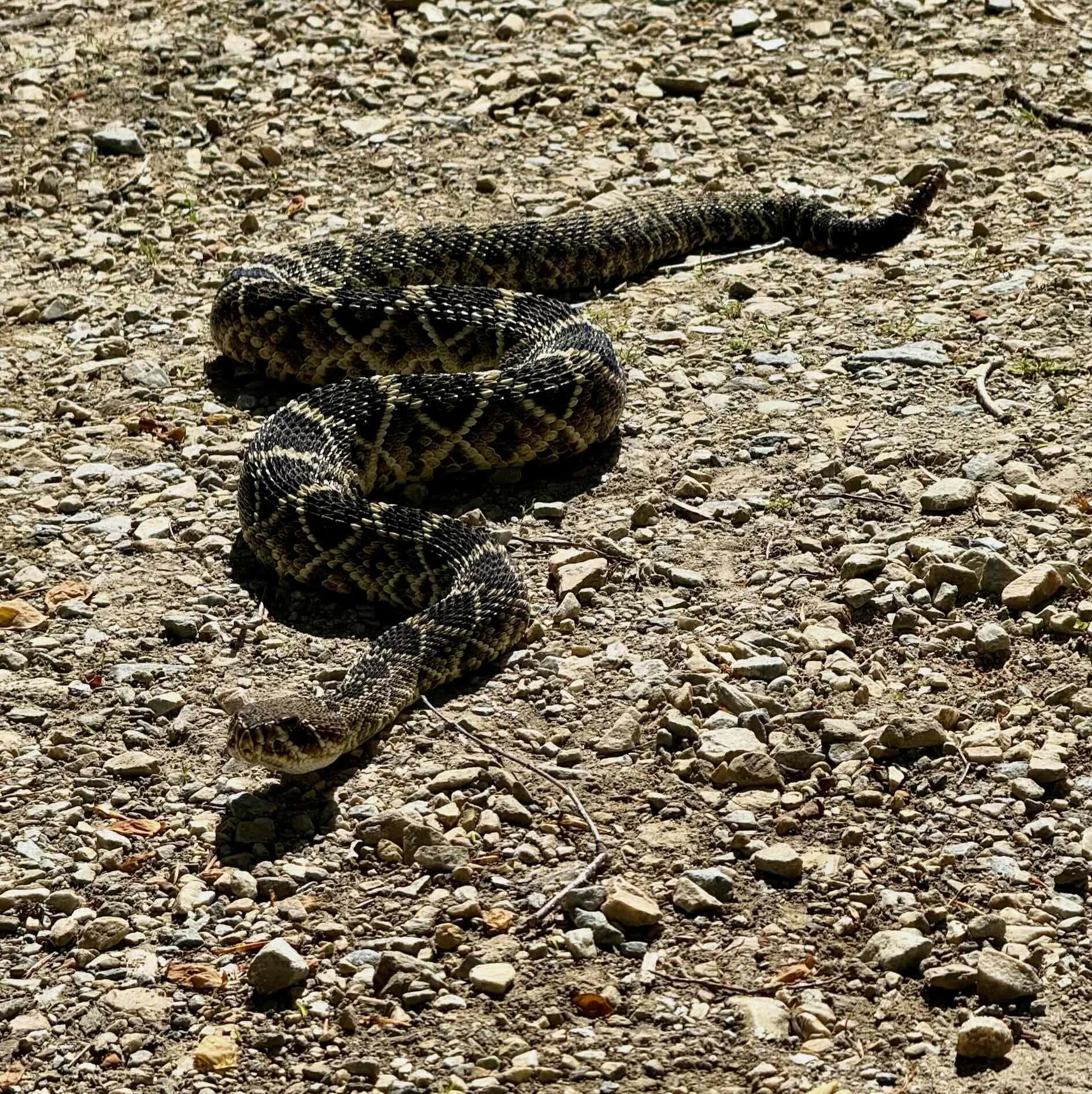
The star of the show, an eastern diamondback (Crotalus adamanteus).
All that stuff is important, and I certainly took the class so I could be more educated on how to deal with the occasional snake call we get at work - both as a cop and a paramedic. I imagine this could also come in handy in my Search & Rescue job. But also…I am just really interested in snakes. When I found this class a few years ago I kept an eye on it, because when do you get to be this close to rattlesnakes? When a class opened up in my area I signed up right away.
Level I Venomous Snake Handling Day 1
Day one of this two day class was all in the classroom. It began with a short talk about The Rattlesnake Conservancy and why rattlesnake conservation is important. This class was taught by Tiffany Bright, who is also the Executive Director of TRC.
Next up was Jake Swisher, who taught snake identification. Jake did a great job but to be honest, I felt portion could have been stronger. Considering the access TRC has to venomous snakes I would have liked to see more detail, more photos of the various color phases of timber rattlesnakes, etc. I consider myself pretty well educated on the venomous snakes in the Southeast, but I offer this as a constructive criticism to make the class stronger.
Next, Tiffany taught both snake anatomy and physiology and reproductive biology. Next, Sean McKnight taught a class on venom toxinology. This was a fascinating class covering the different types of venom in the various snakes in the United States. The most fascinating tidbit was the distribution of various venom types within a single species; This class also covered antivenom and how it’s made, which was utterly fascinating.
In the afternoon Tiffany taught a block called Emergency Snakebite Management. This covered the local and systemic signs and symptoms of snakebites, a long list of “Do Nots,” and what to actually do. The Rattlesnake Conservancy certainly advocates best practices for snakebite management. I pulled my local paramedic protocols and was proud to see they align perfectly with the TRC’s recommendations. The afternoon finished up with some basic information about snakes in captivity and considerations for relocating snakes. Overall the lecture portion was interesting, professionally presented, and packed with interesting information.
Treating a Snakebite
Since this portion isn’t the main draw of the class I’m going to share a bit of what to do if you do get bitten by a venomous snake. This information is also covered in my book Competent & Dangerous: Master the Skills to be a Man Among Men, and is not unique to TRC’s curriculum. The simplest way to treat a snakebite is to not get bitten. Leave the snake alone, don’t try to catch, handle, or kill it. Just let it be and the odds that you will be bitten are very close to zero. Now, some more things NOT to do:
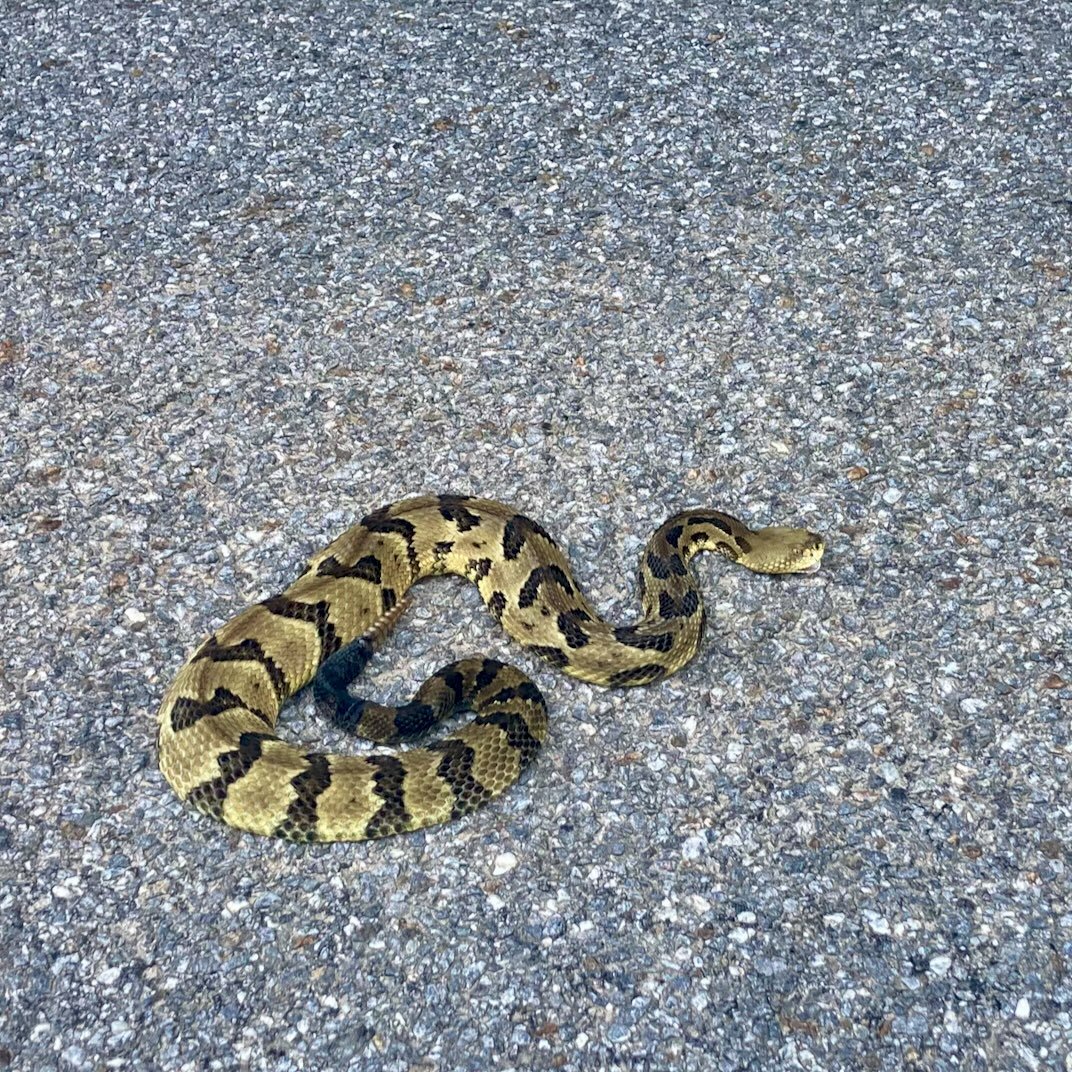
A wild timber rattlesnake (Crotalus horridus) that I encountered two summers ago. Unfortunately this snake had already been run over.
Do Not:
DO NOT try to kill or capture the snake! This just risks another bite and doesn’t “unbite” you. If you are in the US you’re going to get one of two antivenoms: Anavip or CroFab. The both work on rattlesnake, copperhead, and cottonmouth bite, so there’s no need to ID the snake. The only exception is coral snake antivenom, which you should be able to recognize pretty easily. And definitely don’t bring the snake to the ER.
DO NOT use folk remedies! Don’t cut, suck, ice, or electrocute the bite site (I admit this was my first time hearing about electric shock) and don’t get suckered into buying a snake bite kit. Less is more when it comes to treating snakebites. Also, don’t - DO NOT - use that tourniquet you’re dying to use.
DO NOT assume you’ve gotten a dry bite. Dry - or non-envenomated - bites do occur, but if you’re bitten assume the worst. Follow the advice below and get to definitive medical care.
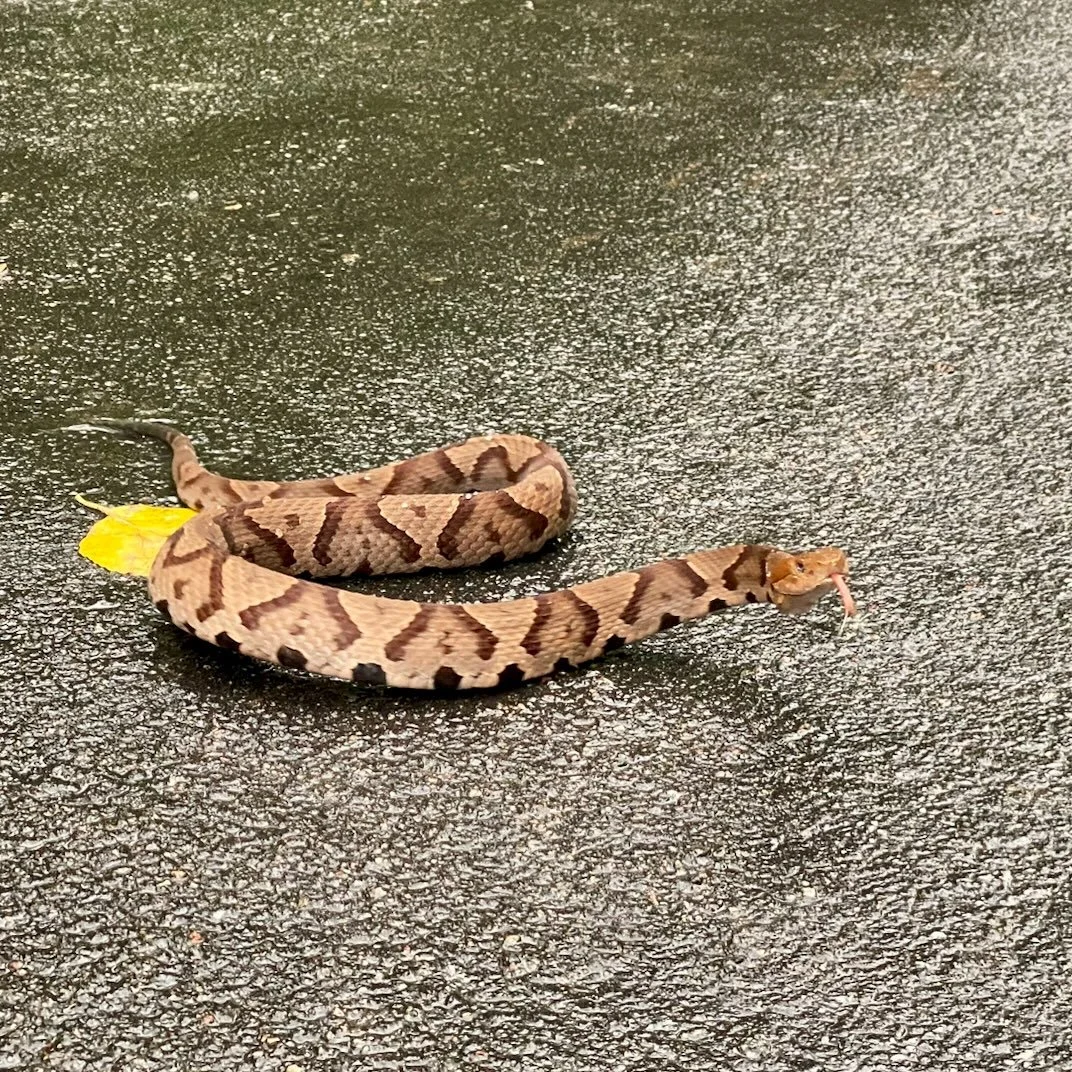
A wild eastern copperhead (Agkistrodon contortrix) that I encountered in a lady friend’s driveway last summer. I was able to gently encourage this very lively snake off the road and back into the woods.
Instead:
Stay calm. Remember that an incredibly small number of people in the U.S. die from snakebites.
Call 911 and if you are in the backcountry, start moving toward rescue. Time is tissue.
Remove any jewelry so swelling doesn’t make it impossible to remove later.
Draw a circle around the bite’s margin so swelling inflammation can be assessed. Write the time beside the line.
Elevate the limb. The solution to pollution is dilution. Venom trapped in the limb will cause potentially disfiguring tissue death. Let the venom circulate. This is why we don’t use tourniquets.
Provide supportive care. Monitor vitals, be alert for anaphylaxis (severe allergic reaction), and be prepared to manage airway/vomiting.
Day Two, AM
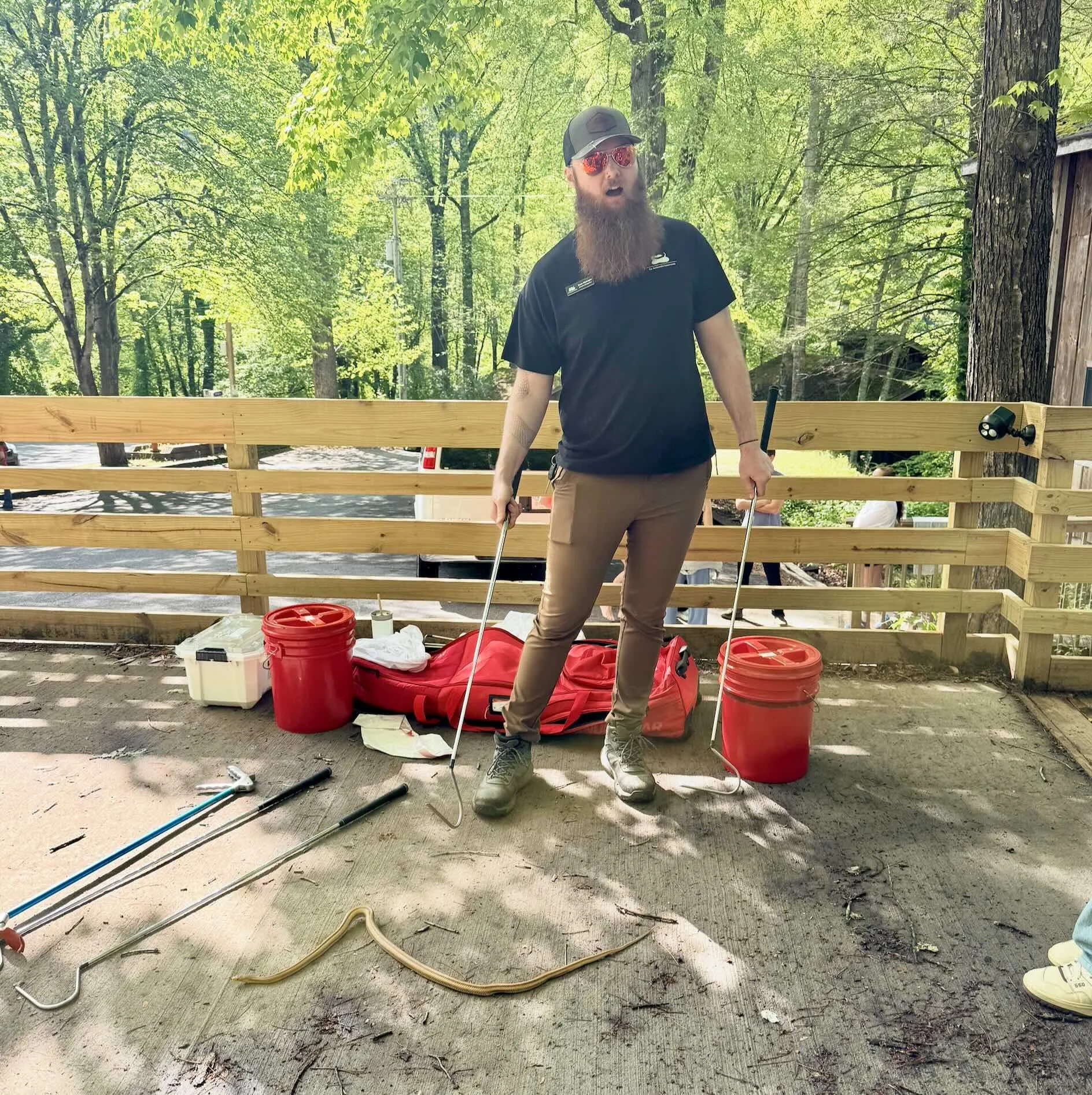
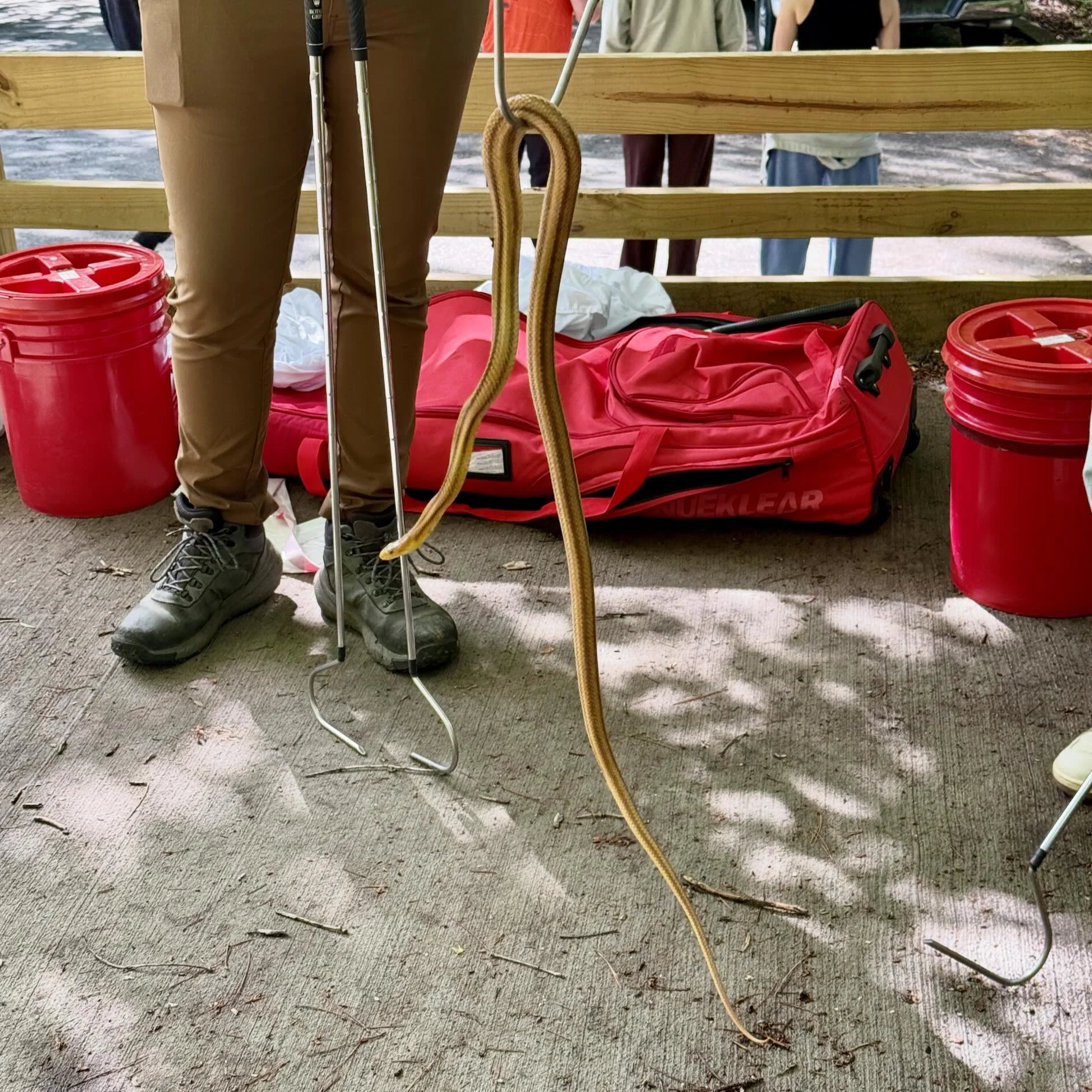
The second day was what most of us were waiting for: handling snakes! We began with non-venomous eastern rat snakes. This let us safely learn how to use snake hooks. Frankly I thought this was a little silly…right up until the point that I tried to actually use the snake hooks, then I realized this was a really good idea. There is a technique to using them, and to picking up the snake in a way that is safe for both parties.
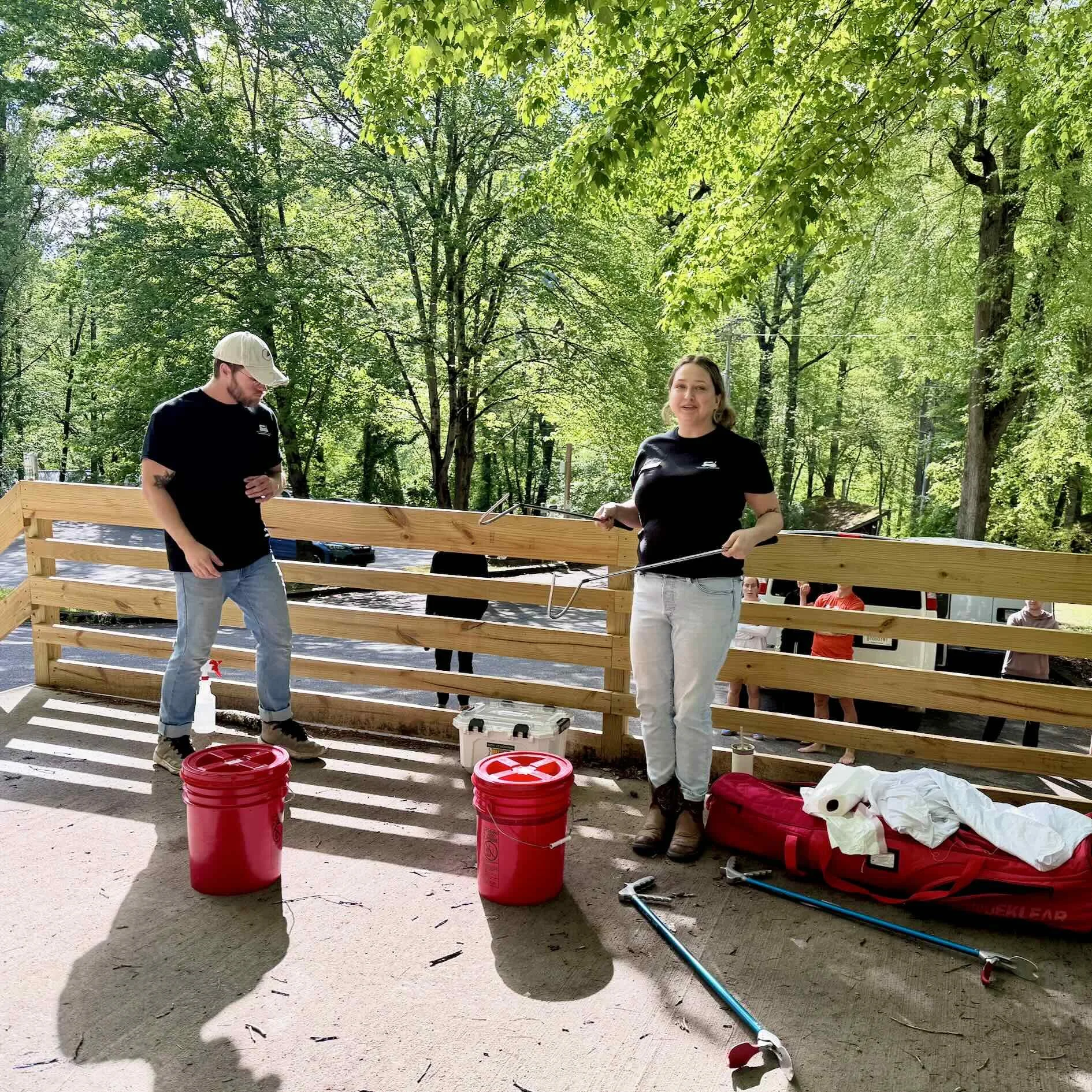
Sean and Tiffany preparing to show us how to handle snakes safely.
We learned both single- and double-hooking techniques. The rat snakes were extremely calm and forgiving of our clumsy efforts. The rat snakes were also much easier to handle than the larger vipers we handled after lunch, being both lighter weight and more comfortable grasping the snake hooks and holding on.
After learning to pick the snakes up, we were taught how to safely contain then. This was the industry-standard “bag and bucket” procedure. This puts the snake into a pillowcase, inside a bucket. The pillowcase is tied off so if the bucket is compromised the snake is still somewhat contained. This is a very involved, multi-step process requiring a lot of attention to avoid risking a bit. Snake bites occur when shortcuts are taken, so respect the process.
Day Two, PM
In the afternoon we finally got to see real, live venomous snakes. This was what I came for and it was exciting to finally get to this point. First, the class split into two groups so one instructor had a smaller instructor:student ratio. They asked us to stop all sidebar conversations, refrain from asking the instructor questions (except the person handling, of course), and to NOT take photos. This was all for safety’s sake.
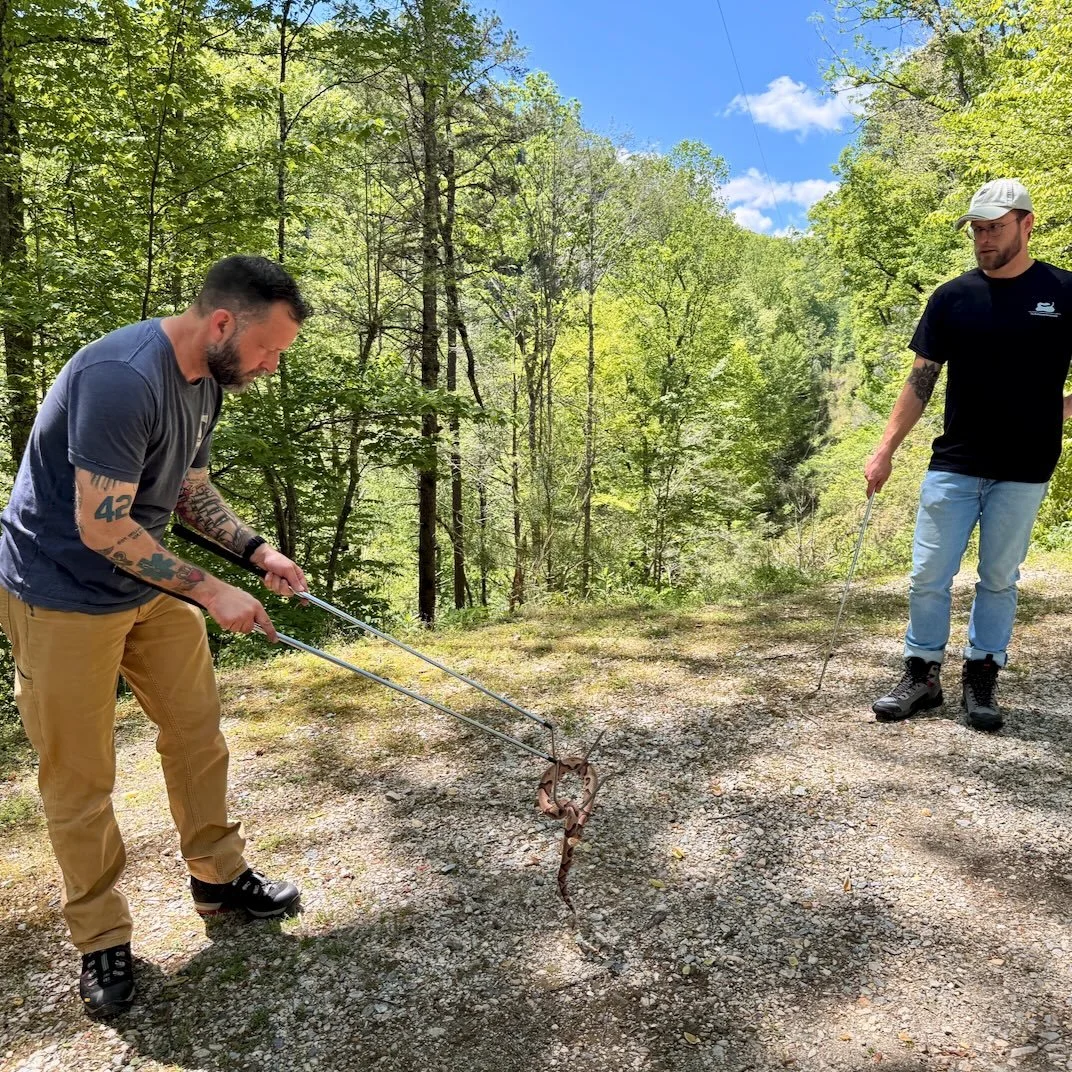
With the class in two groups, the instructors pulled out one copperhead for each group. These smaller snakes were still pretty manageable, but definitely heavier than the lithe rat snakes. We hooked these beautiful copperheads several times before getting the opportunity to safely bag-and-bucket them.
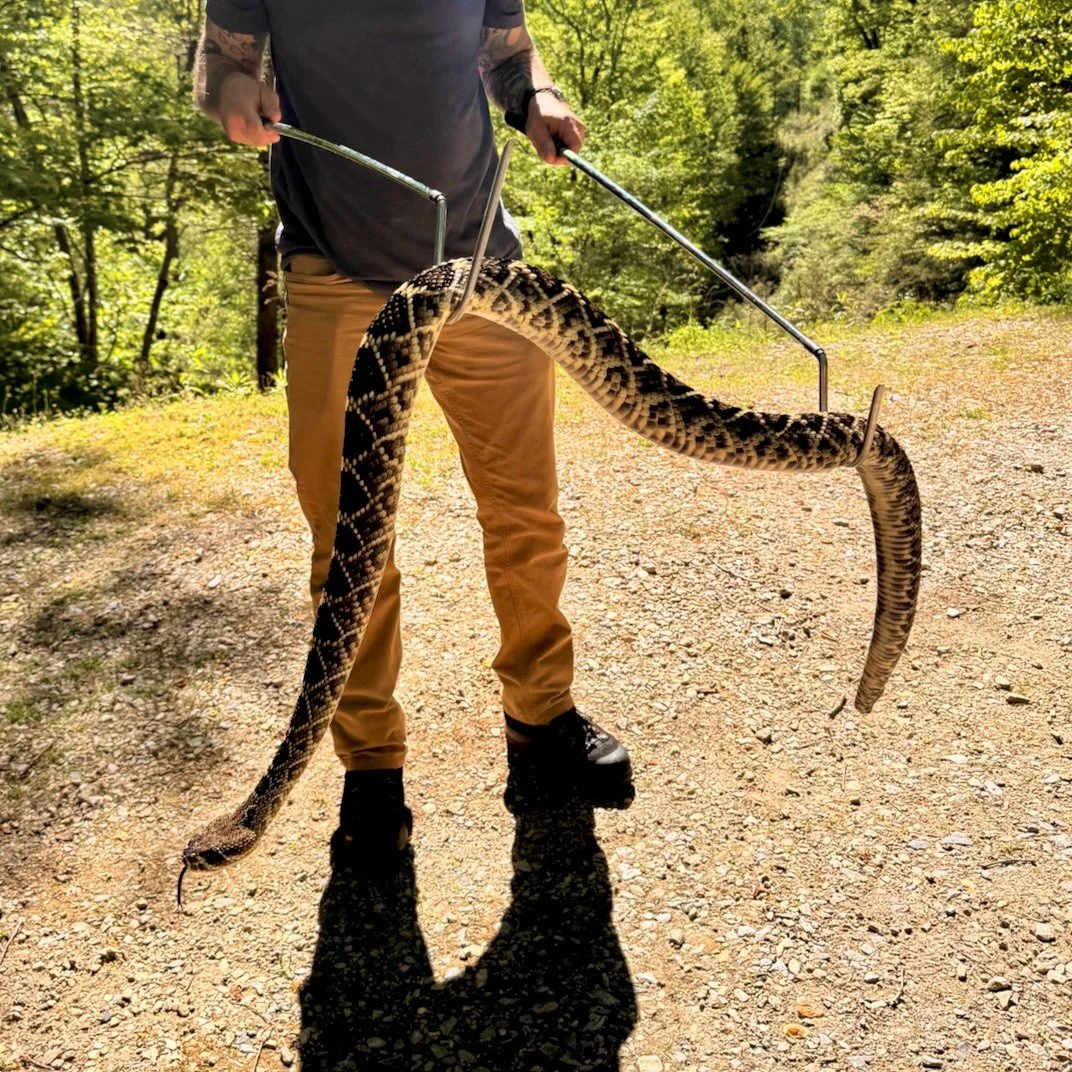
After the copperheads came the rattlesnakes! The rattlesnakes were massive in comparison to any other snake we’d handled. They are very heavy-bodied vipers and I understood the reason for the progression from light, non-venomous species to the heavier copperheads, to the rattlesnakes. Everyone got to practice hooking both an eastern diamondback and a timber rattlesnake.
Venomous, not Malicious
Perhaps the most surprising fact of the whole class was the snakes’ behavior. Between being handled, these snakes were just lying on the ground surrounded by a circle of students. They didn’t rattle, didn’t strike, didn’t lunge, and didn’t chase anyone. They were just curious about the world they found themselves in and were very relaxed. They were hardly the menace they are portrayed to be.
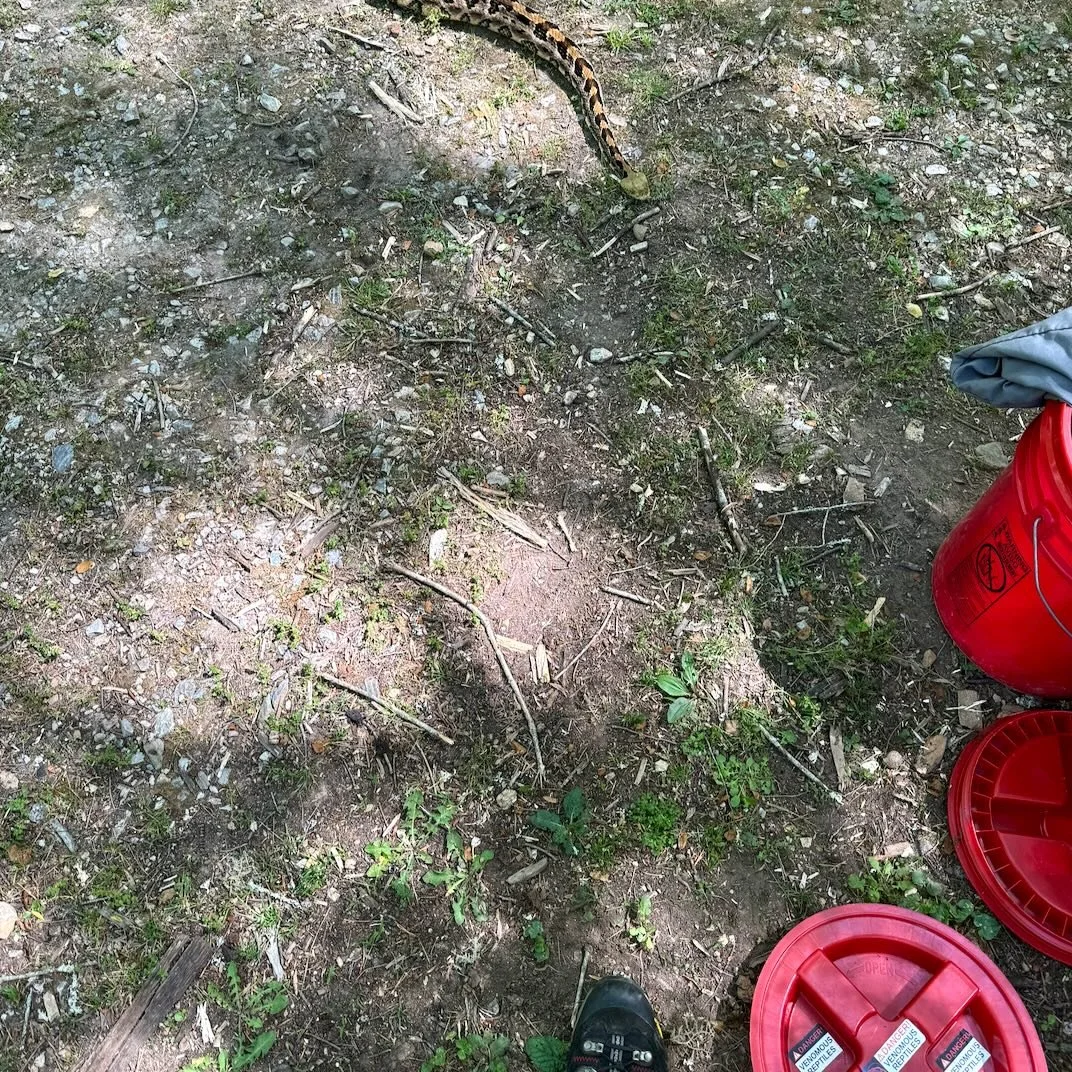
You can see the toe of my boot at the bottom of the photo; this was about as close as we were allowed to get, which is still pretty close (but totally safe). It was very cool to get to observe these animals at this range.
Another thing that was super cool was getting to be in close proximity to these animals. The instructors always ensured students kept a safe distance, but this was still pretty close and the snakes were completely uninterested in us.
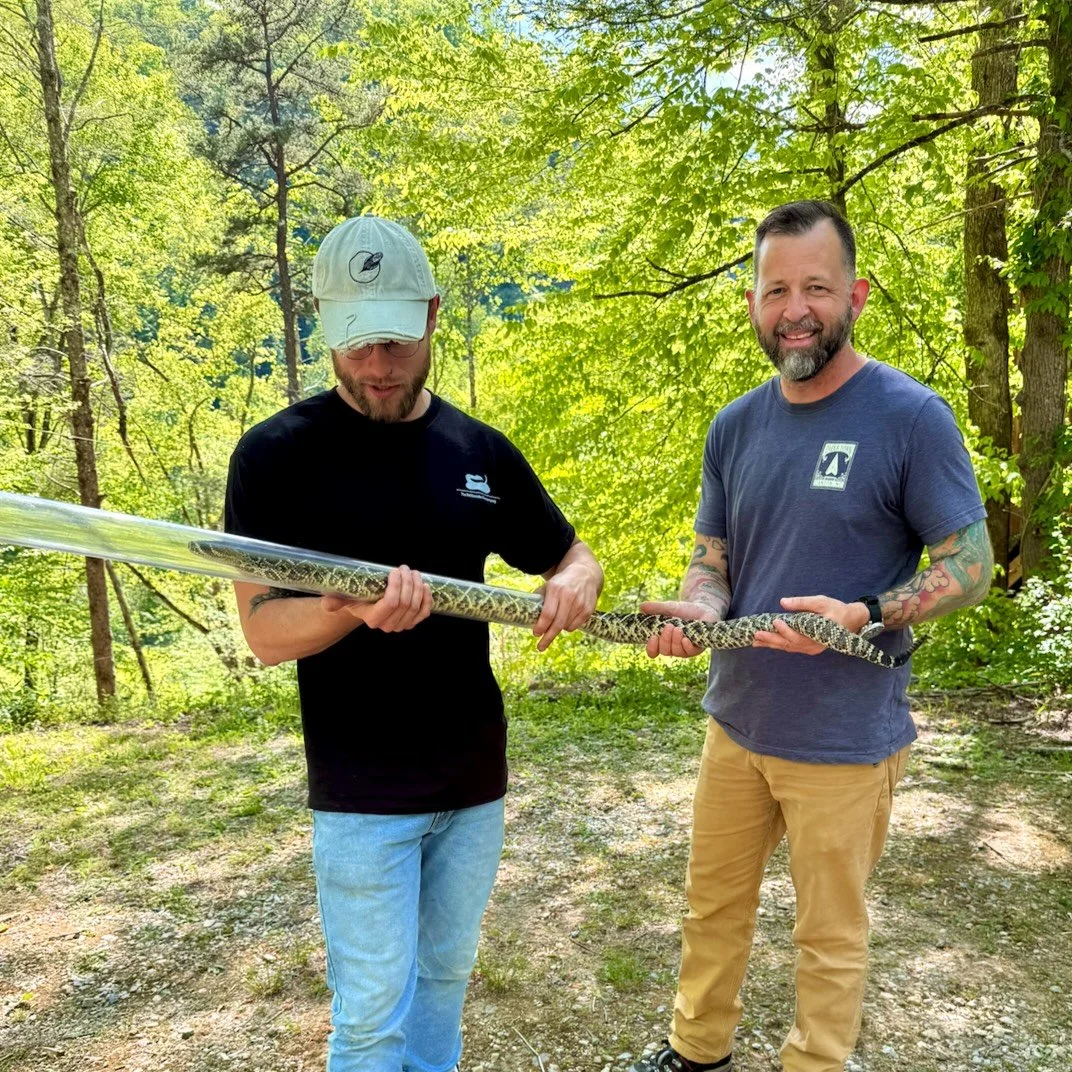
Getting to touch a rattlesnake was a once-in-a-lifetime experience!
After this class a lot of people have told me they hate snakes. Venomous snakes are certainly something to be respected, but not something to fear, and certainly not something to hate. They aren’t malicious, don’t have ill intent toward you, and they don’t live just to bite some unsuspecting human. They just want to live their lives, which is often three decades long (and as many as 50!).
I absolutely hate being limited by emotions like hate and fear. Like many Americans, I used to hate public speaking. So I took a job teaching to classes of 100+ students at the Marine Special Operations School. Guess what I don’t hate anymore? If you hate/are afraid of snakes, this would be an awesome class to take to conquer that limitation head-on.
Closing Thoughts
This was a phenomenal class and a fun way to spend a weekend! The class was extremely professional, every student got personalized instruction, and safety was always prioritized. The other students were a fun, interesting group and the instructors were extremely passionate about what they do. And this gave me a skill to deal with snakes on my job, one those one-off snake calls (though not the tools, but with my reimbursed tuition I can invest in that).
If you really enjoy this, The Rattlesnake Conservancy also offers two Level 2 classes. Level 2C focuses on handling and caring for snakes in captivity. Level 2R covers handling snakes in a field research setting. Level 1 is a prerequisite for either of the Level 2 classes.
Long story short: I highly recommend this class for anyone who potentially deals with venomous snakes on the job, has an interest in these animals, or just wants an adventurous story for the water cooler on Monday morning!